



























































































Generative AI has moved beyond experimentation and is becoming a practical technology for businesses looking to automate operations, improve customer experiences, accelerate software development, and create new digital products. From AI-powered customer support and content generation to enterprise copilots and intelligent workflow automation, companies across the U.S. are exploring how generative AI can solve real business problems.
For organizations planning to implement AI into an existing product or build a new AI-powered solution, understanding the technology is the first step. The next is choosing the right architecture, AI models, integrations, security controls, and development team.
What Is Generative AI?
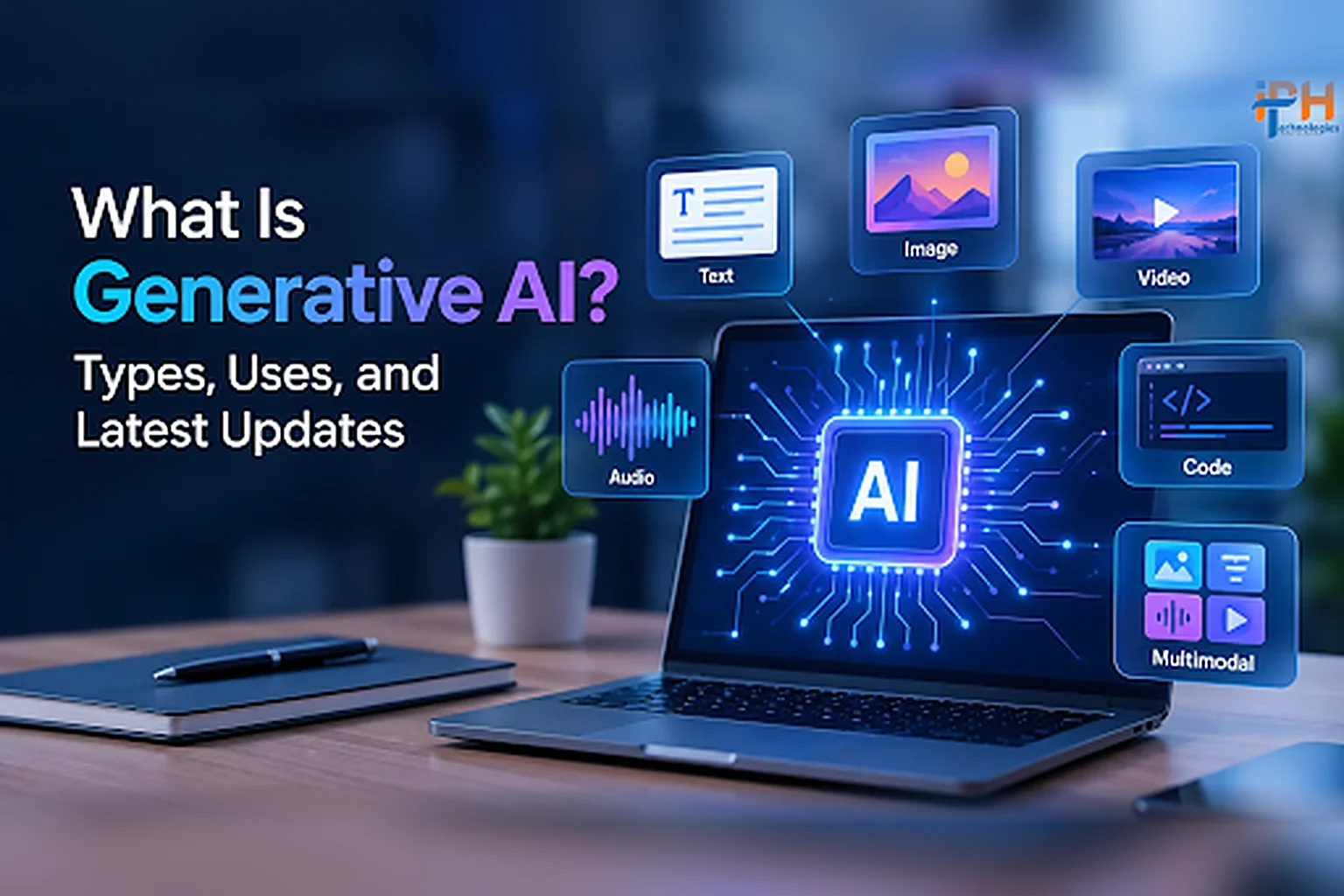
Generative AI is a branch of artificial intelligence that can generate new content based on patterns learned from large datasets. Depending on the model and application, it can create text, images, audio, video, software code, and other digital content.
Unlike traditional AI systems that primarily analyze existing information, generative AI can produce new outputs in response to natural-language prompts, structured inputs, or information retrieved from business systems.
For businesses, this means GenAI can be integrated into applications and workflows rather than being used only as a standalone chatbot.
For example, a healthcare organization could use GenAI to summarize clinical documentation, while a financial services company could use it to analyze documents and assist employees with customer inquiries. An e-commerce business could use generative AI to personalize product descriptions, recommendations, and customer interactions.
How Does Generative AI Work?
Generative AI models are trained on large datasets to learn patterns, relationships, structures, and context. When a user provides a prompt or application input, the model processes that information and generates an output based on what it has learned.
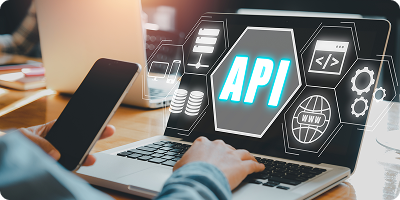
Modern generative AI applications can combine foundation models with APIs, databases, retrieval systems, business rules, automation tools, and other software components.
A production-ready business solution therefore involves more than simply connecting an AI API to an application. Businesses often need:
Types of Generative AI
| # | Type | What it does | Examples |
|---|---|---|---|
| 1 | Large Language Models (LLMs) | Generate and understand text: chatbots, writing assistants, summarization, translation | GPT, Gemini, Claude |
| 2 | Image Generation Models | Create visuals from text prompts | Midjourney, DALL·E, Stable Diffusion |
| 3 | Video & 3D Generation Models | Produce video clips or 3D assets from prompts, increasingly used in prototyping and media. | — |
| 4 | Audio & Music Generation Models | Compose music or synthesize speech with fine controls over tempo, key, and instrumentation. | — |
| 5 | Code Generation Models | Write, debug, and refactor code, acting as an assistant within developer workflows. | — |
| 6 | Multimodal Models | Handle text, image, audio, and video together, now considered the enterprise standard rather than the exception. | — |
| 7 | Synthetic Data Generators | Produce artificial datasets for training, testing, or privacy-preserving analytics. | — |
Common Business Uses of Generative AI
Generative AI becomes commercially valuable when it is connected to specific business processes:
1 AI-Powered Customer Support
Businesses can integrate GenAI into customer support applications to answer questions, summarize conversations, retrieve information, and assist human agents.
A custom AI support solution can connect with CRM, help desk, knowledge bases, and internal databases to provide context-aware responses.
2 Enterprise Knowledge Assistants
Employees often spend significant time searching through documents, policies, reports, and internal knowledge bases.
A generative AI assistant can provide a conversational interface for retrieving relevant business information and generating summaries.
3 AI for Sales and Marketing
Generative AI can support sales and marketing teams with:
The goal is not simply to generate content but to connect AI with existing sales and marketing workflows.
4 Healthcare AI Applications
Healthcare organizations can explore GenAI for administrative and operational workflows such as documentation assistance, information retrieval, summarization, patient communication, and workflow support.
5 Financial Services
Financial organizations can use generative AI for document analysis, customer service, knowledge management, internal assistance, and workflow automation.
Because financial applications can involve sensitive information and regulated processes, AI implementations require strong security and governance controls.
6 Software Development
Development teams can use GenAI throughout the software development lifecycle, including requirements analysis, coding assistance, testing, documentation, debugging, and modernization.
For organizations developing AI-enabled products, professional AI engineering is particularly important when the system needs custom integrations, scalable infrastructure, security, and production monitoring.
Generative AI vs Traditional AI
| Traditional AI | Generative AI | |
|---|---|---|
| Focus | Traditional AI is commonly used to classify, predict, recommend, detect, or analyze information. | Generative AI focuses on creating new content or responses based on learned patterns. |
| For example | Traditional AI: Predict whether a customer is likely to cancel a subscription. | Generative AI: Analyze the customer’s interaction history and generate a personalized retention response for a support representative. |
Latest Generative AI Updates in 2026
Generative AI is increasingly moving from basic content generation toward more capable enterprise systems and AI agents.
AI Security and Governance Are Becoming More Important
As businesses move GenAI into production, security and governance are becoming central parts of AI development.
For U.S. businesses, this makes AI security, privacy, access control, data governance, monitoring, and human oversight important considerations when developing commercial AI applications.
What Can a Generative AI Development Company Build?
A specialized AI development team can help businesses move from an AI concept to a production-ready application. Common commercial GenAI development services include:
| # | Service | What it covers |
|---|---|---|
| 1 | Custom Generative AI Applications | Development of AI-powered web and mobile applications designed around specific business requirements and workflows. |
| 2 | AI Chatbot and Virtual Assistant Development | Development of conversational AI assistants for customer support, employee assistance, sales, healthcare, and other business use cases. |
| 3 | Generative AI Integration | Integration of AI models and services into existing software, websites, mobile applications, CRM systems, ERP platforms, and enterprise applications. |
| 4 | Retrieval-Augmented Generation (RAG) | RAG-based solutions can connect AI models with private or business-specific information so applications can retrieve relevant knowledge before generating responses. |
| 5 | AI Agent Development | Development of AI agents capable of handling multi-step tasks, using business tools, retrieving information, and supporting workflow automation. |
| 6 | AI Model Customization | Businesses with specialized requirements may need model customization, fine-tuning, prompt optimization, evaluation, or model-routing strategies. |
| 7 | AI-Powered Software Modernization | Generative AI can also be incorporated into legacy modernization initiatives to improve existing applications and development workflows. |
Why Choose IPH Technologies for Generative AI Development?
Implementing GenAI successfully requires more than selecting an AI model. The application architecture, data flow, integrations, security, user experience, and deployment strategy all influence the final product.
IPH Technologies combines AI development with broader software engineering capabilities to help businesses develop AI-powered products and integrate generative AI into existing applications.
The team can support the development lifecycle from AI strategy and use-case identification to development, integration, testing, deployment, and ongoing improvements.
For companies looking to hire generative AI developers for a commercial project, this approach can be useful when the requirement goes beyond a basic chatbot or standalone AI tool.
How to Start a Generative AI Project?
A successful GenAI project starts by identifying a specific business problem rather than selecting an AI model first.
The process can include:
Final Thoughts on Generative AI
Generative AI is evolving from a content-generation technology into a broader platform for intelligent applications, automation, enterprise knowledge management, and AI-assisted workflows.
For U.S. businesses, the opportunity is not simply to add an AI chatbot. The greater opportunity is to identify where AI can solve a measurable business problem and integrate it into the systems employees and customers already use.
Whether you are planning a new AI-powered product, adding GenAI features to an existing application, or automating an internal business process, the right development architecture and engineering expertise can make the difference between an AI experiment and a production-ready business solution.
Looking to build a generative AI solution or hire AI developers for your commercial project? IPH Technologies can help turn your AI concept into a scalable software solution.
Frequently Asked Questions (FAQs)
What is generative AI used for in business?
Generative AI can be used for customer support, content generation, enterprise search, document processing, software development, workflow automation, sales assistance, knowledge management, and AI-powered applications.
What are the main types of generative AI?
The major categories include text, image, video, audio, code, and multimodal generative AI. Businesses can combine multiple capabilities within a single application.
Can generative AI be integrated into an existing application?
Yes. Generative AI can be integrated into websites, mobile apps, CRM platforms, ERP systems, customer portals, and other enterprise software through APIs, AI platforms, retrieval systems, and custom application architecture.
How much does it cost to develop a generative AI application?
The cost depends on the application’s complexity, AI model requirements, integrations, data architecture, security requirements, number of users, and deployment environment. A commercial AI application should be scoped around business requirements before development estimates are finalized.
How do I hire generative AI developers for a U.S. project?
Businesses can work with an AI development company such as IPH Technologies to define the use case, select an appropriate technical architecture, develop the application, integrate AI capabilities, and prepare the solution for production.
Is generative AI secure for enterprise applications?
Generative AI can be deployed securely, but enterprise implementations require appropriate controls around data access, privacy, authentication, model usage, monitoring, output validation, and governance. Organizations should assess risks throughout the AI lifecycle rather than treating security as an afterthought.










.png)