





























































































How AI and Machine Learning Are Changing Business Automation in 2026
Remember when “automation” just meant a conveyor belt moving faster or a macro running in Excel? Those days feel like ancient history now. In 2026, artificial intelligence and machine learning aren’t just buzzwords tossed around at tech conferences — they are actively reshaping how businesses operate, compete, and grow. And honestly? If your business isn’t paying attention, you’re already falling behind.
From intelligent chatbots handling thousands of customer queries simultaneously to machine learning algorithms predicting supply chain disruptions before they happen, AI-driven automation is the new engine of modern enterprise. It’s faster, smarter, and infinitely more scalable than anything we’ve seen before. But what does this really mean for your business, and where do you even begin?
Let’s break it all down — clearly, practically, and without the fluff.
Understanding AI and Machine Learning in the Business Context
Before we go deep, let’s get the foundations right. AI and machine learning are often used interchangeably, but they’re not the same thing — and understanding the distinction matters.
Artificial Intelligence (AI) is the broader concept of building machines that can perform tasks that typically require human intelligence — things like reasoning, learning, problem-solving, and understanding natural language.
Machine Learning (ML), on the other hand, is a subset of AI. It’s the specific technique by which machines learn from data, identify patterns, and improve their performance over time without being explicitly reprogrammed. Think of AI as the brain and ML as the learning process that makes that brain sharper every day.
What Exactly Is Business Automation?
Business automation is the use of technology to execute recurring tasks or processes in a business where manual effort can be replaced. It could be something as simple as auto-scheduling emails or as complex as autonomously routing customer support tickets based on sentiment analysis. The goal is always the same: to do more with less, faster, and more accurately.
Traditional automation was rule-based — if X happens, do Y. Simple, rigid, limited. But when you layer AI and ML on top? The system doesn’t just follow rules. It learns the rules, adapts to exceptions, and predicts what comes next. That’s the paradigm shift we’re living through right now.
How AI Supercharges Traditional Automation
Here’s a great analogy: traditional automation is like a vending machine — reliable, but it can only give you what’s already programmed. AI automation is like a personal chef who learns your preferences, adapts to what’s in season, and surprises you with something better than you expected. The difference isn’t incremental — it’s transformational.
Also Read- 15 Top AI Consulting Companies in 2026 | Expert Guide & Rankings
Key Areas Where AI Is Transforming Business Automation in 2026
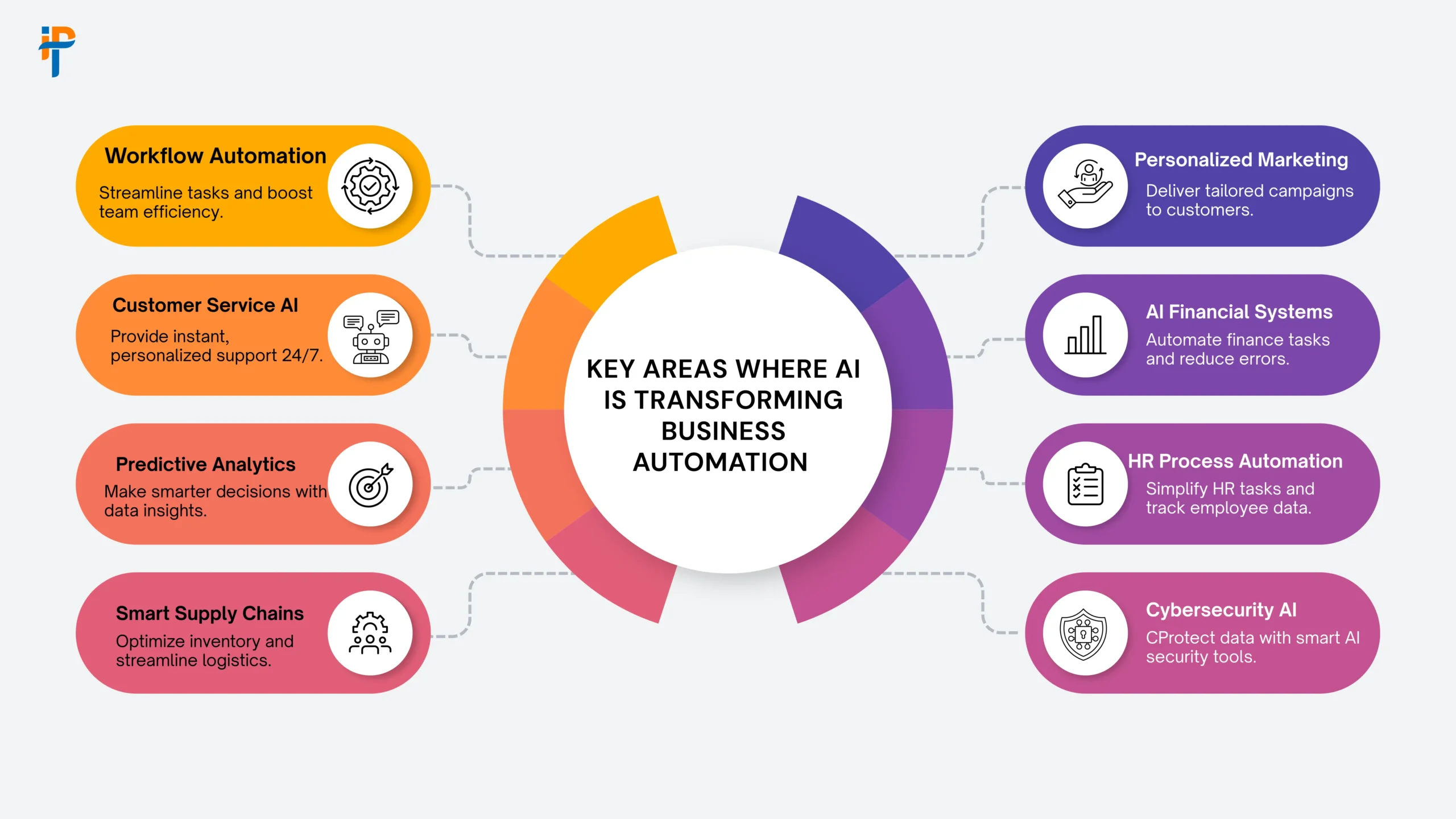
1. Intelligent Process Automation (IPA)
Intelligent Process Automation combines Robotic Process Automation (RPA) with AI capabilities like natural language processing (NLP), machine learning, and computer vision. Unlike traditional RPA, which only handles structured data and predictable workflows, IPA can process unstructured data — emails, PDFs, handwritten documents, voice inputs — and make contextual decisions.
In 2026, companies using IPA are reporting dramatic reductions in processing time across finance, HR, legal, and operations. According to McKinsey, organizations that deploy intelligent automation can cut operational costs by up to 30% while simultaneously improving output quality.
2. AI-Powered Customer Service and Chatbots
Forget the clunky chatbots of five years ago that could barely understand a simple query. Today’s AI-powered virtual agents use large language models (LLMs) to hold nuanced, context-aware conversations that genuinely resolve customer problems — not just redirect them to an FAQ page.
In 2026, AI customer service tools are:
- Handling over 70% of tier-1 support queries autonomously
- Detecting customer frustration in real time using sentiment analysis
- Seamlessly escalating complex cases to human agents with full context
- Operating 24/7 across multiple languages and platforms simultaneously
This isn’t replacing human connection — it’s freeing up human agents to focus on the complex, emotionally sensitive interactions where they truly shine.
3. Predictive Analytics and Smarter Decision-Making
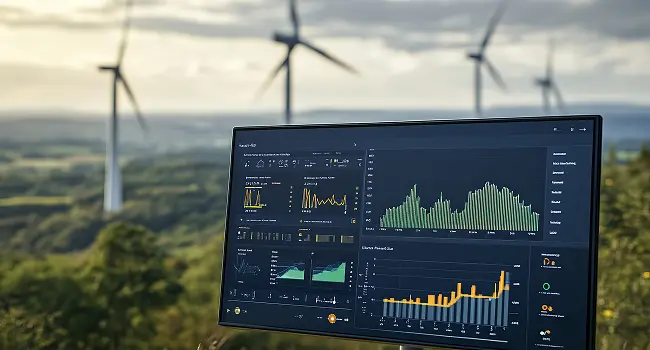
One of the most powerful gifts AI gives businesses is the ability to see around corners. Machine learning models analyze historical data, detect patterns, and generate forecasts that help decision-makers act proactively rather than reactively.
Whether it’s predicting which customers are about to churn, forecasting quarterly revenue with stunning accuracy, or identifying equipment failure before it happens in a manufacturing plant, predictive analytics is turning data into a genuine competitive weapon.
4. AI in Human Resources and Talent Management
HR might not be the first department you associate with AI automation, but it’s one of the fastest-growing application areas. In 2026, AI tools will be used to:
- Screen thousands of resumes in seconds, ranking candidates by fit
- Predict employee turnover before it happens, enabling retention strategies
- Personalize learning and development paths for each employee
- Reduce bias in hiring through structured, data-driven evaluation
This isn’t about removing the human touch from HR — it’s about giving HR professionals more time and better insights to make decisions that actually matter.
5. Supply Chain and Inventory Automation
Supply chains are complex, dynamic beasts. A disruption on one side of the world can send shockwaves through your entire operation. AI automation is changing that by enabling real-time visibility, dynamic demand forecasting, and autonomous inventory management.
Companies like Amazon and Walmart have been doing this for years, but in 2026, even mid-size businesses will have access to AI-powered supply chain tools that were once exclusively enterprise-level luxuries.
Machine Learning Models Driving Operational Efficiency
Machine learning isn’t a single technology — it’s a toolkit. Different types of ML models serve different business purposes, and understanding which one fits your problem is key to getting real value.
Supervised vs. Unsupervised Learning in Business
| ML Type | How It Works | Business Use Case |
|---|---|---|
| Supervised Learning | Learns from labeled data to make predictions | Fraud detection, credit scoring, churn prediction |
| Unsupervised Learning | Finds hidden patterns in unlabeled data | Customer segmentation, anomaly detection |
| Reinforcement Learning | Learns by trial and error, optimizing for rewards | Dynamic pricing, logistics routing, game AI |
| Deep Learning | Multi-layered neural networks for complex pattern recognition | Image recognition, NLP, voice assistants |
Each of these models has its sweet spot. A savvy technology partner helps you identify which model suits your specific automation goal — rather than forcing a one-size-fits-all solution.
Real-World Use Cases of ML in Operations
- Netflix uses ML to power recommendations that save an estimated $1 billion annually in customer retention
- UPS uses route optimization ML algorithms to save over 10 million gallons of fuel per year
- JPMorgan Chase uses NLP-based ML to review legal documents in seconds — work that used to take lawyers 360,000 hours annually
These aren’t sci-fi examples. They’re happening right now, and the same principles are being applied at every level of business.
Also Read – Online Earning App Development in UAE | Complete 2026 Guide
The Numbers Behind AI Business Automation in 2026
Numbers tell the real story. Here’s a snapshot of where AI-driven business automation stands today:
| Statistic | Figure | Source |
|---|---|---|
| Global AI market size (2026 est.) | $621 billion | Statista |
| Businesses using some form of AI automation | 77% | McKinsey Global Survey |
| Reduction in operational costs via AI automation | Up to 30% | McKinsey & Company |
| Jobs augmented (not replaced) by AI by 2026 | 97 million | World Economic Forum |
| ROI from AI investments (avg. within 3 years) | 3.5x | Accenture Research |
These aren’t just impressive stats to drop in a boardroom presentation. They represent a real, measurable shift in how value is created in modern businesses. Companies that act now are the ones writing those success stories; companies that wait are the ones reading them from the sidelines.
Industries Being Disrupted by AI Automation
Healthcare Automation
AI is revolutionizing healthcare in ways that genuinely save lives. From diagnosing diseases in medical imaging with accuracy that rivals trained radiologists to automating administrative billing and patient scheduling, the healthcare sector is one of AI automation’s biggest beneficiaries.
In 2026, AI-powered diagnostic tools have reduced misdiagnosis rates in some specialties by up to 40%, according to research published in The Lancet Digital Health. That’s not a productivity stat — that’s a human-impact stat.
Finance and Banking
The finance industry was an early adopter, and it continues to push boundaries. AI is now handling everything from real-time fraud detection and algorithmic trading to automated compliance monitoring and personalized financial planning.
Machine learning models can process millions of transactions per second, flagging suspicious patterns that no human analyst could ever catch at that speed. In a world where fraud costs businesses trillions annually, that’s not a nice-to-have — it’s a necessity.
Retail and E-Commerce
From hyper-personalized product recommendations to dynamic pricing engines and fully automated warehouse operations, retail and e-commerce have been completely reinvented by AI automation. In 2026, the brands winning customer loyalty are the ones delivering experiences that feel almost eerily personal — because they are, powered by ML models that know your preferences better than you do.
Challenges Businesses Face When Adopting AI Automation
AI automation isn’t all smooth sailing. Let’s be real about the friction points — because glossing over them doesn’t help anyone.
Data Privacy and Ethical Concerns
AI systems are only as good as the data they’re trained on. And with great data comes great responsibility. Businesses must navigate increasingly strict regulations — GDPR in Europe, the AI Act, CCPA in California — while ensuring their AI systems don’t inadvertently encode bias or compromise user privacy.
Ethical AI isn’t just the moral thing to do — it’s rapidly becoming a legal requirement. Organizations that build responsible AI frameworks today are protecting themselves from massive regulatory risk tomorrow.
Integration With Legacy Systems
Here’s the dirty secret many vendors don’t talk about: most businesses are still running on legacy infrastructure that wasn’t built with AI in mind. Integrating modern AI tools into decades-old ERP systems, databases, and workflows is a significant technical and organizational challenge.
It requires careful planning, strong API architecture, phased migration strategies, and a development partner who understands both the old and the new. This is exactly where a company like IPH Technologies earns its keep.
Also Read- AI Chatbots & Virtual Assistants Boost Conversions 2026
How IPH Technologies Helps Businesses Automate Intelligently
At IPH Technologies, the vision is clear: turn bold ideas into impactful, intelligent solutions. With over 500 successful projects and 430+ satisfied clients across industries, they’ve built a reputation as a technology partner that genuinely understands the nuances of AI-driven business transformation.
Custom AI-Powered App Development
IPH Technologies doesn’t deal in generic solutions. Every AI-powered mobile app or web application they build is architected from the ground up around the specific needs, workflows, and goals of the client. Whether you need an intelligent customer-facing app, an internal process automation tool, or a predictive analytics dashboard, their team blends cutting-edge technology with deep domain knowledge to deliver something that actually moves the needle.
End-to-End Software Engineering for Automation
From requirement gathering and system design to deployment, integration, and post-launch support — IPH Technologies handles the full lifecycle of your automation project. Their agile development methodology means you’re never waiting months to see results. You’re involved, informed, and watching your product evolve sprint by sprint.
Their expertise spans mobile app development, web application development, and custom software engineering — making them a one-stop shop for businesses that want to automate intelligently and scale confidently.
The Future of AI and Business Automation Beyond 2026
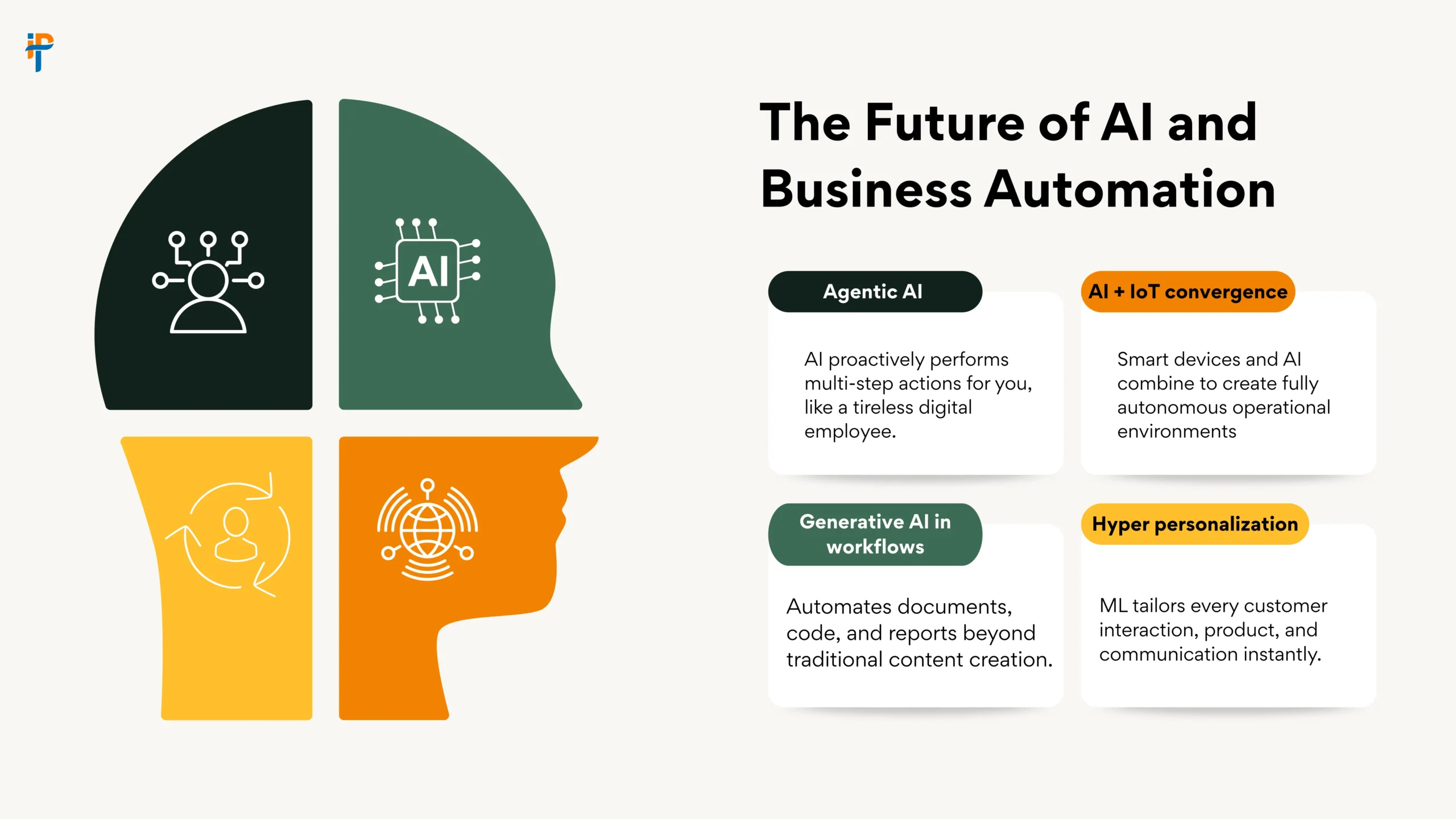
Where does this all go next? A few trends worth watching:
- Agentic AI — AI systems that don’t just respond to commands but proactively take multi-step actions on your behalf, like an employee who never sleeps
- AI + IoT convergence — Smart devices and AI automation merging to create fully autonomous operational environments in manufacturing, logistics, and smart cities
- Generative AI in workflows — Beyond content creation, generative AI will automate complex document generation, code writing, and strategic reporting
- Hyper-personalization at scale — Every customer interaction, product, and communication is being uniquely tailored by ML in real time
The businesses thriving in 2030 are making their AI investments right now. The question isn’t if you should automate — it’s how fast and how well.
Conclusion
AI and machine learning are no longer futuristic concepts reserved for Silicon Valley giants. In 2026, they are practical, accessible, and genuinely transformative tools that businesses of every size can — and should — be leveraging. From intelligent process automation and predictive analytics to AI-powered customer service and supply chain optimization, the breadth of impact is staggering.
But technology alone doesn’t win the race. You need the right partner — one who understands not just the tech, but your business goals, your industry, and your customers. That’s where IPH Technologies comes in. With a proven track record, a client-first philosophy, and the technical depth to build truly intelligent solutions, they’re the partner that helps you stop watching the automation revolution from the sidelines and start leading it.
The future belongs to businesses that automate smarter. Are you ready to be one of them?
Also Read- Top 8 Reasons Startups Choose Custom Software Development










.png)