



































































Highlights
UI/UX Design
User-first, visually engaging interfaces crafted to enhance usability, boost engagement, and deliver seamless digital experiences.
Branding
Strategic brand identities that communicate your vision, build trust, and create a memorable presence across all touchpoints.
Wireframing
Structured layouts and user flows that map the product journey clearly before development begins, saving time and cost.
Prototype Design
Interactive prototypes that simulate real user interactions, helping validate ideas and refine experiences early.
Design Systems
Scalable design frameworks and reusable components that ensure consistency, speed, and efficiency across your product.
UI/UX Design

We design intuitive, user-centric interfaces that enhance engagement, improve usability, and deliver seamless digital experiences across all devices.

UI UX Design
  • User research and wireframing for clear flows
  • Modern UI design using Figma and Adobe XD
  • Interactive prototypes for better user experience testing
  • Usability testing and performance optimization improvements
  • Responsive design across all devices and screens
  • Scalable design systems with reusable UI components
Branding & Identity

We craft strong brand identities that communicate your vision, build trust, and create a lasting impression across all digital and offline touchpoints.

Branding and Identity
  • Logo design and brand identity creation
  • Brand guidelines and visual consistency systems
  • Color palette and typography selection strategy
  • Marketing materials and brand asset design
  • Social media branding and creative direction
  • Rebranding and brand positioning strategies
Wireframing

We create structured wireframes that define layout, user flow, and functionality, helping visualize ideas and build a strong foundation before design and development.

Wireframing
  • Low fidelity wireframes for initial structure
  • High fidelity wireframes with detailed layouts
  • User flow mapping for better navigation
  • Content hierarchy and layout planning
  • Clickable wireframes for early feedback
  • Clear structure before UI design phase
Prototype Design

We design interactive prototypes that simulate real user experiences, helping validate ideas, test functionality, and refine products before development.

Prototype Design
  • Interactive prototypes for real user experience
  • Clickable designs to test product functionality
  • User journey simulation for better understanding
  • Rapid prototyping for faster design validation
  • Feedback driven improvements before development
  • High fidelity prototypes with smooth interactions
Design Systems

We build scalable design systems that ensure consistency, improve collaboration, and accelerate product development across all platforms and teams.

Design Systems
  • Reusable UI components for consistent design
  • Design tokens for colors typography spacing
  • Component libraries for faster development workflow
  • Consistent branding across all digital products
  • Documentation for design and development teams
  • Scalable systems for growing product ecosystems
Highlights
Mobile Apps Development
High-performance Android and iOS mobile applications built with modern technologies, delivering seamless user experiences and robust functionality.
Desktop Application Dev
Powerful and secure desktop applications tailored for Windows, macOS, and Linux, designed for performance, scalability, and reliability.
Web App Development
Scalable and responsive web applications using modern frameworks like React, Angular, and Vue for fast, dynamic, and engaging experiences.
Cross-Platform
Cost-effective cross-platform solutions using Flutter and React Native, enabling a single codebase for both iOS and Android platforms.
PWA Development
Progressive Web Apps that combine the best of web and mobile, offering offline access, fast loading, and app-like experiences directly in the browser.
Highlights
Mobile App

Android

iOS

Flutter

Hybrid

Optimize

Native

Swift

Firebase

Android App Development

We craft powerful, scalable Android applications with intuitive UX, high performance, and deep integration with Google services.

Android App
  • Custom Android app development
  • Native Kotlin & Java apps
  • Google Play Store deployment
  • Material Design UI implementation
Kotlin

Kotlin

Java

Java

Flutter

Flutter

Android Studio

Android

Jetpack

Jetpack

iOS App Development

We build high-quality, user-centric iOS apps combining performance, security, and seamless design for Apple devices.

iOS App
  • Custom iOS app development
  • Native Swift & SwiftUI apps
  • Seamless Apple service integration
  • App Store review & deployment
Swift

Swift

SwiftUI

SwiftUI

Obj-C

Obj-C

Xcode

Xcode

Flutter

Flutter

Cross-Platform Apps

We develop cross-platform mobile apps that run flawlessly on both iOS and Android from a single codebase, saving time and cost.

Cross-Platform App
  • Single codebase for iOS & Android
  • Flutter & React Native development
  • Native-like performance & UI
  • Faster time-to-market
React Native

React Native

TypeScript

TypeScript

Redux

Redux

Firebase

Firebase

Dart

Dart

Hybrid Apps

We build hybrid mobile apps that blend web technologies with native capabilities, delivering broad reach and cost-effective development.

Hybrid App
  • Web + native feature integration
  • Ionic & Cordova frameworks
  • Reduced development costs
  • Multi-platform publishing
Flutter

Flutter

Dart

Dart

Firebase

Firebase

SQLite

SQLite

App Optimization

We enhance existing mobile apps with performance tuning, crash fixes, battery efficiency, and faster load times for a superior user experience.

App Optimization
  • Performance profiling & tuning
  • Memory & battery optimization
  • Crash analysis & bug fixing
  • App size reduction & load speed
Xcode

Xcode

Android Studio

Android

Firebase

Firebase

Java

Java

Highlights
Desktop App

Windows

macOS

Linux

Desktop

Electron

Qt

WinForms

GTK

Windows Apps

We develop robust Windows desktop applications using modern Microsoft technologies, delivering powerful tools for enterprise and consumer use.

Windows App
  • Custom Windows desktop applications
  • WPF & WinForms development
  • Microsoft Store deployment
  • Windows API & system integration
C#

C#

.NET

.NET

Electron

Electron

Visual Studio

Visual Studio

SQL Server

SQL Server

macOS Apps

We create elegant, high-performance macOS applications that leverage Apple's native frameworks for a smooth and delightful desktop experience.

macOS App
  • Native macOS app development
  • SwiftUI & AppKit integration
  • Mac App Store submission
  • Apple Silicon optimization
Swift

Swift

SwiftUI

SwiftUI

Obj-C

Obj-C

Xcode

Xcode

Cross-Platform Desktop

We develop cross-platform desktop applications that run seamlessly on Windows, macOS, and Linux from a single shared codebase.

Cross-Platform Desktop
  • Single codebase for all platforms
  • Electron & Tauri frameworks
  • Flutter for desktop support
  • Consistent UI across OS environments
Flutter

Flutter

Electron

Electron

Node.js

Node.js

TypeScript

TypeScript

Docker

Docker

Electron Apps

We build feature-rich Electron desktop apps using web technologies, enabling cross-platform deployment with native OS capabilities.

Electron App
  • Electron framework development
  • Node.js & Chromium integration
  • Auto-updater & native notifications
  • Cross-OS packaging & distribution
Electron

Electron

Node.js

Node.js

React

React

Vue

Vue

TypeScript

TypeScript

Highlights
Web App

React

Node.js

PHP

Laravel

Python

MySQL

JavaScript

HTML

CSS

React Development

We build fast, component-driven React web applications with modern state management, reusable UI, and seamless API integration.

React Development
  • Custom React SPA development
  • Redux & Context API state management
  • Next.js SSR & SSG support
  • REST & GraphQL API integration
React

React

Next.js

Next.js

Redux

Redux

TypeScript

TypeScript

Tailwind

Tailwind

Angular Development

We develop enterprise-grade Angular applications with structured architecture, two-way data binding, and robust TypeScript foundations.

Angular Development
  • Custom Angular SPA development
  • RxJS & NgRx state management
  • Angular Material UI components
  • Lazy loading & performance tuning
Angular

Angular

TypeScript

TypeScript

HTML

HTML

CSS

CSS

NPM

NPM

Node.js Backend

We build scalable, event-driven Node.js backends with RESTful APIs, real-time capabilities, and seamless database integrations.

Node.js Backend
  • RESTful & GraphQL API development
  • Express.js & Fastify frameworks
  • WebSocket & real-time features
  • MongoDB, PostgreSQL integration
Node.js

Node.js

Express

Express

MongoDB

MongoDB

GraphQL

GraphQL

Docker

Docker

Cloud Web Apps

We design and deploy cloud-native web applications on AWS, Azure, and GCP — scalable, secure, and built for high availability.

Cloud Web Apps
  • AWS, Azure & GCP deployment
  • Serverless architecture development
  • Auto-scaling & load balancing
  • CI/CD pipeline configuration
AWS

AWS

Azure

Azure

GCP

GCP

Docker

Docker

Kubernetes

Kubernetes

Full-Stack Dev

We deliver complete full-stack web solutions — from pixel-perfect frontends to robust backends — as a unified, end-to-end product.

Full-Stack Dev
  • Frontend & backend development
  • MERN & MEAN stack expertise
  • Database design & API architecture
  • DevOps, hosting & deployment
React

React

Node.js

Node.js

MongoDB

MongoDB

PostgreSQL

PostgreSQL

Docker

Docker

Highlights
Cross Platform

Flutter

R. Native

Xamarin

Ionic

Reuse

Electron

NW.js

Framework7

SwiftUI

Flutter Development

We build beautiful, natively compiled Flutter applications for mobile, web, and desktop from a single Dart codebase with pixel-perfect UI.

Flutter Development
  • Flutter mobile & web apps
  • Dart language development
  • Custom widget & animation creation
  • Firebase & REST API integration
Flutter

Flutter

Dart

Dart

Firebase

Firebase

GetX

GetX

Riverpod

Riverpod

React Native

We develop high-performance React Native apps that deliver a truly native experience on both iOS and Android using JavaScript and React.

React Native
  • Cross-platform iOS & Android apps
  • React Native CLI & Expo development
  • Native module & bridge integration
  • Redux & MobX state management
React Native

React Native

Redux

Redux

TypeScript

TypeScript

Firebase

Firebase

Xamarin

We develop Xamarin-based cross-platform apps using C# and .NET, enabling shared business logic across iOS, Android, and Windows.

Xamarin
  • Xamarin.Forms & MAUI apps
  • Shared C# codebase development
  • Native API access via bindings
  • Enterprise app integration
Xamarin

Xamarin

C#

C#

.NET MAUI

.NET

Azure

Azure

Visual Studio

Visual Studio

Ionic Framework

We create stunning Ionic applications that combine the power of web technologies with native device features for a seamless mobile experience.

Ionic Framework
  • Ionic Angular & React apps
  • Capacitor native plugin integration
  • Responsive mobile-first UI
  • PWA & hybrid app deployment
Ionic

Ionic

Angular

Angular

React

React

Vue

Vue

Code Reusability

We build reusable app architectures, reducing duplication, accelerating development, and ensuring seamless cross-platform consistency.

Code Reusability
  • Shared component library creation
  • Monorepo architecture setup
  • Design system implementation
  • Platform-agnostic business logic
Turborepo

Turborepo

Storybook

Storybook

Flutter

Flutter

React Native

React Native

Highlights
PWA

PWA

Offline

Push

Fast

App-Like

IndexedDB

Installable

Sync

Progressive Web Apps

We build Progressive Web Apps that combine the best of web and mobile — installable, reliable, and fast across all devices and browsers.

Progressive Web Apps
  • PWA architecture & manifest setup
  • Service worker implementation
  • Installable & home screen support
  • Cross-browser compatibility
HTML5

HTML5

CSS3

CSS3

JavaScript

JavaScript

Workbox

Workbox

Lighthouse

Lighthouse

Offline Support

We implement robust offline capabilities in your web apps using service workers and smart caching so users stay productive without connectivity.

Offline Support
  • Service worker caching strategies
  • IndexedDB offline data storage
  • Background sync implementation
  • Graceful offline fallback pages
Service Worker

ServiceWorker

Workbox

Workbox

IndexedDB

IndexedDB

Cache API

Cache API

Background Sync

BackgroundSync

Push Notifications

We integrate web push notification systems into your PWA to re-engage users with timely, personalized alerts even when the app is not open.

Push Notifications
  • Web Push API implementation
  • VAPID key & subscription management
  • Notification scheduling & targeting
  • Cross-browser push support
Web Push

Web Push

Firebase FCM

Firebase

OneSignal

OneSignal

Node.js

Node.js

Workbox

Workbox

Fast Loading

We optimize PWAs for lightning-fast load times using code splitting, lazy loading, and caching to deliver exceptional Core Web Vitals scores.

Fast Loading
  • Code splitting & lazy loading
  • Image & asset optimization
  • Core Web Vitals improvement
  • CDN & caching configuration
Webpack

Webpack

Lighthouse

Lighthouse

Vite

Vite

Cloudflare

Cloudflare

Workbox

Workbox

App-Like Experience

We craft PWAs that feel and behave like native mobile apps — with smooth animations, full-screen mode, gestures, and seamless transitions.

App-Like Experience
  • Full-screen & standalone display mode
  • Touch gestures & swipe navigation
  • Smooth page transitions & animations
  • App shell architecture
Web Manifest

Web Manifest

CSS Animations

CSS

Framer Motion

FramerMotion

React

React

Vue

Vue

Highlights
Custom Software
Fully tailored software solutions designed to match your unique business processes, improving efficiency and driving long-term growth.
Backend Systems
Robust and secure backend architectures built for high performance, scalability, and seamless integration with your applications.
Database Design
Efficient and scalable database structures optimized for fast queries, data integrity, and reliable performance at scale.
Cloud-Native
Modern cloud-native solutions using microservices and serverless architecture on AWS, Azure, and GCP for maximum flexibility and scalability.
API Development
Secure and well-documented RESTful and GraphQL APIs that enable seamless communication between systems and third-party integrations.
Custom Software

We develop tailored software solutions that align with your business goals, streamline operations, and deliver scalable, high-performance digital systems.

Custom Software Development
  • Custom software tailored to business needs
  • Scalable architecture for long term growth
  • Secure and high performance application development
  • API integration with third party services
  • Cloud based and enterprise software solutions
  • Ongoing maintenance and system optimization support
Backend Systems

We build robust backend systems that power applications with secure, scalable architecture, efficient data handling, and seamless integrations.

Backend Systems
  • Secure backend architecture and system design
  • Database design and performance optimization
  • API development for seamless integrations
  • Authentication and authorization system implementation
  • Server side logic and business workflows
  • Scalable infrastructure for high traffic applications
Database Design

We design efficient database structures that ensure data integrity, optimize performance, and support scalable, reliable application systems.

Database Design
  • Structured database schema design and planning
  • Efficient data modeling for scalable systems
  • Database optimization for faster query performance
  • Relational and non relational database solutions
  • Secure data storage and access management
  • Backup strategies and data recovery solutions
Cloud-Native Apps

We build cloud-native applications designed for scalability, resilience, and flexibility using modern cloud infrastructure and microservices architecture.

Cloud Native Apps
  • Cloud first architecture for scalable applications
  • Microservices based system design and deployment
  • Containerization using Docker and Kubernetes tools
  • Auto scaling infrastructure for high availability
  • Continuous integration and continuous deployment pipelines
  • Secure cloud environments with monitoring and logging
API Development

We develop secure and scalable APIs that enable seamless communication between systems, applications, and third party services.

API Development
  • RESTful API development for web applications
  • Secure API authentication and authorization systems
  • Third party API integration and data exchange
  • Scalable APIs for high traffic applications
  • API documentation for easy developer integration
  • Performance optimization and API response tuning
Highlights
Manual Testing
Detailed human-driven testing to uncover edge cases, validate user flows, and ensure a seamless, intuitive user experience.
Test Automation
Automated testing frameworks using Selenium, Cypress, and Appium to accelerate regression cycles and improve release confidence.
Performance
Load, stress, and scalability testing to ensure your application performs reliably under high traffic and demanding conditions.
Security Testing
Comprehensive security assessments including penetration testing and vulnerability analysis to safeguard your application.
Mobile QA
End-to-end mobile application testing across devices and platforms to ensure consistent performance, usability, and stability.
Manual Testing

We perform detailed manual testing to ensure software quality, identify issues early, and deliver reliable, user-friendly applications.

Manual Testing
  • Functional testing for application core features
  • UI testing for consistent user experience
  • Cross browser and device compatibility testing
  • Test case creation and execution processes
  • Bug tracking and detailed issue reporting
  • Regression testing after feature updates
Test Automation

We implement automated testing solutions to improve efficiency, reduce manual effort, and ensure faster, reliable software delivery.

Test Automation
  • Automated test scripts for faster execution
  • Regression testing using automation frameworks
  • Continuous testing within CI CD pipelines
  • Test coverage improvement across application modules
  • Reusable automation scripts for long term scalability
  • Performance and load testing automation solutions
Performance Testing

We evaluate application performance to ensure speed, stability, and scalability under different workloads and real-world conditions.

Performance Testing
  • Load testing for high traffic scenarios
  • Stress testing to identify system limits
  • Performance benchmarking and response time analysis
  • Scalability testing for growing user demands
  • Memory and resource usage optimization checks
  • Bottleneck identification and performance improvements
Security Testing

We identify vulnerabilities and secure applications against threats, ensuring data protection, compliance, and safe user interactions.

Security Testing
  • Vulnerability assessment and risk analysis testing
  • Penetration testing to identify security gaps
  • Authentication and authorization security validation
  • Data protection and encryption testing processes
  • Secure code review and security best practices
  • Compliance testing with industry security standards
Mobile QA

We ensure mobile applications deliver flawless performance, usability, and compatibility across devices, platforms, and environments.

Mobile QA
  • Mobile app testing across multiple devices
  • iOS and Android platform compatibility testing
  • UI testing for consistent mobile experience
  • Network and performance testing on mobile
  • App usability and user experience validation
  • App store readiness and release testing
Highlights
CI/CD Pipelines
Automated pipelines for building, testing, and deploying code, enabling faster releases, fewer errors, and continuous delivery.
Infrastructure
Scalable infrastructure provisioning using Infrastructure as Code (IaC) with Terraform and CloudFormation for consistency and reliability.
Deployment
Zero-downtime deployment strategies including blue-green and rolling deployments to ensure smooth and reliable releases.
Containerisation
Container-based architectures using Docker and Kubernetes for portability, scalability, and efficient resource utilization.
Monitoring
Real-time monitoring and observability using tools like Grafana, Prometheus, and Datadog to ensure system health and performance.
CI/CD Pipelines

We implement CI/CD pipelines to automate build, testing, and deployment, enabling faster releases, improved quality, and continuous delivery.

CI CD Pipelines
  • Automated build and deployment pipeline setup
  • Continuous integration for faster code validation
  • Continuous delivery for seamless release cycles
  • Integration with Git version control systems
  • Automated testing within CI CD workflows
  • Monitoring and rollback strategies for deployments
Infrastructure

We design and manage reliable infrastructure to ensure scalability, security, and high availability for modern applications and systems.

Infrastructure
  • Cloud infrastructure setup and configuration services
  • Server management and deployment automation solutions
  • High availability and load balancing implementation
  • Monitoring and logging for system performance tracking
  • Security hardening and infrastructure access controls
  • Scalable environments for growing application demands
Deployment

We manage seamless deployment processes to ensure applications are delivered efficiently, securely, and ready for production environments.

Deployment
  • Application deployment to cloud and servers
  • Automated deployment workflows for faster releases
  • Environment configuration and setup management
  • Version control and release management processes
  • Rollback strategies for safe deployment updates
  • Post deployment monitoring and performance checks
Containerization

We use containerization to package applications for consistency, scalability, and efficient deployment across different environments.

Containerization
  • Application containerization using Docker technologies
  • Environment consistency across development and production
  • Container orchestration with Kubernetes platforms
  • Scalable container deployment for microservices architecture
  • Efficient resource utilization and system isolation
  • Integration with CI CD pipelines for automation
Monitoring

We monitor systems and applications in real time to ensure performance, reliability, and quick issue detection and resolution.

Monitoring
  • Real time system performance monitoring tools
  • Application health checks and uptime tracking
  • Error tracking and issue alerting systems
  • Log management and analysis for debugging
  • Resource usage monitoring across infrastructure layers
  • Proactive issue detection and incident response
Highlights
Roadmap Planning
Strategic product roadmaps aligned with business goals, helping prioritize features, manage timelines, and deliver maximum value.
Team Coordination
Efficient coordination across design, development, and QA teams to ensure smooth collaboration and on-time project delivery.
Growth Strategy
Data-driven product strategies focused on user acquisition, retention, and continuous improvement to drive sustainable growth.
Agile Sprints
Agile methodologies like Scrum and Kanban to deliver iterative releases, improve flexibility, and maintain predictable progress.
Stakeholder Mgmt
Clear communication and alignment with stakeholders through regular updates, reporting, and feedback loops to ensure project success.
Roadmap Planning

We create strategic roadmaps that align with your business goals, helping prioritize features, plan execution, and ensure long-term success.

Roadmap Planning
  • Product roadmap planning aligned with business objectives
  • Feature prioritization based on user and market needs
  • Timeline planning for efficient project execution phases
  • Technology stack selection for scalable solutions
  • Risk assessment and mitigation strategy planning
  • Continuous roadmap updates based on performance insights
Team Coordination

We ensure smooth collaboration across teams to improve productivity, streamline workflows, and deliver projects efficiently on time.

Team Coordination
  • Cross functional team collaboration and communication
  • Agile workflow management and sprint planning processes
  • Task tracking and project progress visibility tools
  • Clear role assignment and responsibility management
  • Regular updates and performance review meetings
  • Efficient coordination between design development teams
Growth Strategy

We develop data-driven growth strategies to scale your business, increase user acquisition, and maximize long-term revenue potential.

Growth Strategy
  • Market analysis and competitive growth planning strategies
  • User acquisition and retention optimization techniques
  • Data driven decision making and performance insights
  • Scalable business models for long term expansion
  • Conversion rate optimization across digital platforms
  • Continuous growth tracking and strategy refinement
Agile Sprints

We follow agile sprint methodologies to deliver faster iterations, improve collaboration, and ensure continuous product improvement.

Agile Sprints
  • Sprint planning and backlog prioritization processes
  • Daily standups for team alignment and progress tracking
  • Iterative development with continuous feedback cycles
  • Task management using agile tools and workflows
  • Regular sprint reviews and performance retrospectives
  • Faster delivery with incremental feature releases
Stakeholder Management

We ensure clear communication and alignment with stakeholders to drive project success, transparency, and informed decision making.

Stakeholder Management
  • Regular stakeholder communication and reporting processes
  • Requirement alignment with business goals and expectations
  • Feedback collection and continuous improvement strategies
  • Transparent project updates and progress visibility
  • Risk identification and stakeholder expectation management
  • Collaborative decision making for project success

Zero Trust Architecture for Mobile Apps Complete 2026 Security Guide

Picture this: you’re using your favorite banking app at a coffee shop, sipping your latte, when suddenly your sensitive financial data becomes vulnerable to cyber threats. Scary, right? In today’s hyper-connected world, mobile applications have become the primary gateway to our digital lives, handling everything from financial transactions to healthcare records. But here’s the catch—traditional security approaches just don’t cut it anymore.

Welcome to the world of Zero Trust Architecture, where the motto is simple yet powerful: Never trust, always verify. As we navigate through 2025, implementing Zero Trust in mobile applications isn’t just a best practice—it’s becoming a necessity. Let’s dive deep into how this revolutionary security framework is transforming mobile app development and why your business needs it today.

What is Zero Trust Architecture? A Complete Guide for 2026

The Evolution from Perimeter Security to Zero Trust

Remember the castle-and-moat approach to security? That’s old news. Traditional security models operated on a simple assumption: everything inside the network perimeter was trustworthy, while threats lurked only outside. Think of it like a medieval fortress—once you crossed the drawbridge, you were considered safe.

But here’s the problem: modern cyber threats don’t respect boundaries. With cloud computing, remote work, and mobile devices accessing corporate resources from anywhere, that protective moat has essentially dried up. Attackers who breach the perimeter can move laterally across the network, accessing sensitive data with alarming ease.

Core Definition and Philosophy

Zero Trust Architecture (ZTA) flips the script entirely. Developed by Forrester Research analyst John Kindervag in 2010, this security model operates on three fundamental assumptions:

1. The network is always hostile
2. External and internal threats exist at all times
3. Network location alone doesn’t determine trust

In practical terms, Zero Trust treats every access request as if it originates from an untrusted network. Whether you’re accessing an app from headquarters or a beach in Bali, you’ll need to prove your identity and authorization every single time. It’s like showing your ID at every door in a building, rather than just at the entrance.

According to Google’s initiative, implementing Zero Trust principles can significantly reduce the attack surface by eliminating the concept of a trusted internal network.

Also read- AI Statistics 2026: 77% Are Ahead—Are You Behind?

Why Mobile Apps Need Zero Trust Security Now More Than Ever

The Mobile Threat Landscape in 2025

The statistics are sobering. Mobile devices now account for over 60% of all digital transactions, making them prime targets for cybercriminals. The Verizon Mobile Security Index 2024 revealed that 45% of organizations experienced a mobile security compromise in the past year.

But why are mobile apps so vulnerable? Let’s break it down:

Device Diversity: Unlike controlled desktop environments, mobile devices come in countless configurations, operating system versions, and security patch levels. This heterogeneity creates numerous attack vectors.

App Overload: The average smartphone user has 80+ apps installed, each potentially containing vulnerabilities. One compromised app can serve as a gateway to others.

Network Promiscuity: Mobile devices constantly hop between networks—from home WiFi to public hotspots to cellular data. Each transition presents security risks.

Rising Security Challenges

The sophistication of mobile threats has evolved dramatically. We’re no longer just dealing with simple malware. Today’s attackers employ advanced persistent threats (APTs), man-in-the-middle attacks, and social engineering tactics specifically designed for mobile platforms.

Consider the rise of supply chain attacks targeting mobile SDKs and third-party libraries. When popular development frameworks get compromised, thousands of apps inheriting those components become vulnerable overnight. It’s like discovering the foundation of your house was built with faulty materials—suddenly, everything above it is at risk.

Core Principles of Zero Trust Architecture for Mobile Applications

Never Trust, Always Verify

This is the beating heart of Zero Trust. Every authentication request, every data access attempt, every API call must be verified—no exceptions. Think of it as airport security: even if you’re a frequent flyer, you still go through screening every single time.

For mobile apps, this means implementing robust authentication mechanisms that go beyond simple username-password combinations. We’re talking multi-factor authentication (MFA), biometric verification, device fingerprinting, and contextual authentication that considers factors like location, time, and user behavior patterns.

Least Privilege Access

Why give someone the keys to the entire kingdom when they only need access to one room? The principle of least privilege ensures users and applications receive only the minimum permissions necessary to perform their functions.

In mobile app development, this translates to:

  • Role-based access control (RBAC)
  • Just-in-time access provisioning
  • Time-bound permissions that expire automatically
  • Granular API access controls

Micro-Segmentation

Imagine dividing your mobile app’s architecture into countless tiny compartments, each with its own security controls. That’s micro-segmentation. Instead of treating your entire backend as a monolithic trusted zone, you create isolated segments for different functions.

For example, your payment processing module operates in complete isolation from your user profile management system. Even if an attacker compromises one segment, they can’t pivot to others without facing additional authentication barriers.

Continuous Monitoring and Validation

Trust isn’t granted once and forgotten—it’s continuously reassessed. Zero Trust implements real-time monitoring that tracks:

  • User behavior patterns
  • Device health status
  • Network conditions
  • Application integrity
  • Data access patterns

According to NIST Special Publication, continuous monitoring enables organizations to detect anomalies and respond to threats in real-time, reducing the window of opportunity for attackers.

Also read- 10 MVP Features You Must Have (And 5 to Skip) | 2025 Guide

How to Implement Zero Trust in Mobile App Development: Step-by-Step Guide

Phase 1: Assessment and Planning

Before diving into implementation, you need a comprehensive understanding of your current security posture. Start by mapping your mobile app’s architecture:

Asset Inventory: Document every component—APIs, databases, third-party services, data flows, and user touchpoints. What data does your app handle? Where does it reside? Who needs access?

Risk Assessment: Identify your crown jewels—the most sensitive data and critical functions. A healthcare app’s patient records require different protection levels than a gaming app’s leaderboard data.

Gap Analysis: Compare your current security measures against Zero Trust principles. Where are the vulnerabilities? What’s missing?

Phase 2: Identity and Access Management

Identity becomes your new perimeter. Implement a robust IAM framework that includes:

Strong Authentication:

  • Multi-factor authentication combining something you know (password), something you have (device), and something you are (biometrics)
  • Adaptive authentication that adjusts security requirements based on risk context
  • Passwordless authentication options using FIDO2 standards

Device Verification:

  • Device health attestation checking for jailbreaking, rooting, or malware
  • Certificate-based device authentication
  • Device inventory management

User Context Analysis:

  • Geolocation verification
  • Behavior-based risk scoring
  • Time-based access patterns

Phase 3: Network Segmentation

Transform your monolithic backend into a segmented architecture:

API Gateway Implementation: Create a centralized entry point that authenticates, authorizes, and routes all requests

Service Mesh Deployment: Use technologies like Istio or Linkerd to manage service-to-service communication with built-in security

Microsegmentation: Isolate workloads and apply granular security policies

Encrypted Communications: Implement end-to-end encryption using TLS 1.3 and certificate pinning

Phase 4: Continuous Monitoring

Deploy comprehensive monitoring and analytics:

Security Information and Event Management (SIEM):

  • Aggregate logs from all components
  • Correlate events to identify suspicious patterns
  • Generate real-time alerts

User and Entity Behavior Analytics (UEBA):

  • Establish baseline behavior patterns
  • Detect anomalies indicating potential compromises
  • Automate response to suspicious activities

Compliance Monitoring:

  • Track adherence to security policies
  • Generate audit trails
  • Demonstrate regulatory compliance

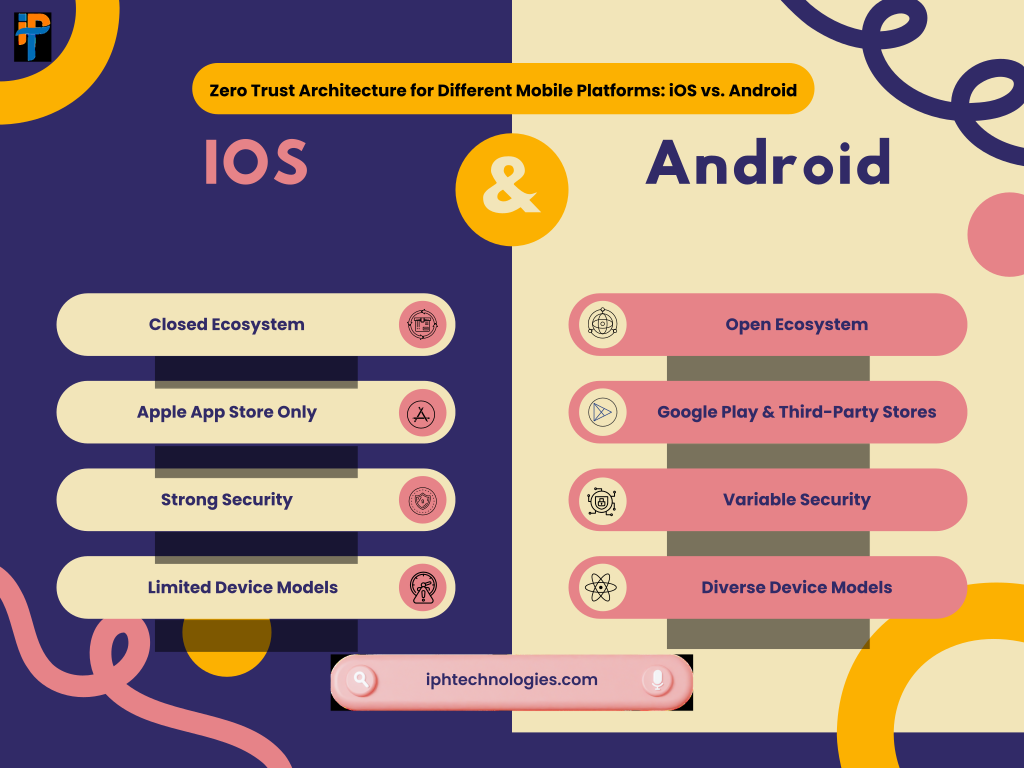
Zero Trust Architecture for Different Mobile Platforms: iOS vs. Android
iOS-Specific Considerations

Apple’s ecosystem offers unique advantages and challenges for Zero Trust implementation:

Built-in Security Features:

  • App Sandboxing: iOS automatically isolates apps from each other and the system
  • Keychain Services: Secure credential storage with hardware-backed encryption
  • App Transport Security (ATS): Enforces secure network connections by default

Implementation Tips:

  • Leverage Face ID and Touch ID for seamless biometric authentication
  • Use Apple’s Secure Enclave for cryptographic operations
  • Implement App Attest API to verify your app’s authenticity
  • Utilize iOS’s Certificate Transparency for enhanced trust validation

Challenges:

  • Limited background processing capabilities affecting continuous monitoring
  • Restrictions on accessing device-level security information
  • App Store review guidelines requiring careful privacy implementation

Android-Specific Considerations

Android’s open ecosystem demands additional security layers:

Built-in Security Features:

  • Android Keystore System: Hardware-backed cryptographic key storage
  • SafetyNet Attestation: Verifies device integrity and app authenticity
  • Verified Boot: Ensures device hasn’t been tampered with during startup

Implementation Tips:

  • Implement Android’s BiometricPrompt API for consistent biometric authentication
  • Use WorkManager for secure background task execution
  • Leverage Android’s SecurityProvider for up-to-date cryptographic algorithms
  • Implement certificate pinning to prevent man-in-the-middle attacks

Challenges:

  • Fragmentation across devices and OS versions
  • Increased rooting and custom ROM prevalence
  • Variable security update deployment across manufacturers

Also read- App Maintenance Costs: What Developers Don’t Tell You

Zero Trust AI/ML The Future of Adaptive Mobile Security

Machine Learning for Behavioral Analytics

Artificial Intelligence supercharges Zero Trust by adding predictive capabilities. Instead of relying solely on predefined rules, AI-driven systems learn normal behavior patterns and identify deviations.

How It Works:

Data Collection: Gather behavioral data—login times, transaction patterns, navigation flows, typing speeds
Pattern Recognition: ML algorithms identify what “normal” looks like for each user
Anomaly Detection: Flag activities that deviate from established baselines
Risk Scoring: Assign dynamic risk scores triggering appropriate security responses

For example, if a user typically accesses your banking app from New York during business hours and suddenly attempts login from Eastern Europe at 3 AM, the AI system might require additional verification steps or temporarily restrict access.

Predictive Threat Detection

Machine learning models can analyze vast amounts of threat intelligence data to predict and prevent attacks before they succeed:

Threat Intelligence Integration: ML systems consume global threat data, identifying emerging attack patterns and proactively updating defenses.

Automated Response: When threats are detected, AI-driven systems can automatically adjust security policies, isolate affected components, or trigger incident response workflows.

Continuous Learning: As the threat landscape evolves, ML models adapt, ensuring your security remains effective against novel attack techniques.

According to research from Gartner, organizations implementing AI-driven security analytics experience 25% faster threat detection and 30% reduction in false positives compared to traditional approaches.

Benefits of Zero Trust Architecture for Mobile App Security
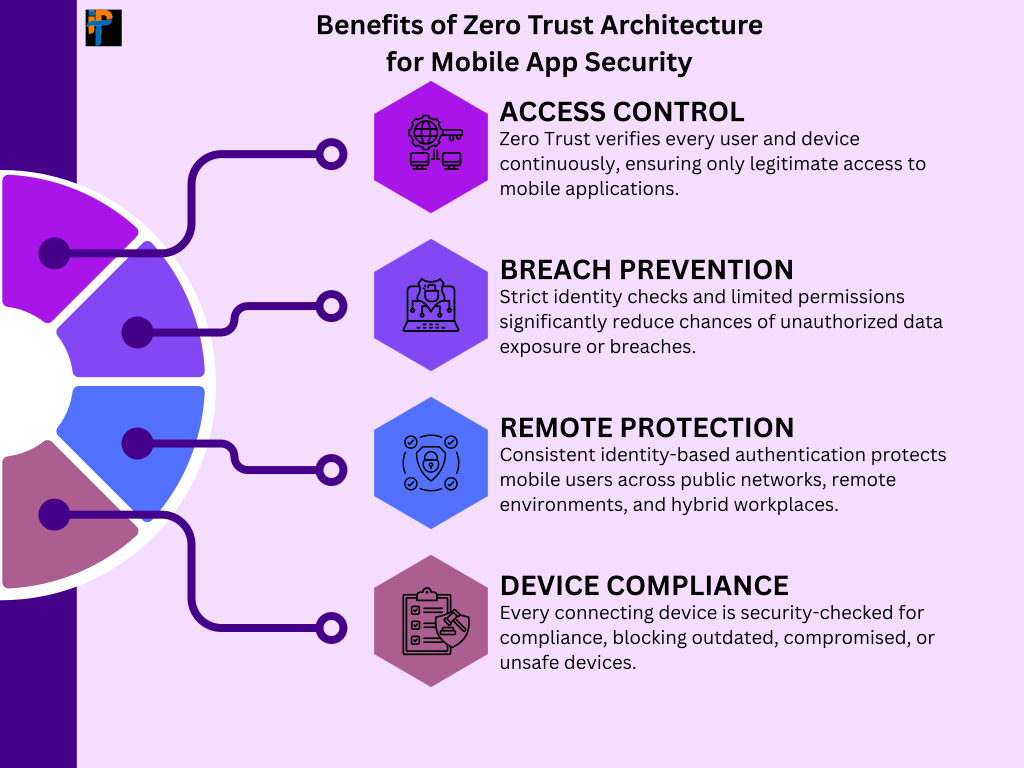
Let’s talk about what Zero Trust actually delivers for your organization:

Enhanced Security Posture

By eliminating implicit trust, you dramatically reduce your attack surface. Every access request faces scrutiny, making lateral movement nearly impossible for attackers. It’s like having a security checkpoint at every door instead of just the building entrance.

Improved Visibility

Zero Trust implementations provide unprecedented insight into your mobile app ecosystem. You’ll see exactly who’s accessing what, when, and from where. This granular visibility enables faster threat detection and more informed security decisions.

Reduced Breach Impact

When breaches do occur (and let’s be honest, no system is 100% impenetrable), micro-segmentation limits the blast radius. An attacker compromising one component doesn’t automatically gain access to your entire infrastructure.

Regulatory Compliance

Zero Trust principles align beautifully with regulatory requirements from GDPR, HIPAA, PCI-DSS, and others. The continuous monitoring, access logging, and data protection mechanisms inherent in Zero Trust make compliance demonstration straightforward.

Better User Experience

Paradoxically, stronger security often improves user experience. Adaptive authentication means low-risk activities flow seamlessly while only suspicious actions trigger additional verification. Users appreciate not jumping through hoops for routine tasks.

Business Agility

Zero Trust enables secure digital transformation. Whether you’re adopting cloud services, supporting remote workers, or launching new mobile initiatives, Zero Trust provides the security foundation to move fast without compromising safety.

Also read- Top 12 Tech Companies in the UAE for Your Next Project

Zero Trust for Compliance Meeting Regulatory Requirements

Navigating the alphabet soup of compliance frameworks can feel overwhelming, but Zero Trust actually simplifies the journey:

Regulation Zero Trust Alignment Key Benefits
GDPR Data minimization, access controls, audit trails Demonstrates technical measures for data protection, simplifies breach notification requirements
HIPAA Encryption, access logging, minimum necessary access Satisfies technical safeguards, administrative controls, and audit requirements
PCI-DSS Network segmentation, strong authentication, monitoring Meets requirements 1-12 including access control, network protection, and monitoring
SOC 2 Continuous monitoring, incident response, access management Addresses security, availability, confidentiality principles comprehensively
CCPA Data access controls, consumer rights management Enables consumer data access, deletion, and opt-out rights implementation

Documentation and Audit Trails

Zero Trust’s continuous logging creates comprehensive audit trails demonstrating compliance. Every access request, authentication attempt, and data modification gets recorded with contextual information including:

  • User identity and device information
  • Timestamp and geolocation
  • Resources accessed
  • Actions performed
  • Access decisions and justifications

This documentation proves invaluable during audits, reducing preparation time and demonstrating due diligence.

Risk Management Framework

Zero Trust operationalizes risk management by:

1. Identifying: Continuous asset discovery and classification
2. Assessing: Real-time risk scoring based on contextual factors
3. Mitigating: Automated policy enforcement and access decisions
4. Monitoring: Ongoing validation and anomaly detection

Challenges and Best Practices in Zero Trust Implementation

Let’s be real—implementing Zero Trust isn’t a walk in the park. Here are the common obstacles and how to overcome them:

Challenge 1: Organizational Resistance

Zero Trust requires cultural change. Teams accustomed to implicit trust may resist additional authentication steps and access restrictions.

Best Practice: Start with education. Help stakeholders understand the “why” behind Zero Trust. Demonstrate quick wins with pilot projects targeting high-risk areas. Involve users early in the design process to address usability concerns proactively.

Challenge 2: Legacy System Integration

Your shiny new Zero Trust architecture needs to coexist with existing systems that weren’t designed with these principles in mind.

Best Practice: Adopt a phased approach. Begin with new mobile apps and gradually extend Zero Trust controls to legacy systems. Use API gateways and reverse proxies as compatibility layers. Consider this a journey, not a destination.

Challenge 3: Performance Concerns

Additional authentication and encryption inevitably introduce latency. Users won’t tolerate sluggish apps, regardless of security benefits.

Best Practice: Optimize ruthlessly. Implement caching for authentication tokens, use efficient encryption algorithms, leverage edge computing for geographically distributed users, and continuously monitor performance metrics. Modern Zero Trust solutions, when properly implemented, add minimal overhead.

Challenge 4: Complexity Management

Zero Trust architectures involve numerous components—IAM systems, policy engines, monitoring platforms, encryption layers. Managing this complexity requires specialized expertise.

Best Practice: Leverage managed services and integrated platforms rather than building everything from scratch. Partner with experienced providers (like IPH Technologies) who’ve navigated these waters before. Invest in automation to reduce operational burden.

Best Practices Table:
Implementation Phase Best Practices Common Pitfalls to Avoid
Planning Conduct thorough risk assessment, define clear objectives, secure executive buy-in Underestimating scope, ignoring user experience, lacking clear success metrics
Deployment Start with pilot projects, implement gradually, maintain backward compatibility Big bang approach, insufficient testing, inadequate rollback plans
Operation Automate policy enforcement, continuously monitor and adjust, provide user training Manual processes, static policies, insufficient documentation
Optimization Gather feedback, measure performance, iterate based on lessons learned Set-it-and-forget-it mentality, ignoring metrics, resisting changes

Also read – Build a Fundable MVP in 2025: The Ultimate Founder’s Guide

How IPH Technologies Implements Zero Trust in Mobile App Development

At IPH Technologies, we don’t just talk about Zero Trust—we live it. With over 500 successful projects and 430+ satisfied clients, we’ve refined our approach to mobile app security through real-world experience.

Our Zero Trust Development Methodology

1. Security-First Architecture Design

We architect your mobile app with Zero Trust principles baked in from day one, not bolted on as an afterthought. Our design process includes:

  • Threat modeling specific to your business domain
  • Data flow mapping identifying sensitive information paths
  • Component isolation strategies for maximum segmentation
  • Defense-in-depth layering across all architectural tiers

2. Comprehensive Identity Management

We implement robust IAM frameworks tailored to your specific requirements:

  • Custom authentication flows balancing security and user experience
  • Integration with enterprise identity providers (Azure AD, Okta, Auth0)
  • Biometric authentication leveraging platform-specific capabilities
  • Contextual access decisions based on risk factors

3. Platform-Optimized Security

Whether you need iOS, Android, or cross-platform apps, we leverage native security features:

  • iOS: Keychain Services, Secure Enclave, App Attest
  • Android: Keystore System, SafetyNet, BiometricPrompt
  • Cross-platform: React Native security modules, Flutter secure storage

4. Advanced Monitoring and Analytics

We deploy comprehensive monitoring capturing security-relevant events:

  • Real-time threat detection using ML-powered analytics
  • Automated incident response workflows
  • Compliance reporting dashboards
  • Performance monitoring ensuring security doesn’t compromise user experience

5. Continuous Security Validation

Security isn’t a one-time checkbox—it’s an ongoing commitment:

  • Regular penetration testing and vulnerability assessments
  • Code reviews focused on security best practices
  • Dependency scanning for vulnerable third-party components
  • Security patch management and rapid response to emerging threats

Case Study Snapshot

We recently partnered with a fintech startup launching a mobile investment platform. Their requirements included:

  • Bank-level security for financial transactions
  • Seamless user experience for daily trading activities
  • Compliance with SEC and FINRA regulations
  • Scalability for rapid user growth

Our Zero Trust implementation delivered:

  • Zero security incidents in the first year of operation
  • 4.8-star app store ratings highlighting seamless experience
  • Full regulatory approval on first audit
  • Infrastructure scaling smoothly from 10,000 to 500,000 users

Why Choose IPH Technologies?

Proven Expertise: Our team brings decades of combined experience in mobile security and Zero Trust implementations across industries including finance, healthcare, retail, and enterprise.

Agile Methodology: We use iterative development approaches ensuring you see value quickly while maintaining flexibility to adapt to changing requirements.

End-to-End Support: From initial consultation through development, deployment, and ongoing maintenance, we’re your partner at every stage.

Technology Agnostic: We recommend the best solutions for your specific needs rather than pushing proprietary technologies.
Commitment to Excellence: Our track record of 500+ successful projects speaks to our dedication to delivering exceptional results on time and within budget.

Ready to future-proof your mobile app with Zero Trust security? Contact IPH Technologies today for a consultation tailored to your unique requirements.

Conclusion: Future-Proof Your Mobile App with Zero Trust

We’ve covered a lot of ground, haven’t we? From understanding Zero Trust fundamentals to exploring real-world implementations, one thing should be crystal clear: Zero Trust Architecture isn’t just a buzzword—it’s the security foundation your mobile apps need to thrive in 2025 and beyond.

The mobile threat landscape will only grow more sophisticated. Attackers are investing heavily in new techniques specifically targeting mobile applications. The question isn’t whether your app will be targeted, but when. Zero Trust provides the resilience to withstand these inevitable attacks and the agility to adapt to emerging threats.

Remember, implementing Zero Trust is a journey, not a destination. Start with assessment, prioritize based on risk, implement incrementally, and continuously improve. You don’t need to boil the ocean on day one—focus on protecting your most critical assets first and expand from there.

The organizations thriving in our interconnected world are those treating security as an enabler of innovation rather than an obstacle. Zero Trust architecture allows you to move fast without breaking things, to embrace cloud and mobile technologies while protecting what matters most, and to build trust with users by demonstrating your commitment to their security.

Whether you’re launching a new mobile app or modernizing an existing one, now is the time to embrace Zero Trust principles. Your users’ data, your brand reputation, and your business continuity depend on it.

Ready to take the next step? Partner with experts who’ve walked this path before. At IPH Technologies, we’re committed to helping you navigate the complexities of Zero Trust implementation, delivering secure, high-performing mobile applications that exceed your expectations.

FAQs: Zero Trust Architecture for Mobile Apps

How long does it take to implement Zero Trust Architecture in a mobile app?
Implementation timelines vary based on app complexity and existing infrastructure. Simple consumer apps can achieve basic Zero Trust principles in 3-4 months, while enterprise applications may require 6-9 months. At IPH Technologies, we adopt a phased approach—delivering initial Zero Trust capabilities within the first sprint for immediate security improvements.
Does Zero Trust Architecture slow down my mobile app's performance?
When properly implemented, Zero Trust adds minimal overhead—typically just milliseconds for authentication checks. Modern cryptographic algorithms and efficient caching ensure security doesn’t compromise user experience. Many clients actually report improved performance because adaptive authentication reduces friction for routine activities.
What's the cost difference between traditional security and Zero Trust implementation?
Zero Trust requires upfront investment but significantly reduces long-term costs. Organizations report 50-70% reductions in security incidents, dramatically lowering breach remediation costs (averaging $4.45 million per incident). Zero Trust automation also reduces operational overhead and simplifies compliance, making it more cost-effective than treating breaches after they occur.
Can IPH Technologies retrofit Zero Trust into my existing mobile app?
Absolutely! You don’t need to rebuild from scratch. IPH Technologies specializes in retrofitting Zero Trust to existing applications through strategic updates—implementing controls at the API gateway level, enhancing authentication, and strengthening encryption. We’ve successfully added Zero Trust capabilities to mature apps with minimal disruption.
How does Zero Trust affect the mobile app user experience?
Done right, Zero Trust improves user experience by providing adaptive security that’s invisible during normal usage. Users enjoy seamless authentication through biometrics for routine activities, while suspicious behavior triggers additional verification. It’s like TSA PreCheck—trusted users flow through quickly, while anomalies receive appropriate scrutiny.
What's the difference between Zero Trust and multi-factor authentication (MFA)?
MFA is one component of Zero Trust, not a replacement. MFA strengthens authentication by requiring multiple verification factors. Zero Trust goes much further—encompassing continuous verification, least privilege access, micro-segmentation, and real-time monitoring across your entire application infrastructure.
How does IPH Technologies handle offline functionality in Zero Trust mobile apps?
At IPH Technologies, we implement smart strategies for offline scenarios: pre-authenticated token caching for limited offline access, local encryption of cached data, and synchronization verification when connectivity returns. The specific approach depends on your app’s requirements—banking apps need stricter controls than productivity tools.
What compliance standards does Zero Trust help meet?
Zero Trust aligns with all major security regulations including GDPR, HIPAA, PCI-DSS, SOC 2, CCPA, NIST frameworks, and ISO 27001. The continuous logging and access control inherent in Zero Trust simplify compliance demonstration, often reducing audit preparation time by 60-70%.
Avatar
Shashi Mishra

Verified CTO

About the Author

I’m Shashi Mishra, CTO at IPH Technologies. I build secure, reliable, future-ready digital products that solve real problems without unnecessary complexity. My work focuses on AI-driven development, cloud-native architecture, and a strict compliance-first approach, ensuring every product meets global security, performance, and regulatory standards. I’ve helped companies modernize systems, integrate AI, and scale platforms with clean engineering and strong user experience. I enjoy working with teams and founders who want to innovate fast while maintaining quality and trust.


WhatsApp
Call us
Get a Call Back