





















































Highlights
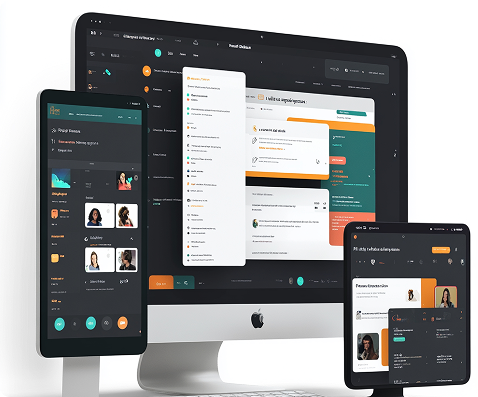
UI/UX Design
User-first, visually engaging interfaces crafted to enhance usability, boost engagement, and deliver seamless digital experiences.
Branding
Strategic brand identities that communicate your vision, build trust, and create a memorable presence across all touchpoints.
Wireframing
Structured layouts and user flows that map the product journey clearly before development begins, saving time and cost.
Prototype Design
Interactive prototypes that simulate real user interactions, helping validate ideas and refine experiences early.
Design Systems
Scalable design frameworks and reusable components that ensure consistency, speed, and efficiency across your product.
UI/UX Design

We design intuitive, user-centric interfaces that enhance engagement, improve usability, and deliver seamless digital experiences across all devices.

UI UX Design
  • User research and wireframing for clear flows
  • Modern UI design using Figma and Adobe XD
  • Interactive prototypes for better user experience testing
  • Usability testing and performance optimization improvements
  • Responsive design across all devices and screens
  • Scalable design systems with reusable UI components
Branding & Identity

We craft strong brand identities that communicate your vision, build trust, and create a lasting impression across all digital and offline touchpoints.

Branding and Identity
  • Logo design and brand identity creation
  • Brand guidelines and visual consistency systems
  • Color palette and typography selection strategy
  • Marketing materials and brand asset design
  • Social media branding and creative direction
  • Rebranding and brand positioning strategies
Wireframing

We create structured wireframes that define layout, user flow, and functionality, helping visualize ideas and build a strong foundation before design and development.

Wireframing
  • Low fidelity wireframes for initial structure
  • High fidelity wireframes with detailed layouts
  • User flow mapping for better navigation
  • Content hierarchy and layout planning
  • Clickable wireframes for early feedback
  • Clear structure before UI design phase
Prototype Design

We design interactive prototypes that simulate real user experiences, helping validate ideas, test functionality, and refine products before development.

Prototype Design
  • Interactive prototypes for real user experience
  • Clickable designs to test product functionality
  • User journey simulation for better understanding
  • Rapid prototyping for faster design validation
  • Feedback driven improvements before development
  • High fidelity prototypes with smooth interactions
Design Systems

We build scalable design systems that ensure consistency, improve collaboration, and accelerate product development across all platforms and teams.

Design Systems
  • Reusable UI components for consistent design
  • Design tokens for colors typography spacing
  • Component libraries for faster development workflow
  • Consistent branding across all digital products
  • Documentation for design and development teams
  • Scalable systems for growing product ecosystems
Highlights
Mobile Apps Development
High-performance Android and iOS mobile applications built with modern technologies, delivering seamless user experiences and robust functionality.
Desktop Application Dev
Powerful and secure desktop applications tailored for Windows, macOS, and Linux, designed for performance, scalability, and reliability.
Web App Development
Scalable and responsive web applications using modern frameworks like React, Angular, and Vue for fast, dynamic, and engaging experiences.
Cross-Platform
Cost-effective cross-platform solutions using Flutter and React Native, enabling a single codebase for both iOS and Android platforms.
PWA Development
Progressive Web Apps that combine the best of web and mobile, offering offline access, fast loading, and app-like experiences directly in the browser.
Highlights
Mobile App

Android

iOS

Flutter

Hybrid

Optimize

Native

Swift

Firebase

Android App Development

We craft powerful, scalable Android applications with intuitive UX, high performance, and deep integration with Google services.

Android App
  • Custom Android app development
  • Native Kotlin & Java apps
  • Google Play Store deployment
  • Material Design UI implementation
Kotlin

Kotlin

Java

Java

Flutter

Flutter

Android Studio

Android

Jetpack

Jetpack

iOS App Development

We build high-quality, user-centric iOS apps combining performance, security, and seamless design for Apple devices.

iOS App
  • Custom iOS app development
  • Native Swift & SwiftUI apps
  • Seamless Apple service integration
  • App Store review & deployment
Swift

Swift

SwiftUI

SwiftUI

Obj-C

Obj-C

Xcode

Xcode

Flutter

Flutter

Cross-Platform Apps

We develop cross-platform mobile apps that run flawlessly on both iOS and Android from a single codebase, saving time and cost.

Cross-Platform App
  • Single codebase for iOS & Android
  • Flutter & React Native development
  • Native-like performance & UI
  • Faster time-to-market
React Native

React Native

TypeScript

TypeScript

Redux

Redux

Firebase

Firebase

Dart

Dart

Hybrid Apps

We build hybrid mobile apps that blend web technologies with native capabilities, delivering broad reach and cost-effective development.

Hybrid App
  • Web + native feature integration
  • Ionic & Cordova frameworks
  • Reduced development costs
  • Multi-platform publishing
Flutter

Flutter

Dart

Dart

Firebase

Firebase

SQLite

SQLite

App Optimization

We enhance existing mobile apps with performance tuning, crash fixes, battery efficiency, and faster load times for a superior user experience.

App Optimization
  • Performance profiling & tuning
  • Memory & battery optimization
  • Crash analysis & bug fixing
  • App size reduction & load speed
Xcode

Xcode

Android Studio

Android

Firebase

Firebase

Java

Java

Highlights
Desktop App

Windows

macOS

Linux

Desktop

Electron

Qt

WinForms

GTK

Windows Apps

We develop robust Windows desktop applications using modern Microsoft technologies, delivering powerful tools for enterprise and consumer use.

Windows App
  • Custom Windows desktop applications
  • WPF & WinForms development
  • Microsoft Store deployment
  • Windows API & system integration
C#

C#

.NET

.NET

Electron

Electron

Visual Studio

Visual Studio

SQL Server

SQL Server

macOS Apps

We create elegant, high-performance macOS applications that leverage Apple's native frameworks for a smooth and delightful desktop experience.

macOS App
  • Native macOS app development
  • SwiftUI & AppKit integration
  • Mac App Store submission
  • Apple Silicon optimization
Swift

Swift

SwiftUI

SwiftUI

Obj-C

Obj-C

Xcode

Xcode

Cross-Platform Desktop

We develop cross-platform desktop applications that run seamlessly on Windows, macOS, and Linux from a single shared codebase.

Cross-Platform Desktop
  • Single codebase for all platforms
  • Electron & Tauri frameworks
  • Flutter for desktop support
  • Consistent UI across OS environments
Flutter

Flutter

Electron

Electron

Node.js

Node.js

TypeScript

TypeScript

Docker

Docker

Electron Apps

We build feature-rich Electron desktop apps using web technologies, enabling cross-platform deployment with native OS capabilities.

Electron App
  • Electron framework development
  • Node.js & Chromium integration
  • Auto-updater & native notifications
  • Cross-OS packaging & distribution
Electron

Electron

Node.js

Node.js

React

React

Vue

Vue

TypeScript

TypeScript

Highlights
Web App

React

Node.js

PHP

Laravel

Python

MySQL

JavaScript

HTML

CSS

React Development

We build fast, component-driven React web applications with modern state management, reusable UI, and seamless API integration.

React Development
  • Custom React SPA development
  • Redux & Context API state management
  • Next.js SSR & SSG support
  • REST & GraphQL API integration
React

React

Next.js

Next.js

Redux

Redux

TypeScript

TypeScript

Tailwind

Tailwind

Angular Development

We develop enterprise-grade Angular applications with structured architecture, two-way data binding, and robust TypeScript foundations.

Angular Development
  • Custom Angular SPA development
  • RxJS & NgRx state management
  • Angular Material UI components
  • Lazy loading & performance tuning
Angular

Angular

TypeScript

TypeScript

HTML

HTML

CSS

CSS

NPM

NPM

Node.js Backend

We build scalable, event-driven Node.js backends with RESTful APIs, real-time capabilities, and seamless database integrations.

Node.js Backend
  • RESTful & GraphQL API development
  • Express.js & Fastify frameworks
  • WebSocket & real-time features
  • MongoDB, PostgreSQL integration
Node.js

Node.js

Express

Express

MongoDB

MongoDB

GraphQL

GraphQL

Docker

Docker

Cloud Web Apps

We design and deploy cloud-native web applications on AWS, Azure, and GCP — scalable, secure, and built for high availability.

Cloud Web Apps
  • AWS, Azure & GCP deployment
  • Serverless architecture development
  • Auto-scaling & load balancing
  • CI/CD pipeline configuration
AWS

AWS

Azure

Azure

GCP

GCP

Docker

Docker

Kubernetes

Kubernetes

Full-Stack Dev

We deliver complete full-stack web solutions — from pixel-perfect frontends to robust backends — as a unified, end-to-end product.

Full-Stack Dev
  • Frontend & backend development
  • MERN & MEAN stack expertise
  • Database design & API architecture
  • DevOps, hosting & deployment
React

React

Node.js

Node.js

MongoDB

MongoDB

PostgreSQL

PostgreSQL

Docker

Docker

Highlights
Cross Platform

Flutter

R. Native

Xamarin

Ionic

Reuse

Electron

NW.js

Framework7

SwiftUI

Flutter Development

We build beautiful, natively compiled Flutter applications for mobile, web, and desktop from a single Dart codebase with pixel-perfect UI.

Flutter Development
  • Flutter mobile & web apps
  • Dart language development
  • Custom widget & animation creation
  • Firebase & REST API integration
Flutter

Flutter

Dart

Dart

Firebase

Firebase

GetX

GetX

Riverpod

Riverpod

React Native

We develop high-performance React Native apps that deliver a truly native experience on both iOS and Android using JavaScript and React.

React Native
  • Cross-platform iOS & Android apps
  • React Native CLI & Expo development
  • Native module & bridge integration
  • Redux & MobX state management
React Native

React Native

Redux

Redux

TypeScript

TypeScript

Firebase

Firebase

Xamarin

We develop Xamarin-based cross-platform apps using C# and .NET, enabling shared business logic across iOS, Android, and Windows.

Xamarin
  • Xamarin.Forms & MAUI apps
  • Shared C# codebase development
  • Native API access via bindings
  • Enterprise app integration
Xamarin

Xamarin

C#

C#

.NET MAUI

.NET

Azure

Azure

Visual Studio

Visual Studio

Ionic Framework

We create stunning Ionic applications that combine the power of web technologies with native device features for a seamless mobile experience.

Ionic Framework
  • Ionic Angular & React apps
  • Capacitor native plugin integration
  • Responsive mobile-first UI
  • PWA & hybrid app deployment
Ionic

Ionic

Angular

Angular

React

React

Vue

Vue

Code Reusability

We build reusable app architectures, reducing duplication, accelerating development, and ensuring seamless cross-platform consistency.

Code Reusability
  • Shared component library creation
  • Monorepo architecture setup
  • Design system implementation
  • Platform-agnostic business logic
Turborepo

Turborepo

Storybook

Storybook

Flutter

Flutter

React Native

React Native

Highlights
PWA

PWA

Offline

Push

Fast

App-Like

IndexedDB

Installable

Sync

Progressive Web Apps

We build Progressive Web Apps that combine the best of web and mobile — installable, reliable, and fast across all devices and browsers.

Progressive Web Apps
  • PWA architecture & manifest setup
  • Service worker implementation
  • Installable & home screen support
  • Cross-browser compatibility
HTML5

HTML5

CSS3

CSS3

JavaScript

JavaScript

Workbox

Workbox

Lighthouse

Lighthouse

Offline Support

We implement robust offline capabilities in your web apps using service workers and smart caching so users stay productive without connectivity.

Offline Support
  • Service worker caching strategies
  • IndexedDB offline data storage
  • Background sync implementation
  • Graceful offline fallback pages
Service Worker

ServiceWorker

Workbox

Workbox

IndexedDB

IndexedDB

Cache API

Cache API

Background Sync

BackgroundSync

Push Notifications

We integrate web push notification systems into your PWA to re-engage users with timely, personalized alerts even when the app is not open.

Push Notifications
  • Web Push API implementation
  • VAPID key & subscription management
  • Notification scheduling & targeting
  • Cross-browser push support
Web Push

Web Push

Firebase FCM

Firebase

OneSignal

OneSignal

Node.js

Node.js

Workbox

Workbox

Fast Loading

We optimize PWAs for lightning-fast load times using code splitting, lazy loading, and caching to deliver exceptional Core Web Vitals scores.

Fast Loading
  • Code splitting & lazy loading
  • Image & asset optimization
  • Core Web Vitals improvement
  • CDN & caching configuration
Webpack

Webpack

Lighthouse

Lighthouse

Vite

Vite

Cloudflare

Cloudflare

Workbox

Workbox

App-Like Experience

We craft PWAs that feel and behave like native mobile apps — with smooth animations, full-screen mode, gestures, and seamless transitions.

App-Like Experience
  • Full-screen & standalone display mode
  • Touch gestures & swipe navigation
  • Smooth page transitions & animations
  • App shell architecture
Web Manifest

Web Manifest

CSS Animations

CSS

Framer Motion

FramerMotion

React

React

Vue

Vue

Highlights
Custom Software
Fully tailored software solutions designed to match your unique business processes, improving efficiency and driving long-term growth.
Backend Systems
Robust and secure backend architectures built for high performance, scalability, and seamless integration with your applications.
Database Design
Efficient and scalable database structures optimized for fast queries, data integrity, and reliable performance at scale.
Cloud-Native
Modern cloud-native solutions using microservices and serverless architecture on AWS, Azure, and GCP for maximum flexibility and scalability.
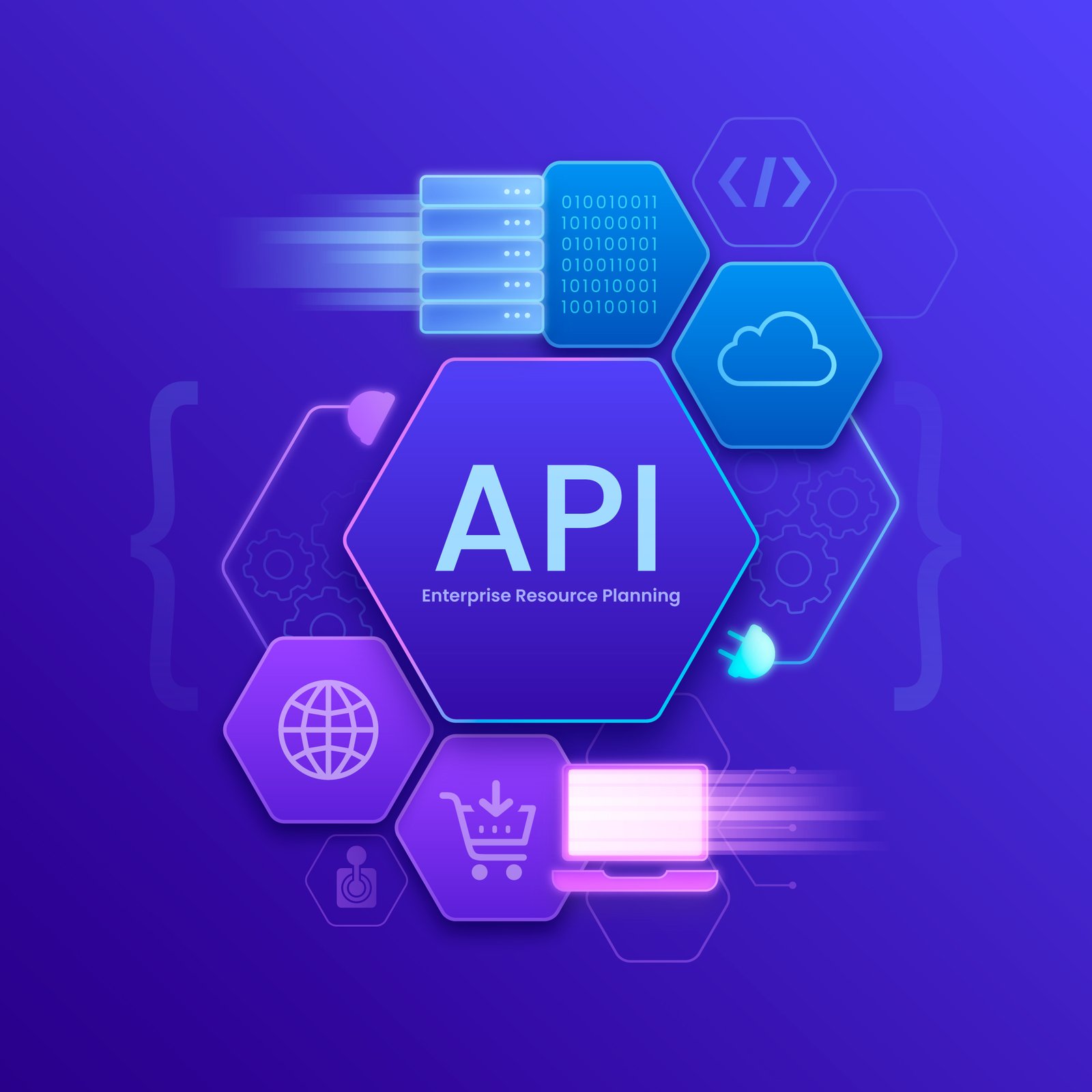
API Development
Secure and well-documented RESTful and GraphQL APIs that enable seamless communication between systems and third-party integrations.
Custom Software

We develop tailored software solutions that align with your business goals, streamline operations, and deliver scalable, high-performance digital systems.

Custom Software Development
  • Custom software tailored to business needs
  • Scalable architecture for long term growth
  • Secure and high performance application development
  • API integration with third party services
  • Cloud based and enterprise software solutions
  • Ongoing maintenance and system optimization support
Backend Systems

We build robust backend systems that power applications with secure, scalable architecture, efficient data handling, and seamless integrations.

Backend Systems
  • Secure backend architecture and system design
  • Database design and performance optimization
  • API development for seamless integrations
  • Authentication and authorization system implementation
  • Server side logic and business workflows
  • Scalable infrastructure for high traffic applications
Database Design

We design efficient database structures that ensure data integrity, optimize performance, and support scalable, reliable application systems.

Database Design
  • Structured database schema design and planning
  • Efficient data modeling for scalable systems
  • Database optimization for faster query performance
  • Relational and non relational database solutions
  • Secure data storage and access management
  • Backup strategies and data recovery solutions
Cloud-Native Apps

We build cloud-native applications designed for scalability, resilience, and flexibility using modern cloud infrastructure and microservices architecture.

Cloud Native Apps
  • Cloud first architecture for scalable applications
  • Microservices based system design and deployment
  • Containerization using Docker and Kubernetes tools
  • Auto scaling infrastructure for high availability
  • Continuous integration and continuous deployment pipelines
  • Secure cloud environments with monitoring and logging
API Development

We develop secure and scalable APIs that enable seamless communication between systems, applications, and third party services.

API Development
  • RESTful API development for web applications
  • Secure API authentication and authorization systems
  • Third party API integration and data exchange
  • Scalable APIs for high traffic applications
  • API documentation for easy developer integration
  • Performance optimization and API response tuning
Highlights
Manual Testing
Detailed human-driven testing to uncover edge cases, validate user flows, and ensure a seamless, intuitive user experience.
Test Automation
Automated testing frameworks using Selenium, Cypress, and Appium to accelerate regression cycles and improve release confidence.
Performance
Load, stress, and scalability testing to ensure your application performs reliably under high traffic and demanding conditions.
Security Testing
Comprehensive security assessments including penetration testing and vulnerability analysis to safeguard your application.
Mobile QA
End-to-end mobile application testing across devices and platforms to ensure consistent performance, usability, and stability.
Manual Testing

We perform detailed manual testing to ensure software quality, identify issues early, and deliver reliable, user-friendly applications.

Manual Testing
  • Functional testing for application core features
  • UI testing for consistent user experience
  • Cross browser and device compatibility testing
  • Test case creation and execution processes
  • Bug tracking and detailed issue reporting
  • Regression testing after feature updates
Test Automation

We implement automated testing solutions to improve efficiency, reduce manual effort, and ensure faster, reliable software delivery.

Test Automation
  • Automated test scripts for faster execution
  • Regression testing using automation frameworks
  • Continuous testing within CI CD pipelines
  • Test coverage improvement across application modules
  • Reusable automation scripts for long term scalability
  • Performance and load testing automation solutions
Performance Testing

We evaluate application performance to ensure speed, stability, and scalability under different workloads and real-world conditions.

Performance Testing
  • Load testing for high traffic scenarios
  • Stress testing to identify system limits
  • Performance benchmarking and response time analysis
  • Scalability testing for growing user demands
  • Memory and resource usage optimization checks
  • Bottleneck identification and performance improvements
Security Testing

We identify vulnerabilities and secure applications against threats, ensuring data protection, compliance, and safe user interactions.

Security Testing
  • Vulnerability assessment and risk analysis testing
  • Penetration testing to identify security gaps
  • Authentication and authorization security validation
  • Data protection and encryption testing processes
  • Secure code review and security best practices
  • Compliance testing with industry security standards
Mobile QA

We ensure mobile applications deliver flawless performance, usability, and compatibility across devices, platforms, and environments.

Mobile QA
  • Mobile app testing across multiple devices
  • iOS and Android platform compatibility testing
  • UI testing for consistent mobile experience
  • Network and performance testing on mobile
  • App usability and user experience validation
  • App store readiness and release testing
Highlights
CI/CD Pipelines
Automated pipelines for building, testing, and deploying code, enabling faster releases, fewer errors, and continuous delivery.
Infrastructure
Scalable infrastructure provisioning using Infrastructure as Code (IaC) with Terraform and CloudFormation for consistency and reliability.
Deployment
Zero-downtime deployment strategies including blue-green and rolling deployments to ensure smooth and reliable releases.
Containerisation
Container-based architectures using Docker and Kubernetes for portability, scalability, and efficient resource utilization.
Monitoring
Real-time monitoring and observability using tools like Grafana, Prometheus, and Datadog to ensure system health and performance.
CI/CD Pipelines

We implement CI/CD pipelines to automate build, testing, and deployment, enabling faster releases, improved quality, and continuous delivery.

CI CD Pipelines
  • Automated build and deployment pipeline setup
  • Continuous integration for faster code validation
  • Continuous delivery for seamless release cycles
  • Integration with Git version control systems
  • Automated testing within CI CD workflows
  • Monitoring and rollback strategies for deployments
Infrastructure

We design and manage reliable infrastructure to ensure scalability, security, and high availability for modern applications and systems.

Infrastructure
  • Cloud infrastructure setup and configuration services
  • Server management and deployment automation solutions
  • High availability and load balancing implementation
  • Monitoring and logging for system performance tracking
  • Security hardening and infrastructure access controls
  • Scalable environments for growing application demands
Deployment

We manage seamless deployment processes to ensure applications are delivered efficiently, securely, and ready for production environments.

Deployment
  • Application deployment to cloud and servers
  • Automated deployment workflows for faster releases
  • Environment configuration and setup management
  • Version control and release management processes
  • Rollback strategies for safe deployment updates
  • Post deployment monitoring and performance checks
Containerization

We use containerization to package applications for consistency, scalability, and efficient deployment across different environments.

Containerization
  • Application containerization using Docker technologies
  • Environment consistency across development and production
  • Container orchestration with Kubernetes platforms
  • Scalable container deployment for microservices architecture
  • Efficient resource utilization and system isolation
  • Integration with CI CD pipelines for automation
Monitoring

We monitor systems and applications in real time to ensure performance, reliability, and quick issue detection and resolution.

Monitoring
  • Real time system performance monitoring tools
  • Application health checks and uptime tracking
  • Error tracking and issue alerting systems
  • Log management and analysis for debugging
  • Resource usage monitoring across infrastructure layers
  • Proactive issue detection and incident response
Highlights
Roadmap Planning
Strategic product roadmaps aligned with business goals, helping prioritize features, manage timelines, and deliver maximum value.
Team Coordination
Efficient coordination across design, development, and QA teams to ensure smooth collaboration and on-time project delivery.
Growth Strategy
Data-driven product strategies focused on user acquisition, retention, and continuous improvement to drive sustainable growth.
Agile Sprints
Agile methodologies like Scrum and Kanban to deliver iterative releases, improve flexibility, and maintain predictable progress.
Stakeholder Mgmt
Clear communication and alignment with stakeholders through regular updates, reporting, and feedback loops to ensure project success.
Roadmap Planning

We create strategic roadmaps that align with your business goals, helping prioritize features, plan execution, and ensure long-term success.

Roadmap Planning
  • Product roadmap planning aligned with business objectives
  • Feature prioritization based on user and market needs
  • Timeline planning for efficient project execution phases
  • Technology stack selection for scalable solutions
  • Risk assessment and mitigation strategy planning
  • Continuous roadmap updates based on performance insights
Team Coordination

We ensure smooth collaboration across teams to improve productivity, streamline workflows, and deliver projects efficiently on time.

Team Coordination
  • Cross functional team collaboration and communication
  • Agile workflow management and sprint planning processes
  • Task tracking and project progress visibility tools
  • Clear role assignment and responsibility management
  • Regular updates and performance review meetings
  • Efficient coordination between design development teams
Growth Strategy

We develop data-driven growth strategies to scale your business, increase user acquisition, and maximize long-term revenue potential.

Growth Strategy
  • Market analysis and competitive growth planning strategies
  • User acquisition and retention optimization techniques
  • Data driven decision making and performance insights
  • Scalable business models for long term expansion
  • Conversion rate optimization across digital platforms
  • Continuous growth tracking and strategy refinement
Agile Sprints

We follow agile sprint methodologies to deliver faster iterations, improve collaboration, and ensure continuous product improvement.

Agile Sprints
  • Sprint planning and backlog prioritization processes
  • Daily standups for team alignment and progress tracking
  • Iterative development with continuous feedback cycles
  • Task management using agile tools and workflows
  • Regular sprint reviews and performance retrospectives
  • Faster delivery with incremental feature releases
Stakeholder Management

We ensure clear communication and alignment with stakeholders to drive project success, transparency, and informed decision making.

Stakeholder Management
  • Regular stakeholder communication and reporting processes
  • Requirement alignment with business goals and expectations
  • Feedback collection and continuous improvement strategies
  • Transparent project updates and progress visibility
  • Risk identification and stakeholder expectation management
  • Collaborative decision making for project success

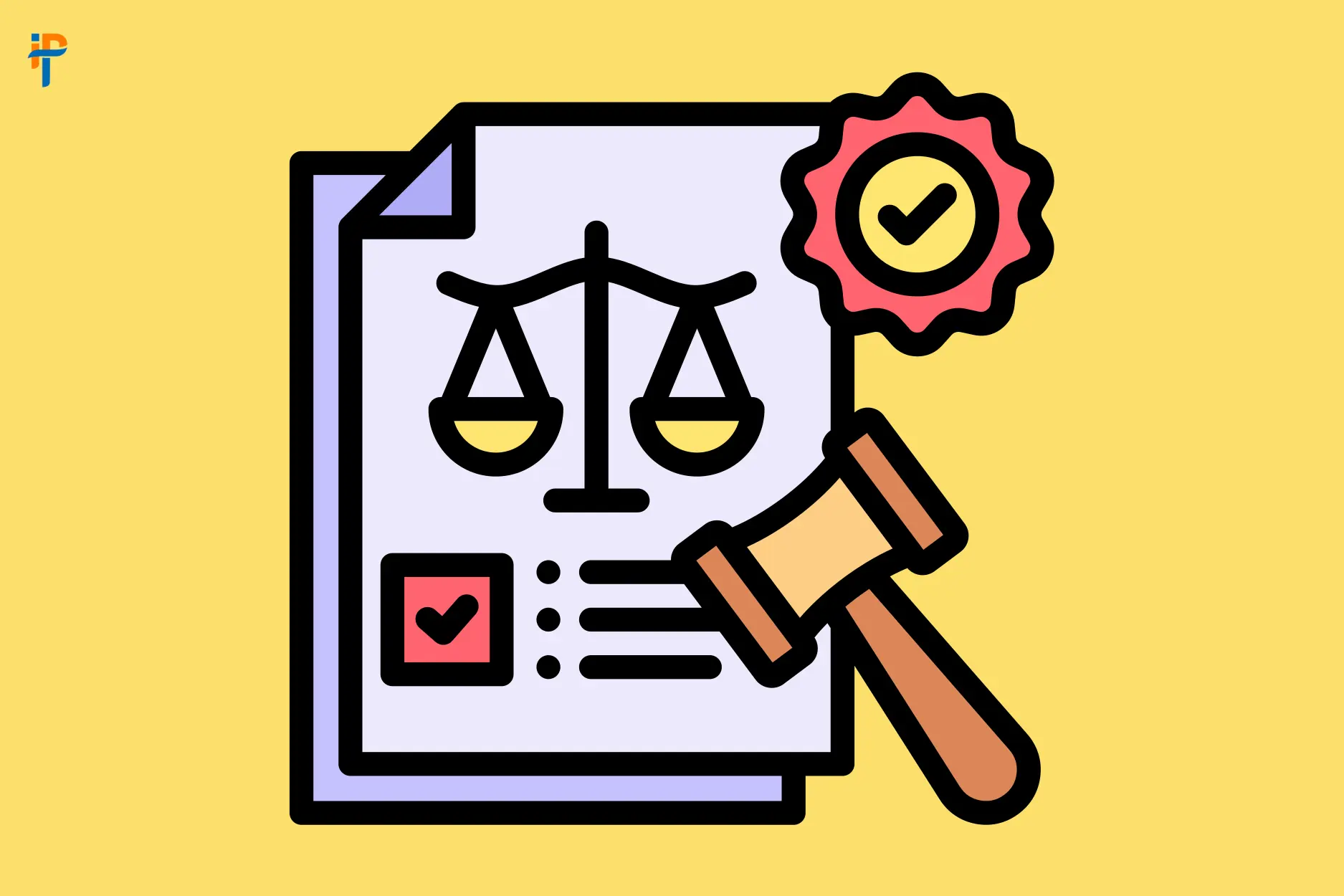
2026 Mobile App Compliance Guide for Founders — GDPR, HIPAA, COPPA, PCI , App Store Rules & More

Picture this: you’ve spent a year building a groundbreaking mobile app. Your UX is polished, your investors are excited, and your launch date is circled on every office calendar. Then — bam — you get a cease-and-desist from a data protection authority because your app wasn’t GDPR-compliant. All that blood, sweat, and late-night debugging sessions, potentially undone by something you didn’t even know you were supposed to check.

Sound terrifying? It is — and it happens more often than you’d think. The good news? Compliance doesn’t have to be your nemesis. In fact, building a compliant app in 2026 is one of the smartest competitive advantages a founder can have. Users trust compliant apps. App stores favor them. And investors love them.

This guide is your comprehensive, no-jargon, founder-friendly roadmap to navigating GDPR, HIPAA, App Store rules, and every major compliance framework you’ll encounter in 2026. Let’s get into it.

Why Mobile App Compliance Is Non-Negotiable in 2026

Let’s not sugarcoat it — the regulatory environment for mobile apps has never been more intense. Global regulatory fines for data breaches and non-compliance exceeded $4.5 billion in 2023 alone, and that number has only climbed heading into 2026. According to Statista, there are now over 6.8 billion smartphone users globally, meaning your app operates in a world where regulators from Brussels to California are watching very closely.

But compliance isn’t just about avoiding penalties. It’s about:

  • User Trust: 87% of consumers say they won’t use an app they don’t trust with their data (PwC Consumer Intelligence Series).
  • Market Access: Non-compliant apps get delisted from Google Play and the Apple App Store — killing your distribution overnight.
  • Investor Confidence: Venture capitalists and private equity firms now routinely perform compliance due diligence before writing checks.
  • Long-Term Scalability: A compliance-first foundation makes it exponentially easier to expand into new markets.

Think of compliance like the foundation of a house. Nobody praises the foundation — but without it, everything collapses.

Also Read – Build a Fundable MVP in 2026: The Ultimate Founder’s Guide

Understanding the Global Compliance Landscape

Key Regulations That Define App Compliance in 2026
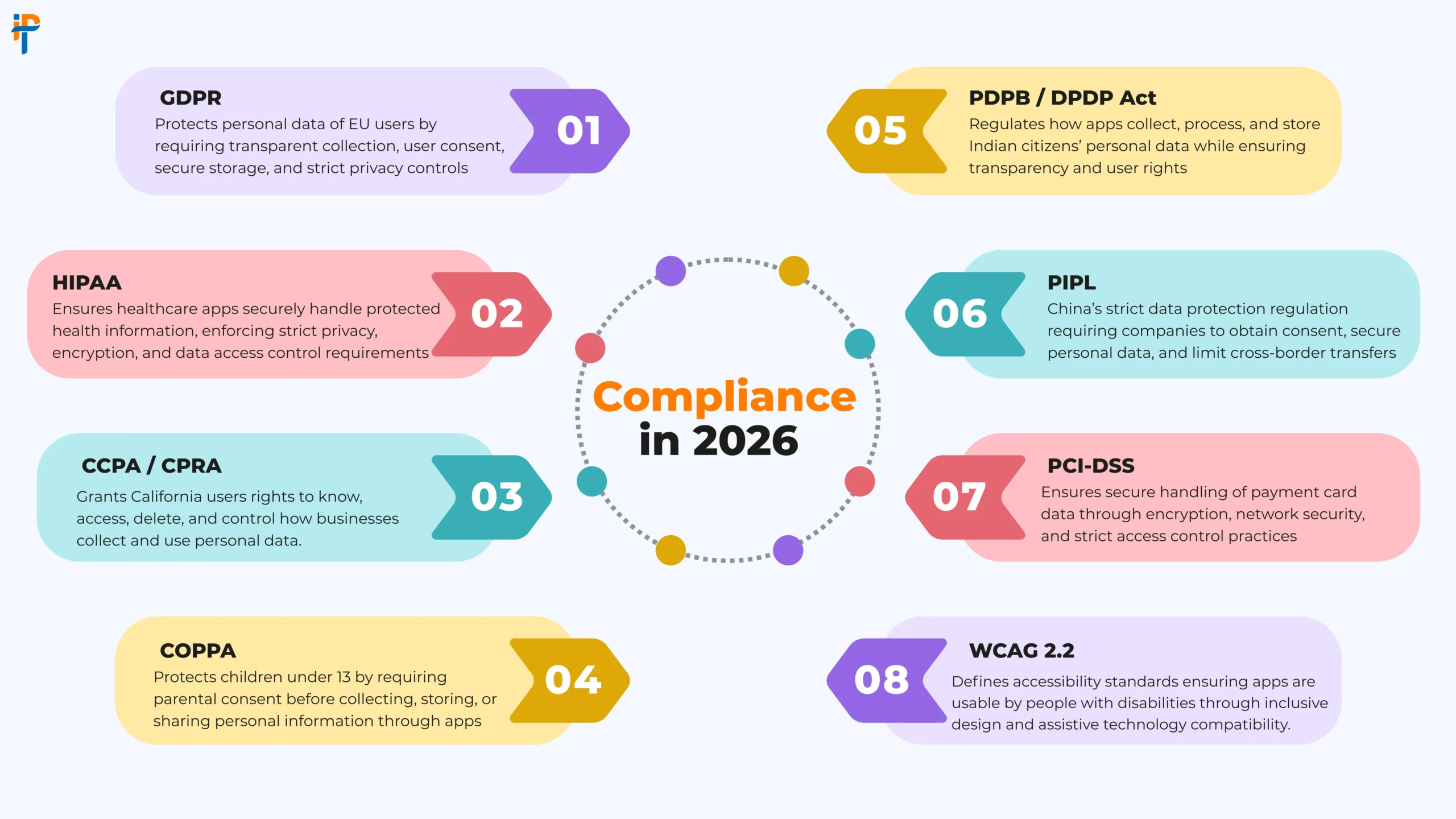
The regulatory landscape is a patchwork quilt, and founders need to understand which patches apply to them. Here’s a high-level breakdown of the major frameworks you’ll encounter:

RegulationJurisdictionApplies ToKey Authority
GDPREuropean Union / UKAny app processing EU/UK user dataEuropean Data Protection Board (EDPB)
HIPAAUnited StatesHealth/medical apps handling PHIHHS Office for Civil Rights
CCPA/CPRACalifornia, USAApps with 100K+ CA users or $25M+ revenueCalifornia Privacy Protection Agency
COPPAUnited StatesApps targeting children under 13Federal Trade Commission (FTC)
PDPBIndiaApps processing Indian user dataData Protection Board of India
PIPLChinaApps processing Chinese citizens’ dataCyberspace Administration of China
PCI-DSSGlobalApps handling payment card dataPCI Security Standards Council
WCAG 2.2Global (ADA/EAA aligned)All consumer-facing appsVarious accessibility authorities

How Regulations Vary by Region and Industry

Here’s something that trips up a lot of founders: compliance isn’t one-size-fits-all. A fitness app targeting EU users faces entirely different obligations than a telemedicine app serving U.S. patients. The intersection of geography (where your users are), industry (healthcare, finance, education), and user demographics (adults vs. children) determines your compliance matrix.

The safest approach? Design for the strictest applicable standard, and you’ll typically be covered across the board.

GDPR Compliance for Mobile Apps — Everything You Need to Know

The General Data Protection Regulation is the gold standard of privacy law — and the one most global founders will encounter first. If your app collects data from anyone in the EU or UK, GDPR applies to you, regardless of where your company is headquartered.

Core GDPR Principles Every Founder Must Understand

GDPR is built on seven foundational principles, as outlined by the European Data Protection Board:

  • Lawfulness, Fairness & Transparency — Users must know what you’re collecting and why.
  • Purpose Limitation — Data collected for one purpose can’t be repurposed without fresh consent.
  • Data Minimisation — Only collect what you actually need.
  • Accuracy— Keep user data accurate and up to date.
  • Storage Limitation — Don’t hold data longer than necessary.
  • Integrity & Confidentiality — Implement appropriate security.
  • Accountability — Be able to demonstrate compliance.

Think of these as the “7 Commandments” of GDPR. Violate them, and you’re looking at fines of up to €20 million or 4% of global annual turnover — whichever is higher.

Also Read – AI App Development Cost in 2025: From MVPs to Full-Scale Solutions

Consent Management and Data Subject Rights

GDPR consent must be freely given, specific, informed, and unambiguous. That cookie banner you see on every website? That’s GDPR consent management in action. For mobile apps, this means:

  • No pre-ticked consent boxes
  • Granular consent options (separate opt-ins for analytics, marketing, etc.)
  • The ability to withdraw consent as easily as giving it
  • Clear language (no legal jargon — write at an 8th-grade reading level)

Your users also have rights — sometimes called Data Subject Rights — that your app must honor. These include the right to access their data, correct it, delete it (“right to be forgotten”), and port it to another service. Building mechanisms to honor these rights into your app architecture from day one will save you massive headaches later.

Building a GDPR-Compliant Privacy Policy

Your privacy policy isn’t just a legal checkbox — it’s a trust document. A GDPR-compliant privacy policy must include:

  • Identity and contact details of the data controller
  • What data you collect and how
  • Your lawful basis for processing
  • Data retention periods
  • Third-party sharing disclosures
  • User rights and how to exercise them
  • Contact details for your Data Protection Officer (if applicable)

Tools like Termly and iubenda can help you generate compliant policies, but always have a qualified attorney review the final version.

HIPAA Compliance for Health and Wellness Apps

If your app touches healthcare in any way — from tracking medications to enabling telemedicine consultations — you need to know HIPAA inside and out. The Health Insurance Portability and Accountability Act is one of the most stringent data protection frameworks in the world, and violations can result in penalties up to $1.9 million per violation category per year.

Who Needs HIPAA Compliance?

Not every health app is automatically a HIPAA-covered entity. HIPAA applies to:

  • Covered Entities: Healthcare providers, health plans, and healthcare clearinghouses
  • Business Associates: Third-party vendors handling Protected Health Information (PHI) on behalf of covered entities

If your app is a general wellness app (think: step counters, meditation timers), you may fall outside HIPAA’s scope. But if your app accesses, transmits, or stores PHI — medical records, diagnosis data, prescription information — you’re in HIPAA territory.

Technical Safeguards Under HIPAA

The HIPAA Security Rule mandates specific technical safeguards for electronic PHI (ePHI). According to the U.S. Department of Health & Human Services, these include:

  • Access Controls: Unique user IDs, automatic logoff, encryption/decryption
  • Audit Controls: Hardware and software activity logs
  • Integrity Controls: Mechanisms to ensure ePHI isn’t improperly altered
  • Transmission Security: End-to-end encryption for data in transit

PHI — What Counts and What Doesn’t

PHI (Protected Health Information) is broader than most founders realize. It includes any individually identifiable health information, such as:

  • Names, addresses, birthdates
  • Medical record numbers
  • Health plan beneficiary numbers
  • Biometric identifiers (fingerprints, voiceprints)
  • Full-face photos
  • Any other unique identifying numbers

De-identified data (where all 18 HIPAA identifiers have been removed) is generally not PHI and falls outside HIPAA’s scope. This is a common strategy for health apps that want to use aggregate data for analytics without triggering HIPAA requirements.

Also Read – How to Patent a Mobile App: Step-by-Step Legal Guide

CCPA and U.S. State Privacy Laws in 2026

The California Consumer Privacy Act (now strengthened by the California Privacy Rights Act, or CPRA) was the first major U.S. state privacy law — and it triggered a domino effect. As of 2026, over 18 U.S. states have enacted comprehensive privacy legislation, including Virginia, Colorado, Connecticut, Texas, and Florida.

The CCPA/CPRA gives California consumers the right to:

  • Know what personal data is being collected
  • Delete their personal data
  • Opt out of the sale or sharing of personal data
  • Non-discrimination for exercising their rights

The practical implication for founders? If you’re building an app with any meaningful U.S. audience, you need a “Do Not Sell or Share My Personal Information” mechanism, a clearly accessible privacy policy, and internal processes to handle consumer rights requests within 45 days.

App Store Compliance Rules — Apple App Store & Google Play

Beyond legal regulations, founders must navigate the gatekeepers of mobile distribution: Apple and Google. Both have become significantly stricter in recent years, and getting rejected from — or delisted by — an app store is catastrophic for your business.

Apple App Store Guidelines 2026

Apple’s App Store Review Guidelines are notoriously thorough. Key compliance requirements include:

  • App Privacy Nutrition Labels: Required disclosure of all data types collected, how they’re used, and whether they’re linked to user identity
  • App Tracking Transparency (ATT): Apps must request explicit user permission before tracking across apps and websites
  • HealthKit & ResearchKit: Strict rules for apps accessing health data — must provide genuine health functionality
  • In-App Purchase Rules: Digital goods and services must use Apple’s IAP system; no directing users to external payment methods
  • Security Requirements: Apps must use HTTPS for all network communications and implement Certificate Pinning for sensitive transactions

Violations can result in rejection, removal, or in severe cases, developer account termination.

Google Play Compliance Policies 2026

Google Play’s policies have been significantly updated heading into 2026. Notable requirements include:

  • Data Safety Section: Mandatory declaration of all data collected, shared, and whether it’s encrypted
  • Sensitive Permissions: Apps requesting sensitive permissions (camera, microphone, location) must clearly explain why
  • Target API Level Requirements: Apps must target recent Android API levels to ensure modern security standards
  • Financial Services Policy: Fintech apps must provide proof of licensing and regulatory compliance
  • Personal Loans Policy: Loan apps face strict requirements around APR disclosure and user protections
RequirementApple App StoreGoogle Play
Privacy DisclosurePrivacy Nutrition LabelData Safety Section
Tracking PermissionATT Framework (mandatory)User Consent required
Health Data RulesHealthKit guidelinesHealth & Fitness policy
Payment ProcessingApple IAP (mandatory)Google Billing (mandatory)
Minimum API LeveliOS 16+ recommendedAndroid API 33+ required
Encryption RequiredYes (HTTPS/TLS)Yes (HTTPS/TLS)

Also ReadBuild a Custom AI Agent: A Small Business Guide 2025

Data Security Standards — Encryption, Authentication, and Storage

Compliance and security are two sides of the same coin. Foundational security practices that every compliant app must implement include:

  • End-to-End Encryption (E2EE) for sensitive data in transit using TLS 1.3
  • AES-256 Encryption for sensitive data at rest
  • Multi-Factor Authentication (MFA) for user accounts, particularly in healthcare, finance, or enterprise apps
  • Secure Storage: Never store sensitive data (passwords, tokens, PHI) in plain text or in easily accessible device storage
  • Certificate Pinning: Prevents man-in-the-middle attacks by validating the server’s SSL certificate
  • Penetration Testing: Regular third-party security audits to identify vulnerabilities before attackers do

The OWASP Mobile Security Project publishes free guidelines and testing frameworks that are considered the industry standard for mobile app security.

Children’s App Compliance — COPPA and Beyond

Building an app for kids? The compliance bar is significantly higher. The Children’s Online Privacy Protection Act (COPPA) in the U.S. prohibits collecting personal information from children under 13 without verifiable parental consent. In the EU, GDPR sets the age of digital consent at 16 (though member states can lower it to 13).

Both Apple and Google have added HIPAA App Guidelines specifically for children’s content. Apps in the “Kids” category on both stores face the strictest data collection restrictions — essentially, you can only collect data that’s essential for the app to function.

Accessibility Compliance — ADA, WCAG 2.2, and More

Accessibility is increasingly a legal requirement, not just a design best practice. The Americans with Disabilities Act (ADA) has been interpreted by U.S. courts to apply to mobile apps, and the EU’s European Accessibility Act (EAA) took full effect in 2025. WCAG 2.2 (Web Content Accessibility Guidelines) is now the benchmark standard, requiring:

  • Sufficient color contrast ratios (4.5:1 for normal text)
  • Screen reader compatibility (VoiceOver/TalkBack support)
  • Scalable text without loss of functionality
  • Accessible navigation and touch targets (minimum 44×44 points)

Accessibility lawsuits in the U.S. are up over 300% since 2018 — building to WCAG 2.2 AA standards from the start is not just ethical, it’s financially prudent.

Financial App Compliance — PCI-DSS and Open Banking Regulations

If your app processes, stores, or transmits payment card data, PCI-DSS (Payment Card Industry Data Security Standard) compliance is mandatory. PCI-DSS v4.0, released in 2022 and fully enforced from March 2025, introduced significant new requirements around authentication, encryption, and penetration testing.

Key requirements include tokenizing card data, using payment gateways that handle cardholder data on your behalf (reducing your compliance scope), and conducting annual penetration tests.

Open Banking regulations (PSD2 in Europe, CFPB’s Open Banking Rule in the U.S.) also impose strict requirements on fintech apps accessing financial data through APIs, including strong customer authentication (SCA) and secure API standards.

Building a Compliance-First Development Process

Privacy by Design — A Framework for Founders

Privacy by Design, originally conceptualized by former Ontario Privacy Commissioner Dr. Ann Cavoukian, has been codified into GDPR and is now considered the global standard for responsible data handling. Its seven foundational principles guide you to embed privacy protections into your architecture proactively — not reactively.

Practically, this means:

  • Conducting Privacy Impact Assessments (PIAs) before building new features
  • Implementing data minimization at the schema level
  • Defaulting to the strictest privacy settings out of the box
  • Building user-facing data controls into the core UI, not buried in settings

Compliance Audits and Ongoing Monitoring

Compliance is not a one-time event — it’s an ongoing program. Build these practices into your development cycle:

  • Quarterly internal compliance reviews against your applicable regulations
  • Annual third-party security audits and penetration tests
  • Automated dependency scanning for open-source vulnerabilities
  • Real-time privacy monitoring tools (OneTrust, TrustArc, or similar) to detect and respond to incidents
  • Employee training on data handling best practices

Also ReadGoogle Play Store Statistics 2026: 10 Insights to Transform Your App Strategy

Common Mobile App Compliance Mistakes Founders Make
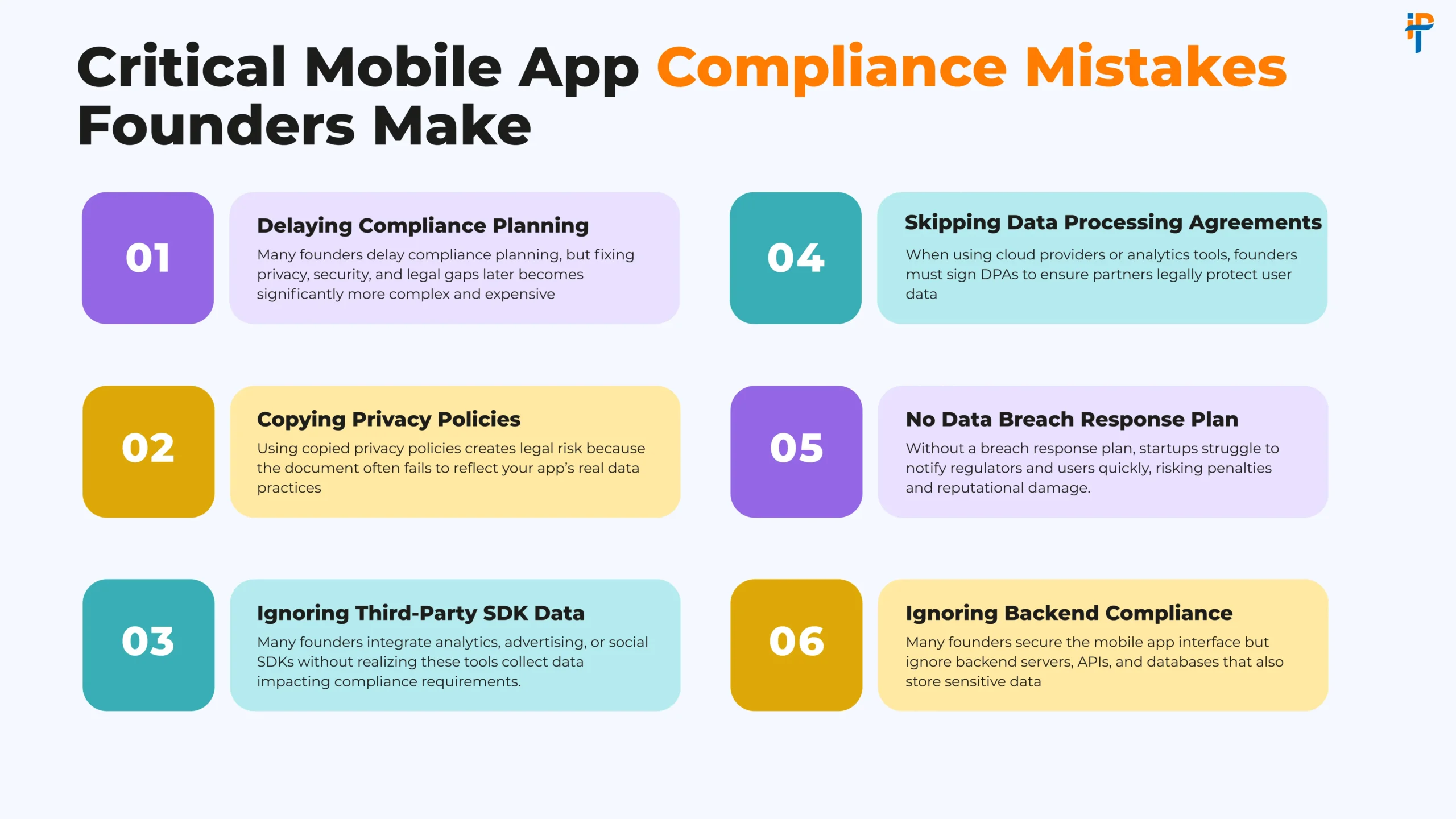
Let’s talk about the pitfalls that most often trip up first-time founders:

  • Assuming compliance is a “later” problem — By the time you’re at scale, retrofitting compliance is exponentially more expensive.
  • Copying privacy policies from other apps — Your policy must reflect your actual data practices. A copied policy that doesn’t match reality is worse than no policy.
  • Ignoring third-party SDKs — Every SDK you integrate potentially changes your compliance posture. Analytics SDKs, advertising SDKs, and social login libraries all collect data.
  • Skipping the Data Processing Agreement (DPA) — If you use third-party processors (cloud hosting, analytics platforms), GDPR requires signed DPAs.
  • Not having a breach response plan — GDPR requires notifying authorities within 72 hours of a data breach. If you don’t have a plan, you’ll miss that window.
  • Neglecting backend compliance — Many founders focus on the app itself but forget that their backend infrastructure, APIs, and databases are equally in scope.

How IPH Technologies Helps Founders Build Compliant Apps

Navigating the compliance maze while also building a great product is genuinely hard. That’s precisely why founders partner with experienced app development companies like IPH Technologies.

With over 500 successful projects and 430+ satisfied clients, IPH Technologies brings deep expertise in building mobile apps that are not only innovative but also architected for compliance from the ground up. Our teams are well-versed in:

  • GDPR-Compliant Architecture: Designing data flows, consent management systems, and privacy policies that hold up to regulatory scrutiny.
  • HIPAA-Ready Development: Implementing the technical and administrative safeguards required for healthcare applications.
  • App Store Submission: Preparing privacy labels, data safety declarations, and navigating review processes for both Apple and Google.
  • Security-First Engineering: Leveraging encryption, secure storage, and MFA as standard components of every build.
  • Accessibility Implementation: Building to WCAG 2.2 standards so your app reaches every user — and stays out of legal trouble.

Our agile methodology means compliance requirements are built into every sprint, not bolted on at the end. We understand that founders need a technology partner who’s as invested in their long-term success as they are — and compliance is a cornerstone of sustainable success.

Conclusion

Building a mobile app in 2026 without a compliance strategy is like driving blindfolded on a highway — you might get lucky for a while, but the odds are not in your favor. GDPR, HIPAA, CCPA, App Store rules, COPPA, ADA — each of these frameworks exists to protect real people, and ignoring them puts both your users and your business at risk.

The silver lining? Compliance and great product development are not mutually exclusive. When you build with privacy by design, robust security, and accessibility as core tenets, you end up with a better product that users trust and regulators respect.

Whether you’re launching your first app or scaling an existing one, the time to get serious about compliance is right now. And if you’d rather focus on building your vision while leaving the compliance architecture to the experts, the team at IPH Technologies is ready to help you build something truly exceptional — and compliant.

Frequently Asked Questions (FAQs)

Does GDPR apply to my app even if my company isn't based in the EU?
Yes, absolutely. GDPR has extraterritorial reach — if your app processes personal data of individuals located in the EU or UK, GDPR applies to you regardless of where your company is headquartered. This is one of the most commonly misunderstood aspects of GDPR compliance.
Do I need HIPAA compliance for a general fitness or wellness app?
Not necessarily. HIPAA applies to Covered Entities and their Business Associates — primarily healthcare providers, health plans, and vendors working with them. A general fitness app that doesn’t access clinical data or work with healthcare providers typically falls outside HIPAA’s scope. However, if your app integrates with a patient portal, EHR, or handles PHI in any form, you’ll need to comply.
What's the difference between the Apple Privacy Nutrition Label and Google's Data Safety Section?
Both require you to disclose what data your app collects and how it’s used, but they differ in format and specifics. Apple’s labels appear on your App Store product page and distinguish between data “linked to you” vs. “not linked to you.” Google’s Data Safety Section is completed in the Play Console and requires additional details about whether data is shared with third parties and whether it’s encrypted in transit.
How often should I update my app's privacy policy?
Any time your data practices change — new features, new third-party integrations, new geographic markets — you should update your privacy policy. Beyond event-driven updates, it’s good practice to do a thorough annual review. GDPR also requires you to notify users of material changes to your privacy policy.
What is "Privacy by Design," and is it legally required?
Privacy by Design is an approach to building systems that embed privacy protections by default, rather than treating them as add-ons. It’s been formally incorporated into GDPR (Article 25) as a legal requirement for data controllers in the EU. Even where it’s not strictly legally mandated, it’s widely considered the industry’s best practice for responsible app development.
My app uses third-party analytics SDKs like Firebase — does that affect my compliance?
Yes, significantly. When you integrate third-party SDKs, those SDKs may collect additional data from your users. Under GDPR, you’re responsible for all data processing that happens within your app, including data collected by integrated SDKs. You need Data Processing Agreements (DPAs) with your SDK providers, and you need to disclose their data collection in your privacy policy.
What is the penalty for an app getting delisted from the App Store or Google Play for compliance violations?
Beyond the direct revenue loss from losing your distribution channel, delisting can trigger a cascade of business consequences: broken marketing links, negative press coverage, lost user trust, and potential regulatory scrutiny (since app stores often flag non-compliant apps to relevant authorities). Recovery can take months and significant investment.
At what stage should a startup begin thinking about app compliance?
From day one — ideally before you write a single line of code. Retrofitting compliance into an existing architecture is dramatically more expensive (in time, money, and technical debt) than building with compliance in mind from the start. Conducting a compliance scoping exercise as part of your initial product planning is one of the best investments a founder can make.
Avatar
Lekha Mishra

Verified CEO

About the Author

I'm Lekha Mishra, Co-Founder of IPH Technologies, a 6x award-winning software and mobile solutions provider. My mission is to empower global entrepreneurs by transforming visionary ideas into powerful, market-ready products. We move beyond code to provide strategic insights and a competitive edge, specializing in intelligent solutions powered by AI and ML. I believe in leveraging these technologies to unlock new possibilities, drive growth, and deliver unparalleled value. Let's connect and turn your vision into a lasting legacy.


WhatsApp
Call us
Get a Call Back