

































































Highlights
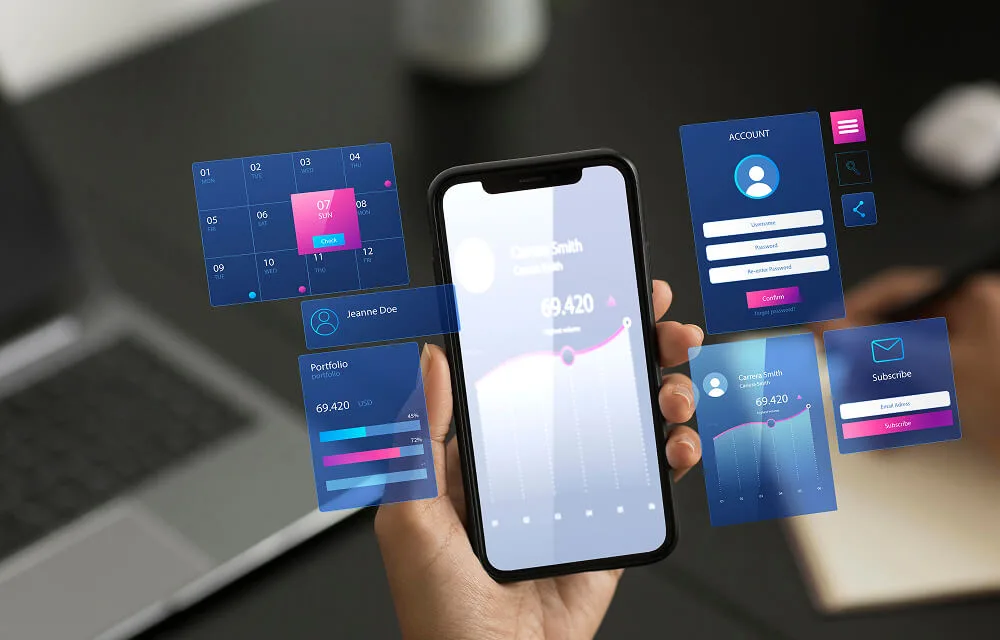
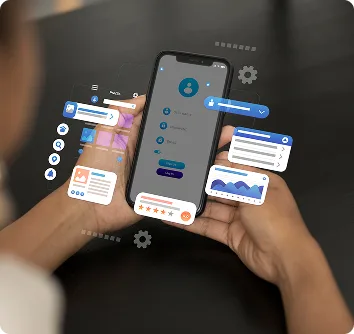
UI/UX Design
User-first, visually engaging interfaces crafted to enhance usability, boost engagement, and deliver seamless digital experiences.
Branding
Strategic brand identities that communicate your vision, build trust, and create a memorable presence across all touchpoints.
Wireframing
Structured layouts and user flows that map the product journey clearly before development begins, saving time and cost.
Prototype Design
Interactive prototypes that simulate real user interactions, helping validate ideas and refine experiences early.
Design Systems
Scalable design frameworks and reusable components that ensure consistency, speed, and efficiency across your product.
UI/UX Design

We design intuitive, user-centric interfaces that enhance engagement, improve usability, and deliver seamless digital experiences across all devices.

UI UX Design
  • User research and wireframing for clear flows
  • Modern UI design using Figma and Adobe XD
  • Interactive prototypes for better user experience testing
  • Usability testing and performance optimization improvements
  • Responsive design across all devices and screens
  • Scalable design systems with reusable UI components
Branding & Identity

We craft strong brand identities that communicate your vision, build trust, and create a lasting impression across all digital and offline touchpoints.

Branding and Identity
  • Logo design and brand identity creation
  • Brand guidelines and visual consistency systems
  • Color palette and typography selection strategy
  • Marketing materials and brand asset design
  • Social media branding and creative direction
  • Rebranding and brand positioning strategies
Wireframing

We create structured wireframes that define layout, user flow, and functionality, helping visualize ideas and build a strong foundation before design and development.

Wireframing
  • Low fidelity wireframes for initial structure
  • High fidelity wireframes with detailed layouts
  • User flow mapping for better navigation
  • Content hierarchy and layout planning
  • Clickable wireframes for early feedback
  • Clear structure before UI design phase
Prototype Design

We design interactive prototypes that simulate real user experiences, helping validate ideas, test functionality, and refine products before development.

Prototype Design
  • Interactive prototypes for real user experience
  • Clickable designs to test product functionality
  • User journey simulation for better understanding
  • Rapid prototyping for faster design validation
  • Feedback driven improvements before development
  • High fidelity prototypes with smooth interactions
Design Systems

We build scalable design systems that ensure consistency, improve collaboration, and accelerate product development across all platforms and teams.

Design Systems
  • Reusable UI components for consistent design
  • Design tokens for colors typography spacing
  • Component libraries for faster development workflow
  • Consistent branding across all digital products
  • Documentation for design and development teams
  • Scalable systems for growing product ecosystems
Highlights
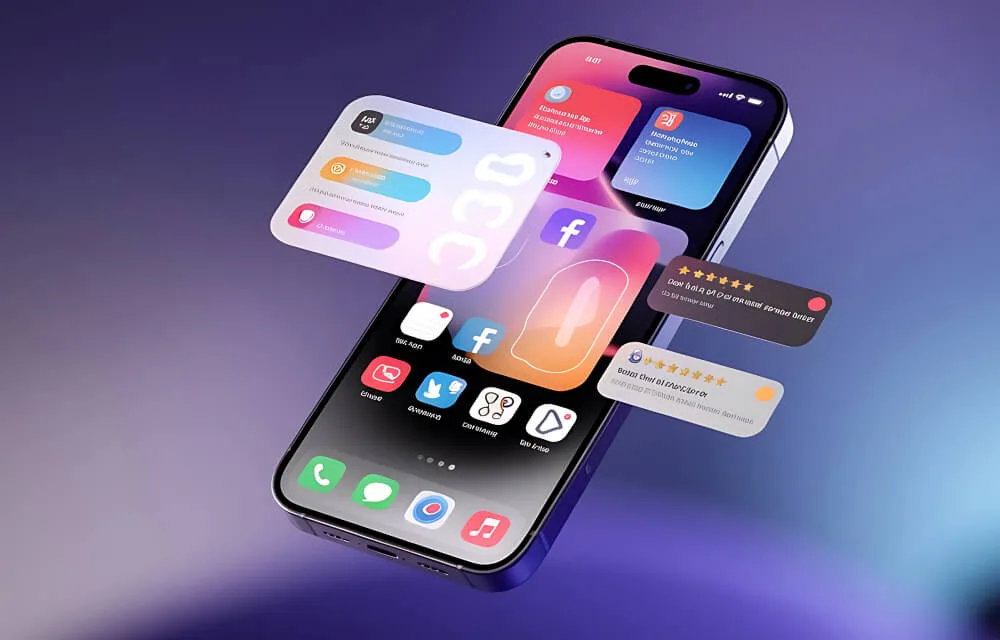
Mobile Apps Development
High-performance Android and iOS mobile applications built with modern technologies, delivering seamless user experiences and robust functionality.
Desktop Application Dev
Powerful and secure desktop applications tailored for Windows, macOS, and Linux, designed for performance, scalability, and reliability.
Web App Development
Scalable and responsive web applications using modern frameworks like React, Angular, and Vue for fast, dynamic, and engaging experiences.
Cross-Platform
Cost-effective cross-platform solutions using Flutter and React Native, enabling a single codebase for both iOS and Android platforms.
PWA Development
Progressive Web Apps that combine the best of web and mobile, offering offline access, fast loading, and app-like experiences directly in the browser.
Highlights
Mobile App

Android

iOS

Flutter

Hybrid

Optimize

Native

Swift

Firebase

Android App Development

We craft powerful, scalable Android applications with intuitive UX, high performance, and deep integration with Google services.

Android App
  • Custom Android app development
  • Native Kotlin & Java apps
  • Google Play Store deployment
  • Material Design UI implementation
Kotlin

Kotlin

Java

Java

Flutter

Flutter

Android Studio

Android

Jetpack

Jetpack

iOS App Development

We build high-quality, user-centric iOS apps combining performance, security, and seamless design for Apple devices.

iOS App
  • Custom iOS app development
  • Native Swift & SwiftUI apps
  • Seamless Apple service integration
  • App Store review & deployment
Swift

Swift

SwiftUI

SwiftUI

Obj-C

Obj-C

Xcode

Xcode

Flutter

Flutter

Cross-Platform Apps

We develop cross-platform mobile apps that run flawlessly on both iOS and Android from a single codebase, saving time and cost.

Cross-Platform App
  • Single codebase for iOS & Android
  • Flutter & React Native development
  • Native-like performance & UI
  • Faster time-to-market
React Native

React Native

TypeScript

TypeScript

Redux

Redux

Firebase

Firebase

Dart

Dart

Hybrid Apps

We build hybrid mobile apps that blend web technologies with native capabilities, delivering broad reach and cost-effective development.

Hybrid App
  • Web + native feature integration
  • Ionic & Cordova frameworks
  • Reduced development costs
  • Multi-platform publishing
Flutter

Flutter

Dart

Dart

Firebase

Firebase

SQLite

SQLite

App Optimization

We enhance existing mobile apps with performance tuning, crash fixes, battery efficiency, and faster load times for a superior user experience.

App Optimization
  • Performance profiling & tuning
  • Memory & battery optimization
  • Crash analysis & bug fixing
  • App size reduction & load speed
Xcode

Xcode

Android Studio

Android

Firebase

Firebase

Java

Java

Highlights
Desktop App

Windows

macOS

Linux

Desktop

Electron

Qt

WinForms

GTK

Windows Apps

We develop robust Windows desktop applications using modern Microsoft technologies, delivering powerful tools for enterprise and consumer use.

Windows App
  • Custom Windows desktop applications
  • WPF & WinForms development
  • Microsoft Store deployment
  • Windows API & system integration
C#

C#

.NET

.NET

Electron

Electron

Visual Studio

Visual Studio

SQL Server

SQL Server

macOS Apps

We create elegant, high-performance macOS applications that leverage Apple's native frameworks for a smooth and delightful desktop experience.

macOS App
  • Native macOS app development
  • SwiftUI & AppKit integration
  • Mac App Store submission
  • Apple Silicon optimization
Swift

Swift

SwiftUI

SwiftUI

Obj-C

Obj-C

Xcode

Xcode

Cross-Platform Desktop

We develop cross-platform desktop applications that run seamlessly on Windows, macOS, and Linux from a single shared codebase.

Cross-Platform Desktop
  • Single codebase for all platforms
  • Electron & Tauri frameworks
  • Flutter for desktop support
  • Consistent UI across OS environments
Flutter

Flutter

Electron

Electron

Node.js

Node.js

TypeScript

TypeScript

Docker

Docker

Electron Apps

We build feature-rich Electron desktop apps using web technologies, enabling cross-platform deployment with native OS capabilities.

Electron App
  • Electron framework development
  • Node.js & Chromium integration
  • Auto-updater & native notifications
  • Cross-OS packaging & distribution
Electron

Electron

Node.js

Node.js

React

React

Vue

Vue

TypeScript

TypeScript

Highlights
Web App

React

Node.js

PHP

Laravel

Python

MySQL

JavaScript

HTML

CSS

React Development

We build fast, component-driven React web applications with modern state management, reusable UI, and seamless API integration.

React Development
  • Custom React SPA development
  • Redux & Context API state management
  • Next.js SSR & SSG support
  • REST & GraphQL API integration
React

React

Next.js

Next.js

Redux

Redux

TypeScript

TypeScript

Tailwind

Tailwind

Angular Development

We develop enterprise-grade Angular applications with structured architecture, two-way data binding, and robust TypeScript foundations.

Angular Development
  • Custom Angular SPA development
  • RxJS & NgRx state management
  • Angular Material UI components
  • Lazy loading & performance tuning
Angular

Angular

TypeScript

TypeScript

HTML

HTML

CSS

CSS

NPM

NPM

Node.js Backend

We build scalable, event-driven Node.js backends with RESTful APIs, real-time capabilities, and seamless database integrations.

Node.js Backend
  • RESTful & GraphQL API development
  • Express.js & Fastify frameworks
  • WebSocket & real-time features
  • MongoDB, PostgreSQL integration
Node.js

Node.js

Express

Express

MongoDB

MongoDB

GraphQL

GraphQL

Docker

Docker

Cloud Web Apps

We design and deploy cloud-native web applications on AWS, Azure, and GCP — scalable, secure, and built for high availability.

Cloud Web Apps
  • AWS, Azure & GCP deployment
  • Serverless architecture development
  • Auto-scaling & load balancing
  • CI/CD pipeline configuration
AWS

AWS

Azure

Azure

GCP

GCP

Docker

Docker

Kubernetes

Kubernetes

Full-Stack Dev

We deliver complete full-stack web solutions — from pixel-perfect frontends to robust backends — as a unified, end-to-end product.

Full-Stack Dev
  • Frontend & backend development
  • MERN & MEAN stack expertise
  • Database design & API architecture
  • DevOps, hosting & deployment
React

React

Node.js

Node.js

MongoDB

MongoDB

PostgreSQL

PostgreSQL

Docker

Docker

Highlights
Cross Platform

Flutter

R. Native

Xamarin

Ionic

Reuse

Electron

NW.js

Framework7

SwiftUI

Flutter Development

We build beautiful, natively compiled Flutter applications for mobile, web, and desktop from a single Dart codebase with pixel-perfect UI.

Flutter Development
  • Flutter mobile & web apps
  • Dart language development
  • Custom widget & animation creation
  • Firebase & REST API integration
Flutter

Flutter

Dart

Dart

Firebase

Firebase

GetX

GetX

Riverpod

Riverpod

React Native

We develop high-performance React Native apps that deliver a truly native experience on both iOS and Android using JavaScript and React.

React Native
  • Cross-platform iOS & Android apps
  • React Native CLI & Expo development
  • Native module & bridge integration
  • Redux & MobX state management
React Native

React Native

Redux

Redux

TypeScript

TypeScript

Firebase

Firebase

Xamarin

We develop Xamarin-based cross-platform apps using C# and .NET, enabling shared business logic across iOS, Android, and Windows.

Xamarin
  • Xamarin.Forms & MAUI apps
  • Shared C# codebase development
  • Native API access via bindings
  • Enterprise app integration
Xamarin

Xamarin

C#

C#

.NET MAUI

.NET

Azure

Azure

Visual Studio

Visual Studio

Ionic Framework

We create stunning Ionic applications that combine the power of web technologies with native device features for a seamless mobile experience.

Ionic Framework
  • Ionic Angular & React apps
  • Capacitor native plugin integration
  • Responsive mobile-first UI
  • PWA & hybrid app deployment
Ionic

Ionic

Angular

Angular

React

React

Vue

Vue

Code Reusability

We build reusable app architectures, reducing duplication, accelerating development, and ensuring seamless cross-platform consistency.

Code Reusability
  • Shared component library creation
  • Monorepo architecture setup
  • Design system implementation
  • Platform-agnostic business logic
Turborepo

Turborepo

Storybook

Storybook

Flutter

Flutter

React Native

React Native

Highlights
PWA

PWA

Offline

Push

Fast

App-Like

IndexedDB

Installable

Sync

Progressive Web Apps

We build Progressive Web Apps that combine the best of web and mobile — installable, reliable, and fast across all devices and browsers.

Progressive Web Apps
  • PWA architecture & manifest setup
  • Service worker implementation
  • Installable & home screen support
  • Cross-browser compatibility
HTML5

HTML5

CSS3

CSS3

JavaScript

JavaScript

Workbox

Workbox

Lighthouse

Lighthouse

Offline Support

We implement robust offline capabilities in your web apps using service workers and smart caching so users stay productive without connectivity.

Offline Support
  • Service worker caching strategies
  • IndexedDB offline data storage
  • Background sync implementation
  • Graceful offline fallback pages
Service Worker

ServiceWorker

Workbox

Workbox

IndexedDB

IndexedDB

Cache API

Cache API

Background Sync

BackgroundSync

Push Notifications

We integrate web push notification systems into your PWA to re-engage users with timely, personalized alerts even when the app is not open.

Push Notifications
  • Web Push API implementation
  • VAPID key & subscription management
  • Notification scheduling & targeting
  • Cross-browser push support
Web Push

Web Push

Firebase FCM

Firebase

OneSignal

OneSignal

Node.js

Node.js

Workbox

Workbox

Fast Loading

We optimize PWAs for lightning-fast load times using code splitting, lazy loading, and caching to deliver exceptional Core Web Vitals scores.

Fast Loading
  • Code splitting & lazy loading
  • Image & asset optimization
  • Core Web Vitals improvement
  • CDN & caching configuration
Webpack

Webpack

Lighthouse

Lighthouse

Vite

Vite

Cloudflare

Cloudflare

Workbox

Workbox

App-Like Experience

We craft PWAs that feel and behave like native mobile apps — with smooth animations, full-screen mode, gestures, and seamless transitions.

App-Like Experience
  • Full-screen & standalone display mode
  • Touch gestures & swipe navigation
  • Smooth page transitions & animations
  • App shell architecture
Web Manifest

Web Manifest

CSS Animations

CSS

Framer Motion

FramerMotion

React

React

Vue

Vue

Highlights
Custom Software
Fully tailored software solutions designed to match your unique business processes, improving efficiency and driving long-term growth.
Backend Systems
Robust and secure backend architectures built for high performance, scalability, and seamless integration with your applications.
Database Design
Efficient and scalable database structures optimized for fast queries, data integrity, and reliable performance at scale.
Cloud-Native
Modern cloud-native solutions using microservices and serverless architecture on AWS, Azure, and GCP for maximum flexibility and scalability.
API Development
Secure and well-documented RESTful and GraphQL APIs that enable seamless communication between systems and third-party integrations.
Custom Software

We develop tailored software solutions that align with your business goals, streamline operations, and deliver scalable, high-performance digital systems.

Custom Software Development
  • Custom software tailored to business needs
  • Scalable architecture for long term growth
  • Secure and high performance application development
  • API integration with third party services
  • Cloud based and enterprise software solutions
  • Ongoing maintenance and system optimization support
Backend Systems

We build robust backend systems that power applications with secure, scalable architecture, efficient data handling, and seamless integrations.

Backend Systems
  • Secure backend architecture and system design
  • Database design and performance optimization
  • API development for seamless integrations
  • Authentication and authorization system implementation
  • Server side logic and business workflows
  • Scalable infrastructure for high traffic applications
Database Design

We design efficient database structures that ensure data integrity, optimize performance, and support scalable, reliable application systems.

Database Design
  • Structured database schema design and planning
  • Efficient data modeling for scalable systems
  • Database optimization for faster query performance
  • Relational and non relational database solutions
  • Secure data storage and access management
  • Backup strategies and data recovery solutions
Cloud-Native Apps

We build cloud-native applications designed for scalability, resilience, and flexibility using modern cloud infrastructure and microservices architecture.

Cloud Native Apps
  • Cloud first architecture for scalable applications
  • Microservices based system design and deployment
  • Containerization using Docker and Kubernetes tools
  • Auto scaling infrastructure for high availability
  • Continuous integration and continuous deployment pipelines
  • Secure cloud environments with monitoring and logging
API Development

We develop secure and scalable APIs that enable seamless communication between systems, applications, and third party services.

API Development
  • RESTful API development for web applications
  • Secure API authentication and authorization systems
  • Third party API integration and data exchange
  • Scalable APIs for high traffic applications
  • API documentation for easy developer integration
  • Performance optimization and API response tuning
Highlights
Manual Testing
Detailed human-driven testing to uncover edge cases, validate user flows, and ensure a seamless, intuitive user experience.
Test Automation
Automated testing frameworks using Selenium, Cypress, and Appium to accelerate regression cycles and improve release confidence.
Performance
Load, stress, and scalability testing to ensure your application performs reliably under high traffic and demanding conditions.
Security Testing
Comprehensive security assessments including penetration testing and vulnerability analysis to safeguard your application.
Mobile QA
End-to-end mobile application testing across devices and platforms to ensure consistent performance, usability, and stability.
Manual Testing

We perform detailed manual testing to ensure software quality, identify issues early, and deliver reliable, user-friendly applications.

Manual Testing
  • Functional testing for application core features
  • UI testing for consistent user experience
  • Cross browser and device compatibility testing
  • Test case creation and execution processes
  • Bug tracking and detailed issue reporting
  • Regression testing after feature updates
Test Automation

We implement automated testing solutions to improve efficiency, reduce manual effort, and ensure faster, reliable software delivery.

Test Automation
  • Automated test scripts for faster execution
  • Regression testing using automation frameworks
  • Continuous testing within CI CD pipelines
  • Test coverage improvement across application modules
  • Reusable automation scripts for long term scalability
  • Performance and load testing automation solutions
Performance Testing

We evaluate application performance to ensure speed, stability, and scalability under different workloads and real-world conditions.

Performance Testing
  • Load testing for high traffic scenarios
  • Stress testing to identify system limits
  • Performance benchmarking and response time analysis
  • Scalability testing for growing user demands
  • Memory and resource usage optimization checks
  • Bottleneck identification and performance improvements
Security Testing

We identify vulnerabilities and secure applications against threats, ensuring data protection, compliance, and safe user interactions.

Security Testing
  • Vulnerability assessment and risk analysis testing
  • Penetration testing to identify security gaps
  • Authentication and authorization security validation
  • Data protection and encryption testing processes
  • Secure code review and security best practices
  • Compliance testing with industry security standards
Mobile QA

We ensure mobile applications deliver flawless performance, usability, and compatibility across devices, platforms, and environments.

Mobile QA
  • Mobile app testing across multiple devices
  • iOS and Android platform compatibility testing
  • UI testing for consistent mobile experience
  • Network and performance testing on mobile
  • App usability and user experience validation
  • App store readiness and release testing
Highlights
CI/CD Pipelines
Automated pipelines for building, testing, and deploying code, enabling faster releases, fewer errors, and continuous delivery.
Infrastructure
Scalable infrastructure provisioning using Infrastructure as Code (IaC) with Terraform and CloudFormation for consistency and reliability.
Deployment
Zero-downtime deployment strategies including blue-green and rolling deployments to ensure smooth and reliable releases.
Containerisation
Container-based architectures using Docker and Kubernetes for portability, scalability, and efficient resource utilization.
Monitoring
Real-time monitoring and observability using tools like Grafana, Prometheus, and Datadog to ensure system health and performance.
CI/CD Pipelines

We implement CI/CD pipelines to automate build, testing, and deployment, enabling faster releases, improved quality, and continuous delivery.

CI CD Pipelines
  • Automated build and deployment pipeline setup
  • Continuous integration for faster code validation
  • Continuous delivery for seamless release cycles
  • Integration with Git version control systems
  • Automated testing within CI CD workflows
  • Monitoring and rollback strategies for deployments
Infrastructure

We design and manage reliable infrastructure to ensure scalability, security, and high availability for modern applications and systems.

Infrastructure
  • Cloud infrastructure setup and configuration services
  • Server management and deployment automation solutions
  • High availability and load balancing implementation
  • Monitoring and logging for system performance tracking
  • Security hardening and infrastructure access controls
  • Scalable environments for growing application demands
Deployment

We manage seamless deployment processes to ensure applications are delivered efficiently, securely, and ready for production environments.

Deployment
  • Application deployment to cloud and servers
  • Automated deployment workflows for faster releases
  • Environment configuration and setup management
  • Version control and release management processes
  • Rollback strategies for safe deployment updates
  • Post deployment monitoring and performance checks
Containerization

We use containerization to package applications for consistency, scalability, and efficient deployment across different environments.

Containerization
  • Application containerization using Docker technologies
  • Environment consistency across development and production
  • Container orchestration with Kubernetes platforms
  • Scalable container deployment for microservices architecture
  • Efficient resource utilization and system isolation
  • Integration with CI CD pipelines for automation
Monitoring

We monitor systems and applications in real time to ensure performance, reliability, and quick issue detection and resolution.

Monitoring
  • Real time system performance monitoring tools
  • Application health checks and uptime tracking
  • Error tracking and issue alerting systems
  • Log management and analysis for debugging
  • Resource usage monitoring across infrastructure layers
  • Proactive issue detection and incident response
Highlights
Roadmap Planning
Strategic product roadmaps aligned with business goals, helping prioritize features, manage timelines, and deliver maximum value.
Team Coordination
Efficient coordination across design, development, and QA teams to ensure smooth collaboration and on-time project delivery.
Growth Strategy
Data-driven product strategies focused on user acquisition, retention, and continuous improvement to drive sustainable growth.
Agile Sprints
Agile methodologies like Scrum and Kanban to deliver iterative releases, improve flexibility, and maintain predictable progress.
Stakeholder Mgmt
Clear communication and alignment with stakeholders through regular updates, reporting, and feedback loops to ensure project success.
Roadmap Planning

We create strategic roadmaps that align with your business goals, helping prioritize features, plan execution, and ensure long-term success.

Roadmap Planning
  • Product roadmap planning aligned with business objectives
  • Feature prioritization based on user and market needs
  • Timeline planning for efficient project execution phases
  • Technology stack selection for scalable solutions
  • Risk assessment and mitigation strategy planning
  • Continuous roadmap updates based on performance insights
Team Coordination

We ensure smooth collaboration across teams to improve productivity, streamline workflows, and deliver projects efficiently on time.

Team Coordination
  • Cross functional team collaboration and communication
  • Agile workflow management and sprint planning processes
  • Task tracking and project progress visibility tools
  • Clear role assignment and responsibility management
  • Regular updates and performance review meetings
  • Efficient coordination between design development teams
Growth Strategy

We develop data-driven growth strategies to scale your business, increase user acquisition, and maximize long-term revenue potential.

Growth Strategy
  • Market analysis and competitive growth planning strategies
  • User acquisition and retention optimization techniques
  • Data driven decision making and performance insights
  • Scalable business models for long term expansion
  • Conversion rate optimization across digital platforms
  • Continuous growth tracking and strategy refinement
Agile Sprints

We follow agile sprint methodologies to deliver faster iterations, improve collaboration, and ensure continuous product improvement.

Agile Sprints
  • Sprint planning and backlog prioritization processes
  • Daily standups for team alignment and progress tracking
  • Iterative development with continuous feedback cycles
  • Task management using agile tools and workflows
  • Regular sprint reviews and performance retrospectives
  • Faster delivery with incremental feature releases
Stakeholder Management

We ensure clear communication and alignment with stakeholders to drive project success, transparency, and informed decision making.

Stakeholder Management
  • Regular stakeholder communication and reporting processes
  • Requirement alignment with business goals and expectations
  • Feedback collection and continuous improvement strategies
  • Transparent project updates and progress visibility
  • Risk identification and stakeholder expectation management
  • Collaborative decision making for project success

10 MVP Features Every Startup Must Include

Introduction: Why Every Startup Needs an MVP

Let’s face it—building a startup is like walking a tightrope while juggling flaming torches. One wrong move, and everything comes crashing down. But here’s the thing: most startups don’t fail because they had a bad idea. They failed because they tried to build everything at once.

The Startup Failure Statistics You Need to Know

According to research, approximately 90% of startups fail, and one of the top reasons? Building products that nobody wants. Even more shocking, a study by the Startup Genome Project revealed that startups that scale prematurely are 70% more likely to fail. That’s where the Minimum Viable Product (MVP) comes in—your safety net in the high-wire act of entrepreneurship.

What exactly is an MVP?

An MVP isn’t just a buzzword that Silicon Valley likes to throw around at coffee shops. It’s a strategic approach to product development that focuses on creating the simplest version of your product that can still deliver value to early adopters. Think of it as the foundation of a house—you need it solid and functional before you start adding the fancy chandeliers and marble countertops.

The term was popularized by Eric Ries in his book “The Lean Startup,” and it revolutionized how companies approach product development. Instead of spending years and millions of dollars building a “perfect” product, you launch quickly, learn from real users, and iterate based on actual data rather than assumptions.

The Cost of Building Too Much Too Soon

Here’s a hard truth: every feature you add to your MVP increases your development time, costs, and complexity. According to research from Harvard Business Review, the average cost of developing a complex mobile app can range from $50,000 to $500,000 or more. But an MVP? You could launch one for a fraction of that cost.

At IPH Technologies, we’ve witnessed countless startups struggle with feature bloat. With over 500 successful projects and 430+ satisfied clients under our belt, we’ve learned that the most successful launches happen when founders embrace the “less is more” philosophy. Our agile methodologies ensure that startups focus on what truly matters—solving a real problem for real users.

Also Read- Build a Fundable MVP in 2025: The Ultimate Founder’s Guide

The Non-Negotiable 10 Your MVP’s Foundation for Success

Now, let’s get to the meat of the matter. What features absolutely must be in your MVP? These are the building blocks you simply cannot skip. Think of them as the essential organs in a body—without them, nothing else functions.
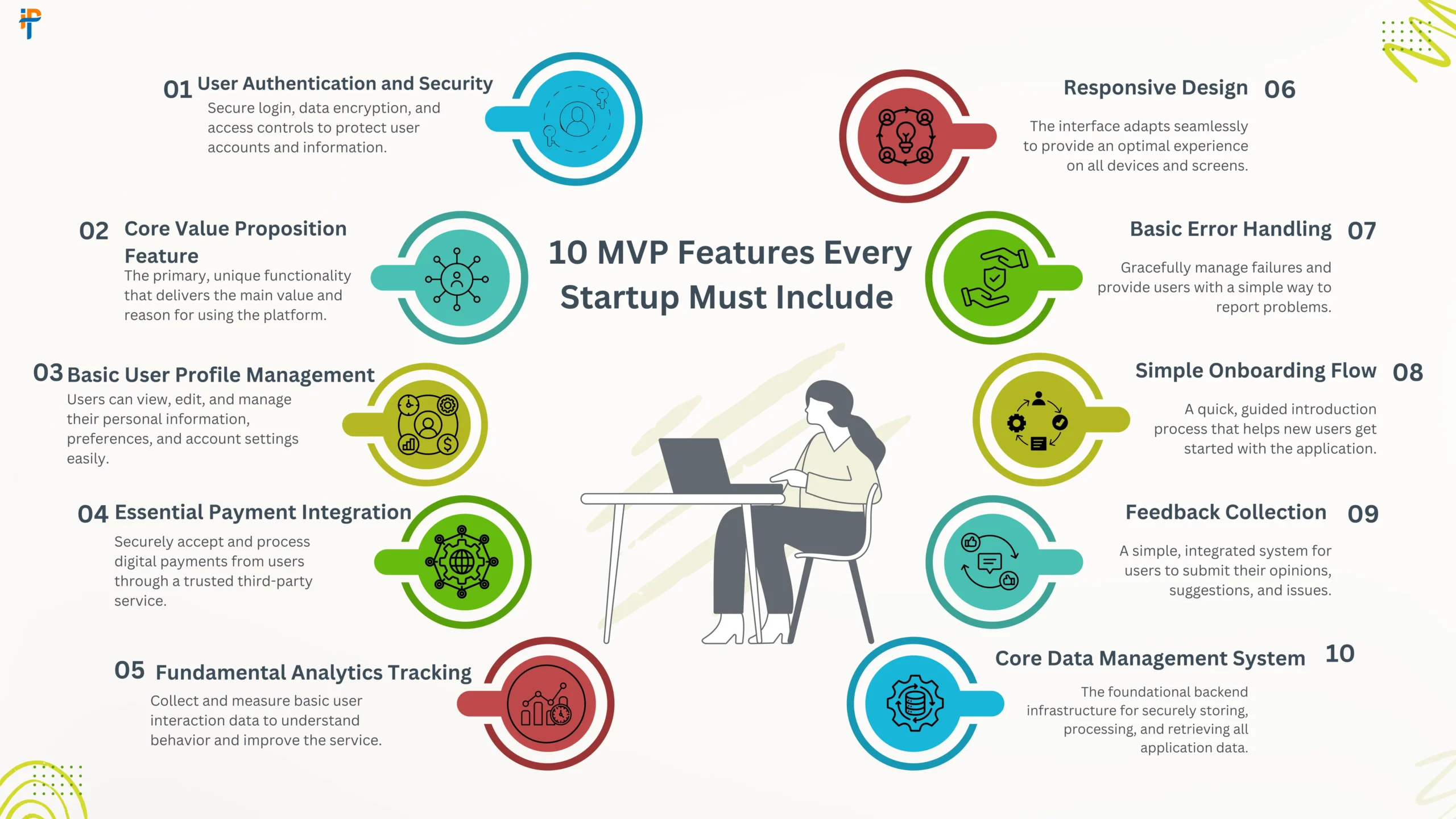
1. User Authentication and Security

You can’t have users without a way for them to sign up, log in, and trust that their data is secure. This isn’t negotiable. Whether it’s a simple email and password combination, social login (Google, Facebook), or two-factor authentication, you need a solid authentication system from day one.

Why? Because according to IBM’s Cost of a Data Breach Report, the average cost of a data breach in 2023 was $4.45 million. Even as an MVP, you need to build trust with your early adopters. A security breach at this stage could be fatal to your startup’s reputation.

2. Core Value Proposition Feature

This is the reason your product exists. It’s the one feature that solves the specific problem you identified. For Uber, it was “request a ride.” For Airbnb, it was “book a place to stay.” For your startup, what’s that one thing that makes users say, “Aha! This solves my problem!”

Everything else is secondary. If your core value proposition doesn’t work flawlessly, nothing else matters. This feature should consume 40-50% of your MVP development time and resources.

3. Basic User Profile Management

Users need to manage their basic information—name, email, profile picture, and relevant settings. Keep it simple. You don’t need 50 customization options. Just the essentials that allow users to personalize their experience minimally and update their critical information.

4. Essential Payment Integration

If your business model involves transactions (and let’s be honest, most do), you need a reliable payment system. But here’s the key: start with one payment method. Don’t try to integrate PayPal, Stripe, Apple Pay, Google Pay, and cryptocurrency all at once. Pick the most popular option for your target market and nail that integration.

According to Statista’s payment methods data, credit and debit cards remain the most popular online payment method globally, followed closely by digital wallets. Start there.

5. Fundamental Analytics Tracking

How will you know if your MVP is successful if you’re not measuring anything? You need basic analytics from day one—user acquisition, retention rates, feature usage, and conversion metrics. Tools like Google Analytics, Mixpanel, or Amplitude can be integrated relatively easily and provide invaluable insights.

6. Responsive Design and Mobile Compatibility

With over 58% of global website traffic coming from mobile devices, your MVP must work seamlessly across different screen sizes. This doesn’t mean building separate iOS and Android apps right away—a responsive web app can serve you well initially.

7. Basic Error Handling and Bug Reporting

Things will break. It’s inevitable. What matters is how quickly you can identify and fix issues. Implement basic error handling that prevents complete app crashes and consider tools like Sentry or Bugsnag that automatically report errors to your development team.

8. Simple Onboarding Flow

First impressions matter. Your onboarding should be smooth enough that users understand your product’s value within the first 60 seconds. According to Appcues research, a good onboarding experience can increase user retention by up to 50%. Keep it to 3-5 steps maximum.

9. Feedback Collection Mechanism

Your MVP users are your product development partners. You need an easy way for them to share feedback, report issues, and suggest improvements. This could be as simple as a feedback button that triggers an email or a lightweight in-app survey tool.

10. Core Data Management System

Whatever data your application handles—whether it’s user-generated content, transactions, or interactions—you need a reliable system to store, retrieve, and manage that data. Choose a scalable database solution from the start, even if you’re starting small.

Also Read- Launch a Loan Lending App MVP: Affordable Steps to Validate Your Idea

The Strategic 5: Features to Skip Now (But Plan for Later)

Here’s where things get interesting. These are features that might seem essential but can actually wait until after your MVP launch. Skipping these doesn’t mean they’re not important—it means you’re being strategic with your resources.

1. Advanced Customization Options

Sure, it would be cool if users could customize every color, font, and layout option in your app. But does that solve their core problem? Probably not. Advanced personalization features can wait until you’ve validated your core value proposition and understand what customizations actually matter to your users.

Skip it because: Development time for robust customization frameworks can add 3-6 weeks to your timeline. That’s 3-6 weeks you could be getting real market feedback.

2. Social Media Integration Beyond Basics

Yes, social sharing can be valuable for growth. But do you really need to integrate with Facebook, Twitter, LinkedIn, Instagram, TikTok, and Pinterest all at once? Probably not. Start with one or two that make the most sense for your audience. You can always add more later based on user demand.

Skip it because: Each social platform has its own API, authentication requirements, and quirks. Integrating them all upfront can consume weeks of development time without guaranteed ROI.

3. Multiple Language Support

Unless your initial target market spans multiple languages, internationalization can wait. Building a proper multi-language system involves more than just translations—it requires right-to-left text support, locale-specific formatting for dates and numbers, and cultural adaptations.

Skip it because: According to our experience at IPH Technologies, adding comprehensive internationalization can increase development time by 30-40%. Focus on nailing one language and market first.

4. Complex Reporting and Analytics Dashboards

While basic analytics are essential (remember, that was in the Non-Negotiable 10), complex dashboards with multiple data visualizations, custom report builders, and advanced filtering options can wait. Most MVPs need simple metrics displayed clearly, not a Bloomberg Terminal-level interface.

Skip it because: Advanced reporting features often require significant backend infrastructure and frontend complexity. Save this for version 2.0 when you know which metrics actually matter to your users.

5. Advanced AI and Machine Learning Features

AI is sexy. Machine learning is trendy. But unless AI is your core value proposition, these features can wait. Smart recommendations, predictive analytics, and intelligent automation are powerful—but they require substantial data to train and refine.

Skip it because: Effective AI/ML implementation requires not just development time but also data scientists, training datasets, and ongoing optimization. Start simple, gather data, and implement AI when you have the resources and data to do it right.

Also read- AI App Development Cost in 2025: From MVPs to Full-Scale Solutions

The Feature Prioritization Matrix: A Data-Driven Framework

So how do you actually decide what makes the cut? Let’s talk about frameworks. At IPH Technologies, we use proven methodologies to help our clients make smart decisions about feature prioritization.

Understanding the MoSCoW Method

The MoSCoW method is a tried-and-true prioritization technique that categorizes features into four buckets:

Must Have: Non-negotiable features that are absolutely essential for launch
Should Have: Important but not vital features that can wait if necessary
Could Have: Nice-to-have features that add value but aren’t crucial

Won’t Have (this time): Features explicitly out of scope for the current iteration

This framework forces you to make hard decisions and prevents the “everything is a priority” trap.

The RICE Scoring Model for Features

RICE stands for Reach, Impact, Confidence, and Effort. It’s a quantitative approach developed by Intercom that helps you score features objectively:

RICE Score = (Reach × Impact × Confidence) / Effort

Let’s break it down with an example:

Feature Reach Impact Confidence Effort RICE Score
User Authentication 100 3 100% 5 60
Advanced Reporting 30 2 70% 8 5.25
Social Sharing 60 2 80% 3 32
AI Recommendations 50 3 50% 12 6.25
Row 5 Col 1 Row 5 Col 2 Row 5 Col 3 Row 5 Col 4 Row 5 Col 5 Row 5 Col 6

In this example, user authentication clearly scores highest and should be prioritized, while advanced reporting and AI recommendations score lower relative to their effort.

Creating Your Custom Prioritization Matrix

Here’s a practical framework you can implement today:

Priority Tier Criteria Decision Rule
P0 – Critical Without it, the product doesn’t work Must launch with MVP
P1 – High Significantly impacts user experience or business goals Include if time/budget allows
P2 – Medium Enhances experience but not essential Post-MVP priority
P3 – Low Nice-to-have, minimal impact Future roadmap consideration

Impact vs. Effort Analysis

The simplest yet most effective tool is the classic 2×2 matrix:

High Impact, Low Effort: Do these immediately (Quick Wins)
High Impact, High Effort: Plan these carefully for your MVP (Major Projects)
Low Impact, Low Effort: Do these if you have spare time (Fill-ins)
Low Impact, High Effort: Skip these entirely for now (Time Sinks)

According to research from ProductPlan, teams that use structured prioritization frameworks are 2.5 times more likely to deliver products on time and within budget.

Also Read- Web vs Native vs Hybrid Apps in 2025: The Ultimate Guide

Beyond the Launch: Building Your Post-MVP Feature Roadmap

Congratulations! You’ve launched your MVP. But the journey is just beginning. Now comes the critical phase of evolution—transforming your MVP into a fully-fledged product based on real-world data and feedback.

Gathering and Analyzing User Feedback

Your early users are gold mines of information. But collecting feedback is an art and science combined. You need both quantitative data (usage metrics, conversion rates, retention statistics) and qualitative insights (user interviews, support tickets, feedback forms).

Create multiple feedback channels:

  • In-app feedback buttons
  • User interviews (aim for 10-15 in-depth conversations monthly)
  • Net Promoter Score (NPS) surveys
  • Usage analytics (What features are being used? What’s being ignored?)
  • Support ticket analysis

According to research from Qualtrics, companies that excel at customer experience have 1.5 times more engaged employees and can reduce customer churn by up to 15%.

Setting Realistic Development Timelines

Here’s where many startups stumble. They rush to add every requested feature immediately. Don’t fall into this trap. Create a structured roadmap with realistic timelines:

Months 1-3 post-launch: Focus entirely on stability, bug fixes, and critical improvements based on user feedback. Don’t add new features yet.

Months 4-6: Introduce 2-3 carefully selected features that address the most common user requests or pain points.

Months 7-12: Continue iterative improvement, adding features that demonstrate clear ROI or user demand.
At IPH Technologies, we’ve guided over 430 clients through this post-MVP phase using agile methodologies that ensure continuous improvement without overwhelming the development team or confusing users with constant changes.

Scaling Your MVP Based on Market Response

Market response will tell you whether to accelerate, maintain pace, or pivot. Key indicators to watch:

User Growth Rate: Are you acquiring users consistently?
Retention Metrics: Are users coming back? (Day 1, Day 7, Day 30 retention)
Engagement Levels: How frequently are users engaging with your core feature?
Revenue Growth (if applicable): Is your business model working?

According to data from Lendle, successful startups typically see at least 40% retention after Day 1 and 20% after Day 7. If your numbers are significantly lower, it might be time to reconsider your approach.

When to Pivot and When to Persevere
This is the million-dollar question. Eric Ries, in “The Lean Startup,” suggests that a pivot should occur when:

  • You’ve validated that your current approach isn’t working through data
  • You’ve identified a better opportunity while maintaining your core vision
  • You have the resources to execute the pivot effectively

Don’t pivot after one bad week. But don’t stubbornly persist when all data points to failure. The sweet spot? Give your MVP 3-6 months of real-world testing before making major strategic changes.

Signs you should pivot:

  • Consistently low user engagement despite marketing efforts
  • User feedback indicates you’re solving the wrong problem
  • Market dynamics have shifted significantly
  • A competitor has emerged with a clearly superior solution

Signs you should persevere:

  • Core metrics are improving, even if slowly
  • Users love your product but you’re struggling with acquisition (marketing problem, not product problem)
  • You’re seeing pockets of high engagement in specific user segments
  • Feedback is generally positive with requests for enhancements, not fundamental changes

Conclusion

Building an MVP is both an art and a science. It requires the wisdom to know what’s essential and the courage to cut everything else. Remember, your MVP isn’t the final product—it’s the first step in a journey of continuous learning and improvement.

The 10 non-negotiable features we discussed form the bedrock of any successful MVP: authentication, core value proposition, basic profile management, payment integration, analytics, responsive design, error handling, onboarding, feedback mechanisms, and data management. These aren’t optional—they’re essential.

Conversely, the strategic 5 features to skip—advanced customization, comprehensive social media integration, multi-language support, complex analytics dashboards, and advanced AI—can wait. They’re valuable, but not at the expense of delaying your launch or diluting your focus.

The frameworks we’ve explored—MoSCoW, RICE scoring, and Impact vs. Effort matrices—provide structured approaches to making these difficult decisions objectively rather than emotionally.

At IPH Technologies, our mission is to turn visionary ideas into impactful solutions. With our comprehensive suite of services spanning app development, web development, and custom software engineering, we leverage cutting-edge technology and agile methodologies to help startups like yours navigate the complex journey from MVP to market leader.

Your MVP is your conversation starter with the market. It’s how you test assumptions, validate hypotheses, and build a foundation for sustainable growth. Don’t overcomplicate it. Launch, learn, iterate, and scale strategically.

The startups that win aren’t necessarily those with the most features—they’re the ones that solve real problems elegantly and evolve based on real user feedback. Now go build something amazing.

FAQ

How long should it take to build an MVP?
Typically, a well-scoped MVP should take 3-4 months to build, though this varies based on complexity. Simple MVPs can be completed in 6-8 weeks, while more complex products might require 5-6 months. The key is not to exceed 6 months—beyond that, you’re likely building too much. Focus on speed to market and learning quickly.
How much should I budget for MVP development?
MVP costs vary widely based on complexity, features, and whether you’re using an agency or building in-house. Generally, expect to invest $25,000-$75,000 for a basic MVP, $75,000-$150,000 for a medium-complexity MVP, and $150,000+ for complex MVPs with significant backend infrastructure. Remember, cheaper isn’t always better—quality matters.
Should I build a mobile app or web app for my MVP?
Start with a responsive web app unless your core value proposition absolutely requires native mobile features (like GPS, camera, push notifications). Web apps are faster to develop, easier to iterate on, and reach users across all devices. You can always build native mobile apps later based on user demand.
How do I know if my MVP is successful?
Success metrics vary by product type, but key indicators include: user retention (aim for 40%+ Day-1 retention), engagement frequency (daily active users for social products, weekly for utilities), user feedback sentiment, and achievement of your specific validation goals (e.g., “100 paying customers” or “10% conversion rate”).
Can I launch an MVP without any technical skills?
While possible using no-code tools like Bubble, Webflow, or Adalo for very simple products, most viable MVPs require technical expertise. Consider partnering with a technical co-founder, hiring a development agency like IPH Technologies, or using your initial funding to build a small development team. The investment in quality development pays off significantly.
How do I prioritize user feedback after launching my MVP?
Use a combination of quantitative and qualitative analysis. Look for patterns—if 10+ users request the same feature, it’s worth considering. Prioritize feedback that aligns with your core value proposition and business goals. Not all feedback is equally valuable; distinguish between “nice to have” requests and genuine pain points that prevent adoption.
What's the biggest mistake startups make with their MVP?
The most common mistake is building too much—trying to create a fully-featured product instead of a minimum viable one. This leads to extended development times, increased costs, and delayed learning. Other critical mistakes include: skipping user research, ignoring analytics, adding features based on assumptions rather than data, and failing to iterate quickly after launch.
When should I start thinking about scaling beyond my MVP?
Start planning for scale once you’ve achieved product-market fit, typically indicated by strong organic growth, high user retention, positive unit economics (if applicable), and consistent user engagement. This usually happens 6-12 months after MVP launch. However, begin technical considerations for scalability during MVP development—choosing the right tech stack matters for future growth
Avatar
Amit Verma

Verified Software Developer

About the Author

I'm Amit Verma, a seasoned Web Developer at IPH Technologies with over 8 years of hands-on experience crafting dynamic and scalable web solutions. I specialize in PHP, WordPress, Laravel, Bootstrap, CSS, and JavaScript, and I'm passionate about writing clean, efficient code that delivers real business results.


WhatsApp
Call us
Get a Call Back