





























































Highlights
UI/UX Design
User-first, visually engaging interfaces crafted to enhance usability, boost engagement, and deliver seamless digital experiences.
Branding
Strategic brand identities that communicate your vision, build trust, and create a memorable presence across all touchpoints.
Wireframing
Structured layouts and user flows that map the product journey clearly before development begins, saving time and cost.
Prototype Design
Interactive prototypes that simulate real user interactions, helping validate ideas and refine experiences early.
Design Systems
Scalable design frameworks and reusable components that ensure consistency, speed, and efficiency across your product.
UI/UX Design

We design intuitive, user-centric interfaces that enhance engagement, improve usability, and deliver seamless digital experiences across all devices.

UI UX Design
  • User research and wireframing for clear flows
  • Modern UI design using Figma and Adobe XD
  • Interactive prototypes for better user experience testing
  • Usability testing and performance optimization improvements
  • Responsive design across all devices and screens
  • Scalable design systems with reusable UI components
Branding & Identity

We craft strong brand identities that communicate your vision, build trust, and create a lasting impression across all digital and offline touchpoints.

Branding and Identity
  • Logo design and brand identity creation
  • Brand guidelines and visual consistency systems
  • Color palette and typography selection strategy
  • Marketing materials and brand asset design
  • Social media branding and creative direction
  • Rebranding and brand positioning strategies
Wireframing

We create structured wireframes that define layout, user flow, and functionality, helping visualize ideas and build a strong foundation before design and development.

Wireframing
  • Low fidelity wireframes for initial structure
  • High fidelity wireframes with detailed layouts
  • User flow mapping for better navigation
  • Content hierarchy and layout planning
  • Clickable wireframes for early feedback
  • Clear structure before UI design phase
Prototype Design

We design interactive prototypes that simulate real user experiences, helping validate ideas, test functionality, and refine products before development.

Prototype Design
  • Interactive prototypes for real user experience
  • Clickable designs to test product functionality
  • User journey simulation for better understanding
  • Rapid prototyping for faster design validation
  • Feedback driven improvements before development
  • High fidelity prototypes with smooth interactions
Design Systems

We build scalable design systems that ensure consistency, improve collaboration, and accelerate product development across all platforms and teams.

Design Systems
  • Reusable UI components for consistent design
  • Design tokens for colors typography spacing
  • Component libraries for faster development workflow
  • Consistent branding across all digital products
  • Documentation for design and development teams
  • Scalable systems for growing product ecosystems
Highlights
Mobile Apps Development
High-performance Android and iOS mobile applications built with modern technologies, delivering seamless user experiences and robust functionality.
Desktop Application Dev
Powerful and secure desktop applications tailored for Windows, macOS, and Linux, designed for performance, scalability, and reliability.
Web App Development
Scalable and responsive web applications using modern frameworks like React, Angular, and Vue for fast, dynamic, and engaging experiences.
Cross-Platform
Cost-effective cross-platform solutions using Flutter and React Native, enabling a single codebase for both iOS and Android platforms.
PWA Development
Progressive Web Apps that combine the best of web and mobile, offering offline access, fast loading, and app-like experiences directly in the browser.
Highlights
Mobile App

Android

iOS

Flutter

Hybrid

Optimize

Native

Swift

Firebase

Android App Development

We craft powerful, scalable Android applications with intuitive UX, high performance, and deep integration with Google services.

Android App
  • Custom Android app development
  • Native Kotlin & Java apps
  • Google Play Store deployment
  • Material Design UI implementation
Kotlin

Kotlin

Java

Java

Flutter

Flutter

Android Studio

Android

Jetpack

Jetpack

iOS App Development

We build high-quality, user-centric iOS apps combining performance, security, and seamless design for Apple devices.

iOS App
  • Custom iOS app development
  • Native Swift & SwiftUI apps
  • Seamless Apple service integration
  • App Store review & deployment
Swift

Swift

SwiftUI

SwiftUI

Obj-C

Obj-C

Xcode

Xcode

Flutter

Flutter

Cross-Platform Apps

We develop cross-platform mobile apps that run flawlessly on both iOS and Android from a single codebase, saving time and cost.

Cross-Platform App
  • Single codebase for iOS & Android
  • Flutter & React Native development
  • Native-like performance & UI
  • Faster time-to-market
React Native

React Native

TypeScript

TypeScript

Redux

Redux

Firebase

Firebase

Dart

Dart

Hybrid Apps

We build hybrid mobile apps that blend web technologies with native capabilities, delivering broad reach and cost-effective development.

Hybrid App
  • Web + native feature integration
  • Ionic & Cordova frameworks
  • Reduced development costs
  • Multi-platform publishing
Flutter

Flutter

Dart

Dart

Firebase

Firebase

SQLite

SQLite

App Optimization

We enhance existing mobile apps with performance tuning, crash fixes, battery efficiency, and faster load times for a superior user experience.

App Optimization
  • Performance profiling & tuning
  • Memory & battery optimization
  • Crash analysis & bug fixing
  • App size reduction & load speed
Xcode

Xcode

Android Studio

Android

Firebase

Firebase

Java

Java

Highlights
Desktop App

Windows

macOS

Linux

Desktop

Electron

Qt

WinForms

GTK

Windows Apps

We develop robust Windows desktop applications using modern Microsoft technologies, delivering powerful tools for enterprise and consumer use.

Windows App
  • Custom Windows desktop applications
  • WPF & WinForms development
  • Microsoft Store deployment
  • Windows API & system integration
C#

C#

.NET

.NET

Electron

Electron

Visual Studio

Visual Studio

SQL Server

SQL Server

macOS Apps

We create elegant, high-performance macOS applications that leverage Apple's native frameworks for a smooth and delightful desktop experience.

macOS App
  • Native macOS app development
  • SwiftUI & AppKit integration
  • Mac App Store submission
  • Apple Silicon optimization
Swift

Swift

SwiftUI

SwiftUI

Obj-C

Obj-C

Xcode

Xcode

Cross-Platform Desktop

We develop cross-platform desktop applications that run seamlessly on Windows, macOS, and Linux from a single shared codebase.

Cross-Platform Desktop
  • Single codebase for all platforms
  • Electron & Tauri frameworks
  • Flutter for desktop support
  • Consistent UI across OS environments
Flutter

Flutter

Electron

Electron

Node.js

Node.js

TypeScript

TypeScript

Docker

Docker

Electron Apps

We build feature-rich Electron desktop apps using web technologies, enabling cross-platform deployment with native OS capabilities.

Electron App
  • Electron framework development
  • Node.js & Chromium integration
  • Auto-updater & native notifications
  • Cross-OS packaging & distribution
Electron

Electron

Node.js

Node.js

React

React

Vue

Vue

TypeScript

TypeScript

Highlights
Web App

React

Node.js

PHP

Laravel

Python

MySQL

JavaScript

HTML

CSS

React Development

We build fast, component-driven React web applications with modern state management, reusable UI, and seamless API integration.

React Development
  • Custom React SPA development
  • Redux & Context API state management
  • Next.js SSR & SSG support
  • REST & GraphQL API integration
React

React

Next.js

Next.js

Redux

Redux

TypeScript

TypeScript

Tailwind

Tailwind

Angular Development

We develop enterprise-grade Angular applications with structured architecture, two-way data binding, and robust TypeScript foundations.

Angular Development
  • Custom Angular SPA development
  • RxJS & NgRx state management
  • Angular Material UI components
  • Lazy loading & performance tuning
Angular

Angular

TypeScript

TypeScript

HTML

HTML

CSS

CSS

NPM

NPM

Node.js Backend

We build scalable, event-driven Node.js backends with RESTful APIs, real-time capabilities, and seamless database integrations.

Node.js Backend
  • RESTful & GraphQL API development
  • Express.js & Fastify frameworks
  • WebSocket & real-time features
  • MongoDB, PostgreSQL integration
Node.js

Node.js

Express

Express

MongoDB

MongoDB

GraphQL

GraphQL

Docker

Docker

Cloud Web Apps

We design and deploy cloud-native web applications on AWS, Azure, and GCP — scalable, secure, and built for high availability.

Cloud Web Apps
  • AWS, Azure & GCP deployment
  • Serverless architecture development
  • Auto-scaling & load balancing
  • CI/CD pipeline configuration
AWS

AWS

Azure

Azure

GCP

GCP

Docker

Docker

Kubernetes

Kubernetes

Full-Stack Dev

We deliver complete full-stack web solutions — from pixel-perfect frontends to robust backends — as a unified, end-to-end product.

Full-Stack Dev
  • Frontend & backend development
  • MERN & MEAN stack expertise
  • Database design & API architecture
  • DevOps, hosting & deployment
React

React

Node.js

Node.js

MongoDB

MongoDB

PostgreSQL

PostgreSQL

Docker

Docker

Highlights
Cross Platform

Flutter

R. Native

Xamarin

Ionic

Reuse

Electron

NW.js

Framework7

SwiftUI

Flutter Development

We build beautiful, natively compiled Flutter applications for mobile, web, and desktop from a single Dart codebase with pixel-perfect UI.

Flutter Development
  • Flutter mobile & web apps
  • Dart language development
  • Custom widget & animation creation
  • Firebase & REST API integration
Flutter

Flutter

Dart

Dart

Firebase

Firebase

GetX

GetX

Riverpod

Riverpod

React Native

We develop high-performance React Native apps that deliver a truly native experience on both iOS and Android using JavaScript and React.

React Native
  • Cross-platform iOS & Android apps
  • React Native CLI & Expo development
  • Native module & bridge integration
  • Redux & MobX state management
React Native

React Native

Redux

Redux

TypeScript

TypeScript

Firebase

Firebase

Xamarin

We develop Xamarin-based cross-platform apps using C# and .NET, enabling shared business logic across iOS, Android, and Windows.

Xamarin
  • Xamarin.Forms & MAUI apps
  • Shared C# codebase development
  • Native API access via bindings
  • Enterprise app integration
Xamarin

Xamarin

C#

C#

.NET MAUI

.NET

Azure

Azure

Visual Studio

Visual Studio

Ionic Framework

We create stunning Ionic applications that combine the power of web technologies with native device features for a seamless mobile experience.

Ionic Framework
  • Ionic Angular & React apps
  • Capacitor native plugin integration
  • Responsive mobile-first UI
  • PWA & hybrid app deployment
Ionic

Ionic

Angular

Angular

React

React

Vue

Vue

Code Reusability

We build reusable app architectures, reducing duplication, accelerating development, and ensuring seamless cross-platform consistency.

Code Reusability
  • Shared component library creation
  • Monorepo architecture setup
  • Design system implementation
  • Platform-agnostic business logic
Turborepo

Turborepo

Storybook

Storybook

Flutter

Flutter

React Native

React Native

Highlights
PWA

PWA

Offline

Push

Fast

App-Like

IndexedDB

Installable

Sync

Progressive Web Apps

We build Progressive Web Apps that combine the best of web and mobile — installable, reliable, and fast across all devices and browsers.

Progressive Web Apps
  • PWA architecture & manifest setup
  • Service worker implementation
  • Installable & home screen support
  • Cross-browser compatibility
HTML5

HTML5

CSS3

CSS3

JavaScript

JavaScript

Workbox

Workbox

Lighthouse

Lighthouse

Offline Support

We implement robust offline capabilities in your web apps using service workers and smart caching so users stay productive without connectivity.

Offline Support
  • Service worker caching strategies
  • IndexedDB offline data storage
  • Background sync implementation
  • Graceful offline fallback pages
Service Worker

ServiceWorker

Workbox

Workbox

IndexedDB

IndexedDB

Cache API

Cache API

Background Sync

BackgroundSync

Push Notifications

We integrate web push notification systems into your PWA to re-engage users with timely, personalized alerts even when the app is not open.

Push Notifications
  • Web Push API implementation
  • VAPID key & subscription management
  • Notification scheduling & targeting
  • Cross-browser push support
Web Push

Web Push

Firebase FCM

Firebase

OneSignal

OneSignal

Node.js

Node.js

Workbox

Workbox

Fast Loading

We optimize PWAs for lightning-fast load times using code splitting, lazy loading, and caching to deliver exceptional Core Web Vitals scores.

Fast Loading
  • Code splitting & lazy loading
  • Image & asset optimization
  • Core Web Vitals improvement
  • CDN & caching configuration
Webpack

Webpack

Lighthouse

Lighthouse

Vite

Vite

Cloudflare

Cloudflare

Workbox

Workbox

App-Like Experience

We craft PWAs that feel and behave like native mobile apps — with smooth animations, full-screen mode, gestures, and seamless transitions.

App-Like Experience
  • Full-screen & standalone display mode
  • Touch gestures & swipe navigation
  • Smooth page transitions & animations
  • App shell architecture
Web Manifest

Web Manifest

CSS Animations

CSS

Framer Motion

FramerMotion

React

React

Vue

Vue

Highlights
Custom Software
Fully tailored software solutions designed to match your unique business processes, improving efficiency and driving long-term growth.
Backend Systems
Robust and secure backend architectures built for high performance, scalability, and seamless integration with your applications.
Database Design
Efficient and scalable database structures optimized for fast queries, data integrity, and reliable performance at scale.
Cloud-Native
Modern cloud-native solutions using microservices and serverless architecture on AWS, Azure, and GCP for maximum flexibility and scalability.
API Development
Secure and well-documented RESTful and GraphQL APIs that enable seamless communication between systems and third-party integrations.
Custom Software

We develop tailored software solutions that align with your business goals, streamline operations, and deliver scalable, high-performance digital systems.

Custom Software Development
  • Custom software tailored to business needs
  • Scalable architecture for long term growth
  • Secure and high performance application development
  • API integration with third party services
  • Cloud based and enterprise software solutions
  • Ongoing maintenance and system optimization support
Backend Systems

We build robust backend systems that power applications with secure, scalable architecture, efficient data handling, and seamless integrations.

Backend Systems
  • Secure backend architecture and system design
  • Database design and performance optimization
  • API development for seamless integrations
  • Authentication and authorization system implementation
  • Server side logic and business workflows
  • Scalable infrastructure for high traffic applications
Database Design

We design efficient database structures that ensure data integrity, optimize performance, and support scalable, reliable application systems.

Database Design
  • Structured database schema design and planning
  • Efficient data modeling for scalable systems
  • Database optimization for faster query performance
  • Relational and non relational database solutions
  • Secure data storage and access management
  • Backup strategies and data recovery solutions
Cloud-Native Apps

We build cloud-native applications designed for scalability, resilience, and flexibility using modern cloud infrastructure and microservices architecture.

Cloud Native Apps
  • Cloud first architecture for scalable applications
  • Microservices based system design and deployment
  • Containerization using Docker and Kubernetes tools
  • Auto scaling infrastructure for high availability
  • Continuous integration and continuous deployment pipelines
  • Secure cloud environments with monitoring and logging
API Development

We develop secure and scalable APIs that enable seamless communication between systems, applications, and third party services.

API Development
  • RESTful API development for web applications
  • Secure API authentication and authorization systems
  • Third party API integration and data exchange
  • Scalable APIs for high traffic applications
  • API documentation for easy developer integration
  • Performance optimization and API response tuning
Highlights
Manual Testing
Detailed human-driven testing to uncover edge cases, validate user flows, and ensure a seamless, intuitive user experience.
Test Automation
Automated testing frameworks using Selenium, Cypress, and Appium to accelerate regression cycles and improve release confidence.
Performance
Load, stress, and scalability testing to ensure your application performs reliably under high traffic and demanding conditions.
Security Testing
Comprehensive security assessments including penetration testing and vulnerability analysis to safeguard your application.
Mobile QA
End-to-end mobile application testing across devices and platforms to ensure consistent performance, usability, and stability.
Manual Testing

We perform detailed manual testing to ensure software quality, identify issues early, and deliver reliable, user-friendly applications.

Manual Testing
  • Functional testing for application core features
  • UI testing for consistent user experience
  • Cross browser and device compatibility testing
  • Test case creation and execution processes
  • Bug tracking and detailed issue reporting
  • Regression testing after feature updates
Test Automation

We implement automated testing solutions to improve efficiency, reduce manual effort, and ensure faster, reliable software delivery.

Test Automation
  • Automated test scripts for faster execution
  • Regression testing using automation frameworks
  • Continuous testing within CI CD pipelines
  • Test coverage improvement across application modules
  • Reusable automation scripts for long term scalability
  • Performance and load testing automation solutions
Performance Testing

We evaluate application performance to ensure speed, stability, and scalability under different workloads and real-world conditions.

Performance Testing
  • Load testing for high traffic scenarios
  • Stress testing to identify system limits
  • Performance benchmarking and response time analysis
  • Scalability testing for growing user demands
  • Memory and resource usage optimization checks
  • Bottleneck identification and performance improvements
Security Testing

We identify vulnerabilities and secure applications against threats, ensuring data protection, compliance, and safe user interactions.

Security Testing
  • Vulnerability assessment and risk analysis testing
  • Penetration testing to identify security gaps
  • Authentication and authorization security validation
  • Data protection and encryption testing processes
  • Secure code review and security best practices
  • Compliance testing with industry security standards
Mobile QA

We ensure mobile applications deliver flawless performance, usability, and compatibility across devices, platforms, and environments.

Mobile QA
  • Mobile app testing across multiple devices
  • iOS and Android platform compatibility testing
  • UI testing for consistent mobile experience
  • Network and performance testing on mobile
  • App usability and user experience validation
  • App store readiness and release testing
Highlights
CI/CD Pipelines
Automated pipelines for building, testing, and deploying code, enabling faster releases, fewer errors, and continuous delivery.
Infrastructure
Scalable infrastructure provisioning using Infrastructure as Code (IaC) with Terraform and CloudFormation for consistency and reliability.
Deployment
Zero-downtime deployment strategies including blue-green and rolling deployments to ensure smooth and reliable releases.
Containerisation
Container-based architectures using Docker and Kubernetes for portability, scalability, and efficient resource utilization.
Monitoring
Real-time monitoring and observability using tools like Grafana, Prometheus, and Datadog to ensure system health and performance.
CI/CD Pipelines

We implement CI/CD pipelines to automate build, testing, and deployment, enabling faster releases, improved quality, and continuous delivery.

CI CD Pipelines
  • Automated build and deployment pipeline setup
  • Continuous integration for faster code validation
  • Continuous delivery for seamless release cycles
  • Integration with Git version control systems
  • Automated testing within CI CD workflows
  • Monitoring and rollback strategies for deployments
Infrastructure

We design and manage reliable infrastructure to ensure scalability, security, and high availability for modern applications and systems.

Infrastructure
  • Cloud infrastructure setup and configuration services
  • Server management and deployment automation solutions
  • High availability and load balancing implementation
  • Monitoring and logging for system performance tracking
  • Security hardening and infrastructure access controls
  • Scalable environments for growing application demands
Deployment

We manage seamless deployment processes to ensure applications are delivered efficiently, securely, and ready for production environments.

Deployment
  • Application deployment to cloud and servers
  • Automated deployment workflows for faster releases
  • Environment configuration and setup management
  • Version control and release management processes
  • Rollback strategies for safe deployment updates
  • Post deployment monitoring and performance checks
Containerization

We use containerization to package applications for consistency, scalability, and efficient deployment across different environments.

Containerization
  • Application containerization using Docker technologies
  • Environment consistency across development and production
  • Container orchestration with Kubernetes platforms
  • Scalable container deployment for microservices architecture
  • Efficient resource utilization and system isolation
  • Integration with CI CD pipelines for automation
Monitoring

We monitor systems and applications in real time to ensure performance, reliability, and quick issue detection and resolution.

Monitoring
  • Real time system performance monitoring tools
  • Application health checks and uptime tracking
  • Error tracking and issue alerting systems
  • Log management and analysis for debugging
  • Resource usage monitoring across infrastructure layers
  • Proactive issue detection and incident response
Highlights
Roadmap Planning
Strategic product roadmaps aligned with business goals, helping prioritize features, manage timelines, and deliver maximum value.
Team Coordination
Efficient coordination across design, development, and QA teams to ensure smooth collaboration and on-time project delivery.
Growth Strategy
Data-driven product strategies focused on user acquisition, retention, and continuous improvement to drive sustainable growth.
Agile Sprints
Agile methodologies like Scrum and Kanban to deliver iterative releases, improve flexibility, and maintain predictable progress.
Stakeholder Mgmt
Clear communication and alignment with stakeholders through regular updates, reporting, and feedback loops to ensure project success.
Roadmap Planning

We create strategic roadmaps that align with your business goals, helping prioritize features, plan execution, and ensure long-term success.

Roadmap Planning
  • Product roadmap planning aligned with business objectives
  • Feature prioritization based on user and market needs
  • Timeline planning for efficient project execution phases
  • Technology stack selection for scalable solutions
  • Risk assessment and mitigation strategy planning
  • Continuous roadmap updates based on performance insights
Team Coordination

We ensure smooth collaboration across teams to improve productivity, streamline workflows, and deliver projects efficiently on time.

Team Coordination
  • Cross functional team collaboration and communication
  • Agile workflow management and sprint planning processes
  • Task tracking and project progress visibility tools
  • Clear role assignment and responsibility management
  • Regular updates and performance review meetings
  • Efficient coordination between design development teams
Growth Strategy

We develop data-driven growth strategies to scale your business, increase user acquisition, and maximize long-term revenue potential.

Growth Strategy
  • Market analysis and competitive growth planning strategies
  • User acquisition and retention optimization techniques
  • Data driven decision making and performance insights
  • Scalable business models for long term expansion
  • Conversion rate optimization across digital platforms
  • Continuous growth tracking and strategy refinement
Agile Sprints

We follow agile sprint methodologies to deliver faster iterations, improve collaboration, and ensure continuous product improvement.

Agile Sprints
  • Sprint planning and backlog prioritization processes
  • Daily standups for team alignment and progress tracking
  • Iterative development with continuous feedback cycles
  • Task management using agile tools and workflows
  • Regular sprint reviews and performance retrospectives
  • Faster delivery with incremental feature releases
Stakeholder Management

We ensure clear communication and alignment with stakeholders to drive project success, transparency, and informed decision making.

Stakeholder Management
  • Regular stakeholder communication and reporting processes
  • Requirement alignment with business goals and expectations
  • Feedback collection and continuous improvement strategies
  • Transparent project updates and progress visibility
  • Risk identification and stakeholder expectation management
  • Collaborative decision making for project success

Native vs Cross Platform App Development Which Is Better choice in 2026

Introduction:

Picture this: You’re standing at a crossroads with your revolutionary app idea, and you need to make a critical decision that could determine your project’s success or failure. Should you go native or cross-platform? In 2026, this question has become more nuanced than ever before, with emerging technologies and frameworks reshaping the mobile development landscape.

The mobile app market continues to explode, with billions of users worldwide relying on mobile applications for everything from banking to entertainment. Making the right development approach crucial for capturing your share of this massive opportunity. At IPH Technologies, with our track record of 500+ successful projects and 430+ satisfied clients, we’ve witnessed firsthand how this decision impacts businesses across industries.

But here’s the million-dollar question: Is there really a clear winner, or does the answer depend on your unique circumstances? Let’s dive deep into this debate and help you make an informed decision that aligns with your business goals and budget.

What Is Cross-Platform App Development?

Cross-platform app development is like being multilingual in the app world—you write code once and deploy it across multiple platforms. Instead of creating separate applications for iOS and Android, developers use frameworks like React Native, Flutter, or Xamarin to build apps that run seamlessly on both operating systems.

Think of it as creating a universal remote control that works with every TV brand, rather than having separate remotes for Samsung, LG, and Sony. The core functionality remains the same, but it adapts to each platform’s specific requirements.

Modern cross-platform frameworks have evolved significantly over the past few years. Flutter, backed by Google, has gained tremendous popularity among developers for its expressive UI capabilities and fast performance. React Native, supported by Meta (Facebook), continues to dominate with its massive developer community and extensive library ecosystem. These frameworks bridge the gap between web and mobile development, allowing developers to leverage familiar programming languages like JavaScript and Dart.

Also read- Low-Code/No-Code Automation Transform Business Processes in 2026

Advantages of Cross-Platform Development
Cost-Effectiveness and Resource Optimization

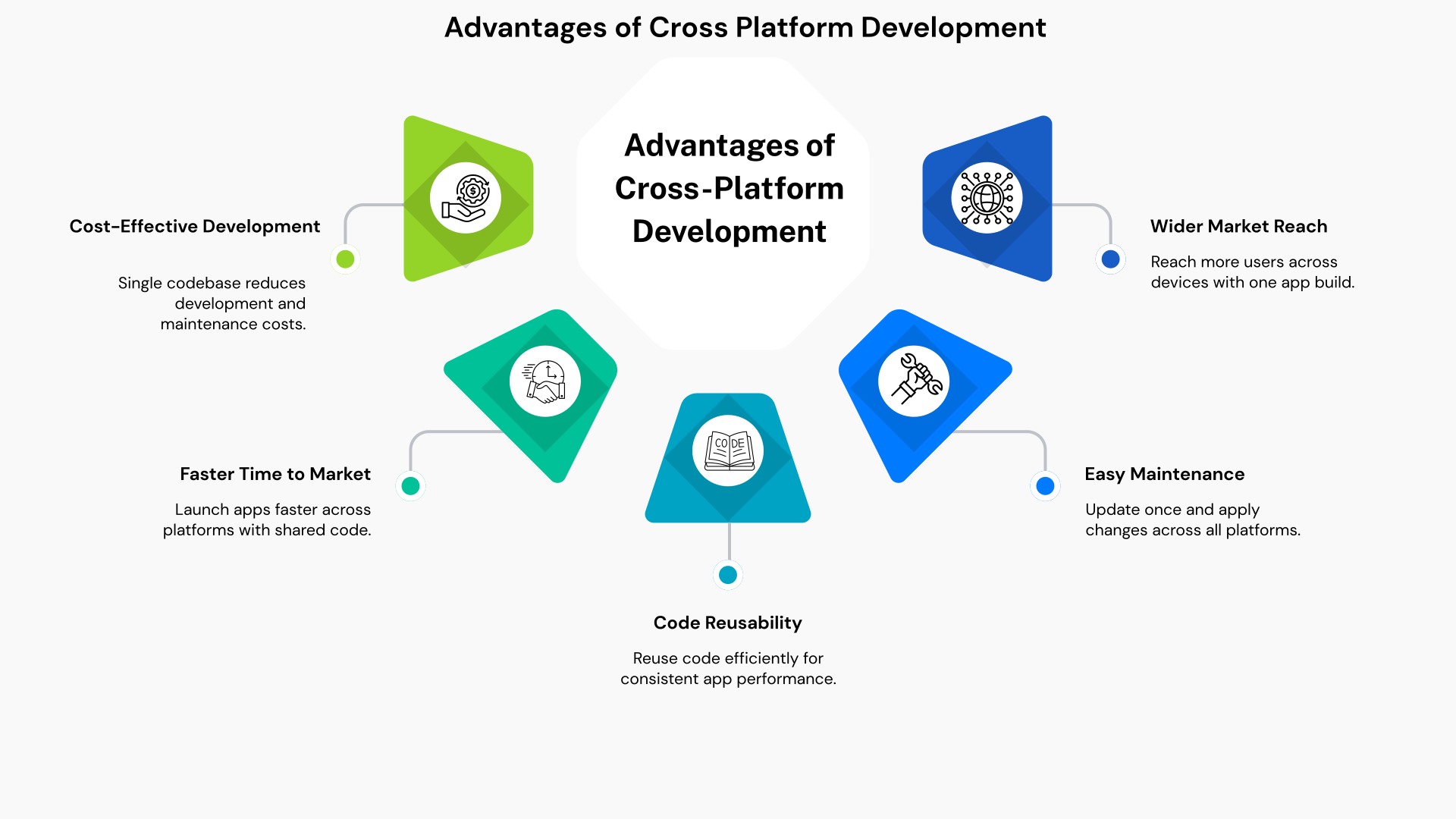
Let’s talk money. Cross-platform development typically reduces costs by 30-40% compared to building separate native apps. Why? You’re essentially paying for one development team instead of two. Your iOS and Android apps share the same codebase, which means less code to write, test, and maintain.

Instead of hiring separate iOS developers proficient in Swift and Android developers skilled in Kotlin, you need a single team working with one framework. This consolidation doesn’t just save on salaries—it reduces project management overhead, streamlines communication, and simplifies quality assurance processes.

Faster Development Cycles

Time is money, especially in the fast-paced tech world. Cross-platform frameworks allow you to launch your app 50-60% faster than native development. Instead of building and debugging two separate applications, your team focuses on a single codebase that works across platforms.

Imagine you’ve identified a market opportunity and need to launch quickly before competitors. Cross-platform development lets you hit both the Apple App Store and Google Play Store simultaneously, maximizing your market penetration from day one. This speed advantage can be the difference between capturing market share and being left behind.

Code Reusability Benefits

Here’s where cross-platform really shines: you can reuse 60-90% of your code across platforms. This isn’t just about the initial build—it’s about every update, feature addition, and bug fix moving forward. Change once, deploy everywhere.

When you need to add a new feature, fix a bug, or update your app’s functionality, you do it once in your shared codebase. Compare this to native development where the same change must be implemented twice—once for iOS and once for Android—doubling the effort, time, and potential for inconsistencies.

Limitations of Cross-Platform Development

Performance Constraints

Let’s be honest—cross-platform apps run through an abstraction layer, which can impact performance. While modern frameworks have dramatically narrowed this gap, resource-intensive applications like high-end games or complex AR/VR experiences may experience 10-15% performance degradation compared to native apps.

The abstraction layer acts as a translator between your code and the native platform, which introduces overhead. For most business applications, social media apps, or e-commerce platforms, this performance difference is negligible and unnoticeable to users. However, if you’re building a graphically intensive 3D game or a real-time video processing app, that performance gap becomes significant.

Platform-Specific Feature Access

Whenever Apple or Google releases new platform features, native developers get immediate access. Cross-platform developers? They wait for framework updates to support these features, which can take weeks or even months. This delay can be frustrating if you’re trying to leverage the latest iOS or Android capabilities.

For instance, when Apple introduces a groundbreaking new ARKit feature or Android releases an innovative material design component, native apps can implement it immediately. Cross-platform apps must wait for their framework maintainers to create support, test it, and release an update. If being first-to-market with cutting-edge features is critical to your competitive advantage, this delay matters.

Also read- Blockchain Integration in Mobile Apps: Complete Guide 2025

What Is Native App Development?

Native app development is the purist’s approach—building applications specifically for iOS using Swift or Objective-C, and for Android using Kotlin or Java. These apps are crafted to leverage every capability of their respective platforms, speaking the native language of the operating system.

It’s like having a tailor-made suit versus buying off-the-rack. Sure, both get you dressed, but one fits perfectly and showcases quality craftsmanship that’s immediately noticeable. Native development means your app is built from the ground up to work seamlessly with the specific platform’s architecture, design guidelines, and performance characteristics.

Native apps have complete access to device hardware, platform-specific APIs, and all the tools that Apple and Google provide to their developers. This unrestricted access translates into apps that feel natural on their respective platforms, delivering experiences that users have come to expect from high-quality mobile applications.

Advantages of Native App Development
Superior Performance

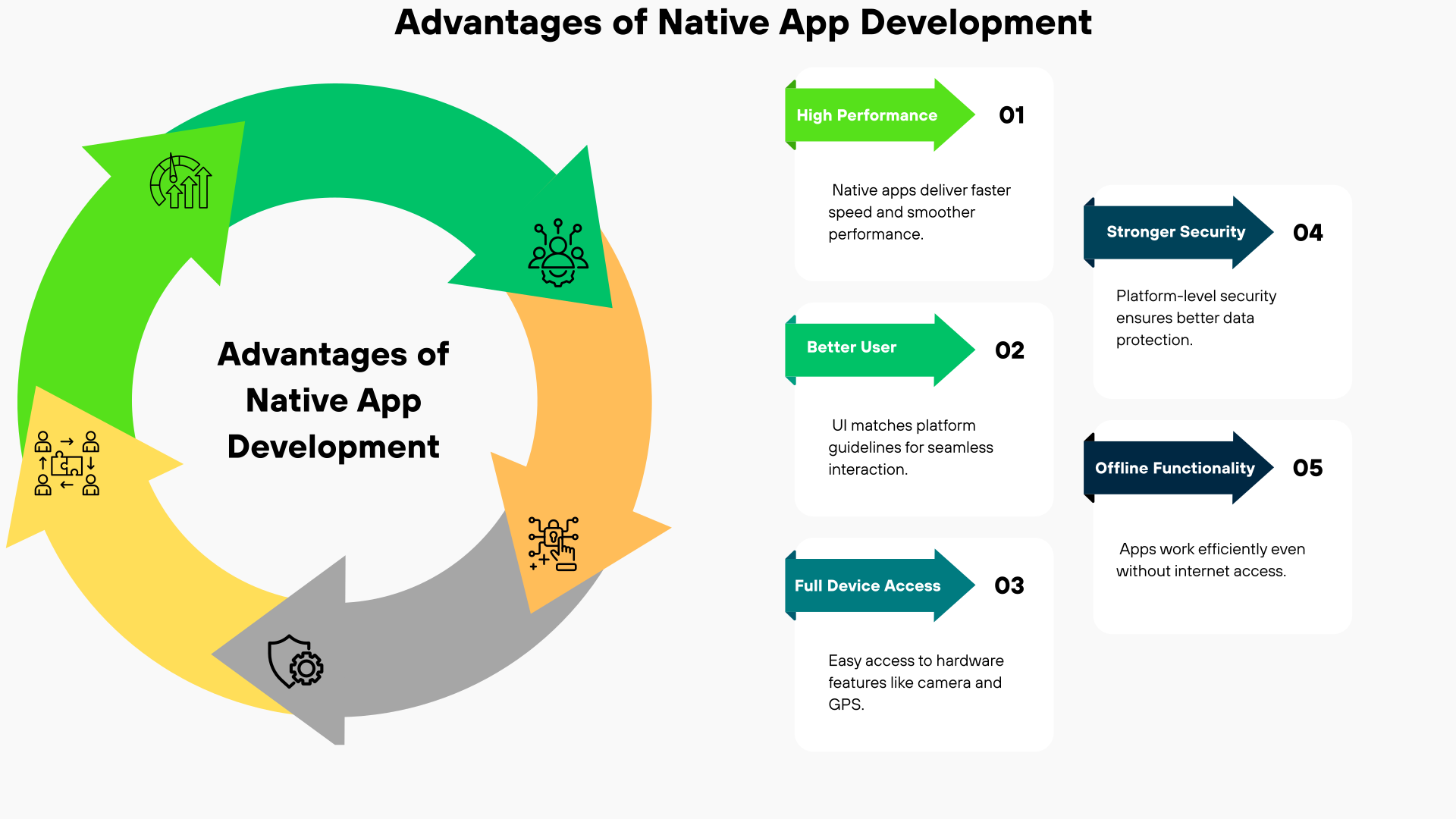
Native apps don’t mess around—they deliver 100% platform optimization and blazing-fast performance. Native applications consistently outperform cross-platform alternatives by 20-40% in computation-heavy tasks because there’s no intermediary layer between your code and the device’s hardware.

When you’re scrolling through Instagram, playing a graphics-intensive game, or using a sophisticated photo editing app, you’re experiencing the power of native development. Every animation is buttery smooth, every interaction feels instantaneous, and the app responds exactly as you’d expect without any lag or stuttering.

Enhanced Security Features

When you’re dealing with sensitive user data, security isn’t negotiable. Native apps provide direct access to platform-specific security features, encryption protocols, and biometric authentication systems without intermediary layers that could introduce vulnerabilities.

Banking apps, healthcare applications, and enterprise software handling confidential information almost always choose native development. Why? Because security breaches can cost companies millions in damages and irreparably harm customer trust. Native development provides the tightest security implementation possible, with direct integration into platform-level security features like Keychain on iOS or KeyStore on Android.

Seamless Platform Integration

Native development gives you unfettered access to device hardware, latest APIs, and platform-specific features the moment they’re released. Want to integrate with Apple’s latest ARKit update or Android’s newest Material Design components? Native development has you covered from day one.

Your app can leverage every sensor, every hardware capability, and every software feature without limitations. Need to access the gyroscope, magnetometer, barometer, or any other device component? Native apps integrate effortlessly. This seamless integration extends to system-level features like widgets, live activities, notifications, and deep linking.

Limitations of Native App Development

Higher Development Costs

Here’s the reality check: building two separate native apps can cost 2x to 2.5x more than cross-platform development. You’re essentially funding two complete projects with separate teams, codebases, and maintenance cycles.

Your iOS team writes code in Swift, your Android team writes code in Kotlin, and neither codebase helps the other. Every feature must be designed, developed, and tested twice. Every bug fix requires two implementations. Every update means double the work. For startups and small businesses with limited budgets, this reality can be prohibitive.

Extended Timeline

Patience is required with native development. Building separate iOS and Android apps typically extends your time-to-market by 40-60%. If you’re racing to launch before competitors, this timeline might not align with your business objectives.

Consider a scenario where your competitor is using cross-platform development and launches their app in 4 months, capturing early market share and building brand awareness. Meanwhile, your native apps won’t be ready for another 3-4 months. In rapidly evolving markets, this head start can be decisive. First-mover advantage is real, and sometimes speed trumps perfection.

Also read- 10 MVP Features You Must Have (And 5 to Skip) | 2025 Guide

The Hybrid-Native Approach Best of Both Worlds

Now, here’s where IPH Technologies brings innovation to the table. Why choose between chocolate and vanilla when you can have swirl? The hybrid-native approach represents the evolution of mobile development thinking—a pragmatic solution that combines the best aspects of both worlds.

Strategic Module Separation

The hybrid-native approach involves identifying which components of your app demand native performance and which can thrive on cross-platform frameworks. We typically architect apps with:

  • Performance-critical modules (real-time processing, complex animations, game engines) built natively
  • Standard UI and business logic developed cross-platform for efficiency
  • Native bridges for platform-specific integrations and hardware access

This strategic separation means you’re not making an all-or-nothing decision. Instead, you’re thoughtfully evaluating each component of your application and choosing the optimal development approach for that specific functionality. It’s like building a car where the engine is precision-engineered for performance, but the interior uses standardized components for cost-efficiency.

Real-World Implementation

In one of our recent projects for a fintech client, we achieved 35% cost savings while maintaining 92% native-level performance by strategically implementing this hybrid approach. The transaction processing engine was built natively for security and speed, while the user interface leveraged React Native for rapid development.

The result? A banking app that processes thousands of transactions daily with bank-grade security, yet cost significantly less than a fully native solution and launched faster than traditional development timelines suggested. This hybrid approach allowed our client to allocate saved budget toward marketing and customer acquisition instead of inflated development costs.

Future-Proofing Your Investment: 5-Year Technology Roadmap

Think beyond the launch date. Your app isn’t a one-and-done project—it’s a living product that will evolve with your business. The development approach you choose today will impact your company for years to come, affecting everything from maintenance costs to feature development speed.

Scalability Considerations

Most successful apps undergo major architectural changes within their first three years. Your initial development choice should accommodate future expansion, whether that’s integrating AI/ML capabilities, supporting IoT devices, scaling to millions of users, or expanding into new markets.

Ask yourself: Where will my app be in three years? Will you need to add augmented reality features? Will you integrate with wearable devices? Will your user base grow from thousands to millions? These aren’t hypothetical questions—they’re strategic considerations that should inform your development decision today. An app that can’t scale with your business becomes a liability rather than an asset.

Technology Evolution Planning

Framework longevity matters immensely. React Native has maintained strong community support since 2015, proving its staying power. Flutter has rapidly grown since 2017, backed by Google’s substantial resources. When choosing your development approach, consider:

  • Framework maturity and community size: Larger communities mean more resources, plugins, and developers
  • Corporate backing: Frameworks supported by major tech companies have more sustainable futures
  • Migration complexity: If pivoting becomes necessary, how difficult will it be?
  • Long-term maintenance: Will you find developers for this technology in five years?

A framework that’s trendy today but lacks corporate backing or community support might become obsolete, forcing expensive rewrites. Conversely, established native development will always be around because it’s maintained directly by Apple and Google. This long-term perspective is crucial for protecting your technology investment.

Also read- Web vs Native vs Hybrid Apps in 2025: The Ultimate Guide

Native vs Cross Platform: Performance Comparison

Let’s cut through the marketing hype and look at real-world performance metrics:

Performance Metric Native Apps Cross-Platform Apps Performance Gap
App Launch Time 1.2 seconds 1.8 seconds 50% slower
Frame Rate (Gaming) 60 FPS 45–55 FPS 8–25% slower
Memory Usage 100 MB baseline 120–140 MB baseline 20–40% higher
API Response Time 150ms 180ms 20% slower
Battery Consumption Standard 10–15% higher Noticeable difference
Animation Smoothness Excellent Good to Very Good Slight difference

Native vs Cross Platform: Time-to-Market

In today’s competitive landscape, speed matters tremendously. Cross-platform development typically delivers your app to market 3-4 months faster than native development. This timeline advantage can be the difference between capturing a market opportunity and watching competitors seize it first.

Consider the implications: If you launch three months earlier, you gain three additional months of user acquisition, revenue generation, and market feedback. You can iterate on your product based on real user data while competitors are still in development. You establish brand presence and build user loyalty before alternatives even exist.

However, if your app requires extensive platform-specific features or peak performance, that native development timeline might be worth the investment. Sometimes slower and better beats fast and mediocre. The key is understanding whether speed or quality is your competitive advantage.

Industry-Specific Recommendations

Different industries have vastly different needs, and the right choice varies accordingly:

FinTech & Banking:

Native development is strongly recommended due to stringent security requirements and performance needs for real-time transactions. Users expect banking apps to be fast, secure, and reliable. Any security breach can be catastrophic, making native development’s robust security features worth the premium cost.

E-Commerce:

Cross-platform works brilliantly for standard shopping experiences. Most e-commerce apps involve browsing products, reading reviews, and completing purchases—functionality that doesn’t require peak performance. However, high-traffic platforms processing thousands of transactions per minute benefit from native optimization.

Healthcare:

Native is preferred for apps handling sensitive medical data and requiring device integration with wearables, medical equipment, or health sensors. HIPAA compliance, data encryption, and secure communication are non-negotiable, making native development’s security advantages critical.

Social Media:

The hybrid-native approach is ideal for social platforms. Use native development for media processing, video encoding, and image filters where performance matters. Use cross-platform for UI/UX, feeds, messaging, and standard interactions where user interface consistency across platforms is valuable.

Enterprise Solutions

Cross-platform excels for internal tools where cost-efficiency and rapid deployment take priority over absolute peak performance. Employee productivity apps, internal communication tools, and business management software typically don’t require the performance ceiling of native development.

Gaming

Native development is essential for graphics-intensive games requiring smooth 60 FPS gameplay, complex physics engines, and intensive GPU usage. Casual puzzle games or turn-based games can work on cross-platform frameworks, but action games, racing games, and 3D experiences demand native performance.

Also read- Top 10 AI & Development Trends at GITEX 2025 | IPH Technologies

When to Choose Native App Development

Choose native development when:

  • Your app requires intensive graphics processing for gaming, AR/VR, or complex visualizations
  • Security is paramount for handling financial transactions, medical records, or government data
  • You need immediate access to latest platform features for competitive differentiation
  • Your target audience is platform-specific, with 80%+ users on iOS or Android
  • Peak performance is non-negotiable because slow apps mean user abandonment
  • You have budget flexibility allowing premium investment for superior quality
  • Your app integrates deeply with device hardware like advanced camera features or sensors
  • Long-term maintenance of separate codebases is manageable for your team

Native development makes sense when your app is your business, not just a tool for your business. If your revenue depends on app performance, user experience, and security, the investment in native development pays dividends through user satisfaction and retention.

When to Choose Cross-Platform App Development

Go cross-platform when

  • You’re working with limited budgets common for startups, MVPs, or small businesses
  • Fast time-to-market is critical for capturing market opportunities
  • Your app features standard UI/UX without complex animations or intensive graphics
  • You need to reach both platforms simultaneously to maximize market penetration
  • Your team has limited platform-specific expertise, making hiring challenging
  • The app doesn’t require intensive hardware integration beyond basic sensors
  • Cost of ownership over multiple years is a primary concern
  • You’re building an MVP to test market viability before committing larger resources
  • Your app is a companion tool rather than your core business offering

Cross-platform development shines when pragmatism trumps perfection. If your app serves as a customer touchpoint for an existing business (like a restaurant, retail store, or service company), cross-platform’s efficiency makes perfect sense.

IPH’s Comprehensive Decision Framework

At IPH Technologies, we’ve developed a proprietary decision matrix that evaluates:

1. Business Objectives:

What are you trying to achieve? Market reach versus time constraints? First-mover advantage or market leadership through quality? Your business strategy should drive technical decisions, not the other way around.

2. Budget Constraints:

What’s your total cost of ownership over 3-5 years? Consider not just initial development but ongoing maintenance, feature additions, and potential scaling costs. A cheaper initial build that becomes expensive to maintain isn’t actually cheaper.

3. Technical Requirements:

What performance do you genuinely need? Be honest about whether you need native performance or if you’re chasing perfection unnecessarily. Most apps don’t need Ferrari performance when a Toyota will suffice.

4. User Experience Goals:

Do you need platform-specific experiences that feel native to each ecosystem, or is unified experience across platforms valuable? Some brands benefit from consistent cross-platform experiences; others want apps that feel perfectly at home on each platform.

5. Maintenance Strategy:

Who will maintain your app long-term? Do you have in-house developers or will you outsource? Native development requires platform-specific expertise, while cross-platform allows more flexible staffing.

6. Team Capabilities:

What expertise does your team have? Hiring Swift developers in some regions can be challenging, while JavaScript developers for React Native are more abundant. Your team’s existing skills matter.

This framework has guided our 430+ clients toward optimal development approaches, ensuring alignment between technical decisions and business goals. We don’t push one solution—we recommend what genuinely serves your interests.

Also read- How Much Does React Native App Development Cost in 2025 | Budget & ROI Insights

Conclusion: Which Is Better Choice in 2026?

So, which is better—native or cross-platform? The truth is, there’s no universal answer. It’s like asking whether a sports car or an SUV is better—the answer depends entirely on what you need the vehicle for, where you’ll drive it, and what you can afford.

In 2026, the lines between native and cross-platform are blurrier than ever. Modern frameworks like Flutter and React Native have dramatically improved performance, narrowing the gap to the point where most users can’t tell the difference. Simultaneously, native development tools have become more efficient, with improved IDEs, better debugging tools, and streamlined workflows.

The emergence of the hybrid-native approach offers a compelling middle ground that wasn’t viable just a few years ago. This strategy acknowledges that not all parts of your app have the same requirements—some components demand native performance while others work perfectly with cross-platform efficiency.

Here’s our recommendation based on a decade of experience and 500+ projects: Start by honestly assessing your priorities.

Choose cross-platform if you’re a startup or small business prioritizing cost-efficiency and speed-to-market. Cross-platform lets you validate your idea, gather user feedback, and generate revenue faster. You can always migrate to native later if your app’s success justifies the investment.

Choose native if you’re building a performance-critical app, handling sensitive data, or creating experiences where every millisecond matters. Native development provides the performance ceiling, security robustness, and platform integration that demanding applications require.

Choose hybrid-native if you want optimal efficiency without compromising on critical performance. This approach requires more sophisticated planning but delivers the best return on investment for complex applications that have both standard and performance-intensive components.

At IPH Technologies, we don’t believe in one-size-fits-all solutions. Our comprehensive suite of services and decade of experience ensures we match the right development approach to your unique business needs. Whether you choose native, cross-platform, or hybrid, we’re committed to delivering exceptional results that help you stay ahead in today’s competitive market.

The mobile landscape will continue evolving. New frameworks will emerge, existing ones will improve, and the debate will continue. But one thing remains constant: the best choice is the one that aligns with your business objectives, budget realities, and user expectations.

Ready to turn your visionary idea into an impactful solution? Let’s talk about which approach will drive your business forward and help you achieve your goals in 2026 and beyond.

Frequently Asked Questions (FAQs)

How much does it cost to develop a native app versus a cross-platform app in 2026?
Native app development typically costs between $80,000-$150,000 for both iOS and Android platforms, while cross-platform development ranges from $50,000-$90,000. Cross-platform offers 30-40% cost savings primarily due to shared codebase and reduced team size. The exact cost depends on app complexity, features, design requirements, and your location. At IPH Technologies, we’ve delivered projects across this range, and we always provide transparent cost breakdowns so you understand exactly where your investment goes.
Can cross-platform apps access device hardware like cameras and GPS?
Absolutely! Modern cross-platform frameworks like React Native and Flutter provide extensive plugins and APIs to access virtually all device hardware including cameras, GPS, accelerometers, gyroscopes, and biometric sensors. However, accessing very new platform-specific features released by Apple or Google might require waiting for framework updates or implementing custom native modules. For 95% of standard hardware access, cross-platform frameworks work flawlessly out of the box.
Which major companies use cross-platform development?
Many Fortune 500 companies successfully use cross-platform frameworks. Facebook and Instagram use React Native for portions of their apps. Alibaba, Google Ads, and BMW use Flutter for various applications. These companies leverage cross-platform development strategically—sometimes for entire apps, sometimes for specific features. The key insight is that even companies with massive budgets choose cross-platform when it makes business sense, proving it’s not just a budget compromise.
How long does it take to develop a mobile app using each approach?
Cross-platform development typically takes 3-5 months for a medium-complexity app, while native development for both iOS and Android requires 6-9 months. This 40-50% time difference stems from writing code once versus twice, unified testing processes, and streamlined deployment. At IPH Technologies, we’ve delivered cross-platform MVPs in as little as 8 weeks and complex native applications in 12 months, depending on requirements. Timeline varies based on feature complexity, design intricacy, and integration needs.
Will users notice performance differences between native and cross-platform apps?
For most standard applications—e-commerce, social media, productivity tools, news apps—users won’t notice significant performance differences. Modern cross-platform frameworks have narrowed the gap considerably. However, for graphics-intensive applications like advanced gaming, real-time video processing, complex AR/VR experiences, or apps with sophisticated animations, users will experience noticeably smoother performance with native apps. The key question is whether your app falls into the performance-critical category or the standard-functionality category.
Can I switch from cross-platform to native (or vice versa) later?
Yes, but it requires substantial investment and essentially means rebuilding your app from scratch. Migrating from cross-platform to native means rewriting for each platform separately, while moving from native to cross-platform requires consolidating two codebases into one. This is why choosing the right approach initially is crucial. At IPH Technologies, we help clients plan their 3-5 year technology roadmap to make informed initial decisions that minimize expensive migrations. If migration becomes necessary, we provide phased approaches that minimize disruption.
Which approach is better for startups with limited budgets?
Cross-platform development is generally superior for startups and MVPs due to 30-40% lower costs, 40-50% faster time-to-market, and ability to reach both iOS and Android audiences simultaneously. This efficiency allows startups to validate their idea, gather user feedback, and generate revenue faster—all critical for startup survival. You can always invest in native development later if your app’s success justifies it. Many of our startup clients began with cross-platform MVPs and migrated to native or hybrid-native approaches after achieving product-market fit and securing funding.
Does native development provide better app store rankings?
No, app store algorithms don’t inherently favor native over cross-platform apps. What matters is app performance, user engagement, crash rates, reviews, ratings, and retention metrics. A well-optimized cross-platform app will rank just as well as a native app if it delivers excellent user experience. However, if native development results in measurably better performance and user satisfaction, this indirectly contributes to better rankings through improved engagement metrics. Focus on delivering value to users regardless of development approach, and rankings will follow.
Avatar
Shashi Mishra

Verified CTO

About the Author

I’m Shashi Mishra, CTO at IPH Technologies. I build secure, reliable, future-ready digital products that solve real problems without unnecessary complexity. My work focuses on AI-driven development, cloud-native architecture, and a strict compliance-first approach, ensuring every product meets global security, performance, and regulatory standards. I’ve helped companies modernize systems, integrate AI, and scale platforms with clean engineering and strong user experience. I enjoy working with teams and founders who want to innovate fast while maintaining quality and trust.


WhatsApp
Call us
Get a Call Back