

























































Highlights
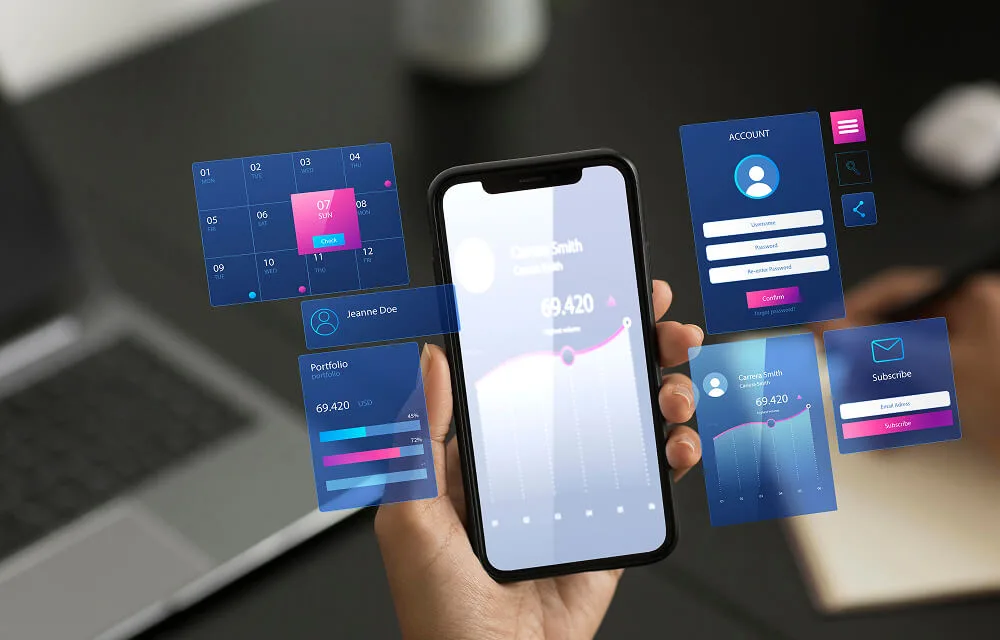
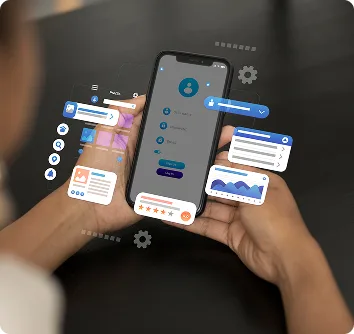
UI/UX Design
User-first, visually engaging interfaces crafted to enhance usability, boost engagement, and deliver seamless digital experiences.
Branding
Strategic brand identities that communicate your vision, build trust, and create a memorable presence across all touchpoints.
Wireframing
Structured layouts and user flows that map the product journey clearly before development begins, saving time and cost.
Prototype Design
Interactive prototypes that simulate real user interactions, helping validate ideas and refine experiences early.
Design Systems
Scalable design frameworks and reusable components that ensure consistency, speed, and efficiency across your product.
UI/UX Design

We design intuitive, user-centric interfaces that enhance engagement, improve usability, and deliver seamless digital experiences across all devices.

UI UX Design
  • User research and wireframing for clear flows
  • Modern UI design using Figma and Adobe XD
  • Interactive prototypes for better user experience testing
  • Usability testing and performance optimization improvements
  • Responsive design across all devices and screens
  • Scalable design systems with reusable UI components
Branding & Identity

We craft strong brand identities that communicate your vision, build trust, and create a lasting impression across all digital and offline touchpoints.

Branding and Identity
  • Logo design and brand identity creation
  • Brand guidelines and visual consistency systems
  • Color palette and typography selection strategy
  • Marketing materials and brand asset design
  • Social media branding and creative direction
  • Rebranding and brand positioning strategies
Wireframing

We create structured wireframes that define layout, user flow, and functionality, helping visualize ideas and build a strong foundation before design and development.

Wireframing
  • Low fidelity wireframes for initial structure
  • High fidelity wireframes with detailed layouts
  • User flow mapping for better navigation
  • Content hierarchy and layout planning
  • Clickable wireframes for early feedback
  • Clear structure before UI design phase
Prototype Design

We design interactive prototypes that simulate real user experiences, helping validate ideas, test functionality, and refine products before development.

Prototype Design
  • Interactive prototypes for real user experience
  • Clickable designs to test product functionality
  • User journey simulation for better understanding
  • Rapid prototyping for faster design validation
  • Feedback driven improvements before development
  • High fidelity prototypes with smooth interactions
Design Systems

We build scalable design systems that ensure consistency, improve collaboration, and accelerate product development across all platforms and teams.

Design Systems
  • Reusable UI components for consistent design
  • Design tokens for colors typography spacing
  • Component libraries for faster development workflow
  • Consistent branding across all digital products
  • Documentation for design and development teams
  • Scalable systems for growing product ecosystems
Highlights
Mobile Apps Development
High-performance Android and iOS mobile applications built with modern technologies, delivering seamless user experiences and robust functionality.
Desktop Application Dev
Powerful and secure desktop applications tailored for Windows, macOS, and Linux, designed for performance, scalability, and reliability.
Web App Development
Scalable and responsive web applications using modern frameworks like React, Angular, and Vue for fast, dynamic, and engaging experiences.
Cross-Platform
Cost-effective cross-platform solutions using Flutter and React Native, enabling a single codebase for both iOS and Android platforms.
PWA Development
Progressive Web Apps that combine the best of web and mobile, offering offline access, fast loading, and app-like experiences directly in the browser.
Highlights
Mobile App

Android

iOS

Flutter

Hybrid

Optimize

Native

Swift

Firebase

Android App Development

We craft powerful, scalable Android applications with intuitive UX, high performance, and deep integration with Google services.

Android App
  • Custom Android app development
  • Native Kotlin & Java apps
  • Google Play Store deployment
  • Material Design UI implementation
Kotlin

Kotlin

Java

Java

Flutter

Flutter

Android Studio

Android

Jetpack

Jetpack

iOS App Development

We build high-quality, user-centric iOS apps combining performance, security, and seamless design for Apple devices.

iOS App
  • Custom iOS app development
  • Native Swift & SwiftUI apps
  • Seamless Apple service integration
  • App Store review & deployment
Swift

Swift

SwiftUI

SwiftUI

Obj-C

Obj-C

Xcode

Xcode

Flutter

Flutter

Cross-Platform Apps

We develop cross-platform mobile apps that run flawlessly on both iOS and Android from a single codebase, saving time and cost.

Cross-Platform App
  • Single codebase for iOS & Android
  • Flutter & React Native development
  • Native-like performance & UI
  • Faster time-to-market
React Native

React Native

TypeScript

TypeScript

Redux

Redux

Firebase

Firebase

Dart

Dart

Hybrid Apps

We build hybrid mobile apps that blend web technologies with native capabilities, delivering broad reach and cost-effective development.

Hybrid App
  • Web + native feature integration
  • Ionic & Cordova frameworks
  • Reduced development costs
  • Multi-platform publishing
Flutter

Flutter

Dart

Dart

Firebase

Firebase

SQLite

SQLite

App Optimization

We enhance existing mobile apps with performance tuning, crash fixes, battery efficiency, and faster load times for a superior user experience.

App Optimization
  • Performance profiling & tuning
  • Memory & battery optimization
  • Crash analysis & bug fixing
  • App size reduction & load speed
Xcode

Xcode

Android Studio

Android

Firebase

Firebase

Java

Java

Highlights
Desktop App

Windows

macOS

Linux

Desktop

Electron

Qt

WinForms

GTK

Windows Apps

We develop robust Windows desktop applications using modern Microsoft technologies, delivering powerful tools for enterprise and consumer use.

Windows App
  • Custom Windows desktop applications
  • WPF & WinForms development
  • Microsoft Store deployment
  • Windows API & system integration
C#

C#

.NET

.NET

Electron

Electron

Visual Studio

Visual Studio

SQL Server

SQL Server

macOS Apps

We create elegant, high-performance macOS applications that leverage Apple's native frameworks for a smooth and delightful desktop experience.

macOS App
  • Native macOS app development
  • SwiftUI & AppKit integration
  • Mac App Store submission
  • Apple Silicon optimization
Swift

Swift

SwiftUI

SwiftUI

Obj-C

Obj-C

Xcode

Xcode

Cross-Platform Desktop

We develop cross-platform desktop applications that run seamlessly on Windows, macOS, and Linux from a single shared codebase.

Cross-Platform Desktop
  • Single codebase for all platforms
  • Electron & Tauri frameworks
  • Flutter for desktop support
  • Consistent UI across OS environments
Flutter

Flutter

Electron

Electron

Node.js

Node.js

TypeScript

TypeScript

Docker

Docker

Electron Apps

We build feature-rich Electron desktop apps using web technologies, enabling cross-platform deployment with native OS capabilities.

Electron App
  • Electron framework development
  • Node.js & Chromium integration
  • Auto-updater & native notifications
  • Cross-OS packaging & distribution
Electron

Electron

Node.js

Node.js

React

React

Vue

Vue

TypeScript

TypeScript

Highlights
Web App

React

Node.js

PHP

Laravel

Python

MySQL

JavaScript

HTML

CSS

React Development

We build fast, component-driven React web applications with modern state management, reusable UI, and seamless API integration.

React Development
  • Custom React SPA development
  • Redux & Context API state management
  • Next.js SSR & SSG support
  • REST & GraphQL API integration
React

React

Next.js

Next.js

Redux

Redux

TypeScript

TypeScript

Tailwind

Tailwind

Angular Development

We develop enterprise-grade Angular applications with structured architecture, two-way data binding, and robust TypeScript foundations.

Angular Development
  • Custom Angular SPA development
  • RxJS & NgRx state management
  • Angular Material UI components
  • Lazy loading & performance tuning
Angular

Angular

TypeScript

TypeScript

HTML

HTML

CSS

CSS

NPM

NPM

Node.js Backend

We build scalable, event-driven Node.js backends with RESTful APIs, real-time capabilities, and seamless database integrations.

Node.js Backend
  • RESTful & GraphQL API development
  • Express.js & Fastify frameworks
  • WebSocket & real-time features
  • MongoDB, PostgreSQL integration
Node.js

Node.js

Express

Express

MongoDB

MongoDB

GraphQL

GraphQL

Docker

Docker

Cloud Web Apps

We design and deploy cloud-native web applications on AWS, Azure, and GCP — scalable, secure, and built for high availability.

Cloud Web Apps
  • AWS, Azure & GCP deployment
  • Serverless architecture development
  • Auto-scaling & load balancing
  • CI/CD pipeline configuration
AWS

AWS

Azure

Azure

GCP

GCP

Docker

Docker

Kubernetes

Kubernetes

Full-Stack Dev

We deliver complete full-stack web solutions — from pixel-perfect frontends to robust backends — as a unified, end-to-end product.

Full-Stack Dev
  • Frontend & backend development
  • MERN & MEAN stack expertise
  • Database design & API architecture
  • DevOps, hosting & deployment
React

React

Node.js

Node.js

MongoDB

MongoDB

PostgreSQL

PostgreSQL

Docker

Docker

Highlights
Cross Platform

Flutter

R. Native

Xamarin

Ionic

Reuse

Electron

NW.js

Framework7

SwiftUI

Flutter Development

We build beautiful, natively compiled Flutter applications for mobile, web, and desktop from a single Dart codebase with pixel-perfect UI.

Flutter Development
  • Flutter mobile & web apps
  • Dart language development
  • Custom widget & animation creation
  • Firebase & REST API integration
Flutter

Flutter

Dart

Dart

Firebase

Firebase

GetX

GetX

Riverpod

Riverpod

React Native

We develop high-performance React Native apps that deliver a truly native experience on both iOS and Android using JavaScript and React.

React Native
  • Cross-platform iOS & Android apps
  • React Native CLI & Expo development
  • Native module & bridge integration
  • Redux & MobX state management
React Native

React Native

Redux

Redux

TypeScript

TypeScript

Firebase

Firebase

Xamarin

We develop Xamarin-based cross-platform apps using C# and .NET, enabling shared business logic across iOS, Android, and Windows.

Xamarin
  • Xamarin.Forms & MAUI apps
  • Shared C# codebase development
  • Native API access via bindings
  • Enterprise app integration
Xamarin

Xamarin

C#

C#

.NET MAUI

.NET

Azure

Azure

Visual Studio

Visual Studio

Ionic Framework

We create stunning Ionic applications that combine the power of web technologies with native device features for a seamless mobile experience.

Ionic Framework
  • Ionic Angular & React apps
  • Capacitor native plugin integration
  • Responsive mobile-first UI
  • PWA & hybrid app deployment
Ionic

Ionic

Angular

Angular

React

React

Vue

Vue

Code Reusability

We build reusable app architectures, reducing duplication, accelerating development, and ensuring seamless cross-platform consistency.

Code Reusability
  • Shared component library creation
  • Monorepo architecture setup
  • Design system implementation
  • Platform-agnostic business logic
Turborepo

Turborepo

Storybook

Storybook

Flutter

Flutter

React Native

React Native

Highlights
PWA

PWA

Offline

Push

Fast

App-Like

IndexedDB

Installable

Sync

Progressive Web Apps

We build Progressive Web Apps that combine the best of web and mobile — installable, reliable, and fast across all devices and browsers.

Progressive Web Apps
  • PWA architecture & manifest setup
  • Service worker implementation
  • Installable & home screen support
  • Cross-browser compatibility
HTML5

HTML5

CSS3

CSS3

JavaScript

JavaScript

Workbox

Workbox

Lighthouse

Lighthouse

Offline Support

We implement robust offline capabilities in your web apps using service workers and smart caching so users stay productive without connectivity.

Offline Support
  • Service worker caching strategies
  • IndexedDB offline data storage
  • Background sync implementation
  • Graceful offline fallback pages
Service Worker

ServiceWorker

Workbox

Workbox

IndexedDB

IndexedDB

Cache API

Cache API

Background Sync

BackgroundSync

Push Notifications

We integrate web push notification systems into your PWA to re-engage users with timely, personalized alerts even when the app is not open.

Push Notifications
  • Web Push API implementation
  • VAPID key & subscription management
  • Notification scheduling & targeting
  • Cross-browser push support
Web Push

Web Push

Firebase FCM

Firebase

OneSignal

OneSignal

Node.js

Node.js

Workbox

Workbox

Fast Loading

We optimize PWAs for lightning-fast load times using code splitting, lazy loading, and caching to deliver exceptional Core Web Vitals scores.

Fast Loading
  • Code splitting & lazy loading
  • Image & asset optimization
  • Core Web Vitals improvement
  • CDN & caching configuration
Webpack

Webpack

Lighthouse

Lighthouse

Vite

Vite

Cloudflare

Cloudflare

Workbox

Workbox

App-Like Experience

We craft PWAs that feel and behave like native mobile apps — with smooth animations, full-screen mode, gestures, and seamless transitions.

App-Like Experience
  • Full-screen & standalone display mode
  • Touch gestures & swipe navigation
  • Smooth page transitions & animations
  • App shell architecture
Web Manifest

Web Manifest

CSS Animations

CSS

Framer Motion

FramerMotion

React

React

Vue

Vue

Highlights
Custom Software
Fully tailored software solutions designed to match your unique business processes, improving efficiency and driving long-term growth.
Backend Systems
Robust and secure backend architectures built for high performance, scalability, and seamless integration with your applications.
Database Design
Efficient and scalable database structures optimized for fast queries, data integrity, and reliable performance at scale.
Cloud-Native
Modern cloud-native solutions using microservices and serverless architecture on AWS, Azure, and GCP for maximum flexibility and scalability.
API Development
Secure and well-documented RESTful and GraphQL APIs that enable seamless communication between systems and third-party integrations.
Custom Software

We develop tailored software solutions that align with your business goals, streamline operations, and deliver scalable, high-performance digital systems.

Custom Software Development
  • Custom software tailored to business needs
  • Scalable architecture for long term growth
  • Secure and high performance application development
  • API integration with third party services
  • Cloud based and enterprise software solutions
  • Ongoing maintenance and system optimization support
Backend Systems

We build robust backend systems that power applications with secure, scalable architecture, efficient data handling, and seamless integrations.

Backend Systems
  • Secure backend architecture and system design
  • Database design and performance optimization
  • API development for seamless integrations
  • Authentication and authorization system implementation
  • Server side logic and business workflows
  • Scalable infrastructure for high traffic applications
Database Design

We design efficient database structures that ensure data integrity, optimize performance, and support scalable, reliable application systems.

Database Design
  • Structured database schema design and planning
  • Efficient data modeling for scalable systems
  • Database optimization for faster query performance
  • Relational and non relational database solutions
  • Secure data storage and access management
  • Backup strategies and data recovery solutions
Cloud-Native Apps

We build cloud-native applications designed for scalability, resilience, and flexibility using modern cloud infrastructure and microservices architecture.

Cloud Native Apps
  • Cloud first architecture for scalable applications
  • Microservices based system design and deployment
  • Containerization using Docker and Kubernetes tools
  • Auto scaling infrastructure for high availability
  • Continuous integration and continuous deployment pipelines
  • Secure cloud environments with monitoring and logging
API Development

We develop secure and scalable APIs that enable seamless communication between systems, applications, and third party services.

API Development
  • RESTful API development for web applications
  • Secure API authentication and authorization systems
  • Third party API integration and data exchange
  • Scalable APIs for high traffic applications
  • API documentation for easy developer integration
  • Performance optimization and API response tuning
Highlights
Manual Testing
Detailed human-driven testing to uncover edge cases, validate user flows, and ensure a seamless, intuitive user experience.
Test Automation
Automated testing frameworks using Selenium, Cypress, and Appium to accelerate regression cycles and improve release confidence.
Performance
Load, stress, and scalability testing to ensure your application performs reliably under high traffic and demanding conditions.
Security Testing
Comprehensive security assessments including penetration testing and vulnerability analysis to safeguard your application.
Mobile QA
End-to-end mobile application testing across devices and platforms to ensure consistent performance, usability, and stability.
Manual Testing

We perform detailed manual testing to ensure software quality, identify issues early, and deliver reliable, user-friendly applications.

Manual Testing
  • Functional testing for application core features
  • UI testing for consistent user experience
  • Cross browser and device compatibility testing
  • Test case creation and execution processes
  • Bug tracking and detailed issue reporting
  • Regression testing after feature updates
Test Automation

We implement automated testing solutions to improve efficiency, reduce manual effort, and ensure faster, reliable software delivery.

Test Automation
  • Automated test scripts for faster execution
  • Regression testing using automation frameworks
  • Continuous testing within CI CD pipelines
  • Test coverage improvement across application modules
  • Reusable automation scripts for long term scalability
  • Performance and load testing automation solutions
Performance Testing

We evaluate application performance to ensure speed, stability, and scalability under different workloads and real-world conditions.

Performance Testing
  • Load testing for high traffic scenarios
  • Stress testing to identify system limits
  • Performance benchmarking and response time analysis
  • Scalability testing for growing user demands
  • Memory and resource usage optimization checks
  • Bottleneck identification and performance improvements
Security Testing

We identify vulnerabilities and secure applications against threats, ensuring data protection, compliance, and safe user interactions.

Security Testing
  • Vulnerability assessment and risk analysis testing
  • Penetration testing to identify security gaps
  • Authentication and authorization security validation
  • Data protection and encryption testing processes
  • Secure code review and security best practices
  • Compliance testing with industry security standards
Mobile QA

We ensure mobile applications deliver flawless performance, usability, and compatibility across devices, platforms, and environments.

Mobile QA
  • Mobile app testing across multiple devices
  • iOS and Android platform compatibility testing
  • UI testing for consistent mobile experience
  • Network and performance testing on mobile
  • App usability and user experience validation
  • App store readiness and release testing
Highlights
CI/CD Pipelines
Automated pipelines for building, testing, and deploying code, enabling faster releases, fewer errors, and continuous delivery.
Infrastructure
Scalable infrastructure provisioning using Infrastructure as Code (IaC) with Terraform and CloudFormation for consistency and reliability.
Deployment
Zero-downtime deployment strategies including blue-green and rolling deployments to ensure smooth and reliable releases.
Containerisation
Container-based architectures using Docker and Kubernetes for portability, scalability, and efficient resource utilization.
Monitoring
Real-time monitoring and observability using tools like Grafana, Prometheus, and Datadog to ensure system health and performance.
CI/CD Pipelines

We implement CI/CD pipelines to automate build, testing, and deployment, enabling faster releases, improved quality, and continuous delivery.

CI CD Pipelines
  • Automated build and deployment pipeline setup
  • Continuous integration for faster code validation
  • Continuous delivery for seamless release cycles
  • Integration with Git version control systems
  • Automated testing within CI CD workflows
  • Monitoring and rollback strategies for deployments
Infrastructure

We design and manage reliable infrastructure to ensure scalability, security, and high availability for modern applications and systems.

Infrastructure
  • Cloud infrastructure setup and configuration services
  • Server management and deployment automation solutions
  • High availability and load balancing implementation
  • Monitoring and logging for system performance tracking
  • Security hardening and infrastructure access controls
  • Scalable environments for growing application demands
Deployment

We manage seamless deployment processes to ensure applications are delivered efficiently, securely, and ready for production environments.

Deployment
  • Application deployment to cloud and servers
  • Automated deployment workflows for faster releases
  • Environment configuration and setup management
  • Version control and release management processes
  • Rollback strategies for safe deployment updates
  • Post deployment monitoring and performance checks
Containerization

We use containerization to package applications for consistency, scalability, and efficient deployment across different environments.

Containerization
  • Application containerization using Docker technologies
  • Environment consistency across development and production
  • Container orchestration with Kubernetes platforms
  • Scalable container deployment for microservices architecture
  • Efficient resource utilization and system isolation
  • Integration with CI CD pipelines for automation
Monitoring

We monitor systems and applications in real time to ensure performance, reliability, and quick issue detection and resolution.

Monitoring
  • Real time system performance monitoring tools
  • Application health checks and uptime tracking
  • Error tracking and issue alerting systems
  • Log management and analysis for debugging
  • Resource usage monitoring across infrastructure layers
  • Proactive issue detection and incident response
Highlights
Roadmap Planning
Strategic product roadmaps aligned with business goals, helping prioritize features, manage timelines, and deliver maximum value.
Team Coordination
Efficient coordination across design, development, and QA teams to ensure smooth collaboration and on-time project delivery.
Growth Strategy
Data-driven product strategies focused on user acquisition, retention, and continuous improvement to drive sustainable growth.
Agile Sprints
Agile methodologies like Scrum and Kanban to deliver iterative releases, improve flexibility, and maintain predictable progress.
Stakeholder Mgmt
Clear communication and alignment with stakeholders through regular updates, reporting, and feedback loops to ensure project success.
Roadmap Planning

We create strategic roadmaps that align with your business goals, helping prioritize features, plan execution, and ensure long-term success.

Roadmap Planning
  • Product roadmap planning aligned with business objectives
  • Feature prioritization based on user and market needs
  • Timeline planning for efficient project execution phases
  • Technology stack selection for scalable solutions
  • Risk assessment and mitigation strategy planning
  • Continuous roadmap updates based on performance insights
Team Coordination

We ensure smooth collaboration across teams to improve productivity, streamline workflows, and deliver projects efficiently on time.

Team Coordination
  • Cross functional team collaboration and communication
  • Agile workflow management and sprint planning processes
  • Task tracking and project progress visibility tools
  • Clear role assignment and responsibility management
  • Regular updates and performance review meetings
  • Efficient coordination between design development teams
Growth Strategy

We develop data-driven growth strategies to scale your business, increase user acquisition, and maximize long-term revenue potential.

Growth Strategy
  • Market analysis and competitive growth planning strategies
  • User acquisition and retention optimization techniques
  • Data driven decision making and performance insights
  • Scalable business models for long term expansion
  • Conversion rate optimization across digital platforms
  • Continuous growth tracking and strategy refinement
Agile Sprints

We follow agile sprint methodologies to deliver faster iterations, improve collaboration, and ensure continuous product improvement.

Agile Sprints
  • Sprint planning and backlog prioritization processes
  • Daily standups for team alignment and progress tracking
  • Iterative development with continuous feedback cycles
  • Task management using agile tools and workflows
  • Regular sprint reviews and performance retrospectives
  • Faster delivery with incremental feature releases
Stakeholder Management

We ensure clear communication and alignment with stakeholders to drive project success, transparency, and informed decision making.

Stakeholder Management
  • Regular stakeholder communication and reporting processes
  • Requirement alignment with business goals and expectations
  • Feedback collection and continuous improvement strategies
  • Transparent project updates and progress visibility
  • Risk identification and stakeholder expectation management
  • Collaborative decision making for project success

How Kotlin Multiplatform is Transforming Mobile App Development

Mobile app development has evolved much over the past decade. With the advent of smartphones, app developers have been working day and night to develop apps that are compatible with both Android and iOS. Nevertheless, making apps for each one of these systems separately is time-consuming and costly. This is where Kotlin Multiplatform mobile app development enters the scene.

It is a revolutionary solution in the context of mobile app development since it facilitates easier creation of cross-platform compatible apps with less effort. Here in this blog, we are going to learn how Kotlin Multiplatform is transforming app development, its advantages, and why it is better than other solutions like Flutter.

What is Kotlin Multiplatform?

Kotlin Multiplatform is the technology that allows for the sharing of code between platforms like Android, iOS, and even web applications. It is Kotlin-based, leveraging a cutting-edge programming language that’s already a favorite when creating Android applications. Developers can create one with Kotlin Multiplatform and apply it to many platforms. Hence, the time and effort saved.

The concept is straightforward: rather than writing isolated code for Android and iOS, you write shared code that can be executed on both. The shared code deals with the essential logic of the application, and UI and device code are applied for the user interface and device features. This also refers to shared code in Kotlin Multiplatform.

Also Read – Grand Central Dispatch (GCD)

Kotlin Multiplatform Benefits

Kotlin Multiplatform has many advantages for developers and businesses alike. Let us get a detailed view of some of the major advantages:

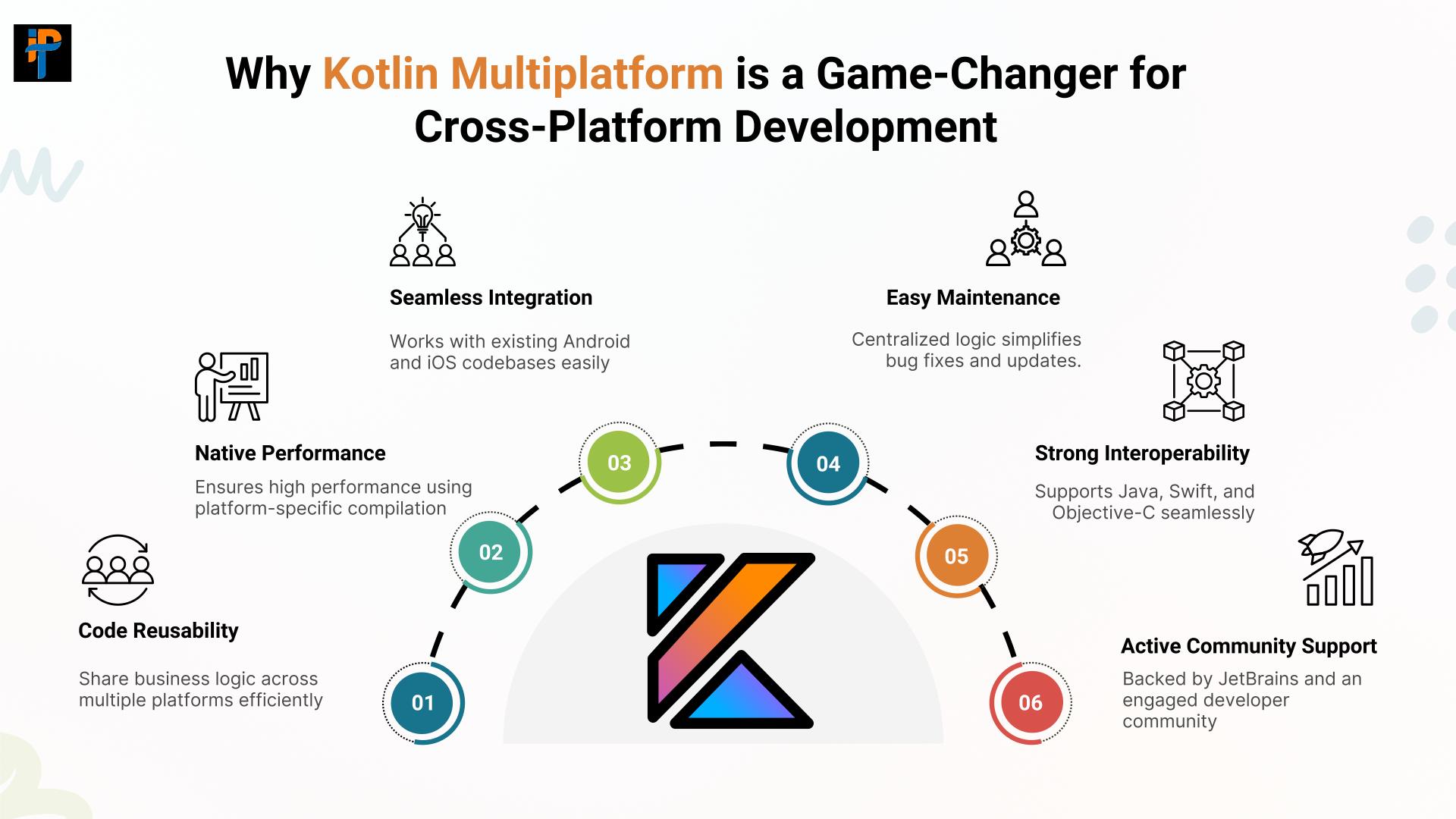
1. Code Reusability

Code reusability is perhaps the biggest advantage of Kotlin Multiplatform. Rather than writing code twice (for iOS and Android), the developer can write it once and reuse it on other platforms. It is time-saving and minimizes the chance of error.

2. Faster Development

Developers are able to develop apps quicker with shared code. They do not have to invest as much time in writing and testing code for every platform. Apps can be brought into the market more quickly, which is a huge benefit for companies.

3. Cost-Effective

Because there is less code to be developed, organizations incur less development costs. It is cheaper to have one team develop common code than to have two different teams for Android and iOS.

4. Improved Performance

Kotlin Multiplatform applications are optimized for performance. Unlike some other cross-platform frameworks, Kotlin Multiplatform does not use a virtual machine or interpreter. Rather, Kotlin Multiplatform mobile app development compiles code directly to native binaries so the apps run more nimbly and efficiently.

5. Flexibility

Kotlin Multiplatform allows developers to write platform-specific code when necessary. This allows them to leverage the native capabilities of each platform without these platforms sharing much code.

6. Native UI

Although KMP facilitates code sharing, it does not limit UI development. Developers can utilize platform-specific UI components such as Jetpack Compose for Android and SwiftUI for iOS, providing a native look and feel.

7. Smooth Integration

If the teams are already Kotlin-based, it is not an issue to apply KMP. It is a building upon already available Kotlin knowledge, which allows developers to port and create applications for various platforms easily.

Why is Kotlin Multiplatform Mobile so Popular for App Development?
No Middleman Needed Between Different Codes

There are also other development tools for apps like Xamarin, Flutter, and React Native, which rely on their own respective libraries and tools, so they need to have a “middleman” that speaks to Android and iOS. Kotlin doesn’t! It lets you utilize the tools that you already have on Android and iOS, so you won’t lose time or money to make other connections between code forms.

Write Your App’s Brain Once and Use It Everywhere

The “brain” of the app (business logic) determines what makes it all tick. Normally, while developing an app for Android and iOS, developers have to code this logic twice in two different programming languages, which may cause mistakes. With Kotlin, you code the logic once, and it will run on both platforms. Future updates become a cakewalk, and it saves time and effort.

Complete Freedom to Style the App’s Appearance

Kotlin decouples the shared code from the app’s appearance. This means that developers can style the app’s appearance however they want, with no restrictions. If something must be done differently for iOS and Android, Kotlin has a simple way of handling it through the functionality of “expect/actual.”.

Shared code in Kotlin Multiplatform

Shared code is exactly what Kotlin Multiplatform mobile app development is about. Here is how it goes:

Shared Module: They implement a shared module that houses the app’s core logic. It is developed in Kotlin and can be utilized across various platforms.

Platform-Specific Code:Developers implement platform-specific code for something like device-specific functionality or UI. They do this so the app will appear native on every platform.

For example, let us say you are building a weather app. The code that fetches weather data from an API can be shared between Android and iOS. However, the code that displays the weather information (like the design of the app) can be written separately for each platform.

Also Read – How much it cost to make an app?

Kotlin vs Flutter for Cross-Platform Apps

Aspect Kotlin Multiplatform Flutter
Programming Language Kotlin Dart
Code Sharing Shares business logic; UI is platform-specific Shares entire codebase, including UI
Performance Near-native performance using native APIs High performance with its own engine, but not fully native
IDE Support Android Studio, IntelliJ IDEA, Xcode Android Studio, IntelliJ IDEA, VS Code
Community Support Growing community with active development Large community with extensive documentation
Ease of Migration Smooth transition for Android developers familiar with Kotlin Suitable for developers with web development background due to Dart’s similarity to JavaScript

For mobile app cross-platform development, Kotlin Multiplatform and Flutter are the two trendy options. They are both highly capable but differently work.

Kotlin Multiplatform

Language: Utilizes Kotlin, which is already mature enough to be used with Android development.
Code Sharing: Has code share between platforms but includes platform-specific code where essential.
Performance: Compiles down to native binaries, providing a higher performance level.
Flexibility: More adaptable since it offers the ability for developers to utilize platform-specific capabilities.

Flutter

Language: Functions utilizing Dart, which is built by Google.
Code Sharing: Shares a majority of the code, such as UI, between platforms.
Performance: Dependent on a rendering engine, which could impact performance from time to time.
UI: Employs its own widgets, which do not appear and feel native on every platform.

Where Flutter is good for apps requiring the same UI on different platforms, Kotlin Multiplatform is suitable for apps requiring high performance and flexibility.

Best Frameworks for Kotlin Multiplatform

Kotlin Multiplatform mobile app development supports a range of frameworks and libraries that simplify development. Some of the most popular frameworks for Kotlin Multiplatform are:

1. Ktor

Ktor is an asynchronous server and client framework. It’s lightweight and Kotlin Multiplatform compatible, making it an excellent option for networking in your app.

2. SQLDelight

SQLDelight is a database library that produces typesafe Kotlin APIs out of SQL queries. It is an excellent database tool for database work in Kotlin Multiplatform projects.

3. Moko MVVM

Moko MVVM is a library used to make developers implement the Model-View-ViewModel (MVVM) architecture in Kotlin Multiplatform applications. It is particularly helpful in UI logic sharing across platforms.

4. Compose Multiplatform

Compose Multiplatform is a UI library for creating common UIs for desktop applications, Android, and iOS. It is constructed on top of Jetpack Compose, which is widely used for Android application development.

Performance Optimization in Kotlin Multiplatform

Kotlin Multiplatform mobile app development demands that performance should be of utmost concern. Apps need to be snappy and responsive. Kotlin Multiplatform supports various ways for performance optimization:

Smart Code Sharing – Share core business logic and non-UI code only between platforms. Reserve UI and performance-critical portions are platform-specific in order to attain speed and responsiveness.

Using Native APIs – For an activity that requires high performance (e.g., animations, file I/O, or networking), use native APIs of each platform rather than shared code. This will get your app run as fast as possible on each platform.

Good Multithreading – Utilize Kotlin Coroutines to carry out background operations without causing any slowdown, such as downloading data or handling big files. It prevents the freeze of UI and makes the app interactive.

Good Memory Usage – Eliminate memory leaks by managing resources like a pro. Prevent pointless object generation and utilize libraries such as kotlinx.serialization to handle data in an efficient manner.

Decreasing Platform Overhead – Minimize unnecessary abstractions that slow down performance. Directly working with the platform APIs when necessary can result in a performance boost.

Testing and Profiling – Test and profile your app on a regular basis using tools such as Android Studio’s profiler and Xcode Instruments to identify and resolve performance bottlenecks.

Kotlin Native vs Kotlin Multiplatform

You may be aware of Kotlin Native and probably wondered how it is different from Kotlin Multiplatform. Here is a summary comparison:

Kotlin Native

Purpose: Kotlin Native compiles Kotlin code to native binaries for a particular platform, such as iOS or macOS.
Scope: It is more single-platform-oriented than shared code across platforms.

Kotlin Multiplatform

Purpose: Kotlin Multiplatform is designed for sharing code across various platforms, for example, Android, iOS, and web.
Scope: It is wider, enabling developers to share code but still employing platform-specific code where necessary.

Briefly, Kotlin Native is a subset of Kotlin Multiplatform. It is the tech used to make Kotlin Multiplatform compile code to native binaries for platforms.

Practical Applications of Kotlin Multiplatform

A few leading companies have used Kotlin Multiplatform mobile app development to simplify their development efforts:

Netflix: The world’s biggest streaming service uses KMP to publish common logic for mobile studio apps, eliminating duplication and allowing faster, more consistent development. This way, they provide quality features at the world’s best rate of rapid production of TV shows and films.

Quizlet: Having 100 million active installations worldwide, Quizlet migrated their shared codebase from JavaScript to Kotlin with the help of KMP. The move greatly improved the performance of their Android and iOS applications, delivering productive study material to users across the world.

Cash App: Square’s popular payment app employs KMP for a few of its features in its app. The firm switched over from cross-JavaScript sharing incrementally to KMP in 2018, resulting in Android and iOS engineering teams performing much better and addressing code-sharing problems otherwise faced with JavaScript.

McDonald’s: McDonald’s utilizes Kotlin Multiplatform (KMP) to develop their Global Mobile App. They use it to get code reuse across various platforms, thereby avoiding the need to write the same code multiple times.

9GAG: 9GAG migrated to Kotlin Multiplatform from Flutter and React Native. Today, they are able to ship new features quicker and provide users with a smoother experience.

Philips: Philips employs KMP for use in their HealthSuite Digital Platform mobile SDK. This enables them to introduce new features rapidly and facilitates better cooperation between Android and iOS developers.

VMware: VMware employs Kotlin Multiplatform in various areas of their Workspace ONE productivity apps. This ensures everything remains in working order on various platforms.

Some other famous organizations that utilize KMP include Forbes, Autodesk, and Philips. These organizations use KMP in order to enhance code reusability, efficiency, and performance in the development process on different platforms.

Conclusion

Kotlin Multiplatform mobile app development is revolutionizing how we build mobile apps. It saves time, cuts costs, and provides improved performance by having shared code across platforms. From building a basic app to a sophisticated one, Kotlin Multiplatform provides the flexibility and capability you require.

As compared to other frameworks such as Flutter, Kotlin Multiplatform is superior in performance and flexibility. It is ideal for developers who intend to develop high-quality applications that feel natively native on every platform.

With the ever-rising trend of mobile app development, Kotlin Multiplatform is set to play an even more pivotal role. With its growing pool of frameworks and tools, it is becoming one of the leading frameworks for Kotlin Multiplatform development.

So, if you are a developer or a business looking to build cross-platform apps, IPH Technologies is definitely worth considering for Kotlin Multiplatform mobile app development.

Frequently Asked Questions

What is Kotlin Multiplatform Mobile (KMP)?

KMP lets developers share code (like business logic) between Android, iOS, and web apps using Kotlin, while keeping UIs platform-specific for a native feel.

What are KMP’s top benefits?
Code reuse, reduced costs, native performance, flexibility, and seamless integration with existing Kotlin/Android tools.
How is KMP different from Flutter?
KMP shares logic (not UI) and uses native components; Flutter shares UI but relies on custom widgets. KMP offers better native performance and flexibility.
Can KMP share code between Android and iOS?
Yes! Share core logic (networking, data models) across both platforms, while writing platform-specific UIs (e.g., Jetpack Compose for Android, SwiftUI for iOS).
Is KMP good for high-performance apps?
Absolutely. KMP compiles to native binaries, ensuring near-native speed. Optimize further with platform-specific APIs for heavy tasks.
Who uses Kotlin Multiplatform?
Netflix, Cash App, McDonald’s, and VMware use KMP to streamline development and maintain cross-platform consistency.
Key frameworks for KMP?
Ktor (networking), SQLDelight (database), and Compose Multiplatform (shared UI).
Avatar
Lekha Mishra

Verified CEO

About the Author

I'm Lekha Mishra, Co-Founder of IPH Technologies, a 6x award-winning software and mobile solutions provider. My mission is to empower global entrepreneurs by transforming visionary ideas into powerful, market-ready products. We move beyond code to provide strategic insights and a competitive edge, specializing in intelligent solutions powered by AI and ML. I believe in leveraging these technologies to unlock new possibilities, drive growth, and deliver unparalleled value. Let's connect and turn your vision into a lasting legacy.


WhatsApp
Call us
Get a Call Back