































































Highlights
UI/UX Design
User-first, visually engaging interfaces crafted to enhance usability, boost engagement, and deliver seamless digital experiences.
Branding
Strategic brand identities that communicate your vision, build trust, and create a memorable presence across all touchpoints.
Wireframing
Structured layouts and user flows that map the product journey clearly before development begins, saving time and cost.
Prototype Design
Interactive prototypes that simulate real user interactions, helping validate ideas and refine experiences early.
Design Systems
Scalable design frameworks and reusable components that ensure consistency, speed, and efficiency across your product.
UI/UX Design

We design intuitive, user-centric interfaces that enhance engagement, improve usability, and deliver seamless digital experiences across all devices.

UI UX Design
  • User research and wireframing for clear flows
  • Modern UI design using Figma and Adobe XD
  • Interactive prototypes for better user experience testing
  • Usability testing and performance optimization improvements
  • Responsive design across all devices and screens
  • Scalable design systems with reusable UI components
Branding & Identity

We craft strong brand identities that communicate your vision, build trust, and create a lasting impression across all digital and offline touchpoints.

Branding and Identity
  • Logo design and brand identity creation
  • Brand guidelines and visual consistency systems
  • Color palette and typography selection strategy
  • Marketing materials and brand asset design
  • Social media branding and creative direction
  • Rebranding and brand positioning strategies
Wireframing

We create structured wireframes that define layout, user flow, and functionality, helping visualize ideas and build a strong foundation before design and development.

Wireframing
  • Low fidelity wireframes for initial structure
  • High fidelity wireframes with detailed layouts
  • User flow mapping for better navigation
  • Content hierarchy and layout planning
  • Clickable wireframes for early feedback
  • Clear structure before UI design phase
Prototype Design

We design interactive prototypes that simulate real user experiences, helping validate ideas, test functionality, and refine products before development.

Prototype Design
  • Interactive prototypes for real user experience
  • Clickable designs to test product functionality
  • User journey simulation for better understanding
  • Rapid prototyping for faster design validation
  • Feedback driven improvements before development
  • High fidelity prototypes with smooth interactions
Design Systems

We build scalable design systems that ensure consistency, improve collaboration, and accelerate product development across all platforms and teams.

Design Systems
  • Reusable UI components for consistent design
  • Design tokens for colors typography spacing
  • Component libraries for faster development workflow
  • Consistent branding across all digital products
  • Documentation for design and development teams
  • Scalable systems for growing product ecosystems
Highlights
Mobile Apps Development
High-performance Android and iOS mobile applications built with modern technologies, delivering seamless user experiences and robust functionality.
Desktop Application Dev
Powerful and secure desktop applications tailored for Windows, macOS, and Linux, designed for performance, scalability, and reliability.
Web App Development
Scalable and responsive web applications using modern frameworks like React, Angular, and Vue for fast, dynamic, and engaging experiences.
Cross-Platform
Cost-effective cross-platform solutions using Flutter and React Native, enabling a single codebase for both iOS and Android platforms.
PWA Development
Progressive Web Apps that combine the best of web and mobile, offering offline access, fast loading, and app-like experiences directly in the browser.
Highlights
Mobile App

Android

iOS

Flutter

Hybrid

Optimize

Native

Swift

Firebase

Android App Development

We craft powerful, scalable Android applications with intuitive UX, high performance, and deep integration with Google services.

Android App
  • Custom Android app development
  • Native Kotlin & Java apps
  • Google Play Store deployment
  • Material Design UI implementation
Kotlin

Kotlin

Java

Java

Flutter

Flutter

Android Studio

Android

Jetpack

Jetpack

iOS App Development

We build high-quality, user-centric iOS apps combining performance, security, and seamless design for Apple devices.

iOS App
  • Custom iOS app development
  • Native Swift & SwiftUI apps
  • Seamless Apple service integration
  • App Store review & deployment
Swift

Swift

SwiftUI

SwiftUI

Obj-C

Obj-C

Xcode

Xcode

Flutter

Flutter

Cross-Platform Apps

We develop cross-platform mobile apps that run flawlessly on both iOS and Android from a single codebase, saving time and cost.

Cross-Platform App
  • Single codebase for iOS & Android
  • Flutter & React Native development
  • Native-like performance & UI
  • Faster time-to-market
React Native

React Native

TypeScript

TypeScript

Redux

Redux

Firebase

Firebase

Dart

Dart

Hybrid Apps

We build hybrid mobile apps that blend web technologies with native capabilities, delivering broad reach and cost-effective development.

Hybrid App
  • Web + native feature integration
  • Ionic & Cordova frameworks
  • Reduced development costs
  • Multi-platform publishing
Flutter

Flutter

Dart

Dart

Firebase

Firebase

SQLite

SQLite

App Optimization

We enhance existing mobile apps with performance tuning, crash fixes, battery efficiency, and faster load times for a superior user experience.

App Optimization
  • Performance profiling & tuning
  • Memory & battery optimization
  • Crash analysis & bug fixing
  • App size reduction & load speed
Xcode

Xcode

Android Studio

Android

Firebase

Firebase

Java

Java

Highlights
Desktop App

Windows

macOS

Linux

Desktop

Electron

Qt

WinForms

GTK

Windows Apps

We develop robust Windows desktop applications using modern Microsoft technologies, delivering powerful tools for enterprise and consumer use.

Windows App
  • Custom Windows desktop applications
  • WPF & WinForms development
  • Microsoft Store deployment
  • Windows API & system integration
C#

C#

.NET

.NET

Electron

Electron

Visual Studio

Visual Studio

SQL Server

SQL Server

macOS Apps

We create elegant, high-performance macOS applications that leverage Apple's native frameworks for a smooth and delightful desktop experience.

macOS App
  • Native macOS app development
  • SwiftUI & AppKit integration
  • Mac App Store submission
  • Apple Silicon optimization
Swift

Swift

SwiftUI

SwiftUI

Obj-C

Obj-C

Xcode

Xcode

Cross-Platform Desktop

We develop cross-platform desktop applications that run seamlessly on Windows, macOS, and Linux from a single shared codebase.

Cross-Platform Desktop
  • Single codebase for all platforms
  • Electron & Tauri frameworks
  • Flutter for desktop support
  • Consistent UI across OS environments
Flutter

Flutter

Electron

Electron

Node.js

Node.js

TypeScript

TypeScript

Docker

Docker

Electron Apps

We build feature-rich Electron desktop apps using web technologies, enabling cross-platform deployment with native OS capabilities.

Electron App
  • Electron framework development
  • Node.js & Chromium integration
  • Auto-updater & native notifications
  • Cross-OS packaging & distribution
Electron

Electron

Node.js

Node.js

React

React

Vue

Vue

TypeScript

TypeScript

Highlights
Web App

React

Node.js

PHP

Laravel

Python

MySQL

JavaScript

HTML

CSS

React Development

We build fast, component-driven React web applications with modern state management, reusable UI, and seamless API integration.

React Development
  • Custom React SPA development
  • Redux & Context API state management
  • Next.js SSR & SSG support
  • REST & GraphQL API integration
React

React

Next.js

Next.js

Redux

Redux

TypeScript

TypeScript

Tailwind

Tailwind

Angular Development

We develop enterprise-grade Angular applications with structured architecture, two-way data binding, and robust TypeScript foundations.

Angular Development
  • Custom Angular SPA development
  • RxJS & NgRx state management
  • Angular Material UI components
  • Lazy loading & performance tuning
Angular

Angular

TypeScript

TypeScript

HTML

HTML

CSS

CSS

NPM

NPM

Node.js Backend

We build scalable, event-driven Node.js backends with RESTful APIs, real-time capabilities, and seamless database integrations.

Node.js Backend
  • RESTful & GraphQL API development
  • Express.js & Fastify frameworks
  • WebSocket & real-time features
  • MongoDB, PostgreSQL integration
Node.js

Node.js

Express

Express

MongoDB

MongoDB

GraphQL

GraphQL

Docker

Docker

Cloud Web Apps

We design and deploy cloud-native web applications on AWS, Azure, and GCP — scalable, secure, and built for high availability.

Cloud Web Apps
  • AWS, Azure & GCP deployment
  • Serverless architecture development
  • Auto-scaling & load balancing
  • CI/CD pipeline configuration
AWS

AWS

Azure

Azure

GCP

GCP

Docker

Docker

Kubernetes

Kubernetes

Full-Stack Dev

We deliver complete full-stack web solutions — from pixel-perfect frontends to robust backends — as a unified, end-to-end product.

Full-Stack Dev
  • Frontend & backend development
  • MERN & MEAN stack expertise
  • Database design & API architecture
  • DevOps, hosting & deployment
React

React

Node.js

Node.js

MongoDB

MongoDB

PostgreSQL

PostgreSQL

Docker

Docker

Highlights
Cross Platform

Flutter

R. Native

Xamarin

Ionic

Reuse

Electron

NW.js

Framework7

SwiftUI

Flutter Development

We build beautiful, natively compiled Flutter applications for mobile, web, and desktop from a single Dart codebase with pixel-perfect UI.

Flutter Development
  • Flutter mobile & web apps
  • Dart language development
  • Custom widget & animation creation
  • Firebase & REST API integration
Flutter

Flutter

Dart

Dart

Firebase

Firebase

GetX

GetX

Riverpod

Riverpod

React Native

We develop high-performance React Native apps that deliver a truly native experience on both iOS and Android using JavaScript and React.

React Native
  • Cross-platform iOS & Android apps
  • React Native CLI & Expo development
  • Native module & bridge integration
  • Redux & MobX state management
React Native

React Native

Redux

Redux

TypeScript

TypeScript

Firebase

Firebase

Xamarin

We develop Xamarin-based cross-platform apps using C# and .NET, enabling shared business logic across iOS, Android, and Windows.

Xamarin
  • Xamarin.Forms & MAUI apps
  • Shared C# codebase development
  • Native API access via bindings
  • Enterprise app integration
Xamarin

Xamarin

C#

C#

.NET MAUI

.NET

Azure

Azure

Visual Studio

Visual Studio

Ionic Framework

We create stunning Ionic applications that combine the power of web technologies with native device features for a seamless mobile experience.

Ionic Framework
  • Ionic Angular & React apps
  • Capacitor native plugin integration
  • Responsive mobile-first UI
  • PWA & hybrid app deployment
Ionic

Ionic

Angular

Angular

React

React

Vue

Vue

Code Reusability

We build reusable app architectures, reducing duplication, accelerating development, and ensuring seamless cross-platform consistency.

Code Reusability
  • Shared component library creation
  • Monorepo architecture setup
  • Design system implementation
  • Platform-agnostic business logic
Turborepo

Turborepo

Storybook

Storybook

Flutter

Flutter

React Native

React Native

Highlights
PWA

PWA

Offline

Push

Fast

App-Like

IndexedDB

Installable

Sync

Progressive Web Apps

We build Progressive Web Apps that combine the best of web and mobile — installable, reliable, and fast across all devices and browsers.

Progressive Web Apps
  • PWA architecture & manifest setup
  • Service worker implementation
  • Installable & home screen support
  • Cross-browser compatibility
HTML5

HTML5

CSS3

CSS3

JavaScript

JavaScript

Workbox

Workbox

Lighthouse

Lighthouse

Offline Support

We implement robust offline capabilities in your web apps using service workers and smart caching so users stay productive without connectivity.

Offline Support
  • Service worker caching strategies
  • IndexedDB offline data storage
  • Background sync implementation
  • Graceful offline fallback pages
Service Worker

ServiceWorker

Workbox

Workbox

IndexedDB

IndexedDB

Cache API

Cache API

Background Sync

BackgroundSync

Push Notifications

We integrate web push notification systems into your PWA to re-engage users with timely, personalized alerts even when the app is not open.

Push Notifications
  • Web Push API implementation
  • VAPID key & subscription management
  • Notification scheduling & targeting
  • Cross-browser push support
Web Push

Web Push

Firebase FCM

Firebase

OneSignal

OneSignal

Node.js

Node.js

Workbox

Workbox

Fast Loading

We optimize PWAs for lightning-fast load times using code splitting, lazy loading, and caching to deliver exceptional Core Web Vitals scores.

Fast Loading
  • Code splitting & lazy loading
  • Image & asset optimization
  • Core Web Vitals improvement
  • CDN & caching configuration
Webpack

Webpack

Lighthouse

Lighthouse

Vite

Vite

Cloudflare

Cloudflare

Workbox

Workbox

App-Like Experience

We craft PWAs that feel and behave like native mobile apps — with smooth animations, full-screen mode, gestures, and seamless transitions.

App-Like Experience
  • Full-screen & standalone display mode
  • Touch gestures & swipe navigation
  • Smooth page transitions & animations
  • App shell architecture
Web Manifest

Web Manifest

CSS Animations

CSS

Framer Motion

FramerMotion

React

React

Vue

Vue

Highlights
Custom Software
Fully tailored software solutions designed to match your unique business processes, improving efficiency and driving long-term growth.
Backend Systems
Robust and secure backend architectures built for high performance, scalability, and seamless integration with your applications.
Database Design
Efficient and scalable database structures optimized for fast queries, data integrity, and reliable performance at scale.
Cloud-Native
Modern cloud-native solutions using microservices and serverless architecture on AWS, Azure, and GCP for maximum flexibility and scalability.
API Development
Secure and well-documented RESTful and GraphQL APIs that enable seamless communication between systems and third-party integrations.
Custom Software

We develop tailored software solutions that align with your business goals, streamline operations, and deliver scalable, high-performance digital systems.

Custom Software Development
  • Custom software tailored to business needs
  • Scalable architecture for long term growth
  • Secure and high performance application development
  • API integration with third party services
  • Cloud based and enterprise software solutions
  • Ongoing maintenance and system optimization support
Backend Systems

We build robust backend systems that power applications with secure, scalable architecture, efficient data handling, and seamless integrations.

Backend Systems
  • Secure backend architecture and system design
  • Database design and performance optimization
  • API development for seamless integrations
  • Authentication and authorization system implementation
  • Server side logic and business workflows
  • Scalable infrastructure for high traffic applications
Database Design

We design efficient database structures that ensure data integrity, optimize performance, and support scalable, reliable application systems.

Database Design
  • Structured database schema design and planning
  • Efficient data modeling for scalable systems
  • Database optimization for faster query performance
  • Relational and non relational database solutions
  • Secure data storage and access management
  • Backup strategies and data recovery solutions
Cloud-Native Apps

We build cloud-native applications designed for scalability, resilience, and flexibility using modern cloud infrastructure and microservices architecture.

Cloud Native Apps
  • Cloud first architecture for scalable applications
  • Microservices based system design and deployment
  • Containerization using Docker and Kubernetes tools
  • Auto scaling infrastructure for high availability
  • Continuous integration and continuous deployment pipelines
  • Secure cloud environments with monitoring and logging
API Development

We develop secure and scalable APIs that enable seamless communication between systems, applications, and third party services.

API Development
  • RESTful API development for web applications
  • Secure API authentication and authorization systems
  • Third party API integration and data exchange
  • Scalable APIs for high traffic applications
  • API documentation for easy developer integration
  • Performance optimization and API response tuning
Highlights
Manual Testing
Detailed human-driven testing to uncover edge cases, validate user flows, and ensure a seamless, intuitive user experience.
Test Automation
Automated testing frameworks using Selenium, Cypress, and Appium to accelerate regression cycles and improve release confidence.
Performance
Load, stress, and scalability testing to ensure your application performs reliably under high traffic and demanding conditions.
Security Testing
Comprehensive security assessments including penetration testing and vulnerability analysis to safeguard your application.
Mobile QA
End-to-end mobile application testing across devices and platforms to ensure consistent performance, usability, and stability.
Manual Testing

We perform detailed manual testing to ensure software quality, identify issues early, and deliver reliable, user-friendly applications.

Manual Testing
  • Functional testing for application core features
  • UI testing for consistent user experience
  • Cross browser and device compatibility testing
  • Test case creation and execution processes
  • Bug tracking and detailed issue reporting
  • Regression testing after feature updates
Test Automation

We implement automated testing solutions to improve efficiency, reduce manual effort, and ensure faster, reliable software delivery.

Test Automation
  • Automated test scripts for faster execution
  • Regression testing using automation frameworks
  • Continuous testing within CI CD pipelines
  • Test coverage improvement across application modules
  • Reusable automation scripts for long term scalability
  • Performance and load testing automation solutions
Performance Testing

We evaluate application performance to ensure speed, stability, and scalability under different workloads and real-world conditions.

Performance Testing
  • Load testing for high traffic scenarios
  • Stress testing to identify system limits
  • Performance benchmarking and response time analysis
  • Scalability testing for growing user demands
  • Memory and resource usage optimization checks
  • Bottleneck identification and performance improvements
Security Testing

We identify vulnerabilities and secure applications against threats, ensuring data protection, compliance, and safe user interactions.

Security Testing
  • Vulnerability assessment and risk analysis testing
  • Penetration testing to identify security gaps
  • Authentication and authorization security validation
  • Data protection and encryption testing processes
  • Secure code review and security best practices
  • Compliance testing with industry security standards
Mobile QA

We ensure mobile applications deliver flawless performance, usability, and compatibility across devices, platforms, and environments.

Mobile QA
  • Mobile app testing across multiple devices
  • iOS and Android platform compatibility testing
  • UI testing for consistent mobile experience
  • Network and performance testing on mobile
  • App usability and user experience validation
  • App store readiness and release testing
Highlights
CI/CD Pipelines
Automated pipelines for building, testing, and deploying code, enabling faster releases, fewer errors, and continuous delivery.
Infrastructure
Scalable infrastructure provisioning using Infrastructure as Code (IaC) with Terraform and CloudFormation for consistency and reliability.
Deployment
Zero-downtime deployment strategies including blue-green and rolling deployments to ensure smooth and reliable releases.
Containerisation
Container-based architectures using Docker and Kubernetes for portability, scalability, and efficient resource utilization.
Monitoring
Real-time monitoring and observability using tools like Grafana, Prometheus, and Datadog to ensure system health and performance.
CI/CD Pipelines

We implement CI/CD pipelines to automate build, testing, and deployment, enabling faster releases, improved quality, and continuous delivery.

CI CD Pipelines
  • Automated build and deployment pipeline setup
  • Continuous integration for faster code validation
  • Continuous delivery for seamless release cycles
  • Integration with Git version control systems
  • Automated testing within CI CD workflows
  • Monitoring and rollback strategies for deployments
Infrastructure

We design and manage reliable infrastructure to ensure scalability, security, and high availability for modern applications and systems.

Infrastructure
  • Cloud infrastructure setup and configuration services
  • Server management and deployment automation solutions
  • High availability and load balancing implementation
  • Monitoring and logging for system performance tracking
  • Security hardening and infrastructure access controls
  • Scalable environments for growing application demands
Deployment

We manage seamless deployment processes to ensure applications are delivered efficiently, securely, and ready for production environments.

Deployment
  • Application deployment to cloud and servers
  • Automated deployment workflows for faster releases
  • Environment configuration and setup management
  • Version control and release management processes
  • Rollback strategies for safe deployment updates
  • Post deployment monitoring and performance checks
Containerization

We use containerization to package applications for consistency, scalability, and efficient deployment across different environments.

Containerization
  • Application containerization using Docker technologies
  • Environment consistency across development and production
  • Container orchestration with Kubernetes platforms
  • Scalable container deployment for microservices architecture
  • Efficient resource utilization and system isolation
  • Integration with CI CD pipelines for automation
Monitoring

We monitor systems and applications in real time to ensure performance, reliability, and quick issue detection and resolution.

Monitoring
  • Real time system performance monitoring tools
  • Application health checks and uptime tracking
  • Error tracking and issue alerting systems
  • Log management and analysis for debugging
  • Resource usage monitoring across infrastructure layers
  • Proactive issue detection and incident response
Highlights
Roadmap Planning
Strategic product roadmaps aligned with business goals, helping prioritize features, manage timelines, and deliver maximum value.
Team Coordination
Efficient coordination across design, development, and QA teams to ensure smooth collaboration and on-time project delivery.
Growth Strategy
Data-driven product strategies focused on user acquisition, retention, and continuous improvement to drive sustainable growth.
Agile Sprints
Agile methodologies like Scrum and Kanban to deliver iterative releases, improve flexibility, and maintain predictable progress.
Stakeholder Mgmt
Clear communication and alignment with stakeholders through regular updates, reporting, and feedback loops to ensure project success.
Roadmap Planning

We create strategic roadmaps that align with your business goals, helping prioritize features, plan execution, and ensure long-term success.

Roadmap Planning
  • Product roadmap planning aligned with business objectives
  • Feature prioritization based on user and market needs
  • Timeline planning for efficient project execution phases
  • Technology stack selection for scalable solutions
  • Risk assessment and mitigation strategy planning
  • Continuous roadmap updates based on performance insights
Team Coordination

We ensure smooth collaboration across teams to improve productivity, streamline workflows, and deliver projects efficiently on time.

Team Coordination
  • Cross functional team collaboration and communication
  • Agile workflow management and sprint planning processes
  • Task tracking and project progress visibility tools
  • Clear role assignment and responsibility management
  • Regular updates and performance review meetings
  • Efficient coordination between design development teams
Growth Strategy

We develop data-driven growth strategies to scale your business, increase user acquisition, and maximize long-term revenue potential.

Growth Strategy
  • Market analysis and competitive growth planning strategies
  • User acquisition and retention optimization techniques
  • Data driven decision making and performance insights
  • Scalable business models for long term expansion
  • Conversion rate optimization across digital platforms
  • Continuous growth tracking and strategy refinement
Agile Sprints

We follow agile sprint methodologies to deliver faster iterations, improve collaboration, and ensure continuous product improvement.

Agile Sprints
  • Sprint planning and backlog prioritization processes
  • Daily standups for team alignment and progress tracking
  • Iterative development with continuous feedback cycles
  • Task management using agile tools and workflows
  • Regular sprint reviews and performance retrospectives
  • Faster delivery with incremental feature releases
Stakeholder Management

We ensure clear communication and alignment with stakeholders to drive project success, transparency, and informed decision making.

Stakeholder Management
  • Regular stakeholder communication and reporting processes
  • Requirement alignment with business goals and expectations
  • Feedback collection and continuous improvement strategies
  • Transparent project updates and progress visibility
  • Risk identification and stakeholder expectation management
  • Collaborative decision making for project success

Why Most Mobile Apps Fail Despite Great Ideas

Have you ever wondered why some brilliant app ideas never make it past their first year? With millions of apps available across major app stores, only a fraction achieve sustainable success. The harsh reality is that approximately 90% of mobile apps fail within their first year of launch. But here’s the thing—failure rarely stems from a lack of creativity or vision. Instead, it’s the execution, planning, and strategic decisions made during development that determine whether an app thrives or becomes another forgotten download.

In this comprehensive guide, we’ll explore the critical mistakes that cause mobile apps to fail and how partnering with the right development team can make all the difference between launching a product that merely exists and one that truly drives business growth.

Not Validating the App Idea with Real Market Data

The Cost of Assumption-Based Development

One of the most expensive mistakes entrepreneurs make is building an app based on assumptions rather than validated market data. You might believe your idea is revolutionary, but without concrete evidence that real users actually need and want your solution, you’re essentially gambling with your investment.

Approximately 35% of startups fail because there’s no market need for their product. This statistic becomes even more sobering when you consider the time, money, and resources invested in developing these apps. Think about it—would you build a restaurant in a location without first checking if people actually want that type of cuisine there?

Market Research Methods That Actually Work

Effective market validation doesn’t have to be complicated or expensive. Start by conducting surveys with your target audience, analyzing competitor apps, and studying user reviews in your niche. Create a minimum viable product (MVP) to test core features with real users before investing in full-scale development.

Focus groups, beta testing programs, and landing page experiments can provide invaluable insights into user preferences and pain points. The key is to listen to actual market signals rather than relying on your gut feeling or feedback from friends and family who may not represent your true target audience.

Also read- Machine Learning Mobile Apps: Boost User Experience 2026

Choosing the Wrong Mobile App Development Partner

Red Flags When Selecting a Development Company

Selecting the right development partner is arguably one of the most critical decisions you’ll make. Unfortunately, many businesses fall victim to flashy marketing or rock-bottom pricing without considering the long-term implications.

Watch out for these warning signs: unrealistic timelines, lack of a proven portfolio, poor communication during the proposal stage, absence of a structured development process, and unwillingness to sign proper contracts or NDAs. If a company promises to build your complex app in just a few weeks or offers prices significantly below market rates, you’re likely looking at quality compromises or hidden costs down the line.

What to Look for in a Reliable Partner

A trustworthy development partner should demonstrate industry expertise, transparent communication, and a proven track record of successful projects. Look for companies that ask detailed questions about your business goals, target audience, and long-term vision—not just about features and technical specifications.

Check their portfolio for projects similar to yours in complexity and industry. Do they have client testimonials? Can they provide references? At IPH Technologies, our 500+ successful projects and 430+ satisfied clients reflect our commitment to delivering exceptional results through cutting-edge technology and agile methodologies.

Unclear App Requirements and Poor Product Documentation

The Documentation Gap That Kills Projects

Imagine building a house without blueprints. That’s essentially what happens when you start app development without comprehensive documentation. Unclear requirements lead to scope creep, budget overruns, miscommunication between stakeholders, and ultimately, a product that doesn’t meet user needs or business objectives.

Poor documentation creates a domino effect throughout the development lifecycle. Developers waste time building features that need to be rebuilt, designers create interfaces that don’t align with functionality, and project managers struggle to track progress against undefined goals.

Creating Effective Product Specifications

Comprehensive product documentation should include detailed user stories, functional requirements, technical specifications, wireframes, user flow diagrams, and acceptance criteria for each feature. This documentation serves as a single source of truth that keeps everyone aligned.

Your documentation should answer critical questions: Who are your users? What problems does your app solve? How will users interact with each feature? What are the success metrics? Investing time upfront in thorough documentation prevents costly revisions and ensures your development team builds exactly what you envision.

Also read- Native vs Cross Platform App Development: 2026 Guide

Ignoring User Experience (UX) and User Interface (UI) Design

Why Design Is Not Just About Aesthetics

Here’s a sobering truth: users will abandon your app within seconds if they find it confusing or unattractive. Design isn’t just about making things look pretty—it’s about creating intuitive, seamless experiences that guide users toward their goals with minimal friction.

Many entrepreneurs make the mistake of treating design as an afterthought or something that can be “fixed later.” However, retrofitting good UX into a poorly designed app is exponentially more expensive than building it right from the start. Poor design leads to high uninstall rates, negative reviews, and ultimately, failed user acquisition efforts.

User-Centric Design Principles

Effective app design prioritizes user needs above everything else. This means conducting user research, creating detailed user personas, mapping user journeys, and designing interfaces that feel natural and intuitive to your target audience.

Consider factors like information architecture, visual hierarchy, accessibility, loading times, and consistency across different screens. Every design decision should answer the question: “Does this make the user’s experience better or worse?” Remember, users don’t care about your technical achievements—they care about whether your app solves their problem efficiently and enjoyably.

Selecting the Wrong Technology Stack for Your App

Common Technology Stack Mistakes

Choosing the right technology stack is like selecting the foundation for your house—get it wrong, and you’ll face structural problems that are expensive and difficult to fix later. Common mistakes include following trends without considering long-term implications, choosing technologies your team isn’t proficient in, or selecting stacks that can’t scale with your growth.

Some businesses make the mistake of choosing native development when a cross-platform solution would be more cost-effective, or vice versa. Others select cutting-edge but unstable technologies that lack proper documentation and community support, leading to development headaches and maintenance nightmares.

Matching Tech Stack to Business Goals

Your technology stack should align with your business objectives, budget, timeline, and long-term vision. Consider factors like time-to-market requirements, target platforms, expected user load, feature complexity, and available development expertise.

For example, if you need to launch quickly on both iOS and Android with limited budget, frameworks like React Native or Flutter might be ideal. However, if you’re building a performance-intensive gaming app, native development might be the better choice. At IPH Technologies, we leverage the latest technology to recommend the optimal stack for your specific needs, ensuring your app is built on a solid foundation.

Also read- Low-Code No-Code Automation Transform Business Processes in 2026

Skipping Proper App Testing and Quality Assurance

The True Cost of Poor QA

Launching an app riddled with bugs is like opening a restaurant and serving undercooked food—you’ll lose customers faster than you can acquire them. Yet many businesses rush to launch without adequate testing, viewing QA as an unnecessary expense rather than a critical investment.

The consequences of poor quality assurance extend far beyond immediate user frustration. Bug-filled apps generate negative reviews that are nearly impossible to overcome, damage your brand reputation, increase customer support costs, and require expensive emergency fixes post-launch. Studies show that fixing a bug after release costs 30 times more than catching it during development.

Comprehensive Testing Strategies

Effective QA encompasses multiple testing types: functional testing, usability testing, performance testing, security testing, compatibility testing across devices and operating systems, and regression testing after each update.

Create a structured testing plan that includes both automated and manual testing processes. Test edge cases, not just happy paths. Conduct beta testing with real users in real-world conditions. The goal isn’t just to find bugs—it’s to ensure your app delivers a flawless experience that delights users and builds trust in your brand.

Testing Type Purpose When to Conduct
Functional Testing Verify features work as intended Throughout development
Usability Testing Ensure intuitive user experience During design and development
Performance Testing Check speed, responsiveness, stability Before and after major updates
Security Testing Identify vulnerabilities Throughout development cycle
Compatibility Testing Verify operation across devices/OS Before each release
Beta Testing Gather real-world user feedback Pre-launch phase

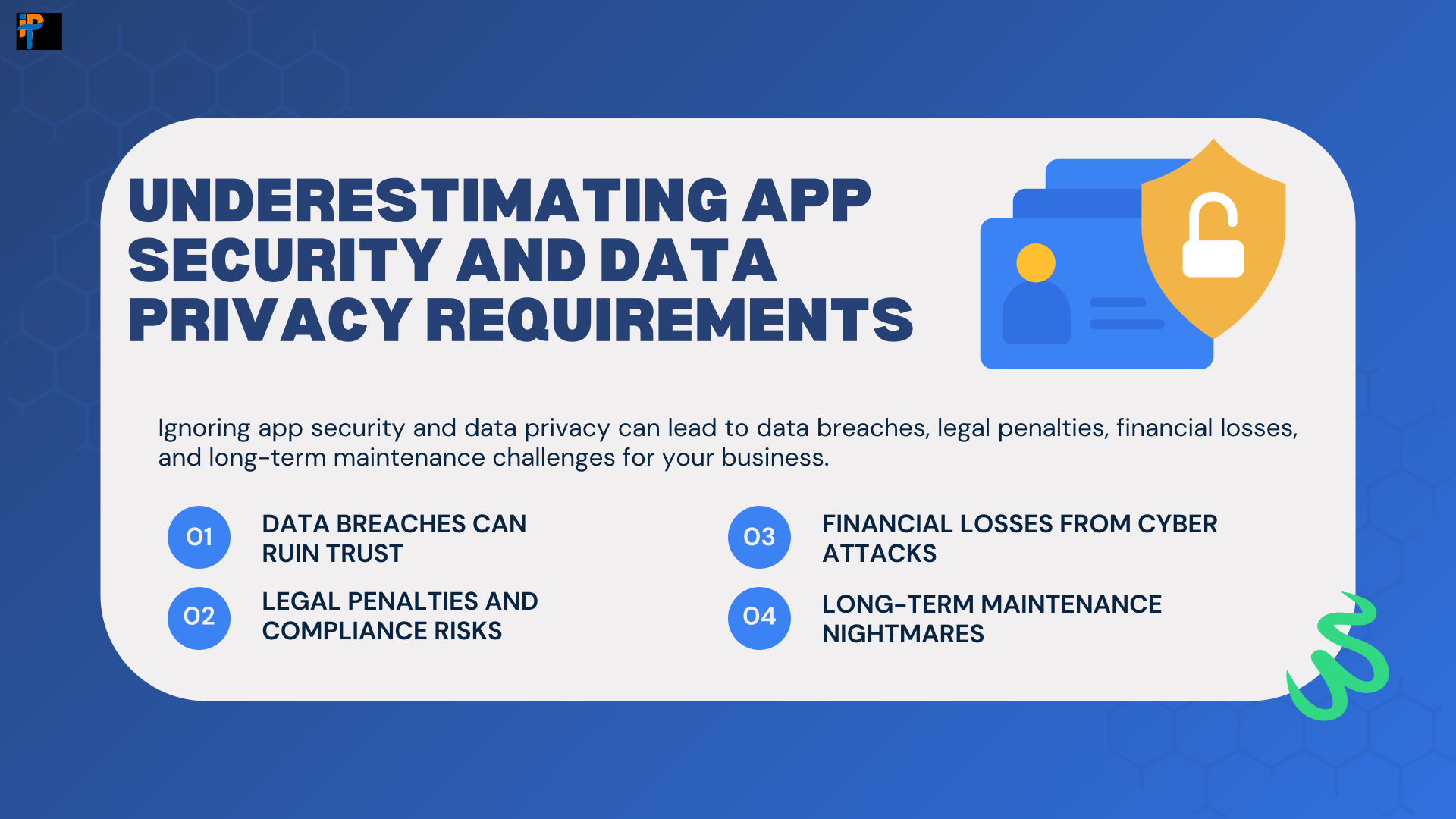
Underestimating App Security and Data Privacy Requirements
Security Breaches and Their Business Impact

In today’s digital landscape, a single security breach can destroy years of hard-earned trust and cost millions in damages, legal fees, and lost business. Yet many app developers treat security as an optional feature rather than a fundamental requirement.

Data breaches expose sensitive user information, violate privacy regulations like GDPR and CCPA, result in hefty fines, trigger lawsuits, and irreparably damage your brand reputation. Users are increasingly aware of privacy concerns and will quickly abandon apps that don’t demonstrate robust security measures.

Essential Security Measures

Security must be baked into your app from day one, not bolted on as an afterthought. Implement end-to-end encryption for sensitive data, secure authentication protocols, regular security audits, penetration testing, and compliance with industry-specific regulations.

Consider security at every level: secure coding practices, API security, server-side security, database encryption, and user education about security features. Regularly update dependencies to patch known vulnerabilities, implement proper session management, and ensure secure data transmission and storage. At IPH Technologies, we understand that robust security isn’t optional—it’s essential for protecting both your users and your business.

Failing to Plan App Scalability for Long-Term Business Growth

Scalability vs. Immediate Needs

Many entrepreneurs build apps that work perfectly for 100 users but crash spectacularly when they reach 10,000. This happens when scalability is treated as a future problem rather than a foundational design principle. The irony? Success becomes your biggest problem when your infrastructure can’t handle growth.

Scalability isn’t just about handling more users—it’s about maintaining performance, adding new features efficiently, expanding to new markets, and adapting to changing business needs without requiring complete rebuilds. Non-scalable apps create technical debt that becomes increasingly expensive to address as your user base grows.

Building for Tomorrow, Today

Scalable architecture requires strategic planning from day one. This includes choosing flexible database solutions, implementing microservices architecture when appropriate, utilizing cloud infrastructure that can grow with demand, and writing clean, modular code that’s easy to maintain and extend.

Consider your growth trajectory: Where do you expect to be in one year? Five years? What new features might you need? How will your user base grow? Design your app architecture to accommodate this growth without requiring fundamental rewrites. This doesn’t mean over-engineering for problems you may never face—it means making intelligent architectural decisions that provide flexibility without unnecessary complexity.

Scalability Factor Poor Planning Impact Strategic Approach
User Capacity App crashes during growth Cloud-based auto-scaling infrastructure
Feature Additions Requires complete rewrites Modular architecture with clean code
Geographic Expansion Performance issues in new regions Content delivery networks (CDNs)
Data Management Slow queries and bottlenecks Optimized databases with indexing
API Integration Breaking changes affect entire system Versioned APIs with backward compatibility
Team Collaboration Code conflicts and delays Proper version control and CI/CD pipelines

Also read- How Much Does It Cost to Build an AI App in Dubai? 2026 Breakdown

Treating Mobile App Development as a One-Time Project

The Continuous Evolution Mindset

One of the most dangerous misconceptions in app development is viewing it as a project with a definite end date. In reality, launching your app is just the beginning of an ongoing journey of improvement, adaptation, and evolution.

Mobile platforms constantly update their operating systems, user expectations continuously evolve, competitors introduce new features, and market conditions change. Apps that aren’t regularly updated quickly become outdated, lose functionality with OS updates, and fall behind competitors who are continuously improving their offerings.

Iterative Development Benefits

Embracing an iterative development approach means releasing a solid MVP, gathering user feedback, analyzing usage data, and continuously refining your app based on real-world insights. This approach reduces initial development costs, allows faster time-to-market, minimizes risk by validating features incrementally, and ensures your app remains relevant and competitive.

Think of your app as a living product that grows and adapts with your business and your users’ needs. Each update should bring meaningful improvements based on data-driven insights, not just arbitrary changes. This continuous improvement cycle is what separates successful apps from those that fade into obscurity.

Ignoring Post-Launch Support and App Maintenance

The Post-Launch Reality

Launching your app is exciting, but the real work begins after your app hits the app stores. Many businesses celebrate their launch and then wonder why their app’s performance degrades, users complain about bugs, and download numbers plateau or decline.

Post-launch support isn’t optional—it’s essential for maintaining app health, user satisfaction, and competitive advantage. Without proper maintenance, you’ll face compatibility issues with new OS versions, accumulated technical debt, unresolved user complaints, security vulnerabilities, and ultimately, declining user retention.

Maintenance Planning Essentials

Effective app maintenance includes regular bug fixes, performance optimization, OS compatibility updates, security patches, server maintenance, analytics monitoring, and user support. Allocate approximately 15-20% of your initial development budget annually for ongoing maintenance and improvements.

Create a maintenance schedule that includes routine check-ups, emergency response protocols for critical issues, regular performance audits, and planned feature updates. Monitor user reviews and feedback channels consistently to identify and address issues before they escalate. At IPH Technologies, we don’t just build your app and walk away—we provide comprehensive post-launch support to ensure your app continues delivering value long after its initial release.

Poor Communication and Lack of Agile Development Process

Communication Breakdowns That Derail Projects

Poor communication is the silent killer of app development projects. When stakeholders, developers, designers, and project managers aren’t aligned, you get misunderstood requirements, duplicated efforts, missed deadlines, budget overruns, and ultimately, a product that doesn’t meet expectations.

Communication failures manifest in various ways: infrequent updates, unclear feedback, assumptions instead of clarifications, siloed teams working in isolation, and misalignment between technical capabilities and business expectations. These issues compound over time, turning minor misunderstandings into major project disasters.

Agile Methodologies in Practice

Agile development methodologies solve many communication challenges by emphasizing collaboration, transparency, and iterative progress. Agile practices include regular sprint planning meetings, daily standups to align team members, sprint reviews to demonstrate progress, retrospectives to continuously improve processes, and clear documentation that everyone can access.

Effective agile implementation means involving stakeholders throughout development, not just at the beginning and end. It means creating feedback loops that allow for course correction before significant resources are wasted. It means breaking large projects into manageable chunks that deliver value incrementally. At IPH Technologies, we leverage agile methodologies to ensure transparent communication, rapid adaptation to changing requirements, and consistent delivery of high-quality results.

Also read- Blockchain Integration in Mobile Apps: Complete Guide 2025

Overlooking App Marketing and User Acquisition Strategy

Build It and They Won’t Come

Perhaps the most devastating mistake is believing that a great app will market itself. The harsh truth? Without a strategic marketing and user acquisition plan, even the most innovative app will languish in obscurity among millions of competitors.

Many developers pour all their resources into development and have nothing left for marketing when launch day arrives. They assume organic discovery through app stores will drive downloads, but with thousands of new apps launching daily, hoping for organic visibility is like buying a lottery ticket as your retirement plan.

Pre-Launch and Post-Launch Marketing

Successful app marketing begins long before launch day. Build anticipation through social media teasing, landing pages that collect email addresses, beta testing programs that create early advocates, press outreach to tech bloggers and journalists, and strategic partnerships with influencers in your niche.

Post-launch marketing requires ongoing effort: app store optimization (ASO) to improve discoverability, content marketing that demonstrates value, paid advertising campaigns on relevant platforms, referral programs that incentivize sharing, regular engagement with your user community, and continuous analysis of acquisition costs versus lifetime value. Marketing isn’t a one-time expense—it’s an ongoing investment in growth.

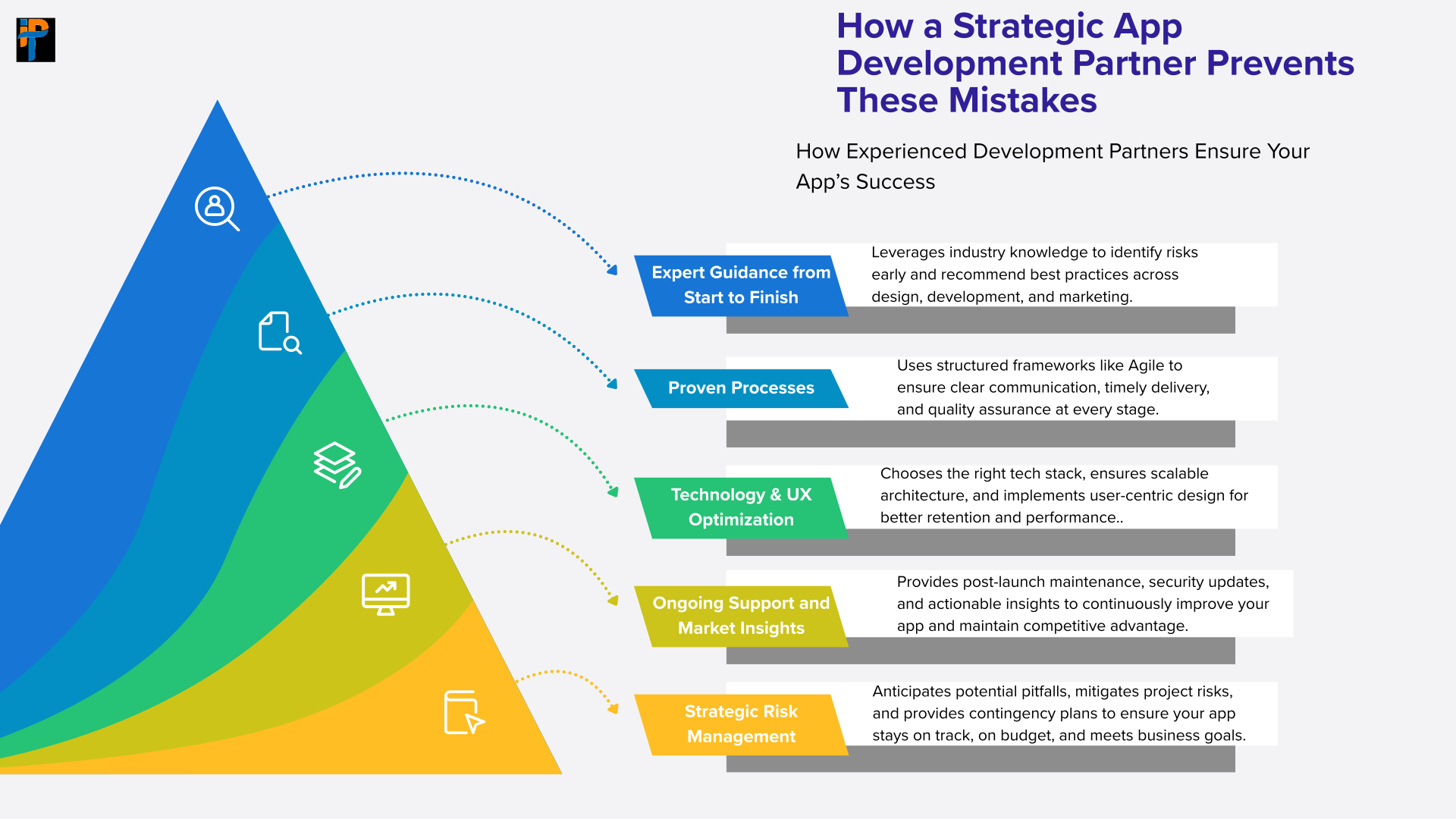
How a Strategic App Development Partner Prevents These Mistakes
The Value of Experience and Expertise

Working with an experienced app development partner is like having a seasoned guide when climbing a mountain—they’ve navigated these challenges before and know how to avoid common pitfalls. A strategic partner brings industry knowledge, technical expertise, proven processes, and objective perspective that internal teams often lack.

The right development partner doesn’t just code your specifications—they challenge assumptions, identify potential problems before they become expensive mistakes, recommend best practices based on hundreds of previous projects, and provide guidance on technology decisions, UX design, scalability planning, and go-to-market strategy.

They’ve seen what works and what doesn’t across various industries and use cases. This experience is invaluable for first-time app developers or businesses entering new markets. Instead of learning expensive lessons through trial and error, you benefit from accumulated wisdom and battle-tested methodologies.

Why Businesses Choose IPH Technologies for Scalable App Development

Our Track Record and Approach

At IPH Technologies, we’ve transformed over 500 visionary ideas into impactful solutions for more than 430 satisfied clients. Our success stems from our unwavering commitment to understanding your unique business needs and delivering solutions that exceed expectations, not just meet requirements.

We don’t believe in cookie-cutter approaches. Every project begins with deep discovery to understand your business objectives, target audience, competitive landscape, and long-term vision. This foundation ensures we’re not just building an app—we’re building a solution that drives tangible business results.

Comprehensive Service Suite

Our expertise spans the entire app development lifecycle: strategic consulting and market validation, comprehensive UX/UI design, custom mobile app development for iOS and Android, web application development, custom software engineering, rigorous quality assurance and testing, security implementation and compliance, scalability planning and cloud architecture, and ongoing support and maintenance.

We leverage agile methodologies to ensure transparent communication, flexible adaptation to changing needs, and consistent delivery of high-quality results. Our team stays current with the latest technologies and industry best practices, ensuring your app is built with cutting-edge solutions that position you ahead of the competition.

Most importantly, we view ourselves as partners in your success, not just service providers. Your wins are our wins. We’re committed to delivering not only exceptional technical solutions but also an unparalleled client experience that makes the development journey as rewarding as the final product.

Also read- 10 MVP Features You Must Have (And 5 to Skip) | 2025 Guide

Final Thoughts: Build Smarter Apps That Drive Business Growth

Success in mobile app development isn’t about luck—it’s about strategy, execution, and partnership. The difference between apps that fail and those that thrive comes down to avoiding the critical mistakes we’ve discussed: validating your idea with real market data, choosing the right development partner, documenting requirements thoroughly, prioritizing exceptional UX/UI design, selecting appropriate technology stacks, implementing rigorous testing, ensuring robust security, planning for scalability, embracing continuous improvement, providing ongoing maintenance, maintaining clear communication, and executing strategic marketing.

Every app that failed had a great idea behind it. What separated those failures from successes was the execution—the strategic decisions made during planning and development, the expertise of the team building it, and the commitment to quality at every stage.

Your app doesn’t have to become another statistic. By partnering with experienced developers who understand both the technical and business aspects of app development, you dramatically increase your chances of building something that not only launches successfully but continues delivering value for years to come.

At IPH Technologies, we’re dedicated to helping you stay ahead of the curve and achieve your business objectives through innovative, tailored solutions. Whether you’re launching your first app or scaling an existing product, we bring the expertise, processes, and commitment necessary to turn your vision into a thriving reality.

Ready to build smarter apps that drive real business growth? Let’s start the conversation about how we can help you avoid these common pitfalls and create something exceptional together.

Frequently Asked Questions (FAQs)

Why do most mobile apps fail despite great ideas?
Most apps fail due to poor execution, lack of market validation, weak UX/UI, wrong tech stack, and insufficient post-launch support—not the idea itself.
How can I validate my app idea before development?
Use surveys, focus groups, competitor analysis, MVP testing, and landing page experiments to gather real market data and user feedback.
What are the risks of choosing the wrong development partner?
It can lead to missed deadlines, budget overruns, low-quality code, poor communication, and ultimately, a product that fails to meet user needs.
How important is UX/UI design in mobile app success?
UX/UI is critical. Poor design leads to high uninstall rates and negative reviews. User-centric, intuitive design improves retention and satisfaction.
What role does technology stack play in app development?
The right tech stack ensures scalability, maintainability, performance, and cost efficiency. Choosing the wrong stack can cause expensive rewrites and crashes.
Why is app testing and QA essential?
Proper QA prevents bugs, ensures performance, enhances security, and improves user satisfaction. Fixing issues post-launch is far costlier than during development.
How do I ensure my app is secure and complies with privacy regulations?
Implement encryption, secure authentication, penetration testing, and adhere to GDPR/CCPA. Security should be integrated from day one, not as an afterthought.
Should I treat app development as a one-time project?
No. Apps need continuous updates, improvements, and maintenance to stay competitive and compatible with OS updates.
How can a strategic app development partner help?
An experienced partner guides technology choices, UX design, scalability planning, QA, marketing strategy, and ongoing support to ensure long-term success.
What is the biggest mistake businesses make in mobile app marketing?
Assuming users will find the app organically. A strategic marketing plan including ASO, social media, paid ads, and user engagement is essential.
Avatar
Lekha Mishra

Verified CEO

About the Author

I'm Lekha Mishra, Co-Founder of IPH Technologies, a 6x award-winning software and mobile solutions provider. My mission is to empower global entrepreneurs by transforming visionary ideas into powerful, market-ready products. We move beyond code to provide strategic insights and a competitive edge, specializing in intelligent solutions powered by AI and ML. I believe in leveraging these technologies to unlock new possibilities, drive growth, and deliver unparalleled value. Let's connect and turn your vision into a lasting legacy.


WhatsApp
Call us
Get a Call Back