


































































































AI in CRM Software Development: Features, Benefits & Future Trends
Customer relationship management has evolved far beyond storing customer names, contact details, and sales records. Modern businesses need CRM platforms that can understand customer behavior, automate repetitive tasks, support sales teams, and deliver actionable insights.
This is where AI in CRM software development is creating a major shift.
By combining artificial intelligence with CRM platforms, businesses can move from traditional data management toward intelligent, automated, and personalized customer relationship management.
AI-powered CRM solutions can analyze customer data, predict sales opportunities, automate communication, generate insights, assist sales representatives, and improve customer support.
For businesses planning to modernize their CRM systems, understanding the key AI CRM features, benefits, use cases, development considerations, and future trends is essential.
What Is AI in CRM Software Development?
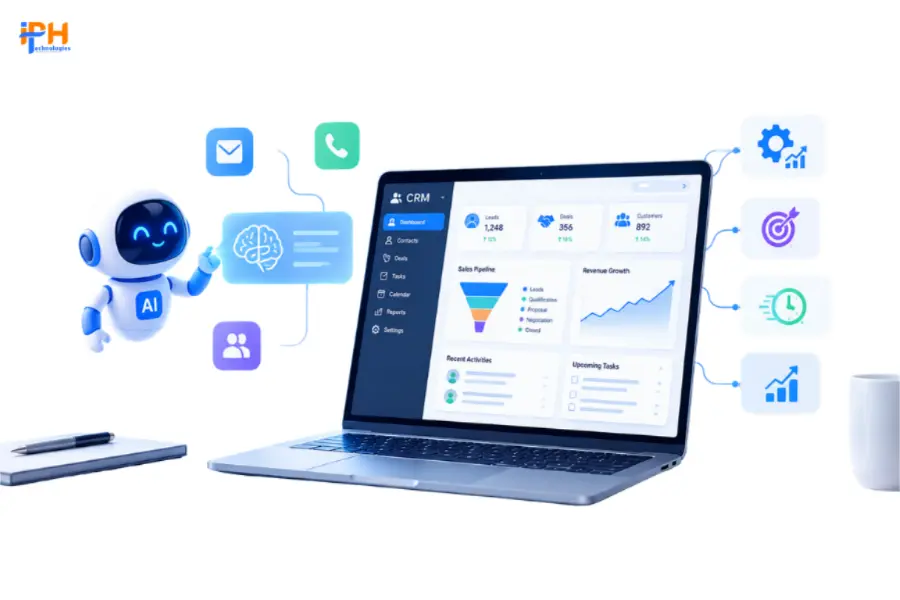
AI in CRM software development refers to integrating artificial intelligence technologies into customer relationship management platforms to automate processes, analyze customer information, and provide intelligent recommendations.
Traditional CRM systems primarily help businesses collect, organize, and manage customer data. AI-powered CRM systems can go a step further by helping businesses understand and act on that data.
Also read: AI powered KYC gold dealers USA
Why Are Businesses Integrating AI Into CRM Systems?
Businesses generate enormous amounts of customer information through websites, applications, emails, phone calls, social media, sales interactions, and support channels.
Managing this information manually can be time-consuming.
AI can help CRM platforms process large amounts of information and identify useful patterns.
- For sales teams, this can mean better lead prioritization.
- For marketing teams, it can mean more personalized campaigns.
- For customer service teams, it can mean faster responses.
- For business leaders, it can mean better forecasting and decision-making.
As businesses increasingly focus on automation and personalized customer experiences, AI-powered CRM development is becoming an important technology strategy.
Benefits of AI in CRM Software Development
Integrating AI into CRM platforms can provide benefits across sales, marketing, customer service, and management teams.
- Improved Sales Productivity: AI can automate repetitive tasks and help sales representatives focus on higher-value customer interactions.
- Better Lead Prioritization: AI-powered lead scoring can help sales teams focus on prospects with stronger engagement signals.
- Personalized Customer Experiences: AI can analyze customer behavior and help businesses provide more relevant recommendations and communications.
- Faster Customer Support: AI assistants can handle routine questions and provide support outside traditional working hours.
- Better Decision-Making: AI can convert large amounts of CRM data into useful insights and recommendations.
- Reduced Manual Work: Automation can reduce repetitive CRM activities such as data entry, summaries, categorization, and follow-ups.
- Improved Customer Retention: Predictive analytics can help businesses identify potential churn and take proactive action.
- Scalable Operations: AI automation can help businesses handle growing customer volumes without increasing manual workloads at the same rate.
Also Read: Agentic AI development cost
AI CRM Use Cases Across Industries
AI-powered CRM systems aren’t limited to one industry:
- E-Commerce: AI can analyze purchase behavior, recommend products, personalize communication, and identify potential churn.
- Healthcare: AI CRM platforms can support patient engagement, appointment workflows, communication, and service management while requiring appropriate healthcare privacy and security controls.
- Banking and Financial Services: AI can help analyze customer interactions, identify opportunities, automate service requests, and personalize financial communications.
- Real Estate: AI CRM solutions can prioritize leads, recommend properties, automate follow-ups, and analyze buyer behavior.
- Education: Educational institutions can use AI CRM systems for student communication, lead management, enrollment workflows, and engagement tracking.
- SaaS Businesses: AI can analyze product usage, identify expansion opportunities, predict churn, and support customer success teams.
How AI CRM Software Works
A simplified AI CRM architecture may look like this:
Customer Data → CRM Platform → Data Processing → AI/ML Layer → Insights & Automation → Business Users
The AI layer processes this information and produces insights, recommendations, predictions, or automated actions.
Also Read: AI Astrology app development
Technologies Used in AI CRM Development
Building an intelligent CRM platform may involve several technologies.
- Artificial Intelligence: Used for intelligent decision-making, automation, recommendations, and analysis.
- Machine Learning: Useful for predictive analytics, lead scoring, churn prediction, and forecasting.
- Natural Language Processing: Helps CRM systems understand human language from emails, chats, documents, and conversations.
- Generative AI: Can assist with content generation, summarization, conversational interfaces, and workflow assistance.
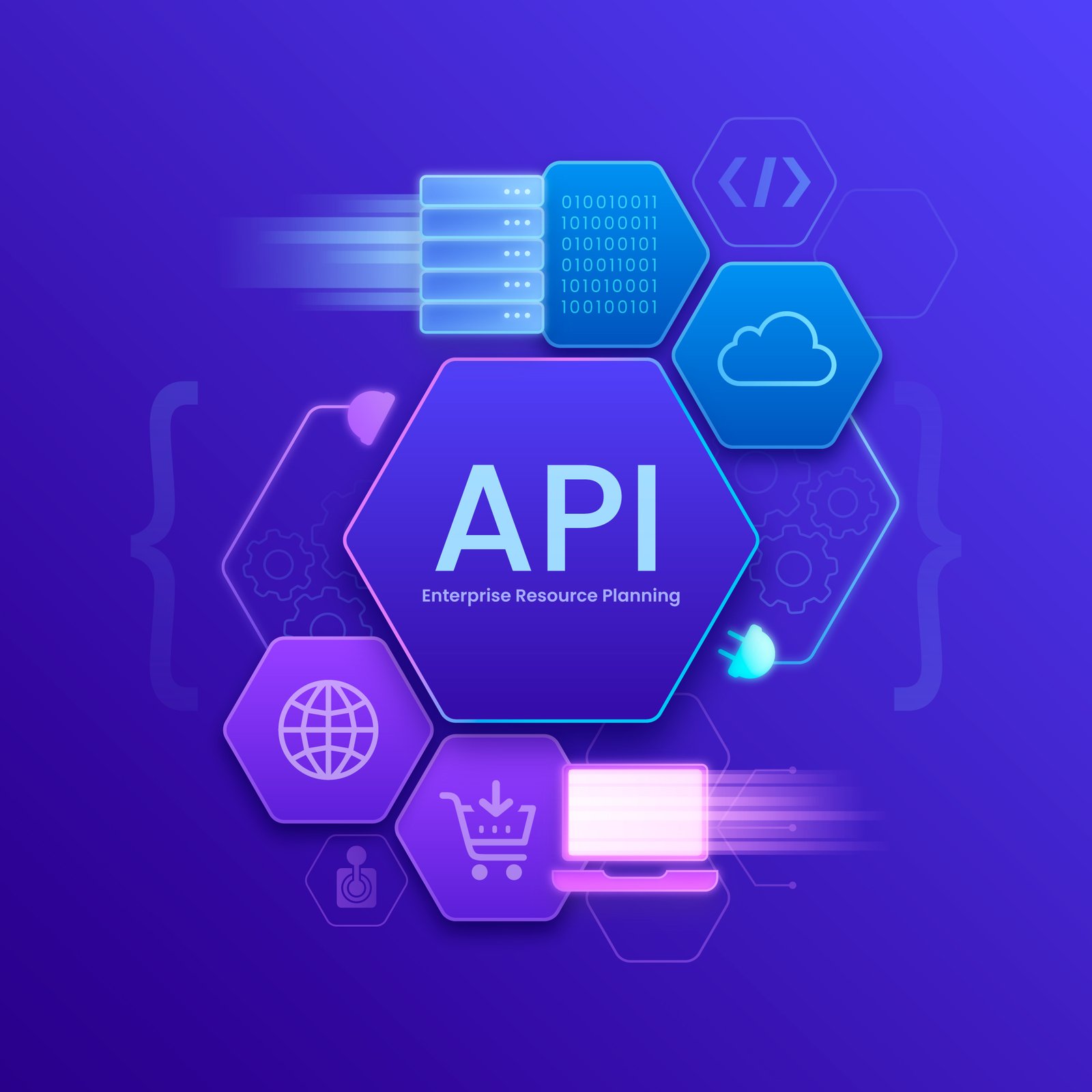
- APIs: APIs allow CRM platforms to connect with external applications and services.
- Cloud Computing: Cloud infrastructure can support scalable CRM platforms and AI workloads.
- Data Analytics: Analytics systems transform CRM data into dashboards, reports, and business insights.
Challenges in AI CRM Software Development
AI CRM development also comes with challenges that businesses should consider before implementation.
Data Quality: AI models depend heavily on the quality of the underlying data. Duplicate, outdated, incomplete, or inconsistent customer records can reduce the reliability of AI-generated insights.
Data Privacy: CRM platforms contain sensitive business and customer information. Organizations need appropriate security controls, access management, encryption, and data governance.
AI Accuracy: AI-generated content and recommendations can sometimes be incorrect. Human review and validation should be incorporated into workflows where accuracy is important.
Future Trends in AI CRM Software Development
AI CRM technology is likely to continue evolving as businesses demand more automation and personalization.
1. Agentic AI in CRM
Agentic AI could enable CRM systems to perform multi-step workflows rather than simply respond to individual prompts. The level of automation should depend on business requirements and appropriate human oversight.
2. Conversational CRM Interfaces
Users may increasingly interact with CRM platforms through natural-language commands rather than navigating complex dashboards. Instead of searching through reports, employees could simply ask the CRM questions about customers, sales, or performance.
3. Hyper-Personalization
AI can help businesses move beyond basic customer segmentation toward highly personalized experiences based on individual customer behavior and preferences.
4. Predictive Customer Experience
Future CRM systems are likely to become more proactive. Instead of waiting for a customer to complain, AI may identify potential problems based on behavioral signals and recommend preventive action.
Why Choose IPH Technologies for AI CRM Development?
Building an AI-powered CRM requires expertise across multiple technology areas.
IPH Technologies can help businesses explore custom software solutions that combine AI, CRM, mobile, web, APIs, automation, and cloud technologies.
Our approach can focus on developing CRM platforms around specific business workflows rather than forcing businesses to adapt to a generic system.
Potential solutions can include:
- Custom CRM software
- AI-powered CRM
- Sales automation platforms
- Customer support systems
- AI chatbots
- CRM mobile applications
- Business dashboards
- API integrations
- Predictive analytics
- Generative AI features
- Workflow automation
The right AI CRM solution should ultimately solve a measurable business problem whether that’s improving sales productivity, reducing manual work, increasing customer retention, or creating better customer experiences.
Final Thought for AI in CRM software development
AI in CRM software development is changing how businesses manage customer relationships.
Traditional CRM platforms remain valuable for organizing customer information, but AI can make those systems more intelligent by adding predictive analytics, automation, personalization, conversational interfaces, recommendations, and generative AI capabilities.
From AI lead scoring and sales forecasting to customer support automation and churn prediction, organizations can use AI to improve multiple stages of the customer lifecycle.
However, successful AI CRM development isn’t simply about adding the latest AI model. Businesses need to consider data quality, security, integrations, scalability, user experience, AI accuracy, and responsible automation.
As AI continues to evolve, CRM platforms are likely to become more proactive, personalized, and conversational helping businesses move from simply managing customer relationships to intelligently improving them.
Frequently Asked Questions
What is AI in CRM?
AI in CRM involves using artificial intelligence to analyze customer data, automate tasks, generate insights, personalize interactions, and support sales and customer service teams.
What are the main features of AI-powered CRM software?
Common features include AI lead scoring, predictive analytics, sales forecasting, chatbots, sentiment analysis, recommendations, automated data entry, generative AI, and churn prediction.
How does AI improve CRM?
AI can reduce repetitive work, improve customer insights, help prioritize leads, personalize communication, automate support, and assist businesses with data-driven decision-making.
Can AI be integrated into an existing CRM?
Yes. AI capabilities can often be integrated into existing CRM platforms through APIs, AI services, machine learning models, and custom development.
How much does AI CRM development cost?
The cost depends on features, AI complexity, integrations, platforms, security requirements, infrastructure, and customization. A project assessment is recommended for an accurate estimate.










.png)