





































































































If you’re evaluating pharmacy software systems for a hospital or health system, you’re probably writing down two lists right now: what compliance boxes it needs to check, plus what’s actually going to work on a Friday night when the ER is full. This post covers both, plus the actual systems different providers use, leaving you with a shortlist criteria you can actually apply.
Key Takeaways
What Pharmacy Software Systems Actually Do
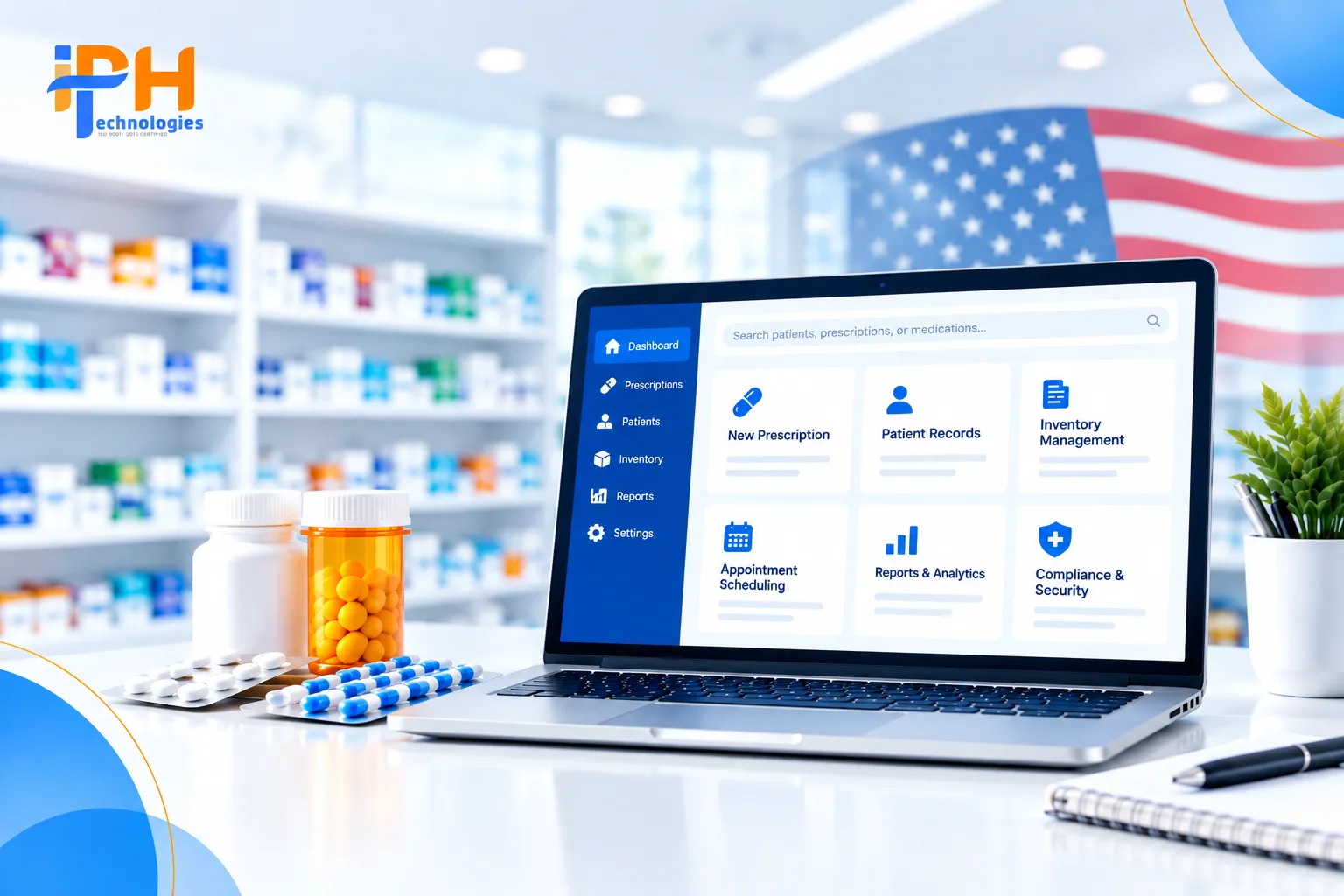
A pharmacy software system is the platform managing prescription intake, verification, dispensing, inventory, and billing in a connected workflow. In the hospital environment, it has to exchange information in real-time with the organization’s electronic health records (EHR) system, the digital version of patients’ paper charts.
Think of it as the connective tissue between the physician’s order and actual delivery of medication to the patient. This process involves drug interaction, insurance adjudication, controlled substance, and inventory control, which are performed simultaneously and efficiently.
There is none such thing as the best pharmacy software system. It is always better to choose the one that suits your needs the most considering the average number of patients and the type of EHR you are going to use on a daily basis. A retail chain and a 400-bed hospital are two different entities that have nothing in common despite being part of the pharmacy business.
How to Choose Pharmacy Compliance Software for a Multi-Hospital Health System
Prioritize centralized formulary management, real-time audit logging, and native EHR interoperability over feature count. A system that looks impressive in a demo but can’t sync formulary changes across facilities instantly will create compliance gaps, not close them.
Multi-hospital systems encounter a distinct challenge that single-site pharmacies typically do not have to face: the issue of maintaining updated formularies, controlled substance regulations, and reporting procedures across the entire network. If, for instance, a regulation regarding drug interaction is changed in one hospital, and it fails to be updated in another one, there is a potential for medical error.
Seek out solutions that natively support DEA EPCS-compliant electronic prescribing, not those that bolt on a compliance module on top of an otherwise standard system. Ask vendors to describe the process by which they update their proprietary drug formularies — is the synchronization with official DEA schedules done in real-time API calls or batch jobs that run overnight?
One weakness that is completely legitimate is that no matter how good the compliance software is, it cannot control the inconsistencies in the processes of different facilities. The software is used to standardize, not to create the rules: so it needs a properly designed pharmacy and therapeutics committee process to follow.
What Pharmacy Software Do Major Providers Actually Use
Different care settings genuinely run different technology, and it’s worth knowing the landscape before you assume one platform fits everyone.
Large retail pharmacy chains have traditionally relied on systems such as Enterprise Pharmacy System (EPS) which is designed to support high-volume prescription processing, e-prescribing functions, and inventory management across multiple independent and franchised pharmacies.
Some national chains have developed their own in-house systems that seek to embody their particular approach to the dual retail-and-pharmacy business model. CVS is one such company that makes use of a system of its own design.
Hospital–based pharmacies generally have a different look. Health systems that leverage Epic as their EHR such as Valleywise Health, previously known as Maricopa Integrated Health System (MIHS) usually manage inpatient and outpatient pharmacy services through Epic’s Willow pharmacy module, which keeps drug dispenses directly tied to the same clinical record physicians and nurses are already using.
The pattern of interest: hospital pharmacy software is judged on its ability to integrate with EHRs while the retail equivalent is focused on processing power and speed. Do not compare an application designed for one vertical against the requirements of the other.
| Setting | Common Platform Type | Primary Priority |
|---|---|---|
| Retail chain pharmacy | Proprietary or enterprise systems | Transaction speed, multi-store inventory |
| Independent pharmacy | ScriptPro, or similar packaged software | Ease of use, POS integration |
| Hospital / health system | EHR-native modules (e.g., Epic Willow) | Clinical integration, medication safety |
| Long-term care / specialty | Purpose-built LTC pharmacy platforms | Compliance, complex billing rules |
How to Increase Pharmacy Management Software Response Time
Slow response in pharmacy software is invariably an infrastructure or database problem, not a user problem. Before blaming end-users, check the hosting platform, database indexing, and whether on-premise servers have been scaled with the growth of the patient base.
On-premise systems that were properly sized years ago for a smaller patient base are often to blame. As the number of prescriptions increases, non-indexed look-up tables and aging servers cause the same sluggishness as staff members wait for a screen to refresh.
Migrating dispensing databases to properly indexed, cloud hosted infrastructures reduce screen response time from seconds to sub second, with no changes to any workflows your staff is already familiar with.
This is throughput that can be seen in weeks, not quarters.
It is essential to recognize the trade-offs that come with cloud migration; you are now reliant on the internet connection and uptime of another entity, which is why hospital pharmacy systems require documented fail-over procedures rather than a faster server.
Build vs. Buy: When Custom Pharmacy Software Development Makes Sense
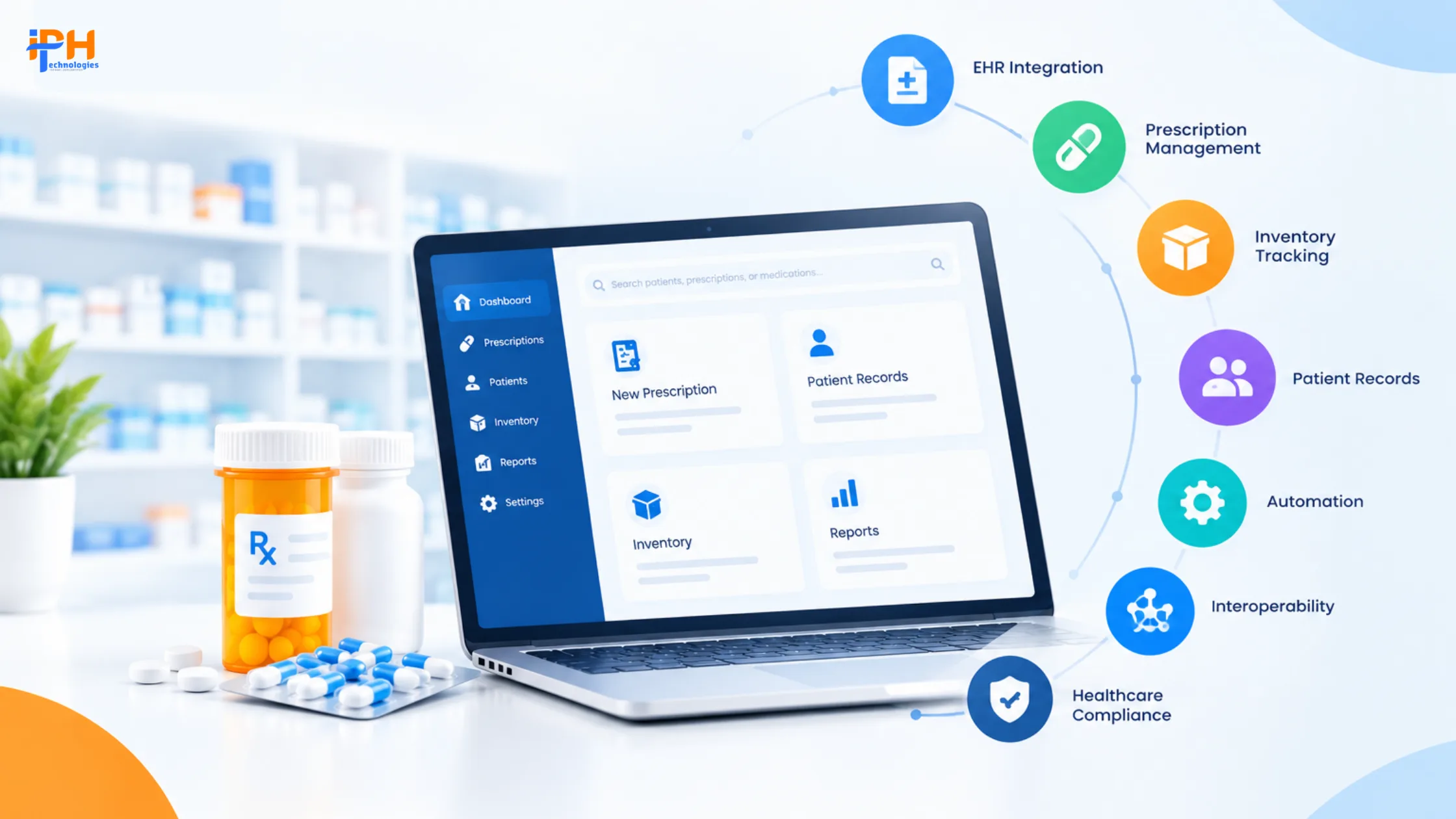 The point of pharmacy software solutions off the shelf is good until you need more than it can provide, and that’s when it’s time to start thinking about customized options. These tend to come in two flavors: multi-hospital setups with a mixture of EHRs or a non-standard formulary, or a specialty pharmacy setup.
Custom development is not always the best option. It can have a higher cost and take more time out of your day than licensing another company’s program. It is only worth it if you would need to make several changes or if it is necessary rather than just a one-time thing.
If you’re evaluating a technology partner for this kind of build, the questions worth asking are specific: have they shipped HIPAA-compliant healthcare software before, do they understand HL7/FHIR interoperability standards, and can they show integration work with EHR platforms like Epic or Cerner — not just generic app development experience.
Our healthcare application development work covers exactly this kind of build, from compliance architecture through EHR integration. And if compliance across app stores and data privacy rules is part of your evaluation:
Read More: 2026 Mobile App Compliance Guide: GDPR, HIPAA & App Store Rules
Choosing the Right Path Forward
Pharmacy software has more than one category, and something that will work well for a retail drug store may not work so well for hospital pharmacies. The key to selecting the best pharmacy management software for your organization depends on your environment, your compliance needs, and your pain points.
If your team has outgrown off-the-shelf options or requires more comprehensive EHR integration than a packaged platform allows, it usually means that it’s worth trying to set up a call with a development partner that has successfully created healthcare software and ask them how they could help you to reimagine and rebuild your health system. You can contact us right here to set up a call.
Written by Lekha Mishra, CO-FOUNDER at IPH Technologies.
https://www.linkedin.com/in/lekha-mishra/
Frequently Asked Questions (FAQs)
What is the best pharmacy software system?
There are various EHR systems suitable for different healthcare facilities. Thus, hospitals tend to use Epic’s Willow, which is native to EHR, whereas retail and independent pharmacies are more likely to choose Enterprise Pharmacy System due to its high transaction processing capacity.
What pharmacy software system does MIHS use?
Valleywise Health, previously known as Maricopa Integrated Health System (MIHS), utilizes Epic electronic health records (EHR) to manage its clinical operations, including pharmacy services. Specifically, Maricopa’s pharmacy operations and medical staff use Epic’s Willow platform, which is connected to the same patient record.
What software does CVS Pharmacy use?
CVS has invested in a proprietary, in-house point-of-sale and pharmacy system that surrounds its combined retail and pharmacy business; many independent or smaller chain pharmacies, on the other hand, utilize packaged solutions such as PDX, to manage their operations.
How do I learn pharmacy software systems?
Begin with the platform your employer or training program is actually using, since pharmacy software is highly varied between fields of care. Vendor certification programs and on-the-job shadowing are the most practical options, as these systems involve a highly intensive workflow that can’t be accurately reflected in a more general tutorial.










.png)