





























































Highlights
UI/UX Design
User-first, visually engaging interfaces crafted to enhance usability, boost engagement, and deliver seamless digital experiences.
Branding
Strategic brand identities that communicate your vision, build trust, and create a memorable presence across all touchpoints.
Wireframing
Structured layouts and user flows that map the product journey clearly before development begins, saving time and cost.
Prototype Design
Interactive prototypes that simulate real user interactions, helping validate ideas and refine experiences early.
Design Systems
Scalable design frameworks and reusable components that ensure consistency, speed, and efficiency across your product.
UI/UX Design

We design intuitive, user-centric interfaces that enhance engagement, improve usability, and deliver seamless digital experiences across all devices.

UI UX Design
  • User research and wireframing for clear flows
  • Modern UI design using Figma and Adobe XD
  • Interactive prototypes for better user experience testing
  • Usability testing and performance optimization improvements
  • Responsive design across all devices and screens
  • Scalable design systems with reusable UI components
Branding & Identity

We craft strong brand identities that communicate your vision, build trust, and create a lasting impression across all digital and offline touchpoints.

Branding and Identity
  • Logo design and brand identity creation
  • Brand guidelines and visual consistency systems
  • Color palette and typography selection strategy
  • Marketing materials and brand asset design
  • Social media branding and creative direction
  • Rebranding and brand positioning strategies
Wireframing

We create structured wireframes that define layout, user flow, and functionality, helping visualize ideas and build a strong foundation before design and development.

Wireframing
  • Low fidelity wireframes for initial structure
  • High fidelity wireframes with detailed layouts
  • User flow mapping for better navigation
  • Content hierarchy and layout planning
  • Clickable wireframes for early feedback
  • Clear structure before UI design phase
Prototype Design

We design interactive prototypes that simulate real user experiences, helping validate ideas, test functionality, and refine products before development.

Prototype Design
  • Interactive prototypes for real user experience
  • Clickable designs to test product functionality
  • User journey simulation for better understanding
  • Rapid prototyping for faster design validation
  • Feedback driven improvements before development
  • High fidelity prototypes with smooth interactions
Design Systems

We build scalable design systems that ensure consistency, improve collaboration, and accelerate product development across all platforms and teams.

Design Systems
  • Reusable UI components for consistent design
  • Design tokens for colors typography spacing
  • Component libraries for faster development workflow
  • Consistent branding across all digital products
  • Documentation for design and development teams
  • Scalable systems for growing product ecosystems
Highlights
Mobile Apps Development
High-performance Android and iOS mobile applications built with modern technologies, delivering seamless user experiences and robust functionality.
Desktop Application Dev
Powerful and secure desktop applications tailored for Windows, macOS, and Linux, designed for performance, scalability, and reliability.
Web App Development
Scalable and responsive web applications using modern frameworks like React, Angular, and Vue for fast, dynamic, and engaging experiences.
Cross-Platform
Cost-effective cross-platform solutions using Flutter and React Native, enabling a single codebase for both iOS and Android platforms.
PWA Development
Progressive Web Apps that combine the best of web and mobile, offering offline access, fast loading, and app-like experiences directly in the browser.
Highlights
Mobile App

Android

iOS

Flutter

Hybrid

Optimize

Native

Swift

Firebase

Android App Development

We craft powerful, scalable Android applications with intuitive UX, high performance, and deep integration with Google services.

Android App
  • Custom Android app development
  • Native Kotlin & Java apps
  • Google Play Store deployment
  • Material Design UI implementation
Kotlin

Kotlin

Java

Java

Flutter

Flutter

Android Studio

Android

Jetpack

Jetpack

iOS App Development

We build high-quality, user-centric iOS apps combining performance, security, and seamless design for Apple devices.

iOS App
  • Custom iOS app development
  • Native Swift & SwiftUI apps
  • Seamless Apple service integration
  • App Store review & deployment
Swift

Swift

SwiftUI

SwiftUI

Obj-C

Obj-C

Xcode

Xcode

Flutter

Flutter

Cross-Platform Apps

We develop cross-platform mobile apps that run flawlessly on both iOS and Android from a single codebase, saving time and cost.

Cross-Platform App
  • Single codebase for iOS & Android
  • Flutter & React Native development
  • Native-like performance & UI
  • Faster time-to-market
React Native

React Native

TypeScript

TypeScript

Redux

Redux

Firebase

Firebase

Dart

Dart

Hybrid Apps

We build hybrid mobile apps that blend web technologies with native capabilities, delivering broad reach and cost-effective development.

Hybrid App
  • Web + native feature integration
  • Ionic & Cordova frameworks
  • Reduced development costs
  • Multi-platform publishing
Flutter

Flutter

Dart

Dart

Firebase

Firebase

SQLite

SQLite

App Optimization

We enhance existing mobile apps with performance tuning, crash fixes, battery efficiency, and faster load times for a superior user experience.

App Optimization
  • Performance profiling & tuning
  • Memory & battery optimization
  • Crash analysis & bug fixing
  • App size reduction & load speed
Xcode

Xcode

Android Studio

Android

Firebase

Firebase

Java

Java

Highlights
Desktop App

Windows

macOS

Linux

Desktop

Electron

Qt

WinForms

GTK

Windows Apps

We develop robust Windows desktop applications using modern Microsoft technologies, delivering powerful tools for enterprise and consumer use.

Windows App
  • Custom Windows desktop applications
  • WPF & WinForms development
  • Microsoft Store deployment
  • Windows API & system integration
C#

C#

.NET

.NET

Electron

Electron

Visual Studio

Visual Studio

SQL Server

SQL Server

macOS Apps

We create elegant, high-performance macOS applications that leverage Apple's native frameworks for a smooth and delightful desktop experience.

macOS App
  • Native macOS app development
  • SwiftUI & AppKit integration
  • Mac App Store submission
  • Apple Silicon optimization
Swift

Swift

SwiftUI

SwiftUI

Obj-C

Obj-C

Xcode

Xcode

Cross-Platform Desktop

We develop cross-platform desktop applications that run seamlessly on Windows, macOS, and Linux from a single shared codebase.

Cross-Platform Desktop
  • Single codebase for all platforms
  • Electron & Tauri frameworks
  • Flutter for desktop support
  • Consistent UI across OS environments
Flutter

Flutter

Electron

Electron

Node.js

Node.js

TypeScript

TypeScript

Docker

Docker

Electron Apps

We build feature-rich Electron desktop apps using web technologies, enabling cross-platform deployment with native OS capabilities.

Electron App
  • Electron framework development
  • Node.js & Chromium integration
  • Auto-updater & native notifications
  • Cross-OS packaging & distribution
Electron

Electron

Node.js

Node.js

React

React

Vue

Vue

TypeScript

TypeScript

Highlights
Web App

React

Node.js

PHP

Laravel

Python

MySQL

JavaScript

HTML

CSS

React Development

We build fast, component-driven React web applications with modern state management, reusable UI, and seamless API integration.

React Development
  • Custom React SPA development
  • Redux & Context API state management
  • Next.js SSR & SSG support
  • REST & GraphQL API integration
React

React

Next.js

Next.js

Redux

Redux

TypeScript

TypeScript

Tailwind

Tailwind

Angular Development

We develop enterprise-grade Angular applications with structured architecture, two-way data binding, and robust TypeScript foundations.

Angular Development
  • Custom Angular SPA development
  • RxJS & NgRx state management
  • Angular Material UI components
  • Lazy loading & performance tuning
Angular

Angular

TypeScript

TypeScript

HTML

HTML

CSS

CSS

NPM

NPM

Node.js Backend

We build scalable, event-driven Node.js backends with RESTful APIs, real-time capabilities, and seamless database integrations.

Node.js Backend
  • RESTful & GraphQL API development
  • Express.js & Fastify frameworks
  • WebSocket & real-time features
  • MongoDB, PostgreSQL integration
Node.js

Node.js

Express

Express

MongoDB

MongoDB

GraphQL

GraphQL

Docker

Docker

Cloud Web Apps

We design and deploy cloud-native web applications on AWS, Azure, and GCP — scalable, secure, and built for high availability.

Cloud Web Apps
  • AWS, Azure & GCP deployment
  • Serverless architecture development
  • Auto-scaling & load balancing
  • CI/CD pipeline configuration
AWS

AWS

Azure

Azure

GCP

GCP

Docker

Docker

Kubernetes

Kubernetes

Full-Stack Dev

We deliver complete full-stack web solutions — from pixel-perfect frontends to robust backends — as a unified, end-to-end product.

Full-Stack Dev
  • Frontend & backend development
  • MERN & MEAN stack expertise
  • Database design & API architecture
  • DevOps, hosting & deployment
React

React

Node.js

Node.js

MongoDB

MongoDB

PostgreSQL

PostgreSQL

Docker

Docker

Highlights
Cross Platform

Flutter

R. Native

Xamarin

Ionic

Reuse

Electron

NW.js

Framework7

SwiftUI

Flutter Development

We build beautiful, natively compiled Flutter applications for mobile, web, and desktop from a single Dart codebase with pixel-perfect UI.

Flutter Development
  • Flutter mobile & web apps
  • Dart language development
  • Custom widget & animation creation
  • Firebase & REST API integration
Flutter

Flutter

Dart

Dart

Firebase

Firebase

GetX

GetX

Riverpod

Riverpod

React Native

We develop high-performance React Native apps that deliver a truly native experience on both iOS and Android using JavaScript and React.

React Native
  • Cross-platform iOS & Android apps
  • React Native CLI & Expo development
  • Native module & bridge integration
  • Redux & MobX state management
React Native

React Native

Redux

Redux

TypeScript

TypeScript

Firebase

Firebase

Xamarin

We develop Xamarin-based cross-platform apps using C# and .NET, enabling shared business logic across iOS, Android, and Windows.

Xamarin
  • Xamarin.Forms & MAUI apps
  • Shared C# codebase development
  • Native API access via bindings
  • Enterprise app integration
Xamarin

Xamarin

C#

C#

.NET MAUI

.NET

Azure

Azure

Visual Studio

Visual Studio

Ionic Framework

We create stunning Ionic applications that combine the power of web technologies with native device features for a seamless mobile experience.

Ionic Framework
  • Ionic Angular & React apps
  • Capacitor native plugin integration
  • Responsive mobile-first UI
  • PWA & hybrid app deployment
Ionic

Ionic

Angular

Angular

React

React

Vue

Vue

Code Reusability

We build reusable app architectures, reducing duplication, accelerating development, and ensuring seamless cross-platform consistency.

Code Reusability
  • Shared component library creation
  • Monorepo architecture setup
  • Design system implementation
  • Platform-agnostic business logic
Turborepo

Turborepo

Storybook

Storybook

Flutter

Flutter

React Native

React Native

Highlights
PWA

PWA

Offline

Push

Fast

App-Like

IndexedDB

Installable

Sync

Progressive Web Apps

We build Progressive Web Apps that combine the best of web and mobile — installable, reliable, and fast across all devices and browsers.

Progressive Web Apps
  • PWA architecture & manifest setup
  • Service worker implementation
  • Installable & home screen support
  • Cross-browser compatibility
HTML5

HTML5

CSS3

CSS3

JavaScript

JavaScript

Workbox

Workbox

Lighthouse

Lighthouse

Offline Support

We implement robust offline capabilities in your web apps using service workers and smart caching so users stay productive without connectivity.

Offline Support
  • Service worker caching strategies
  • IndexedDB offline data storage
  • Background sync implementation
  • Graceful offline fallback pages
Service Worker

ServiceWorker

Workbox

Workbox

IndexedDB

IndexedDB

Cache API

Cache API

Background Sync

BackgroundSync

Push Notifications

We integrate web push notification systems into your PWA to re-engage users with timely, personalized alerts even when the app is not open.

Push Notifications
  • Web Push API implementation
  • VAPID key & subscription management
  • Notification scheduling & targeting
  • Cross-browser push support
Web Push

Web Push

Firebase FCM

Firebase

OneSignal

OneSignal

Node.js

Node.js

Workbox

Workbox

Fast Loading

We optimize PWAs for lightning-fast load times using code splitting, lazy loading, and caching to deliver exceptional Core Web Vitals scores.

Fast Loading
  • Code splitting & lazy loading
  • Image & asset optimization
  • Core Web Vitals improvement
  • CDN & caching configuration
Webpack

Webpack

Lighthouse

Lighthouse

Vite

Vite

Cloudflare

Cloudflare

Workbox

Workbox

App-Like Experience

We craft PWAs that feel and behave like native mobile apps — with smooth animations, full-screen mode, gestures, and seamless transitions.

App-Like Experience
  • Full-screen & standalone display mode
  • Touch gestures & swipe navigation
  • Smooth page transitions & animations
  • App shell architecture
Web Manifest

Web Manifest

CSS Animations

CSS

Framer Motion

FramerMotion

React

React

Vue

Vue

Highlights
Custom Software
Fully tailored software solutions designed to match your unique business processes, improving efficiency and driving long-term growth.
Backend Systems
Robust and secure backend architectures built for high performance, scalability, and seamless integration with your applications.
Database Design
Efficient and scalable database structures optimized for fast queries, data integrity, and reliable performance at scale.
Cloud-Native
Modern cloud-native solutions using microservices and serverless architecture on AWS, Azure, and GCP for maximum flexibility and scalability.
API Development
Secure and well-documented RESTful and GraphQL APIs that enable seamless communication between systems and third-party integrations.
Custom Software

We develop tailored software solutions that align with your business goals, streamline operations, and deliver scalable, high-performance digital systems.

Custom Software Development
  • Custom software tailored to business needs
  • Scalable architecture for long term growth
  • Secure and high performance application development
  • API integration with third party services
  • Cloud based and enterprise software solutions
  • Ongoing maintenance and system optimization support
Backend Systems

We build robust backend systems that power applications with secure, scalable architecture, efficient data handling, and seamless integrations.

Backend Systems
  • Secure backend architecture and system design
  • Database design and performance optimization
  • API development for seamless integrations
  • Authentication and authorization system implementation
  • Server side logic and business workflows
  • Scalable infrastructure for high traffic applications
Database Design

We design efficient database structures that ensure data integrity, optimize performance, and support scalable, reliable application systems.

Database Design
  • Structured database schema design and planning
  • Efficient data modeling for scalable systems
  • Database optimization for faster query performance
  • Relational and non relational database solutions
  • Secure data storage and access management
  • Backup strategies and data recovery solutions
Cloud-Native Apps

We build cloud-native applications designed for scalability, resilience, and flexibility using modern cloud infrastructure and microservices architecture.

Cloud Native Apps
  • Cloud first architecture for scalable applications
  • Microservices based system design and deployment
  • Containerization using Docker and Kubernetes tools
  • Auto scaling infrastructure for high availability
  • Continuous integration and continuous deployment pipelines
  • Secure cloud environments with monitoring and logging
API Development

We develop secure and scalable APIs that enable seamless communication between systems, applications, and third party services.

API Development
  • RESTful API development for web applications
  • Secure API authentication and authorization systems
  • Third party API integration and data exchange
  • Scalable APIs for high traffic applications
  • API documentation for easy developer integration
  • Performance optimization and API response tuning
Highlights
Manual Testing
Detailed human-driven testing to uncover edge cases, validate user flows, and ensure a seamless, intuitive user experience.
Test Automation
Automated testing frameworks using Selenium, Cypress, and Appium to accelerate regression cycles and improve release confidence.
Performance
Load, stress, and scalability testing to ensure your application performs reliably under high traffic and demanding conditions.
Security Testing
Comprehensive security assessments including penetration testing and vulnerability analysis to safeguard your application.
Mobile QA
End-to-end mobile application testing across devices and platforms to ensure consistent performance, usability, and stability.
Manual Testing

We perform detailed manual testing to ensure software quality, identify issues early, and deliver reliable, user-friendly applications.

Manual Testing
  • Functional testing for application core features
  • UI testing for consistent user experience
  • Cross browser and device compatibility testing
  • Test case creation and execution processes
  • Bug tracking and detailed issue reporting
  • Regression testing after feature updates
Test Automation

We implement automated testing solutions to improve efficiency, reduce manual effort, and ensure faster, reliable software delivery.

Test Automation
  • Automated test scripts for faster execution
  • Regression testing using automation frameworks
  • Continuous testing within CI CD pipelines
  • Test coverage improvement across application modules
  • Reusable automation scripts for long term scalability
  • Performance and load testing automation solutions
Performance Testing

We evaluate application performance to ensure speed, stability, and scalability under different workloads and real-world conditions.

Performance Testing
  • Load testing for high traffic scenarios
  • Stress testing to identify system limits
  • Performance benchmarking and response time analysis
  • Scalability testing for growing user demands
  • Memory and resource usage optimization checks
  • Bottleneck identification and performance improvements
Security Testing

We identify vulnerabilities and secure applications against threats, ensuring data protection, compliance, and safe user interactions.

Security Testing
  • Vulnerability assessment and risk analysis testing
  • Penetration testing to identify security gaps
  • Authentication and authorization security validation
  • Data protection and encryption testing processes
  • Secure code review and security best practices
  • Compliance testing with industry security standards
Mobile QA

We ensure mobile applications deliver flawless performance, usability, and compatibility across devices, platforms, and environments.

Mobile QA
  • Mobile app testing across multiple devices
  • iOS and Android platform compatibility testing
  • UI testing for consistent mobile experience
  • Network and performance testing on mobile
  • App usability and user experience validation
  • App store readiness and release testing
Highlights
CI/CD Pipelines
Automated pipelines for building, testing, and deploying code, enabling faster releases, fewer errors, and continuous delivery.
Infrastructure
Scalable infrastructure provisioning using Infrastructure as Code (IaC) with Terraform and CloudFormation for consistency and reliability.
Deployment
Zero-downtime deployment strategies including blue-green and rolling deployments to ensure smooth and reliable releases.
Containerisation
Container-based architectures using Docker and Kubernetes for portability, scalability, and efficient resource utilization.
Monitoring
Real-time monitoring and observability using tools like Grafana, Prometheus, and Datadog to ensure system health and performance.
CI/CD Pipelines

We implement CI/CD pipelines to automate build, testing, and deployment, enabling faster releases, improved quality, and continuous delivery.

CI CD Pipelines
  • Automated build and deployment pipeline setup
  • Continuous integration for faster code validation
  • Continuous delivery for seamless release cycles
  • Integration with Git version control systems
  • Automated testing within CI CD workflows
  • Monitoring and rollback strategies for deployments
Infrastructure

We design and manage reliable infrastructure to ensure scalability, security, and high availability for modern applications and systems.

Infrastructure
  • Cloud infrastructure setup and configuration services
  • Server management and deployment automation solutions
  • High availability and load balancing implementation
  • Monitoring and logging for system performance tracking
  • Security hardening and infrastructure access controls
  • Scalable environments for growing application demands
Deployment

We manage seamless deployment processes to ensure applications are delivered efficiently, securely, and ready for production environments.

Deployment
  • Application deployment to cloud and servers
  • Automated deployment workflows for faster releases
  • Environment configuration and setup management
  • Version control and release management processes
  • Rollback strategies for safe deployment updates
  • Post deployment monitoring and performance checks
Containerization

We use containerization to package applications for consistency, scalability, and efficient deployment across different environments.

Containerization
  • Application containerization using Docker technologies
  • Environment consistency across development and production
  • Container orchestration with Kubernetes platforms
  • Scalable container deployment for microservices architecture
  • Efficient resource utilization and system isolation
  • Integration with CI CD pipelines for automation
Monitoring

We monitor systems and applications in real time to ensure performance, reliability, and quick issue detection and resolution.

Monitoring
  • Real time system performance monitoring tools
  • Application health checks and uptime tracking
  • Error tracking and issue alerting systems
  • Log management and analysis for debugging
  • Resource usage monitoring across infrastructure layers
  • Proactive issue detection and incident response
Highlights
Roadmap Planning
Strategic product roadmaps aligned with business goals, helping prioritize features, manage timelines, and deliver maximum value.
Team Coordination
Efficient coordination across design, development, and QA teams to ensure smooth collaboration and on-time project delivery.
Growth Strategy
Data-driven product strategies focused on user acquisition, retention, and continuous improvement to drive sustainable growth.
Agile Sprints
Agile methodologies like Scrum and Kanban to deliver iterative releases, improve flexibility, and maintain predictable progress.
Stakeholder Mgmt
Clear communication and alignment with stakeholders through regular updates, reporting, and feedback loops to ensure project success.
Roadmap Planning

We create strategic roadmaps that align with your business goals, helping prioritize features, plan execution, and ensure long-term success.

Roadmap Planning
  • Product roadmap planning aligned with business objectives
  • Feature prioritization based on user and market needs
  • Timeline planning for efficient project execution phases
  • Technology stack selection for scalable solutions
  • Risk assessment and mitigation strategy planning
  • Continuous roadmap updates based on performance insights
Team Coordination

We ensure smooth collaboration across teams to improve productivity, streamline workflows, and deliver projects efficiently on time.

Team Coordination
  • Cross functional team collaboration and communication
  • Agile workflow management and sprint planning processes
  • Task tracking and project progress visibility tools
  • Clear role assignment and responsibility management
  • Regular updates and performance review meetings
  • Efficient coordination between design development teams
Growth Strategy

We develop data-driven growth strategies to scale your business, increase user acquisition, and maximize long-term revenue potential.

Growth Strategy
  • Market analysis and competitive growth planning strategies
  • User acquisition and retention optimization techniques
  • Data driven decision making and performance insights
  • Scalable business models for long term expansion
  • Conversion rate optimization across digital platforms
  • Continuous growth tracking and strategy refinement
Agile Sprints

We follow agile sprint methodologies to deliver faster iterations, improve collaboration, and ensure continuous product improvement.

Agile Sprints
  • Sprint planning and backlog prioritization processes
  • Daily standups for team alignment and progress tracking
  • Iterative development with continuous feedback cycles
  • Task management using agile tools and workflows
  • Regular sprint reviews and performance retrospectives
  • Faster delivery with incremental feature releases
Stakeholder Management

We ensure clear communication and alignment with stakeholders to drive project success, transparency, and informed decision making.

Stakeholder Management
  • Regular stakeholder communication and reporting processes
  • Requirement alignment with business goals and expectations
  • Feedback collection and continuous improvement strategies
  • Transparent project updates and progress visibility
  • Risk identification and stakeholder expectation management
  • Collaborative decision making for project success

Introduction

Have you ever wondered why some small businesses seem to effortlessly handle customer inquiries, automate complex tasks, and make data-driven decisions while others struggle to keep up? The secret weapon increasingly lies in custom AI agents —intelligent digital assistants that go far beyond simple chatbots to transform how businesses operate.

In today’s hyper-competitive market, small businesses face a unique paradox. They need sophisticated technology to compete with larger enterprises, yet they often lack the resources to invest in expensive, one-size-fits-all solutions. This is where custom AI agents emerge as game-changers, offering tailored intelligence that fits your specific business needs like a glove fits a hand.

Think of AI agents as your tireless digital employees who never need coffee breaks, never call in sick, and continuously learn from every interaction. Unlike traditional software that follows rigid rules, these intelligent systems adapt, evolve, and become more valuable over time. They’re not just tools; they’re partners in your business growth journey.

The transformation we’re witnessing isn’t just technological—it’s fundamentally changing how small businesses compete, serve customers, and scale operations. As we dive deeper into this comprehensive guide, you’ll discover not only what AI agents can do for your business but also how to avoid common pitfalls and implement them successfully.

Also Read- AI App Development Cost in 2025: From

The Real AI Agent Challenges Small Businesses Face

Budget Constraints and ROI Concerns

Let’s address the elephant in the room—money. Small businesses often operate on razor-thin margins, making every investment decision critical. The initial cost of developing custom AI agents can seem daunting, especially when you’re comparing it to your monthly operating expenses. However, viewing AI agents solely through the lens of upfront costs is like judging a book by its price tag rather than the knowledge it contains.

The real challenge isn’t just the financial investment but understanding the return timeline. Unlike traditional marketing campaigns that might show immediate results, AI agents often demonstrate their value progressively. They start by handling simple tasks, gradually taking on more complex responsibilities as they learn your business patterns. This gradual value realization can create anxiety for business owners expecting instant transformation.

Consider this perspective: a custom AI agent handling customer service inquiries costs roughly the same as hiring a part-time employee for six months. But while that employee works 20 hours a week, your AI agent operates 24/7, handles multiple conversations simultaneously, and never needs training refreshers. The ROI becomes clearer when you factor in scalability, consistency, and the compound effect of continuous learning.

Technical Complexity and Skill Gaps

You don’t need to be a rocket scientist to launch a successful AI agent, but the technical landscape can feel overwhelming. Small business owners often find themselves drowning in jargon—machine learning, natural language processing, neural networks—terms that sound more like science fiction than business tools.

The skill gap presents itself in multiple layers. First, there’s the challenge of understanding what AI agents can and cannot do. Many businesses either overestimate capabilities, expecting human-level reasoning, or underestimate potential, limiting agents to basic FAQ responses. Second, there’s the implementation challenge—knowing how to integrate these systems with existing workflows without disrupting operations.

Integration with Existing Systems

Your business likely runs on a patchwork of systems—a CRM here, an inventory management system there, perhaps a separate booking platform, and don’t forget that accounting software you’ve been using for years. Introducing an AI agent into this ecosystem isn’t like adding another app to your phone; it’s more like introducing a new team member who needs to learn everyone’s language.

Integration challenges manifest in unexpected ways. Your AI agent might excel at understanding customer queries but struggle to access the inventory database to check product availability. Or it might brilliantly schedule appointments but fail to sync with your team’s calendars. These disconnects create friction that can undermine the entire implementation.

Data Privacy and Security Considerations

In an era where data breaches make headlines weekly, small businesses can’t afford to be cavalier about security. AI agents, by their very nature, process vast amounts of potentially sensitive information—customer conversations, purchase histories, personal preferences. This data goldmine that makes agents intelligent also makes them attractive targets for cybercriminals.

The challenge intensifies when you consider regulatory compliance. Depending on your location and industry, you might need to navigate GDPR, CCPA, HIPAA, or other alphabet soup regulations. Each comes with its own requirements for data handling, storage, and user consent. For a small business without a dedicated legal team, ensuring compliance while maintaining AI agent effectiveness can feel like walking a tightrope.

Mistakes To Avoid in AI Agent Development

Overcomplicating the Initial Implementation

Here’s a truth bomb that might save you thousands of dollars and countless headaches: your first AI agent doesn’t need to be Iron Man’s JARVIS. Too many businesses fall into the trap of trying to build an all-knowing, all-doing super agent from day one. It’s like trying to run a marathon without first learning to walk.

The overcomplication trap manifests in various forms. Some businesses insist on natural language processing so advanced that the agent can understand sarcasm and regional dialects. Others want their agent to handle everything from customer service to predictive analytics to making coffee (okay, not literally, but you get the point). This kitchen-sink approach almost always leads to delays, budget overruns, and ultimately, a system that does many things poorly rather than a few things excellently.

Start with a focused use case—perhaps answering the top 20% of customer questions that consume 80% of your support time. Master that, measure the impact, gather feedback, then expand. Think evolution, not revolution.

Ignoring User Experience Design

You’ve probably encountered those frustrating automated phone systems that make you want to scream “REPRESENTATIVE!” until you’re blue in the face. Don’t let your AI agent become the digital equivalent. User experience isn’t just about functionality; it’s about creating interactions that feel natural, helpful, and even delightful.

Poor UX design in AI agents often stems from thinking like a programmer rather than a user. Your agent might be technically capable of processing complex queries, but if users need a manual to figure out how to ask questions, you’ve already failed. The best AI agents guide users naturally through interactions, anticipate needs, and gracefully
handle misunderstandings.

Underestimating Training and Maintenance Requirements

Deploying an AI agent isn’t a “set it and forget it” situation—it’s more like adopting a very smart puppy that needs continuous training and attention. Many businesses budget for development but forget about the ongoing investment required to keep their agent performing optimally.

Training challenges emerge from multiple angles. Your agent needs initial training data, but it also requires continuous feedback to improve. When your business introduces new products, services, or policies, your agent needs updates. When customers start asking questions in new ways or about emerging topics, your agent needs guidance. This ongoing refinement process demands both time and expertise.

Failing to Define Clear Success Metrics

How do you know if your AI agent is succeeding? If you answered “when customers stop complaining” or “when it feels like it’s working,” you’re setting yourself up for disappointment. Vague success criteria lead to vague results and make it impossible to justify continued investment or identify areas for improvement.

Success metrics for AI agents should be specific, measurable, and tied to business outcomes. Instead of “improve customer service,” aim for “reduce average response time from 2 hours to 5 minutes” or “achieve 85% first-contact resolution rate.” These concrete goals not only guide development but also provide clear evidence of ROI.

Also Read- AI Agents Explained: Why They Matter and Real-World Use Cases

Types of AI Agents
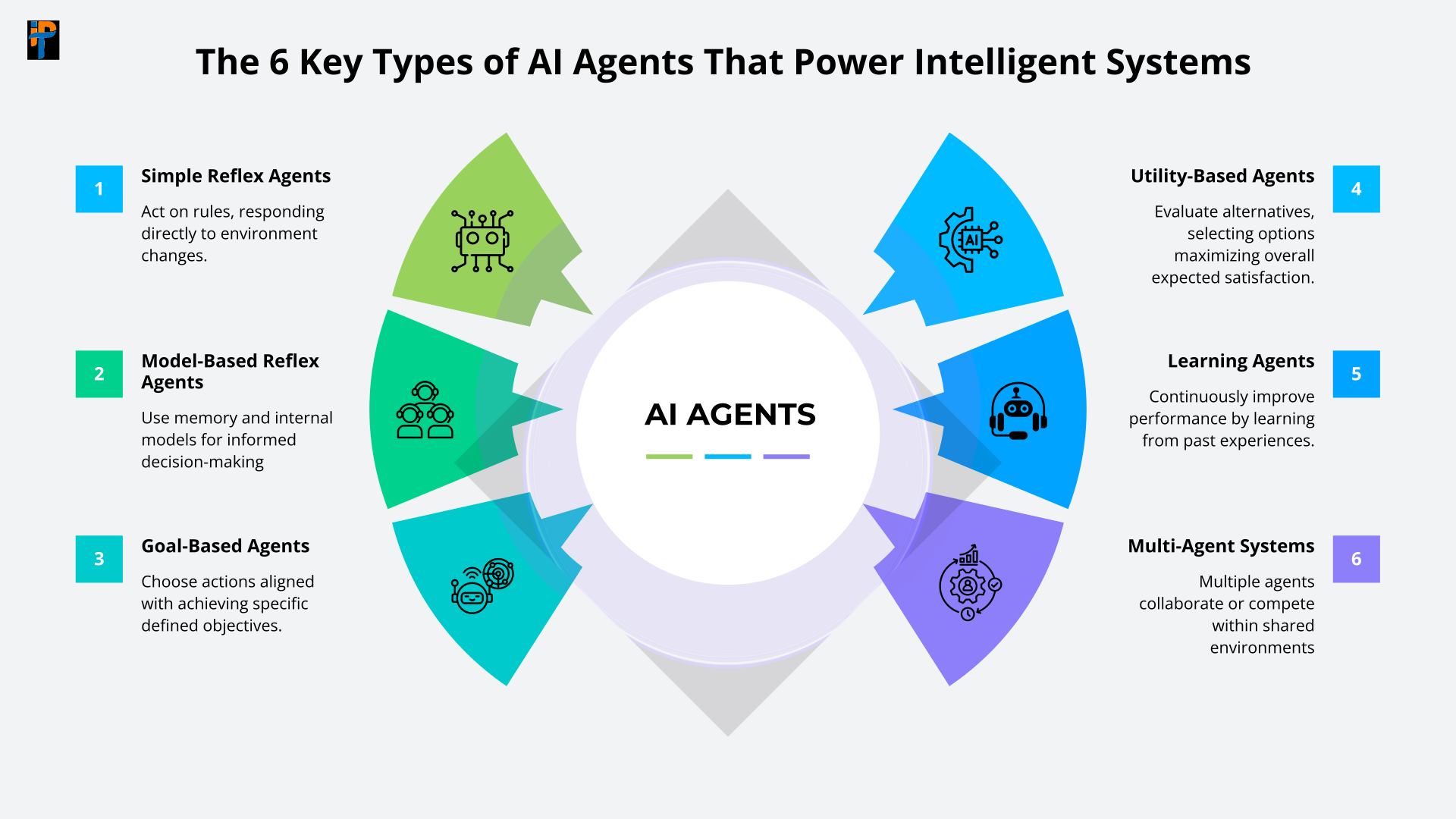
Conversational AI Agents

These are the social butterflies of the AI world, designed to engage in natural, flowing conversations with humans. Unlike traditional chatbots that follow scripted responses, conversational AI agents understand context, remember previous interactions, and can handle complex, multi-turn dialogues.

Imagine having a knowledgeable employee who never forgets a customer’s name, previous purchases, or preferences. Conversational agents can handle everything from answering product questions to providing personalized recommendations, processing returns, and even engaging in small talk that builds rapport. They’re particularly powerful in industries where relationship building drives sales, such as real estate, financial services, and luxury retail.

The sophistication of modern conversational agents extends beyond mere text exchanges. They can detect emotional cues in customer messages and adjust their tone and approach accordingly. Frustrated customer? The agent adopts a more empathetic, solution-focused approach. Excited buyer? It matches their enthusiasm while guiding them toward a purchase.

Task Automation Agents

While conversational agents are the face of your operation, task automation agents are the behind-the-scenes workhorses. These digital employees excel at repetitive, rule-based tasks that consume hours of human time—data entry, report generation, invoice processing, and appointment scheduling.

Consider the typical small business owner’s day: checking inventory levels, updating spreadsheets, sending follow-up emails, and generating reports. Task automation agents can handle these activities simultaneously, accurately, and without the Monday morning blues. They’re like having an incredibly efficient assistant who never makes typos, never forgets a task, and can process thousands of items in the time it takes you to finish your morning coffee.

Predictive Analytics Agents

These are your business fortune-tellers, minus the crystal ball and mysterious ambiguity. Predictive analytics agents analyze patterns in your historical data to forecast future trends, identify opportunities, and flag potential problems before they materialize.

For a retail business, this might mean predicting which products will trend next month, allowing you to adjust inventory accordingly. For a service business, it could involve identifying customers likely to churn, enabling proactive retention efforts. These agents transform raw data into actionable insights, turning hindsight into foresight.

Decision Support Agents

Think of these as your AI advisors, designed not to make decisions for you but to ensure you make better-informed ones. Decision support agents aggregate data from multiple sources, analyze complex scenarios, and present recommendations with clear reasoning.

These agents shine in situations requiring nuanced judgment. Should you expand into a new market? Which supplier offers the best long-term value? What pricing strategy will maximize both revenue and customer satisfaction? Decision support agents can process vastly more information than any human, considering factors you might overlook and presenting options with probability-weighted outcomes.

Also Read- RAG Use Cases 2025: Transform Mobile & Web Apps | Data-Backed Guide

Comparison of AI Agent Types

Agent Type Primary Function Best Use Cases Implementation Complexity Typical ROI Timeline
Conversational AI Customer interaction & support Customer service, sales, and lead qualification Medium to High 3-6 months
Task Automation Repetitive task execution Data entry, scheduling, and report generation Low to Medium 1-3 months
Predictive Analytics Future trend forecasting Inventory management, demand planning, risk assessment High 6-12 months
Decision Support Strategic recommendation Pricing optimization, market expansion, resource allocation Medium to High 4-8 months

AI Agent vs Bot: The Difference You Must Know
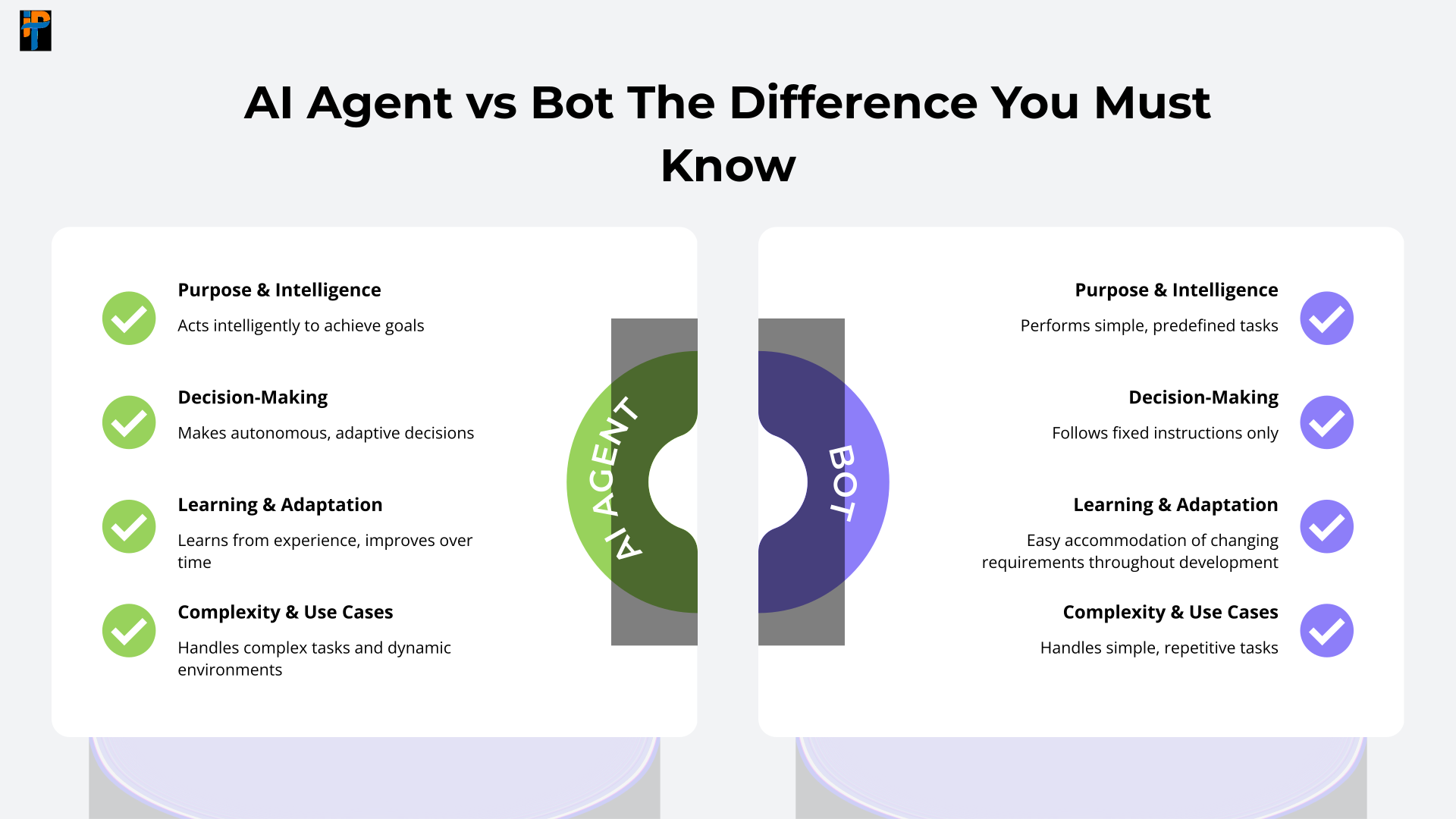
Understanding Core Capabilities

The distinction between AI agents and traditional bots is like comparing a smartphone to a calculator—both compute, but their capabilities exist in different universes. Traditional bots operate on predetermined scripts, following if-then logic that works well for simple, predictable interactions but crumbles when faced with complexity or ambiguity.

AI agents, conversely, leverage machine learning and natural language processing to understand intent rather than just matching keywords. When a customer types “My package hasn’t shown up yet and I’m getting worried,” a bot might respond with a generic shipping FAQ. An AI agent understands the concern, checks the order status, identifies potential delays, and provides specific, contextual assistance while acknowledging the customer’s frustration.

The capability gap becomes even more pronounced in handling variations. A bot programmed to process returns might fail when a customer says, “I want to send this back” instead of “I want to return this item.” An AI agent recognizes these as equivalent requests, understanding the intent regardless of phrasing.

Learning and Adaptation Features

Here’s where the distinction becomes truly transformative: bots are static, while AI agents evolve. Every interaction teaches an AI agent something new, gradually improving its understanding and responses. It’s the difference between a tool that remains unchanged from day one and a system that becomes more valuable over time.

This learning capability manifests in subtle but powerful ways. An AI agent notices that customers asking about “shipping times” on Fridays are often planning weekend projects and might benefit from expedited shipping offers. It learns that complaints about product complexity often precede returns and proactively offers additional support resources. These insights emerge organically from patterns in data, without explicit programming.

Complexity of Task Handling

Traditional bots excel at simple, linear tasks—think password resets or balance inquiries. But throw them a curveball like “I ordered the blue widget last month, but I think I need the red one instead, though I’m not sure if it’s compatible with my existing setup, and by the way, can I get a discount since I’m a repeat customer?”—and they’re lost.

AI agents parse this complexity naturally. They identify multiple requests (product exchange, compatibility check, discount inquiry), prioritize them logically, and address each while maintaining conversation flow. They can even handle interruptions, topic changes, and clarification requests without losing context.

What Are the Advantages of Building Custom AI Agents

Tailored to Your Specific Business Needs

Off-the-shelf AI solutions are like buying a suit off the rack—it might fit okay, but it’ll never match the perfection of a tailored ensemble. Custom AI agents are designed around your unique business processes, customer base, and growth objectives. They speak your industry’s language, understand your product nuances, and align with your brand voice.

This customization extends beyond surface-level adjustments. A custom agent for a boutique law firm understands legal terminology, confidentiality requirements, and the delicate nature of client communications. One built for an e-commerce store knows your inventory system, shipping policies, and can even reflect your brand’s personality—whether that’s professionally distant or warmly casual.

The specificity advantage compounds over time. As your custom agent learns from interactions specific to your business, it develops insights that no generic solution could provide. It might be noticed that your customers in certain regions prefer different payment methods, or that support tickets spike after you send marketing emails—insights that directly inform business strategy.

Competitive Advantage Through Unique Capabilities

In a world where everyone has access to the same tools, custom AI agents become your secret sauce. While competitors struggle with generic solutions that sort of work, your tailored agent delivers experiences that feel magical to customers. It’s not just about efficiency; it’s about creating differentiation that’s hard to replicate.

Consider a small online bookstore competing against giants. Their custom AI agent doesn’t just recommend bestsellers; it understands literary preferences with nuance, suggesting obscure titles based on reading patterns, even engaging in book discussions that build community. This isn’t something you can buy off the shelf—it’s a competitive moat built on intelligent customization.

Scalability and Long-term Cost Efficiency

The beauty of custom AI agents lies in their scalability economics. Unlike human resources, where each additional unit of capacity requires proportional investment, AI agents scale logarithmically. Handling ten customers costs essentially the same as handling ten thousand.

This scalability isn’t just about volume—it’s about capability expansion. Your custom agent designed for customer service can be extended to handle sales qualification, then order processing, then inventory management. Each extension leverages existing infrastructure and learning, making subsequent capabilities cheaper and faster to implement.

Enhanced Data Control and Security

With custom AI agents, you’re not sending your sensitive business data to third-party servers where it mingles with competitors’ information. You maintain complete control over data storage, processing, and access. This isn’t just about paranoia—it’s about protecting your competitive intelligence and customer trust.

Custom solutions allow you to implement security measures tailored to your specific risks and regulatory requirements. Need to ensure HIPAA compliance for health-related data? Built in from the ground up. Want to implement zero-knowledge architecture for maximum privacy? You have that flexibility. This control becomes increasingly valuable as data privacy regulations tighten globally.

Custom AI Agents vs. Generic Solutions

Evaluation Criteria Custom AI Agents Generic AI Solutions Winner
Initial Cost Higher ($15,000-$100,000+) Lower ($100-$5,000/month) Generic
Long-term ROI Superior (200-500% typical) Moderate (50-150% typical) Custom
Scalability Unlimited with minimal cost Limited by tier/pricing Custom
Customization Complete flexibility Limited to configuration options Custom
Time to Deploy 2-6 months Days to weeks Generic
Learning Curve Minimal (designed for your team Moderate to high Custom
Data Security Full control Shared infrastructure Custom
Competitive Advantage Significant Minimal Custom

A Practical Framework for Implementing AI Agents in Your Business

Phase 1: Assessment and Planning

Before you write a single line of code or spend a single dollar, you need a clear map of where you’re going. This phase isn’t about technology—it’s about understanding your business needs, capabilities, and constraints. Think of it as architectural planning before construction begins.

Start by identifying your pain points with surgical precision. Where does your team spend the most time on repetitive tasks? Which customer complaints appear most frequently? What decisions do you wish you could make with better information? These questions reveal where AI agents can deliver maximum impact.

Next, audit your technical readiness. What systems do you currently use? How is your data organized? What integration points exist? You’re not looking for perfection here—you’re identifying what needs to be prepared or improved. It’s like checking your foundation before building an addition to your house.

Finally, establish clear success criteria and ROI expectations. If you’re investing $50,000 in a custom AI agent, what return justifies that investment? Reduced customer service costs? Increased sales conversion? Faster order processing? Quantify these expectations using your current baseline metrics.

Phase 2: Development and Testing

This is where your AI agent takes its first breaths of digital life. Development should follow an iterative approach—build a little, test a little, learn a lot. Starting with a minimum viable agent (MVA) allows you to validate concepts quickly without overcommitting resources.

Your MVA might handle just the five most common customer questions or automate a single workflow. This focused approach provides rapid feedback on what works, what doesn’t, and what users actually need versus what you thought they needed. It’s like launching a food truck before opening a restaurant—you test your recipes with lower risk.

Testing extends beyond functional verification. You need to evaluate how your agent handles edge cases, inappropriate requests, and system failures. What happens when a customer asks something completely unexpected? How does the agent respond to frustrated or confused users? These scenarios reveal the difference between an agent that works in theory and one that thrives in reality.

Phase 3: Deployment and Optimization

Launching your AI agent isn’t a big-bang event—it’s more like introducing a new team member gradually. Start with a soft launch to a small user segment or for limited use cases. This controlled deployment allows you to identify and fix issues before they affect your entire customer base.

Monitor everything during early deployment. Response accuracy, user satisfaction, completion rates, escalation frequency—these metrics tell you whether your agent is helping or hindering. Be prepared to make rapid adjustments based on real-world performance.

Optimization is an ongoing journey, not a destination. Your agent should continuously improve through feedback loops. User corrections teach it better responses. New scenarios expand its capabilities.

Performance analytics reveal optimization opportunities. Think of it as ongoing education rather than one-time training.

Phase 4: Scaling and Evolution

Once your agent proves its worth in initial use cases, scaling becomes your focus. This isn’t just about handling more volume—it’s about expanding capabilities strategically. Each new capability should build on existing strengths while opening new value streams.

Scaling might mean extending your customer service agent to handle sales inquiries or expanding your task automation agent to cover additional workflows. The key is maintaining quality while growing scope. It’s like expanding a successful restaurant—you want to serve more customers without compromising the experience that made you successful.

Evolution involves fundamentally advancing your agent’s capabilities. This might mean implementing more sophisticated natural language processing, adding predictive capabilities, or enabling multi-modal interactions (voice, text, visual). Evolution should align with your business growth and changing market demands.

The Future is Orchestrated: From Single Agents to an AI Workforce

Multi-Agent Systems and Collaboration

The future isn’t about having one super-intelligent AI agent—it’s about orchestrating specialized agents that work together seamlessly. Imagine a digital workforce where your customer service agent collaborates with your inventory agent, your analytics agent, and your scheduling agent to solve complex problems holistically.

This collaborative approach mirrors how human teams function. When a customer inquires about a delayed order, your customer service agent doesn’t need to know everything. It consults the logistics agent for shipping status, the inventory agent for stock levels, and the prediction agent for estimated resolution times. Each agent excels in its domain while contributing to a unified solution.

Multi-agent systems also provide resilience. If one agent encounters an issue, others can compensate or provide alternative solutions. It’s like having a well-trained team where everyone knows their role but can support colleagues when needed.

The Rise of Agent Orchestration Platforms

As businesses deploy multiple AI agents, managing them individually becomes impractical. Enter orchestration platforms—the conductors of your AI symphony. These platforms coordinate agent interactions, manage workflows, and ensure consistent performance across your entire AI ecosystem.

According to recent industry reports, the agent orchestration market is expected to grow from $2.1 billion in 2024 to $15.8 billion by 2028, representing a compound annual growth rate of 65.3%. This explosive growth reflects the increasing sophistication of AI deployments and the need for unified management solutions.

Orchestration platforms handle the complex choreography of agent interactions. They manage authentication, data flow, error handling, and performance optimization across agents. For small businesses, this means being able to deploy sophisticated AI capabilities without becoming systems integration experts.

Preparing for the Autonomous Business Model

We’re approaching a paradigm shift where businesses can operate with minimal human intervention for routine operations. This isn’t about replacing humans—it’s about freeing them to focus on creativity, strategy, and relationship building while AI handles the repetitive and predictable.

Small businesses that prepare for this shift today will have significant advantages tomorrow. This means building flexible technical infrastructure, developing AI governance frameworks, and cultivating a culture that embraces human-AI collaboration. It’s like preparing for the internet revolution in the early 1990s—those who moved early gained insurmountable advantages.

The autonomous business model doesn’t mean zero human involvement. Instead, it represents a new division of labor where AI agents handle information processing, routine decisions, and repetitive tasks while humans provide creativity, empathy, and strategic thinking. This symbiosis amplifies human capabilities rather than replacing them.

You’ve Seen The Future. Now, Let’s Build It Together.

This guide didn’t just explain AI agents; it painted a picture of the modern, efficient, and competitive business you are capable of building. An enterprise that doesn’t just keep up but sets the pace.

The journey from your current operations to an AI-augmented future begins with a single, strategic partnership.

Partner with IPH to Craft Your Intelligent Digital Workforce

When you choose IPH Technologies, you’re not hiring a developer; you’re gaining a partner with a decade of experience, a portfolio of 500+ successful projects, and a commitment to your success that is reflected in our 5-star reviews.

Let’s architect a solution that doesn’t just solve a single problem, but transforms how you operate.

Begin Your Transformation. Tell Us About Your Vision.

Click Here to Schedule a Strategy Call with Our AI Experts

Download Our Case Study Portfolio to See Real-World Results

Your competition is already researching this. You can be the one who implements it.

Conclusion

The journey from traditional business operations to AI-enhanced processes isn’t just a technological upgrade—it’s a fundamental reimagining of how small businesses can compete, serve customers, and scale efficiently. Custom AI agents represent more than tools; they’re partners in your business evolution, learning and growing alongside your company.

We’ve explored the real challenges small businesses face, from budget constraints to technical complexity, and provided practical solutions for each. We’ve distinguished between simple bots and sophisticated AI agents, highlighting why the investment in true AI capabilities pays dividends over time. Most importantly, we’ve laid out a practical framework for implementation that any small business can follow.

The advantages of custom AI agents—from tailored functionality to competitive differentiation—far outweigh the initial investment hurdles. As we look toward a future of orchestrated AI workforces and autonomous business models, the question isn’t whether to implement AI agents, but how quickly you can begin the journey.

Remember, every giant tech company started with a single step toward innovation. Your custom AI agent journey begins with understanding your unique needs, avoiding common pitfalls, and building systematically toward a more intelligent, efficient, and competitive business. The tools are available, the frameworks are proven, and the potential is limitless.

The businesses that thrive in the next decade won’t necessarily be the largest or most well-funded—they’ll be the ones that most effectively blend human creativity with AI capability. By starting your AI agent journey today, you’re not just preparing for the future; you’re actively creating it.

FAQ

How much does it typically cost to develop a custom AI agent for a small business?
Custom AI agent development costs vary significantly based on complexity and requirements. Basic agents handling simple customer queries might start at $15,000-$25,000, while sophisticated multi-functional agents can range from $50,000-$100,000 or more. However, when you compare this to the annual cost of even one full-time employee, plus the 24/7 availability and scalability benefits, the investment often pays for itself within 6-12 months. Many development partners, including IPH Technologies, offer flexible payment structures and phased development approaches to make the investment more manageable for small businesses.
What makes IPH Technologies' approach to AI development different?
Our approach combines cutting-edge technology with practical business sense. We don’t believe in one-size-fits-all solutions or overwhelming clients with technical jargon. Instead, we focus on understanding your specific business challenges and crafting AI solutions that address them directly. Our agile methodology means you see results quickly and can provide feedback throughout development. We also provide comprehensive training and support, ensuring your team can maximize the value of your AI investment long after deployment.
Does IPH Technologies offer ongoing support after AI agent deployment?
Absolutely. We understand that deployment is just the beginning of your AI journey. Our comprehensive support packages include regular performance monitoring, continuous optimization based on user feedback, updates for new features or business requirements, and 24/7 technical support for critical issues. We also provide quarterly business reviews to ensure your AI agent continues aligning with your evolving business goals. This ongoing partnership approach is why many of our clients have been with us for years, continuously expanding their AI capabilities.
What industries does IPH Technologies have experience with for AI agent development?
Our decade of experience spans diverse industries, including e-commerce, healthcare, financial services, real estate, education, manufacturing, and professional services. This cross-industry expertise allows us to bring best practices from various sectors to your project. For instance, we might apply customer service innovations from e-commerce to healthcare, or efficiency solutions from manufacturing to professional services. This cross-pollination of ideas often leads to breakthrough solutions that give our clients competitive advantages.
How do I measure the ROI of my AI agent investment?
ROI measurement should focus on both hard and soft metrics. Hard metrics include cost savings (reduced labor costs, fewer errors), revenue increases (higher conversion rates, larger average orders), and efficiency gains (faster response times, more transactions processed). Soft metrics encompass customer satisfaction scores, employee satisfaction (from eliminating mundane tasks), and competitive positioning. Most businesses see positive ROI within 6-12 months when tracking these metrics comprehensively.
Can AI agents really handle complex customer emotions and complaints?
Modern AI agents have become remarkably sophisticated in emotional intelligence. They can detect frustration, confusion, or urgency in customer messages and adjust their responses accordingly. However, they’re not meant to replace human empathy entirely. The best implementations use AI agents to handle routine emotional interactions while escalating complex emotional situations to human agents. This hybrid approach ensures customers always receive appropriate support while maximizing efficiency.
What about data security and privacy with AI agents?
Security and privacy are paramount when implementing AI agents. Custom solutions offer significant advantages here—you control where data is stored, how it’s processed, and who has access. Reputable development partners implement encryption, access controls, and compliance frameworks (GDPR, CCPA, etc.) from the ground up. Additionally, custom agents can be designed with privacy-by-design principles, collecting only necessary data and providing users with transparency and control over their information.
Can IPH Technologies integrate AI agents with our existing software systems?
Integration capability is one of our core strengths. We’ve successfully integrated AI agents with hundreds of different software systems, including CRMs (Salesforce, HubSpot), ERPs (SAP, Oracle), e-commerce platforms (Shopify, WooCommerce), and countless custom applications. Our integration approach prioritizes data security and system stability, ensuring your AI agent enhances rather than disrupts existing operations. We also provide detailed documentation and training on managing these integrations, empowering your team to handle routine maintenance independently.
Avatar
Lekha Mishra

Verified CEO

About the Author

I'm Lekha Mishra, Co-Founder of IPH Technologies, a 6x award-winning software and mobile solutions provider. My mission is to empower global entrepreneurs by transforming visionary ideas into powerful, market-ready products. We move beyond code to provide strategic insights and a competitive edge, specializing in intelligent solutions powered by AI and ML. I believe in leveraging these technologies to unlock new possibilities, drive growth, and deliver unparalleled value. Let's connect and turn your vision into a lasting legacy.


WhatsApp
Call us
Get a Call Back