
























































Introduction
Hey there, entrepreneur or tech enthusiast—have you ever stared at your phone and thought, “What if this could predict my next move, chat like a pro, or even spot patterns I never noticed?”
That’s the magic of AI apps, and in Dubai’s glittering skyline of innovation, they’re not just a dream; they’re a smart business move. But let’s cut to the chase: you’re here because the big question looms—how much does it really cost to build an AI app in Dubai in 2026?
As the UAE’s AI market surges toward a whopping $46 billion by 2030, with a blistering 43.9% CAGR, turning your idea into a reality isn’t cheap, but it’s worth every dirham if done right.
Picture this: a fintech app that flags fraud before it happens, or a healthcare tool diagnosing issues faster than a doctor sips coffee. At IPH Technologies, we’ve turned over 500 such visions into hits for over 430 happy clients, blending cutting-edge AI with agile vibes to keep you ahead in this competitive landscape.
In this complete 2026 breakdown, we’ll unpack the costs step by step—no fluff, just real talk. We’ll explore factors like complexity and data hunger that jack up the bill, dive into breakdowns with tables for easy scanning, and share tips to trim the fat.
Whether you’re a startup hustling in Deira or a corporate giant in DIFC, stick around. By the end, you’ll know if AED 100,000 or a million is your ballpark, and how to make it pay off. Ready to demystify AI app development cost in Dubai? Let’s roll.
What Exactly Is an AI App?
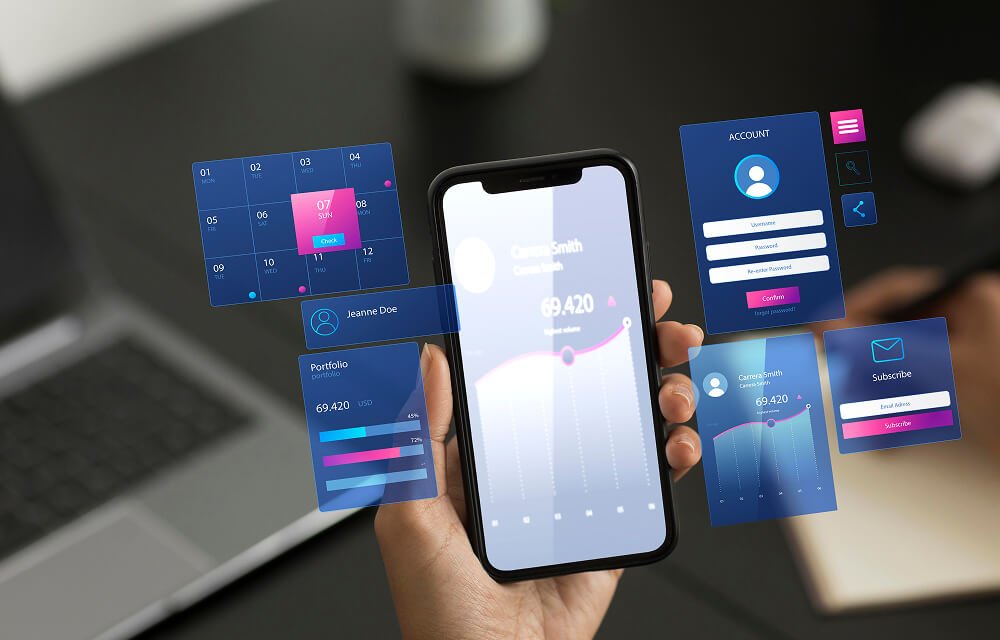
Okay, before we throw numbers around, let’s level-set: what’s an AI app, anyway? Think of it as your smartphone’s brainy sidekick—software infused with artificial intelligence that learns, adapts, and acts smarter than your average calculator.
Unlike a basic to-do list app, an AI-powered one might analyze your habits to suggest tasks or use natural language processing (NLP) to respond conversationally, much like a human.
The Rise of AI in Everyday Mobile Experiences
Fast-forward to 2026, and AI apps are everywhere in Dubai’s hyper-connected scene. Remember Siri? Now imagine her evolved cousin handling Arabic dialects flawlessly or optimizing your Burj Khalifa view with augmented reality overlays.
From recommendation engines in e-commerce (hello, personalized shopping sprees) to predictive maintenance in logistics, these apps leverage machine learning (ML) models, computer vision, or even generative AI to deliver wow-factor experiences.
But here’s the kicker: building one isn’t like slapping together a website. It demands data pipelines, model training, and seamless integrations—stuff that can balloon costs if you’re not careful.
At IPH Technologies, we’ve seen simple chatbots evolve into full-blown enterprise systems, proving that the right AI touch can skyrocket user engagement by 40% or more. So, if you’re pondering an AI mobile app in the UAE, know it’s not just tech; it’s a growth engine disguised as code.
Also Read – AI App Development Cost in 2025: From MVPs to Full-Scale Solutions
Why Dubai Is the Hotspot for AI Innovation in 2026
Dubai isn’t just beaches and malls—it’s a launchpad for AI dreams. Why? The city’s visionaries have bet big on tech, making it a magnet for startups and giants alike.
Government Initiatives Fueling AI Growth
Take Dubai’s AI Strategy 2031: it’s pumping billions into smart cities, with initiatives like the Dubai Future Foundation handing out grants that could shave 20% off your development tab if you qualify.
Add the UAE’s National AI Strategy, aiming for AI to contribute 14% to GDP by 2030, and you’ve got an ecosystem ripe for innovation. It’s like the government rolled out the red carpet, saying, “Build here, thrive here.”
Booming Sectors Demanding AI Apps
From fintech’s fraud-busting tools to healthcare’s diagnostic wizards and tourism’s personalized guides, Dubai’s diverse economy craves AI. E-commerce alone is exploding, with apps using ML to predict trends and boost sales by 30%. If you’re eyeing AI app expenses in UAE, factor in this demand—it’s what keeps rates competitive but talent premium.
Key Factors That Drive AI App Development Costs
Alright, costs aren’t one-size-fits-all; they’re a puzzle of variables. Let’s break down the big ones that could turn your budget from lean to lavish.

App Complexity and Feature Set
Simple rule: more bells and whistles, more bucks. A basic chatbot using off-the-shelf NLP? That’s entry-level. But toss in custom ML models for real-time predictions or computer vision for image analysis, and costs climb 2-3x. Think of it as upgrading from a bicycle to a Ferrari—faster, flashier, pricier.
Data Requirements and Quality
AI thrives on data, but garbage in, garbage out. Sourcing, cleaning, and labeling datasets can eat 20-30% of your budget. In Dubai, where privacy laws are tightening, expect extra for compliant data pipelines. Got proprietary data? Lucky you—saves cash. Otherwise, it’s like mining gold in the desert: rewarding but sweaty work.
Team Expertise and Location
Who’s building it? A solo freelancer or a crack team of AI wizards? Dubai’s talent pool is deep, but top-tier devs command AED 200-400 per hour. Offshore hybrids can cut that by 40%, but watch for time zone tango. At IPH Technologies, our 500+ project legacy means we blend local know-how with global efficiency—no headaches, just results.
Technology Stack Choices
Python with TensorFlow for ML? Swift for iOS integration? Your stack dictates speed and spend. Open-source gems keep costs low, but proprietary clouds like AWS Middle East add scalability fees—up to $15/hour for GPUs. Choose wisely; it’s the foundation of your AI fortress.
Compliance and Security Needs
Dubai’s TRA regulations demand data localization and ethical AI—non-negotiable. Add encryption, bias audits, and GDPR-lite compliance, and that’s 10-15% more on the tab. Skip it? Risk fines that dwarf your dev bill. Better safe than sanctioned, right?
Detailed Cost Breakdown for 2026
Now, the meat: hard numbers for 2026, adjusted for 5-10% inflation from 2025 trends. We’ll tier it by app scale, with a handy table to visualize.
Expect totals from AED 100,000 for bare-bones to over AED 1 million for beasts. Timelines? 3-18 months, depending on depth.
Also Read – How Much Does It Cost to Hire an App Developer in Dubai 2025
| AI App Type | Key Features | Estimated Cost (AED) | Timeline (Months) | Ideal For |
|---|---|---|---|---|
| Simple | Basic NLP chatbot, rule-based automation | 80,000 – 150,000 | 2 – 4 | Startups testing waters, small e-commerce tools |
| Mid-Tier | Custom ML models, API integrations, basic predictions | 150,000 – 500,000 | 4 – 8 | Mid-size firms in fintech or retail, personalized user applications |
| Enterprise | Advanced computer vision, scalable decision engines, and full governance | 500,000+ | 8 – 18+ | Corporations in healthcare/logistics, high-stakes AI systems |
This table draws from industry benchmarks, showing how features scale spend. Notice enterprise jumps? That’s where integrations and robustness kick in.
Simple AI Apps: Under AED 150,000
Perfect for dipping toes. Imagine a voice bot for restaurant bookings—quick win, low risk. Costs cover basic dev (60%), data prep (20%), and testing (10%).
Mid-Tier AI Apps: AED 150,000 – 500,000
Here, things get juicy: think predictive analytics for inventory. Budget splits into model training (30%), integrations (25%), and UI polish (20%). It’s the sweet spot for ROI—payback in 6-12 months via efficiency gains.
Enterprise-Level AI Apps: Over AED 500,000
Big leagues: fraud detection platforms with real-time learning. Hidden gems like ongoing retraining add $5k-30k yearly. But scale it right, and you’re talking market domination.
Phase-by-Phase Cost Allocation in AI Development
Building an AI app is a relay race, not a sprint. Each phase nibbles at the budget—here’s the split, visualized in our second table for clarity.
| Phase | Description | Cost Percentage | Estimated AED (Mid-Tier App) | Duration |
|---|---|---|---|---|
| Planning & Discovery | Idea validation, scope definition | 10–15% | 20,000 – 50,000 | 2 – 4 weeks |
| Design & Prototyping | Wireframes, AI model sketches | 15–20% | 30,000 – 75,000 | 3 – 6 weeks |
| Development & Integration | Coding, ML training, backend setup | 40–50% | 80,000 – 200,000 | 8 – 12 weeks |
| Testing & Deployment | QA, security checks, launch | 15–20% | 30,000 – 75,000 | 4 – 6 weeks |
| Maintenance & Scaling | Updates, model tuning, cloud operations | 10–15% annually | 20,000 – 50,000 / year | Ongoing |
Overlaps happen (testing during dev), but this phased view keeps surprises low.
Planning and Discovery Phase
Start here: map your problem to AI solutions. Skip it, and you’re building blind—costs overrun by 20%. Tools like user interviews? Gold for nailing the scope.
Design and Prototyping
Visualize the magic. Bilingual UI for Dubai’s crowd? Adds flair but 10% to this phase. Prototypes let you test AI flows early, dodging pricey pivots.
Development and Integration
The engine room: train models, wire APIs. Expect hiccups with data drift—budget buffers save sanity.
Testing and Deployment
Rigorous QA ensures your AI doesn’t hallucinate. Dubai’s heat? Stress-test for that too. Launch on app stores, then monitor like a hawk.
Maintenance and Scaling
Post-launch: retrain models quarterly. Cloud bills spike with users—plan for 15% yearly upkeep to keep it humming.
Also Read – AI Agents Explained: Why They Matter and Real-World Use Cases
Dubai-Specific Cost Considerations
What makes Dubai’s tab unique? Location perks and pitfalls.
Local Talent and Hourly Rates
AI devs here fetch AED 200-400/hour, higher than global averages but worth it for cultural fit. Free zones like DMCC offer tax breaks, sweetening the deal.
Regulatory Environment in the UAE
TDRA mandates? Bake in AED 10k-50k for compliance audits. It’s a safeguard, not a steal—protects your IP in this innovation hub.
Cost-Saving Strategies for Your AI Project
Feeling the pinch? Here’s how to hack the budget without skimping on smarts.
Start with an MVP Approach
Minimum Viable Product: build core AI features first, iterate later. Cuts initial outlay by 30-50%, validating your idea fast. Like tasting the soup before cooking the feast.
Leverage Open-Source Tools and Cloud Services
TensorFlow? Free. AWS credits for UAE startups? Score. Hybrid teams (local + offshore) trim 20-40% off labor. Smart choices = lean machine.
Cost-Saving Strategies for Your AI Project
Feeling the pinch? Here’s how to hack the budget without skimping on smarts.
Start with an MVP Approach
Minimum Viable Product: build core AI features first, iterate later. Cuts initial outlay by 30-50%, validating your idea fast. Like tasting the soup before cooking the feast.
Leverage Open-Source Tools and Cloud Services
TensorFlow? Free. AWS credits for UAE startups? Score. Hybrid teams (local + offshore) trim 20-40% off labor. Smart choices = lean machine.
ROI Expectations for AI Apps in 2026
Invest now, harvest soon. Expect breakeven in 6-18 months: quicker for customer-facing apps (e.g., chatbots at 4-6 months), longer for backend beasts. Metrics? Track engagement spikes, cost savings—aim for 3x return in year two. In Dubai’s boom, it’s not if, but how big.
Also Read – Build a Custom AI Agent: A Small Business Guide 2025
Conclusion
Whew, we’ve journeyed from AI basics to budget blueprints, uncovering that building an AI app in Dubai for 2026 could run you AED 80,000 to over a million, shaped by everything from data feasts to regulatory feasts. But here’s the truth: in a city where innovation isn’t optional, the real cost is not building at all.
At IPH Technologies, we’re all about turning those “what ifs” into “we dids”—with our 500+ projects and client-first ethos, we make the complex feel effortless. So, what’s your next move? Chat with us, sketch that MVP, and let’s code your edge. Dubai’s future is AI-bright; make sure yours shines too.








.png)