








































































































A gold dealer in Texas is still emailing out a spot price sheet three times a day. A silver refiner in Ohio still reconciles scrap weights on a spreadsheet. Both are asking the same question in different words: is there a precious metals trading platform built for how they actually operate, or are they stuck choosing between clunky legacy systems and tools made for retail investors?
This post breaks down what these platforms actually do, the different categories on the market, and the features that separate a serious system from a glorified price ticker. By the end, you’ll know which type of software fits your operation and what to ask a vendor before you sign anything.
Key Takeaways
- Precious metals software splits into four different categories: trading, refining/ERP, portfolio tracking, and warehouse custody, and most dealers end up needing pieces of more than one, not a single tool that does it all.
- Live spot pricing and metal accounting are just table stakes at this point; risk and hedge management is what actually protects your margins.
- Off-the-shelf platforms rarely handle US-specific compliance out of the box.
- Custom-built platforms cost more upfront but they save you from “almost fits” problem that plagues generic bullion software.
What Is a Precious Metals Trading Platform?
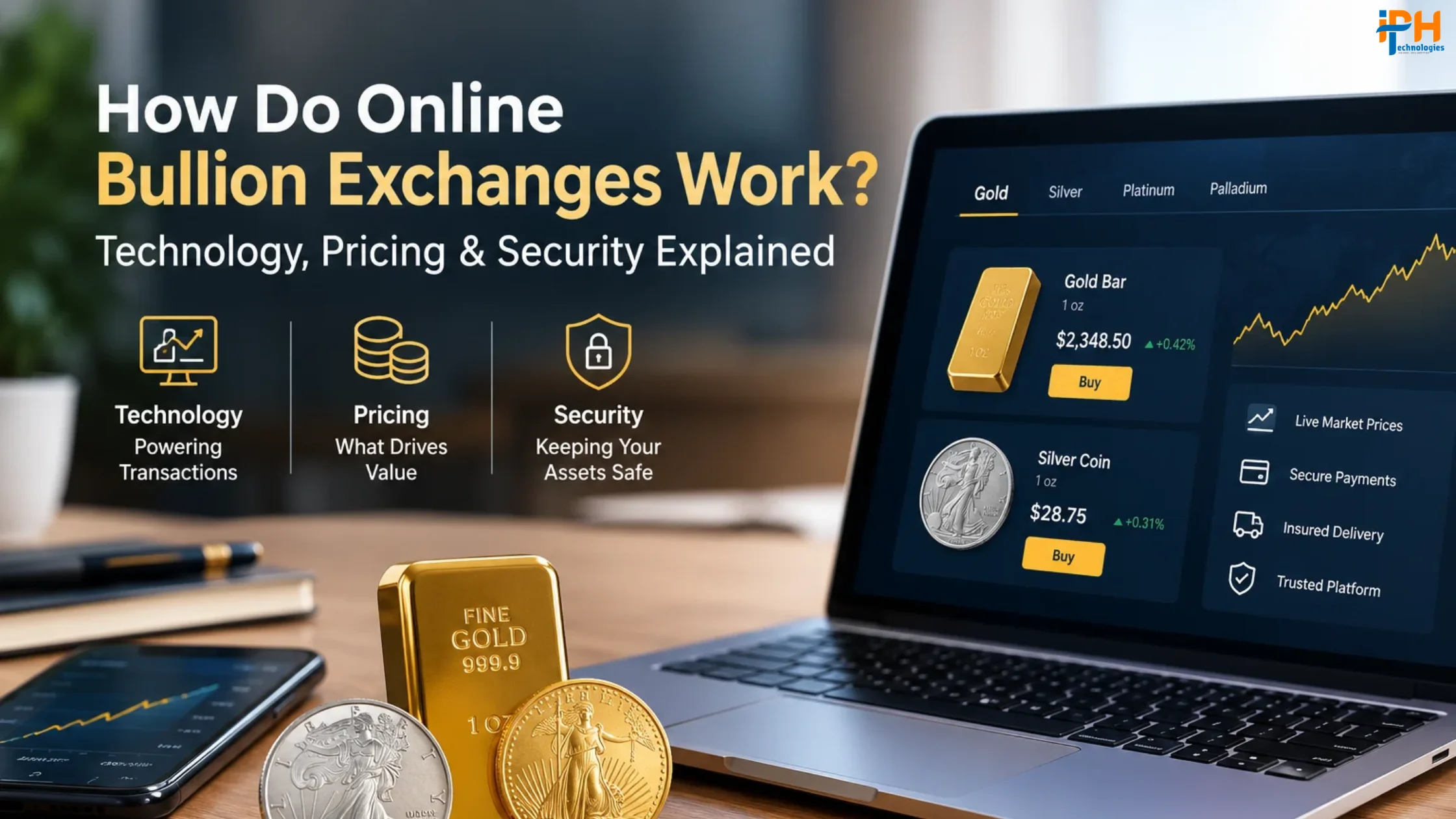
A precious metals trading platform is software that lets dealers, refiners, or institutions buy, sell, price, and track gold, silver, platinum, and palladium in real time. It connects live spot pricing, inventory, and settlement into one system instead of three disconnected tools.
For a bank or institutional trader, that might mean a platform like ION Precious Metals or Finmechanics, built for physical and financial trading at scale. For a smaller dealer, it might mean something far leaner, a system that just needs to price a coin accurately and record the transaction without any errors.
The confusion usually starts from here: “bullion software” gets used as a catch-all term, but the tools underneath it solve very different problems.
Read More: Bullion App Development: The Complete 2026 Guide for Founders
The Four Types of Precious Metals Software
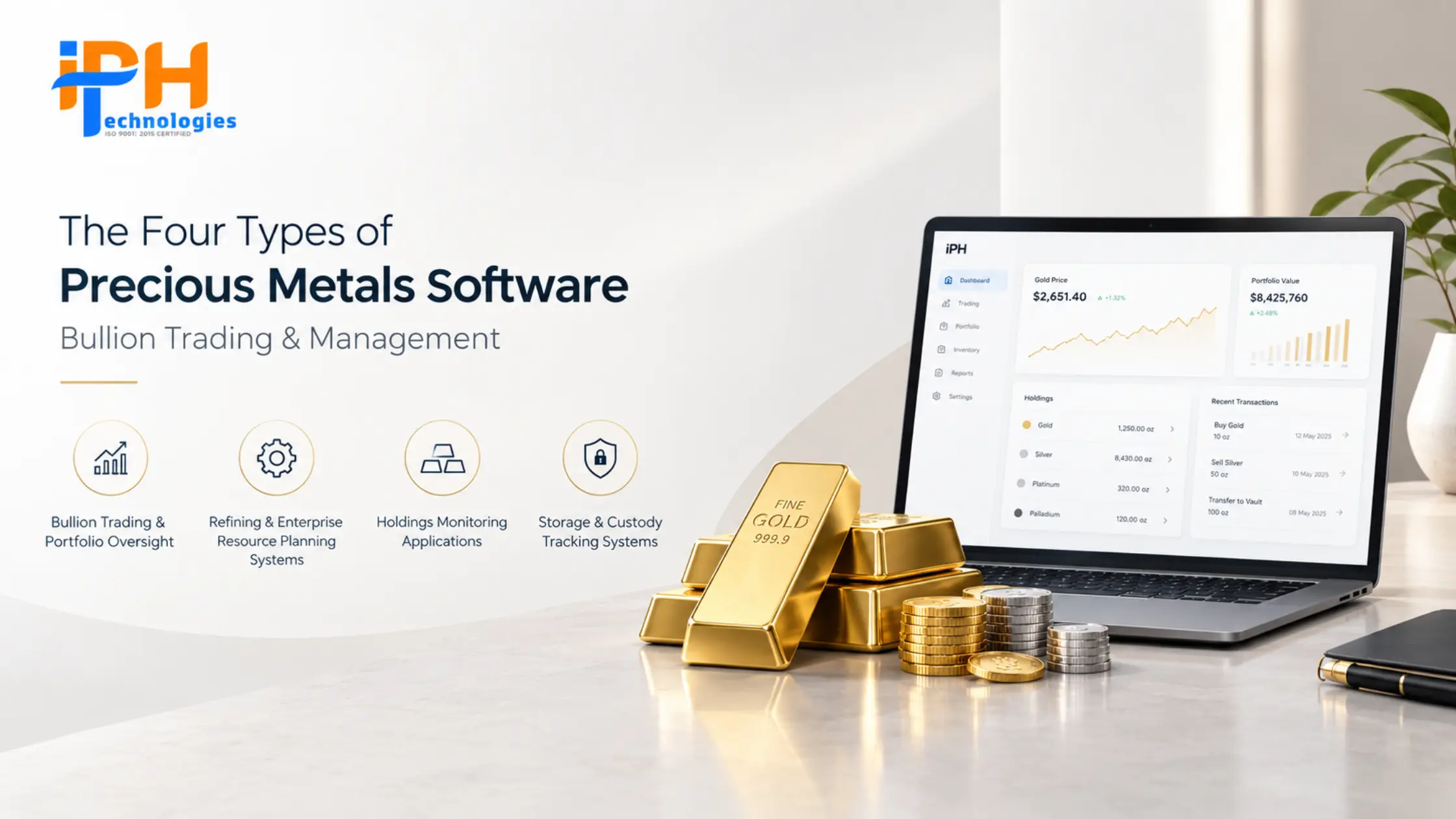
Most vendors fall into one of four buckets, and knowing which one you’re shopping in saves a lot of wasted demo calls.
Bullion Trading & Management covers the physical side of buying and selling metal alongside the financial markets by keeping tabs on live spot prices and managing real-time risk. This is the realm where institutional traders and banks operate daily; it’s all about depth of market, order books, credit limits, and exposure, far removed from a standard retail checkout.
Refining & ERP Solutions track material movement, scrap metal, hedge positions, and settlements. If your business involves melting, assaying, or converting scrap into refined bars, this is the layer that keeps custody chains and yields accurate.
Portfolio Tracking Apps serve individual investors rather than dealers. Consumer tools like Precious Metals Manager let people monitor holdings, watch spot prices, and pull tax reports — useful for end customers, not built for B2B transaction volume.
Warehouse & Chain of Custody platforms are high-security inventory systems. They matter most for dealers storing physical metal for clients, where every gram needs an auditable trail from vault to buyer.
Key Features Serious Bullion Platforms Need
The feature list that actually matters is shorter than most vendor pitch decks would have you believe, but each item on it is non-negotiable for a working system.
Live spot pricing means real-time data feeds for gold, silver, platinum, and palladium, refreshed continuously rather than pulled on a delay. A platform quoting five-minute-old prices during a volatile session can cost a dealer real money on a single trade.
Risk and hedge management tools are what protect your margins against market swings, this is the main part that separates a trading platform from a pricing calculator. Without it, you’re exposed every time you’re holding inventory between purchase and resale.
Metal accounting is the precise tracking of purity weights and transaction ledgers, down to the fraction of a gram. Get this wrong and reconciliation at month-end turns into a multi-day headache.
Industry guides, including the Synergics Bullion Guide, are worth a read if you want the fuller vocabulary around purity standards and settlement terms before you start vendor conversations.
Read more: How AI-Driven Analytics Predict Gold Price Trends in USA
Comparison Table: Which Type Fits Your Business
| Software Type | Built For | Core Strength | Common Limitation |
|---|---|---|---|
| Bullion Trading & Management | Banks, institutional traders | Live pricing, order execution, risk tools | Overbuilt and costly for small/mid dealers |
| Refining & ERP | Refiners, scrap processors | Material tracking, hedge & settlement | Weak on retail-facing trading features |
| Portfolio Tracking | Individual investors | Simple, consumer-friendly tracking | Not built for B2B transaction volume |
| Warehouse & Custody | Vaulted storage operators | Auditable chain of custody | Limited pricing/trading functionality alone |
Most dealers end up needing a combination — trading plus accounting, or accounting plus custody — which is exactly where off-the-shelf tools start to strain.
Build vs. Buy: What US Bullion Dealers Should Weigh
Off-the-shelf bullion software gets you up and running fast, but it rarely handles US compliance out of the box. KYC checks, AML reporting, and state-level bullion tax rules all vary enough that generic platforms usually end up tacking these on as an afterthought rather than building them in from the start.
A platform that can’t verify a buyer’s identity in real time isn’t a trading tool; it’s a liability waiting to surface during an audit.
Custom development costs more upfront and takes longer to get off the ground. That’s the honest tradeoff: you’re giving up speed today for a system that actually fits your compliance workflow and inventory structure a year down the road, rather than one you’re stuck patching forever.
If KYC is a pain point specifically, it’s worth looking at how AI-powered KYC for gold dealers is a different game than the manual checks most legacy platforms still rely on. Pricing accuracy is the other half of the equation. AI-driven gold price prediction is worth a look if your current spot feed is more reactive than predictive.
Read More: AI-Powered KYC For Gold Dealers in the USA
How IPH Technologies can support Precious Metals Trading
Picking the right precious metals trading platform really comes down to matching the software category to what your business actually does: trading, refining, custody, or some mix of the three. Off-the-shelf tools work fine until US compliance requirements or transaction volume outgrow them.
If you’re evaluating a partner for this kind of build, it’s worth looking at what a custom bullion software solution looks like when it’s designed around US dealer workflows from day one, like spot pricing, hedge management, and compliance included, not patched on later. You can also get in touch directly with the IPH Technologies team if you want to talk through what your specific setup needs.
Frequently Asked Questions(FAQs)
What's the difference between bullion software and a precious metals trading platform?
Bullion software is the broader umbrella term covering any tool used in the metals trade. A trading platform is one specific type within that umbrella, focused on live pricing, order execution, and risk management rather than accounting or custody.
Do small dealers need institutional-grade trading platforms?
Usually not. Most small and mid-sized dealers are better served by lighter systems focused on accurate spot pricing and metal accounting; platforms like ION or Finmechanics are designed for the kind of trading volume and risk exposure that most independent dealers just don’t carry.
Can portfolio tracking apps double as dealer software?
No. Portfolio tracking apps like Precious Metals Manager are built for individual investors keeping tabs on their personal holdings, not for processing B2B transaction volume, multi-party settlements, or inventory across locations.
Why does US-specific compliance matter so much in bullion software?
Because KYC, AML, and bullion tax rules shift depending on the state and the size of the transaction, and a platform that doesn’t handle these natively puts the dealer at risk during audits or high-value transactions. It’s one of the most common gaps in generic, non-US-built software.










.png)