























































































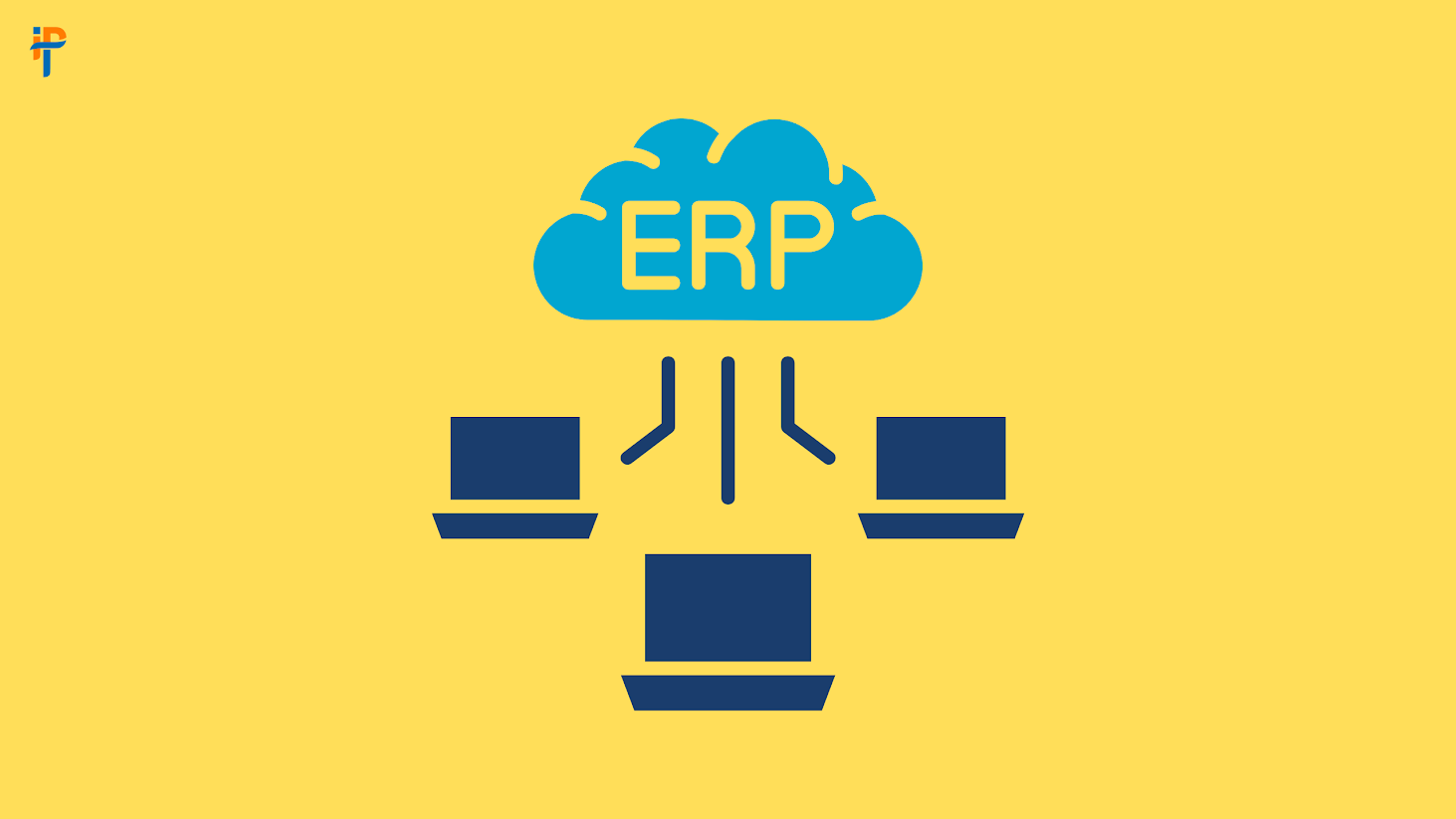
Enterprise Resource Planning software (ERP) was designed to solve this problem. This guide will help you understand what ERP is, how it functions, its benefits, and the various deployment models. It also explains the best time to buy ERP.
Why ERP is important for growing businesses
It’s not something that most companies do on purpose. There’s a spreadsheet, an accounting tool, and a system for inventory. Before long, nobody knows which numbers are reliable.
This pattern is important to business leaders. For decades, disconnected systems have caused friction in growing businesses. If finance, sales and operations are working from different versions of the truth, it can lead to duplicate work, headaches with reconciliation, and outdated data being used for decisions.
ERP software alters the equation. ERP software gives each department a single, connected system from which to operate. The lessons learned by a good data architecture are applicable to all departments.
The System Behind the Software
Even for mid-sized businesses, the ERP can have a significant impact.
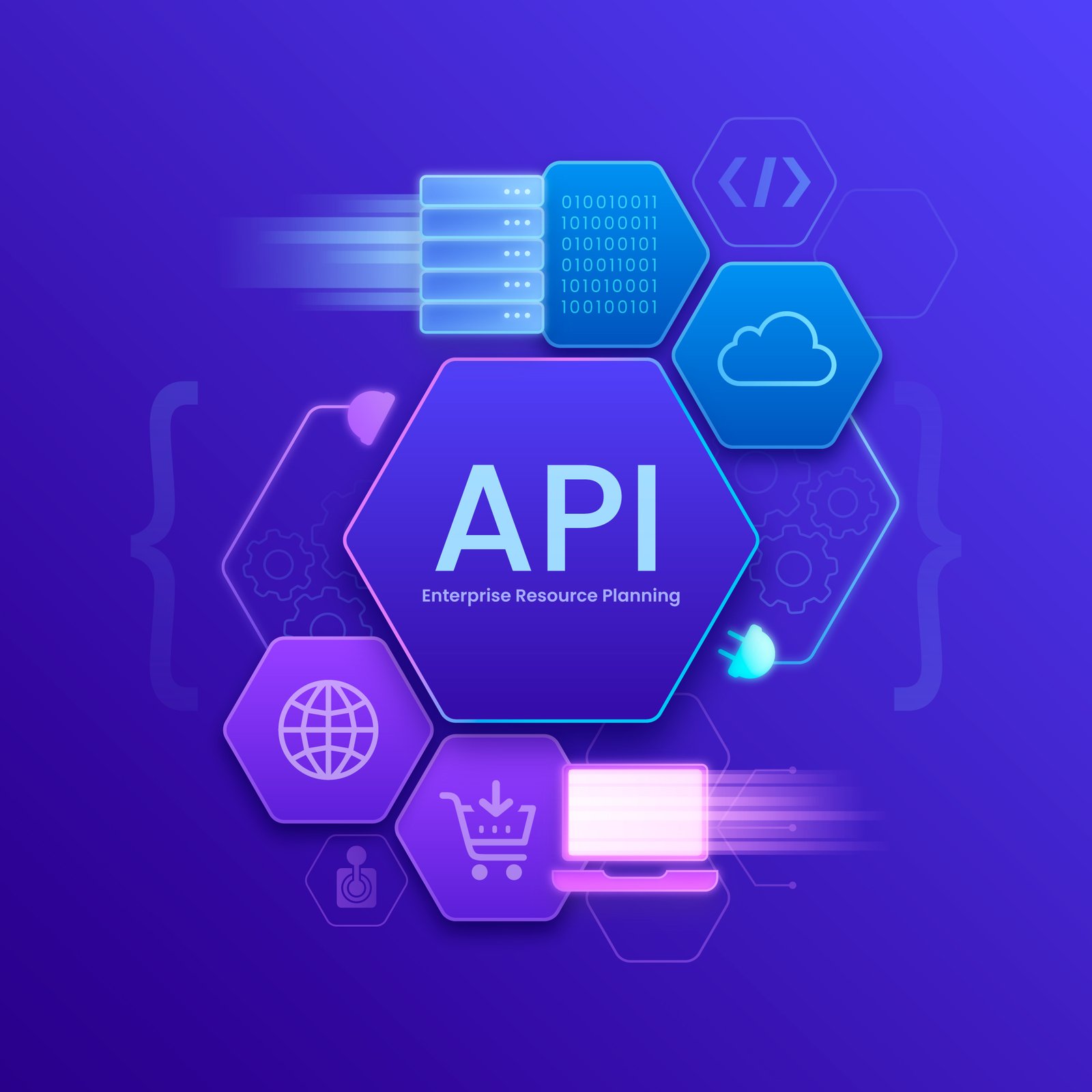
A typical ERP deployment centralizes the following:
- One database shared across the organization.
- Integrated modules for Finance, Inventory, HR, Sales, and Operations.
- Real-time workflows that connect every department seamlessly.
- Audit trails and role-based access to strengthen security and compliance.
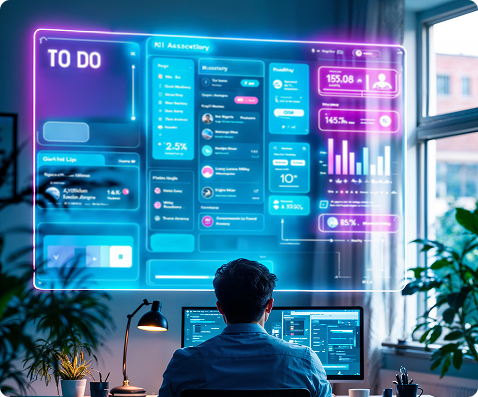
- Dashboards and reporting that provide real-time visibility into business performance.
Connected ERP allows a company to run a coordinated system of operations for its entire organization.
Also read : https://iphtechnologies.com/best-ai-app-development-companies-india/ .
Understanding the Difference between Cloud ERP and On Premise ERP
How the system is deployed is one of the most important decisions that any business must make.
There is no single network, or single deployment model that will work for everyone.
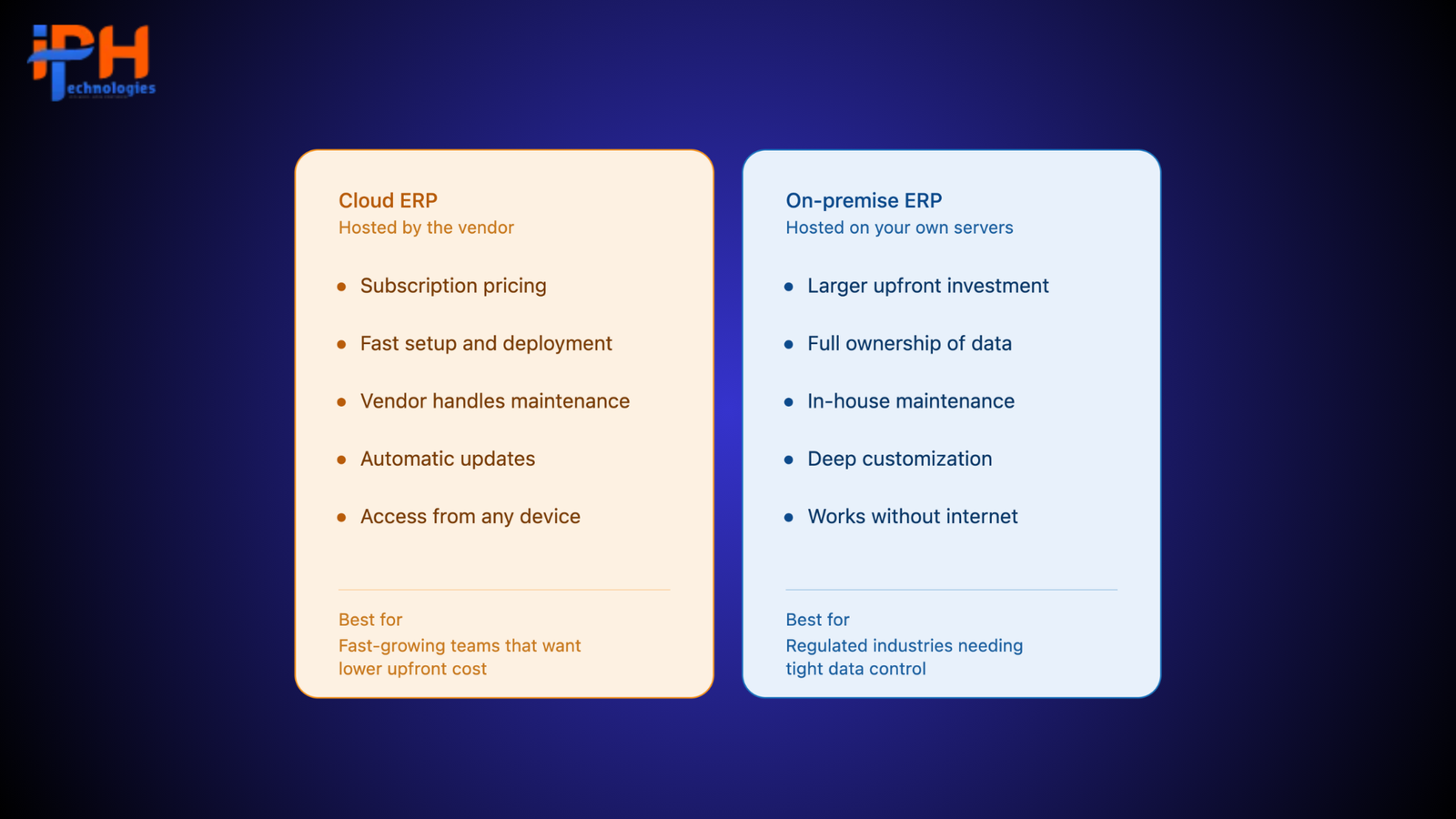
Cloud ERP — Built for speed and flexibility.
- Reduced upfront costs.
- Setup and deployment is faster.
- Maintenance, security, and updates are managed by the vendor.
- Access from anywhere on any device.
The goal is to quickly get a company up and running without having a large IT footprint.
On-Premise ERP – built for control and offering:
- Ownership of data and infrastructure.
- Deep customization potential.
- Core operations do not require internet connectivity.
Cloud deployments are faster and cheaper than on-premise systems. Many businesses are weighing the tradeoffs and opting for a hybrid model, where sensitive processes run locally, while other functions operate in the cloud. Deployment strategy becomes more important as compliance and data residency requirements increase across industries.
The Modules that Define the System
Images of modules that make up an ERP system
The modules that run underneath an ERP platform show how interconnected a company’s operations are.
Finance & Accounting All transactions in the business are recorded on the general ledger.
- Accounts Receivable/Payable
- Budgeting and forecasting
- Financial reporting
These modules combine real time transaction data with automated control to produce a financial picture that is not just a snapshot.
Inventory & Supply Chain Inventory modules are used by businesses to manage their suppliers and track stock in real-time.
- Stock level tracking
- Purchase order automation
- Supplier management
- Demand Forecasting
Human Resources modules HR keep employee data up to date from the first day.
- Employee Records
- Payroll
- Attendance and Performance Tracking
Sales & CRM Modules Sales and CRM modules link the front-facing business with everything that happens behind the scenes.
- Customer Records
- Order Management
- Tracking service
It is clear that data from the customer and operations in the back office are merging into a single connected experience.
Project & Operations Management Centralized data that is reliable and accurate is vital for budgeting, scheduling, and other departments.
- Budgets and timelines
- Project-based resource allocation
Also read :https://iphtechnologies.com/custom-software-vs-off-the-shelf-2026/
ERP Adoption: Five lessons every growing business should learn
IPH Technologies has identified five major changes in the way businesses approach ERP.
1. Real-Time Visibility is a Must Leaders are becoming more aware of the costs associated with decisions based on outdated data. Live dashboards allow teams to act on the current situation, rather than what occurred last month. Real-time transparency is increasingly a requirement for competitiveness, whether in finance, inventory or customer operations.
2. Automation Will Transform Everyday Operations ERP automation automates routine processes such as invoicing, approvals and payroll. It also ensures consistency of all the tasks without any manual intervention. There are opportunities to reduce error across:
- Procurement workflows
- Financial close processes
- Onboarding and HR administration
- Order to cash cycles
How much manual work is automated will determine how efficient businesses are in the future.
3. Custom ERP has reached a new level of accessibility. Custom ERP used to be viewed as an option that only large companies could afford. Customized deployments are now possible for mid-sized companies, thanks to faster development frameworks and modular architecture. Manufacturing, retail, healthcare and professional services industries all benefit from this.
4. Data silos are no longer an option for ERP deployments. Centralized data is crucial to the most efficient ERP deployments. Teams expect to have instant access to information. Businesses that rely on spreadsheets or standalone tools are unlikely to be able to compete with companies using unified systems.
5. Compliance creates new ERP requirements As ERP adoption expands in regulated industries such as finance, healthcare, manufacturing and other sectors, organizations use centralized systems to:
- Audit Trails
- Reporting on regulatory matters
- Access Control Based on Role
- Residency requirements
Teams that understand the compliance requirements have an edge over teams focused solely on core functionality.
Legacy Beyond the Software
ERP adoption is not about the software itself, but what businesses do with it.
After go-live, connected data, automated workflows and centralized reporting will continue to benefit the organization. As centralized systems become more common, business processes tend to follow a similar pattern. Companies that invest in a solid foundation today will be the leaders of their industry tomorrow.
What this means for your business
ERP is a roadmap that can help any organization scale up without losing control or visibility over their operations. Businesses that are prepared for the future will have systems:
- Centralized around one source of truth
- Optimized for automation
- Real-time reporting is the foundation of this product, not an addition.
- Prepared for audit and compliance requirements
- Scalable to grow with you
- Prepare for future integrations – AI, IoT and beyond
Your business must be prepared for this shift, which is coming faster than you think.
IPH Technologies designs and develops custom ERP and CRM systems for businesses in manufacturing, retail, health care, and more. We build our solutions around your workflows and not the other way round. Speak to our team today about getting your company ready.









.png)