





























































Introduction to Real Estate App Development
The real estate industry has undergone a massive digital revolution over the past decade. Gone are the days when property hunting meant endless weekend drives and stacks of newspaper clippings.
Today, finding your dream home or investment property is as simple as swiping through your smartphone. But have you ever wondered what goes into creating these powerful real estate applications that have transformed how we buy, sell, and rent properties?
Real estate app development has become a critical investment for businesses looking to stay competitive in an increasingly digital marketplace.
These applications serve as comprehensive platforms that connect buyers, sellers, agents, and property managers in ways that were unimaginable just a few years ago. Whether you’re a real estate agency, a property management company, or an entrepreneur with the next big idea in property technology, choosing the right development partner can make or break your success.
Why Real Estate Businesses Need Mobile Apps
The Digital Transformation of Real Estate
The real estate sector has traditionally been relationship-driven and paper-heavy. However, digital technologies are reshaping traditional industries, and real estate is no exception. Mobile apps have become essential tools that streamline operations, improve customer engagement, and ultimately drive sales.
Think about it—when was the last time you purchased anything significant without first researching it online? Today’s property seekers are digital natives who expect instant access to information, high-quality visuals, and seamless communication channels.
Real estate apps meet these expectations by providing 24/7 access to property listings, virtual tours, mortgage calculators, and direct communication with agents.
Meeting Modern Customer Expectations
Customer behavior has fundamentally changed. According to recent industry data, over 90% of homebuyers start their property search online.
They want convenience, transparency, and speed—three things that mobile apps deliver exceptionally well. A well-designed real estate app doesn’t just list properties; it creates an immersive experience that helps users envision their future homes.
Moreover, apps provide invaluable data insights that help real estate businesses understand customer preferences, track engagement, and optimize their offerings. This data-driven approach allows companies to personalize experiences, predict market trends, and make informed business decisions.
Also Read – Top 5 Mobile App Development Companies in Qatar Your Complete 2025 Guide
Key Features of Successful Real Estate Apps
Property Listings and Search Functionality
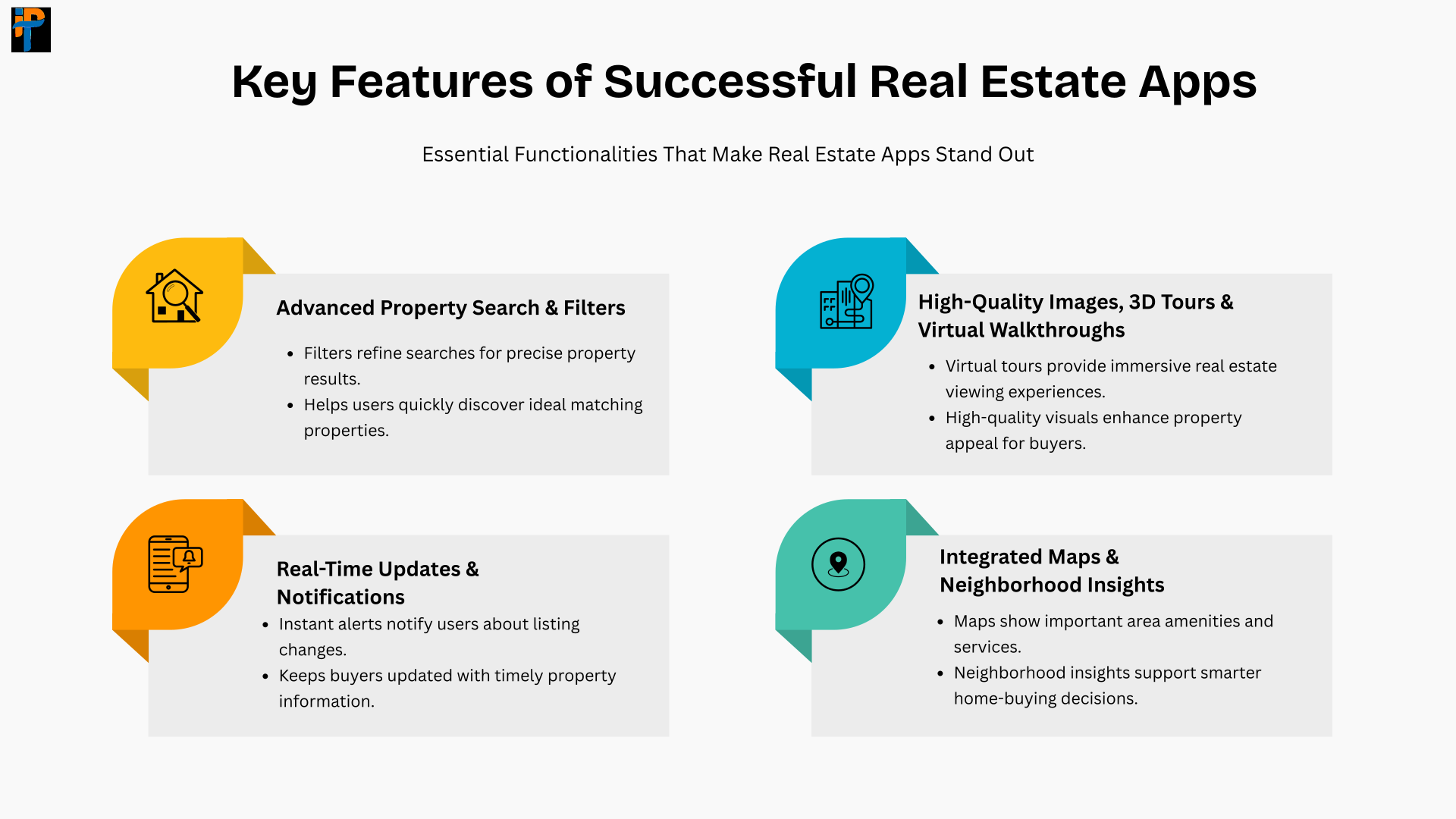
At the heart of any real estate app lies its property listing functionality. However, modern apps go far beyond simple listings.
They incorporate advanced search filters that allow users to narrow down options by price range, location, property type, amenities, and even specific features like pet-friendly spaces or smart home technology.
Successful apps also integrate interactive maps, showing properties in relation to important landmarks like schools, hospitals, shopping centers, and public transportation. This geographical context helps users make more informed decisions about not just the property, but the lifestyle it offers.
Virtual Tours and AR Integration
Virtual reality and augmented reality have revolutionized property viewing. Why schedule multiple physical visits when you can take a 3D walkthrough from your living room? The best real estate apps now offer immersive virtual tours that give potential buyers a realistic sense of space, layout, and ambiance.
Augmented reality takes this further by allowing users to visualize how their furniture would look in a space or even see potential renovations before making a purchase decision. These technologies save time for both buyers and agents while increasing engagement and conversion rates.
CRM and Lead Management
For real estate professionals, apps aren’t just about showcasing properties—they’re powerful business tools. Integrated Customer Relationship Management (CRM) systems help agents track leads, schedule appointments, send automated follow-ups, and manage their entire sales pipeline from a single platform.
Push notifications keep both agents and clients informed about new listings, price changes, and appointment reminders, ensuring no opportunity slips through the cracks.
How to Choose the Right Real Estate App Development Company
Industry Experience and Portfolio
When selecting a development partner, industry-specific experience matters tremendously. A company that has built successful real estate apps understands the unique challenges of the sector—from handling large databases of property listings to implementing secure payment gateways for deposits and transactions.
Review their portfolio carefully. Look for apps they’ve developed that showcase sophisticated features, intuitive user interfaces, and proven success in the marketplace. Case studies and client testimonials provide valuable insights into their problem-solving capabilities and reliability.
Technical Expertise and Innovation
The technology landscape evolves rapidly. Your development partner should demonstrate expertise in current technologies while staying ahead of emerging trends. This includes proficiency in native iOS and Android development, cross-platform frameworks, cloud infrastructure, AI integration, and data security protocols.
Innovation is equally important. The best companies don’t just execute your vision—they enhance it with creative solutions and industry best practices you might not have considered.
Client Reviews and Success Stories
Third-party reviews and ratings offer unbiased perspectives on a company’s performance. Platforms like Clutch, GoodFirms, and Google Reviews provide insights into client satisfaction, project management capabilities, and post-launch support quality.
Success stories reveal how companies handle challenges, meet deadlines, and measure project success. They also demonstrate the tangible business results their apps have delivered for clients.
Also Read- App Maintenance Costs: What Developers Don’t Tell You
Top 10 Real Estate App Development Companies in 2026
1. IPH Technologies
Leading our list is IPH Technologies, a powerhouse in real estate app development that has earned its reputation through consistent excellence and innovation. At IPH Technologies, we specialize in turning visionary ideas into impactful solutions. As a leading app development company, they offer a comprehensive suite of services designed to meet unique business needs.
What sets IPH Technologies apart is its proven track record—over 500 successful projects and 430+ satisfied clients across various industries, with particular strength in real estate technology. Their team leverages the latest technology and agile methodologies to deliver exceptional results that exceed client expectations.
IPH Technologies understands that staying ahead in today’s competitive market requires more than just technology—it requires a partner dedicated to your success. They focus on delivering not only cutting-edge solutions but also an unparalleled client experience. Their expertise extends across mobile apps, web applications, and custom software solutions, ensuring they provide the perfect solution for every real estate challenge.
Their real estate app solutions include advanced property search engines, integrated CRM systems, virtual tour capabilities, blockchain-based transaction security, and AI-powered property recommendations.
With IPH Technologies, you’re not just getting an app—you’re getting a comprehensive digital strategy tailored to help you achieve your business objectives and stay ahead of the curve.
2. Accenture
Accenture is a global consulting and technology services giant with extensive experience in digital transformation across industries, including real estate. Their approach combines strategic consulting with technical implementation, making them ideal for large-scale enterprise projects.
Accenture’s real estate solutions focus on creating intelligent platforms that leverage cloud computing, AI, and IoT technologies. They excel at integrating complex backend systems with user-friendly mobile interfaces, particularly for multinational real estate corporations managing diverse portfolios across multiple markets.
3. Simpalm
Simpalm is one of the most reputed real estate app development companies, mostly for its excellence in building scalable, high-performance, and intuitive client-centric solutions. The team of developers at Simpalm is skilled, trained, and experienced in leveraging the potential of modern technology and helping real estate business owners grow digitally.
From a simple property listing app to a lead management platform, Simpalm can help you build a high-performance application with robust features, capable of helping you stand out in the competitive real estate sector. Simpalm can also integrate app with MLS like Zillow, Redfin and state based MLS systems.
4. IBM
IBM brings decades of technological innovation to real estate app development. Known for its enterprise-grade solutions, IBM specializes in building secure, scalable applications that handle massive amounts of data efficiently.
Their expertise in blockchain technology makes them particularly valuable for companies looking to implement transparent, tamper-proof property transaction systems. IBM’s Watson AI capabilities also enable sophisticated features like predictive analytics for property valuations and automated customer service through intelligent chatbots.
5. Capgemini
Capgemini is a French multinational corporation that provides consulting, technology, and outsourcing services with a strong presence in the real estate technology sector. Their holistic approach addresses both customer-facing applications and backend operational systems.
Capgemini excels at creating omnichannel experiences that seamlessly connect mobile apps with websites, physical offices, and other touchpoints. Their focus on user experience design ensures that apps are not only functional but genuinely enjoyable to use.
6. Infosys
Infosys is an Indian multinational corporation offering business consulting, information technology, and outsourcing services. Their strength lies in creating cost-effective yet robust real estate solutions that scale efficiently as businesses grow.
Infosys has particular expertise in integrating legacy systems with modern mobile applications, making it an excellent choice for established real estate companies undergoing digital transformation. Their agile development methodology ensures rapid deployment without compromising quality.
7. Wipro
Wipro Limited is another Indian IT giant with substantial capabilities in real estate technology. They offer end-to-end solutions from strategy and design through development, deployment, and ongoing maintenance.
Wipro’s real estate apps typically incorporate advanced analytics capabilities that provide actionable insights into market trends, customer behavior, and operational efficiency. Their global delivery model allows them to provide round-the-clock development support while maintaining cost competitiveness.
8. TCS (Tata Consultancy Services)
Tata Consultancy Services (TCS) is one of the world’s largest IT services companies, with extensive experience in developing enterprise-level real estate applications. Their solutions are known for reliability, security, and scalability.
TCS excels at creating comprehensive digital ecosystems that connect multiple stakeholders—buyers, sellers, agents, property managers, and financial institutions—on unified platforms. Their commitment to innovation is evident in their early adoption of emerging technologies like IoT for smart building integration.
9. DXC Technology
DXC Technology is formed from the merger of CSC and HPE Enterprise Services, bringing together decades of IT expertise. They specialize in mission-critical applications where downtime is not an option—perfect for high-volume real estate platforms.
DXC’s strength lies in its infrastructure management capabilities, ensuring that apps remain fast and responsive even during peak usage periods. They also offer robust cybersecurity solutions, protecting sensitive financial and personal data from emerging threats.
10. Cognizant
Cognizant is an American multinational that provides IT services, including digital, technology, consulting, and operations services. Their design thinking approach ensures that real estate apps are built around actual user needs rather than assumed requirements.
Cognizant’s agile squads work in tight collaboration with clients, allowing for rapid iteration and continuous improvement. They’re particularly strong in creating apps that integrate multiple third-party services like mortgage calculators, credit checks, and document verification systems.
11. Tech Mahindra
Rounding out our list is Tech Mahindra, part of the Mahindra Group conglomerate. They bring a unique perspective to real estate app development through their work across multiple industries, enabling cross-pollination of innovative ideas.
Tech Mahindra focuses heavily on creating sustainable, energy-efficient solutions—an increasingly important consideration as the real estate industry addresses environmental concerns. Their apps often incorporate features that highlight properties’ sustainability credentials and environmental impact.
Also Read- AI Statistics 2026: 77% Are Ahead—Are You Behind?
Comparative Analysis of Top Companies
To help you make an informed decision, here’s a comparative overview of these leading companies:
| Company | Strengths | Best For | Geographic Presence |
|---|---|---|---|
| IPH Technologies | Proven track record (500+ projects), comprehensive solutions, agile methodology, exceptional client experience | Businesses of all sizes seeking innovative, customized real estate apps with dedicated support | Global with strong client relationships |
| Accenture | Strategic consulting, enterprise integration, global reach | Large multinational corporations with complex requirements | Worldwide presence |
| Simpalm | Scalable real estate apps, intuitive UI/UX, strong MLS integrations, experienced development team. | Startups and real estate businesses needing MLS-enabled property and lead management apps. | United States with clients across North America. |
| IBM | Blockchain expertise, AI capabilities, enterprise-grade security | Companies prioritizing transparency and cutting-edge technology | Global leader |
| Capgemini | Omnichannel experience, UX focus, holistic approach | Businesses seeking a seamless multi-platform presence | Strong European and global presence |
| Infosys | Cost-effective solutions, legacy system integration | Established companies undergoing digital transformation | Global with a strong Asian presence |
| Wipro | Analytics capabilities, 24/7 support, global delivery | Data-driven organizations require continuous support | International footprint |
| TCS | Reliability, comprehensive ecosystems, stakeholder connectivity | Large-scale platforms connecting multiple parties | Worldwide operations |
| DXC Technology | Infrastructure management, high availability, and cybersecurity | High-volume platforms requiring maximum uptime | Global presence |
| Cognizant | Design thinking, agile methodology, third-party integrations | Projects requiring extensive API integrations | Americas, Europe, Asia-Pacific |
| Tech Mahindra | Sustainability focus, cross-industry innovation | Environmentally conscious real estate businesses | Growing global presence |
Here’s another comparison focusing on service offerings:
| Service Category | IPH Technologies | Large IT Consultancies (Accenture, IBM, etc.) |
|---|---|---|
| Custom Mobile Apps | ✓ Core specialty with personalized approach | ✓ Available but often template-based |
| Web Applications | ✓ Comprehensive web solutions | ✓ Enterprise-focused platforms |
| AI/ML Integration | ✓ Latest technology implementation | ✓ Advanced R&D capabilities |
| Blockchain Solutions | ✓ Modern security features | ✓ Extensive blockchain expertise |
| Project Management | Agile, client-collaborative | Structured, process-driven |
| Post-Launch Support | Dedicated ongoing support | Tiered support packages |
| Innovation Focus | Client-specific creative solutions | Industry-standard best practices |
| Scalability | Flexible scaling options | Enterprise-level scalability |
Also read- Top 10 AI & Development Trends at GITEX 2025 | IPH Technologies
Cost Considerations for Real Estate App Development
Factors Affecting Development Costs
Understanding the cost structure of real estate app development is crucial for budgeting and planning. Several factors influence the final price tag:
Complexity and Features: A basic property listing app costs significantly less than a comprehensive platform with virtual tours, AI recommendations, integrated payment systems, and CRM functionality. Each additional feature requires development time, testing, and ongoing maintenance.
Platform Choice: Developing for both iOS and Android costs more than creating a single-platform app. However, cross-platform frameworks like React Native or Flutter can reduce costs while maintaining a broad market reach.
Design Requirements: Custom, sophisticated user interfaces require more investment in design resources. However, superior UX directly impacts user engagement and conversion rates, making it a worthwhile investment.
Backend Infrastructure: Cloud hosting, database management, API integrations, and security measures all contribute to costs. Scalable architecture that accommodates growth might cost more initially but saves money long-term.
Team Location: Development costs vary significantly by geographic region. Companies in North America and Western Europe typically charge $100-250 per hour, while equally skilled teams in Eastern Europe or Asia might charge $30-80 per hour.
ROI Expectations
While app development requires significant upfront investment, the return on investment can be substantial. According to industry research, real estate companies that implement mobile apps see an average increase of 30-40% in lead generation and a 25% improvement in customer engagement rates.
Apps also reduce operational costs by automating routine tasks, improving agent productivity, and enabling self-service capabilities for clients. The long-term value extends beyond immediate revenue to include brand strengthening, competitive differentiation, and market positioning.
Also Read- Build a Custom AI Agent: A Small Business Guide 2025
Emerging Trends in Real Estate App Development
AI and Machine Learning Integration
Artificial intelligence is revolutionizing how real estate apps function. Machine learning algorithms analyze user behavior to provide personalized property recommendations that improve with each interaction. Chatbots powered by natural language processing handle routine inquiries instantly, freeing human agents to focus on complex client needs.
Predictive analytics help agents identify serious buyers, forecast property values, and optimize pricing strategies. Computer vision technology can analyze property images to automatically tag features, assess condition, and even suggest staging improvements.
Blockchain for Property Transactions
Blockchain technology addresses some of real estate’s most persistent challenges—lack of transparency, fraud risk, and transaction inefficiency. Smart contracts can automate escrow processes, reducing closing times from weeks to days while minimizing fraud risk.
Tokenization of real estate assets enables fractional ownership, opening investment opportunities to broader audiences. Immutable blockchain records create transparent property histories that reduce due diligence time and increase buyer confidence.
Other emerging trends include voice-activated property searches, drone photography integration for comprehensive property views, IoT connectivity for smart home management, and sustainability tracking features that highlight energy efficiency and environmental impact.
Conclusion
The real estate industry’s digital transformation is accelerating, and mobile apps have become essential tools for success. Whether you’re a boutique agency or a multinational corporation, the right app development partner can transform your business, enhance customer experiences, and position you for sustained growth.
This comprehensive review of the top 10 real estate app development companies provides a starting point for your selection process. While global giants like Accenture, IBM, and Capgemini bring immense resources and proven methodologies, IPH Technologies stands out with its perfect balance of technical excellence, innovation, and personalized client experience. With over 500 successful projects and a client-first approach, IPH Technologies delivers not just apps, but strategic digital solutions tailored to your unique needs.
The key is finding a partner whose values, expertise, and approach align with your business objectives. Consider your specific requirements, budget constraints, timeline expectations, and long-term vision. Schedule consultations with multiple companies, review their portfolios, speak with their clients, and trust your instincts.
Remember, your app isn’t just a piece of software—it’s a representation of your brand, a tool for your team, and a service for your customers. Choose wisely, invest thoughtfully, and watch your real estate business thrive in the digital age.








.png)