























































Introduction The Mobile App Revolution in 2026
Have you ever wondered why some mobile apps become household names while others disappear into the digital abyss within weeks? The answer isn’t just luck—it’s about following a strategic, well-planned development process that puts user needs at the forefront.
In 2026, building a successful mobile app requires more than just a brilliant idea scribbled on a napkin. It demands careful planning, expert execution, continuous optimization, and a deep understanding of what makes users tick. With mobile devices becoming the primary gateway to digital experiences, your app needs to stand out in a sea of millions.
Whether you’re an entrepreneur with a game-changing vision or an established business looking to expand your digital footprint, this comprehensive guide will walk you through every critical step of building a mobile app that users will love, recommend, and—most importantly—keep using.
Also read- Blockchain Integration in Mobile Apps: Complete Guide 2025
Understanding the Mobile App Development Landscape
Current Market Statistics and Trends
The mobile app industry continues to experience unprecedented growth. Global mobile app revenue is projected to surpass $1 trillion by 2026, reflecting not just the sheer number of apps but the increasing value users place on mobile solutions. People now spend over 5 hours daily on their smartphones, with apps accounting for nearly 90% of that time.
| Mobile App Market Metrics | 2024 Data | 2026 Projection |
|---|---|---|
| Global App Revenue | $935 Billion | $1+ Trillion |
| Total App Downloads | 255 Billion | 280+ Billion |
| Average Apps per Smartphone | 40-50 apps | 60-70 apps |
| Time Spent on Mobile Apps Daily | 4.8 hours | 5.5+ hours |
What does this mean for you? Simple—there’s massive opportunity, but also fierce competition. Your app needs to be exceptional to capture attention and maintain user engagement.
Why Your Business Needs a Mobile App
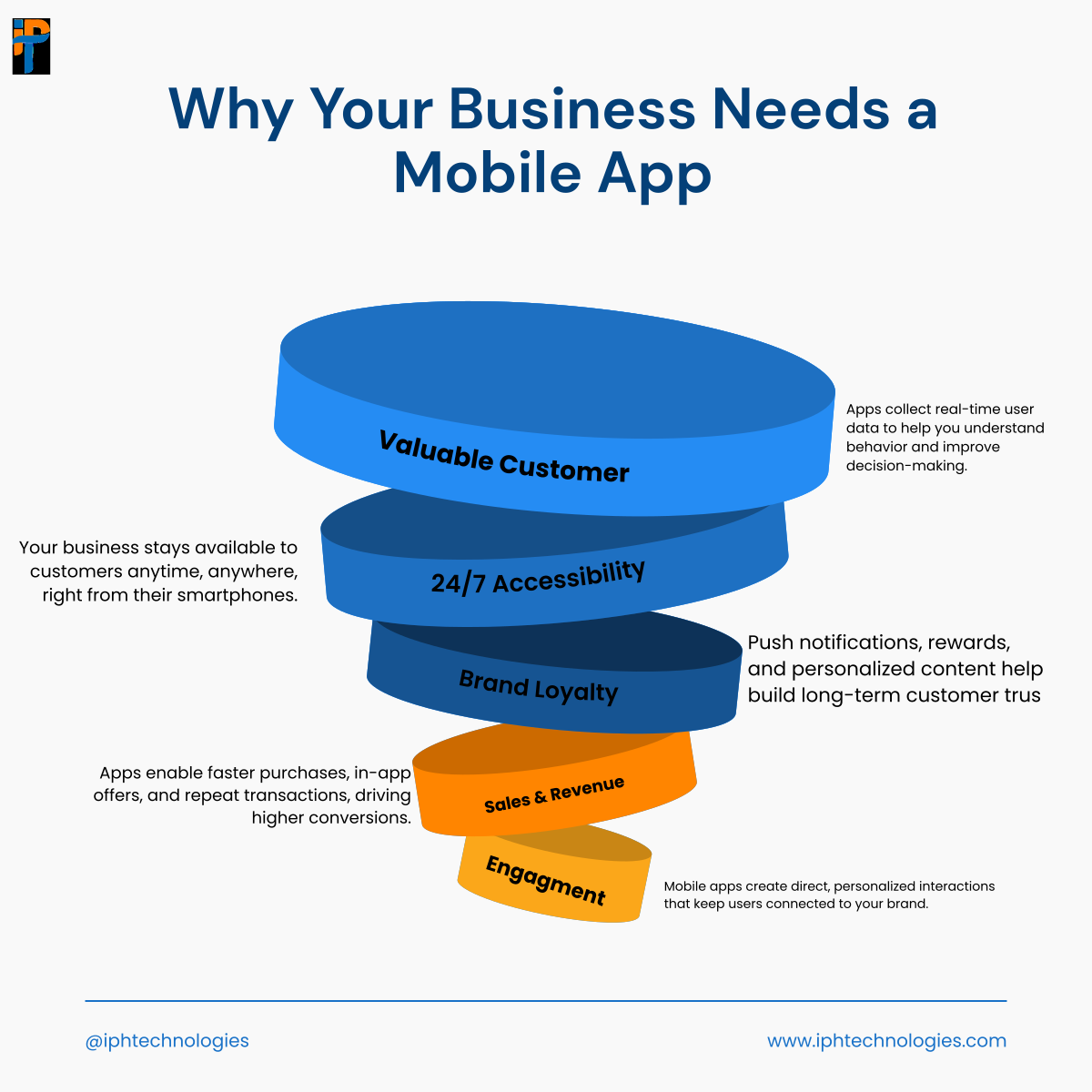
Think of a mobile app as your business’s 24/7 storefront sitting right in your customers’ pockets. It’s not just about having a digital presence anymore—it’s about creating meaningful, personalized connections with your users. Mobile apps increase customer engagement by up to 88% compared to mobile websites, offering seamless experiences that build brand loyalty and drive revenue.
Defining Your App’s Purpose and Goals
Identifying the Problem Your App Solves
Here’s a truth bomb: nobody downloads an app just because it exists. They download it because it solves a specific problem or fulfills a particular need. Before you write a single line of code or sketch a single screen, ask yourself: “What problem am I solving, and for whom?”
Your app might streamline a tedious process, connect people in new ways, provide entertainment, or offer educational value. Whatever it is, that core problem-solution fit must be crystal clear. Take Uber, for example—they didn’t just create a taxi app; they solved the problem of unreliable transportation with transparent pricing and real-time tracking.
Setting Clear Objectives and KPIs
Goals without metrics are just wishes. Define what success looks like for your app with specific, measurable objectives:
- User Acquisition: How many downloads in the first 3, 6, 12 months?
- Engagement Rate: What’s your target for daily/monthly active users?
- Retention Rate: What percentage of users should return after 1 day, 7 days, 30 days?
- Revenue Goals: If monetized, what’s your target earnings per user?
- User Satisfaction: What App Store rating are you aiming for?
These KPIs will guide your development decisions and help you measure real progress.
Also read- Zero Trust Architecture for Mobile Apps Complete 2025 Security Guide
Conducting Thorough Market Research
Analyzing Your Target Audience
Who is your ideal user? And I don’t mean vague answers like “everyone” or “millennials.” You need laser-focused clarity about your target audience. Create detailed user personas that include:
- Demographics: Age, location, income level, education
- Psychographics: Values, interests, lifestyle choices
- Pain Points: What frustrates them about current solutions?
- Tech Savviness: How comfortable are they with technology?
- Usage Patterns: When and where will they use your app?
Remember, you’re not building an app for yourself—you’re building it for them. Every design decision, every feature, every word of copy should resonate with your target audience.
Competitive Analysis Strategies
Your competitors are either your best teachers or your worst nightmare, depending on how you approach them. Don’t copy them—learn from them. Download and use competing apps extensively. What do they do well? Where do they fall short? What do users complain about in reviews?
Tools for Market Research
Leverage tools like App Annie, Sensor Tower, and Google Trends to analyze competitor performance, market gaps, and emerging trends. Social media listening can also reveal unmet needs and user frustrations with existing solutions.
Planning Your App’s Features and Functionality
Creating a Feature Prioritization Matrix
I know you’re excited and want to pack every cool feature into your app. But here’s the reality: feature bloat kills apps. Instead, create a feature prioritization matrix that categorizes features into:
- Must-Have: Core functionality without which the app won’t work
- Should-Have: Important features that enhance user experience
- Nice-to-Have: Features that can wait for future updates
- Won’t-Have: Ideas to explicitly leave out (for now)
| Feature Priority Levels | Description | Launch Timeline | Example Features |
|---|---|---|---|
| Must-Have | Core functionality | Version 1.0 | User registration, main service delivery |
| Should-Have | Important enhancements | Version 1.0-1.2 | Push notifications, user profiles |
| Nice-to-Have | Value additions | Version 2.0+ | Social sharing, gamification |
| Won’t-Have | Future considerations | Post-launch evaluation | AI chatbot, AR features |
MVP vs. Full-Featured App
Here’s where smart entrepreneurs separate themselves from dreamers: they start with an MVP (Minimum Viable Product). An MVP isn’t a half-baked app—it’s a strategic launch with just enough features to satisfy early users and provide feedback for future development.
Think of it like this: Would you rather spend 18 months and $200,000 building your dream app only to discover users don’t want it? Or invest 3-4 months and $50,000 in an MVP that validates your concept and provides real user data to guide your next steps?
Also read- 10 MVP Features You Must Have (And 5 to Skip) | 2025 Guide
Choosing the Right Technology Stack
Native vs. Cross-Platform Development
This is the million-dollar question (sometimes literally). Should you build native apps for iOS and Android separately, or use a cross-platform framework?
Native Development (Swift for iOS, Kotlin for Android) offers:
- Best performance and user experience
- Full access to device features
- Better security
- Higher development costs (building twice)
Cross-Platform Development (React Native, Flutter) offers:
- Single codebase for both platforms
- Faster development time
- Cost efficiency
- Slight performance trade-offs
Popular Frameworks in 2026
The development landscape in 2026 is dominated by several powerful frameworks:
- Flutter: Google’s UI toolkit gaining massive popularity for its performance
- React Native: Facebook’s framework with a huge community and library ecosystem
- Swift/SwiftUI: Apple’s modern approach to iOS development
- Kotlin Multiplatform: Google’s solution for sharing code across platforms
At IPH Technologies, we’ve successfully delivered over 500 projects using various technology stacks, and we always recommend the technology based on your specific requirements, budget, and timeline rather than a one-size-fits-all approach.
Designing an Intuitive User Experience
UI/UX Best Practices
Your app could have the most powerful functionality in the world, but if users can’t figure out how to use it in 10 seconds, they’ll delete it just as fast. Great UI/UX design isn’t about making things look pretty—it’s about making things work beautifully.
Key principles include:
- Simplicity: Remove unnecessary elements
- Consistency: Use familiar patterns and conventions
- Accessibility: Design for all users, including those with disabilities
- Feedback: Users should always know what’s happening
- Forgiveness: Make it easy to undo mistakes
Wireframing and Prototyping
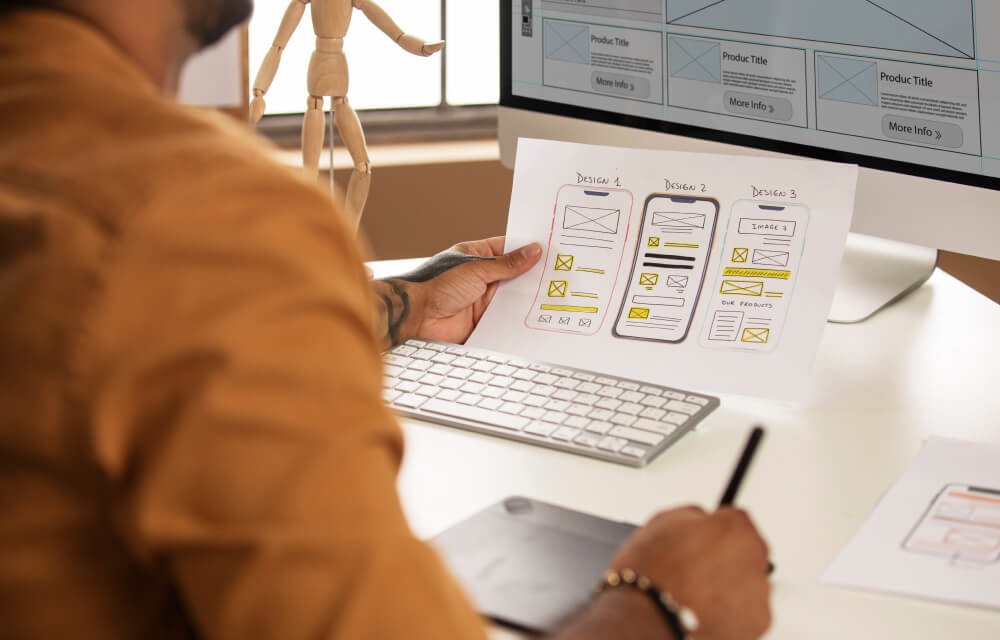
Before your developers write a single line of code, create wireframes (low-fidelity sketches) and interactive prototypes. This approach saves thousands of dollars by catching design flaws early. Tools like Figma, Sketch, and Adobe XD make this process collaborative and iterative.
Think of wireframing like creating a blueprint before building a house. Would you start construction without architectural plans? Of course not!
Also read- Native vs Cross Platform App Development: 2026 Guide
Development Phase Bringing Your Vision to Life
Agile Development Methodology
Gone are the days of “waterfall” development where you wait six months to see anything. Modern app development follows Agile methodology—breaking projects into 2-3 week sprints with regular deliverables and feedback loops.
This approach offers several advantages:
- Flexibility: Adapt to changing requirements
- Transparency: Regular updates on progress
- Quality: Continuous testing and refinement
- Risk Reduction: Identify issues early
Quality Assurance and Testing
Here’s an uncomfortable truth: your app will have bugs. The question is whether users discover them or your QA team does. Comprehensive testing includes:
- Functional Testing: Does everything work as intended?
- Performance Testing: How does it handle stress and load?
- Security Testing: Are user data and transactions secure?
- Usability Testing: Can real users navigate it intuitively?
- Compatibility Testing: Does it work across different devices and OS versions?
Launching Your App Successfully
App Store Optimization (ASO)
Building a great app is only half the battle. Getting it discovered is the other half. ASO is like SEO for app stores—it helps your app rank higher in search results and category listings.
Key ASO elements include:
- App Title: Include relevant keywords naturally
- Description: Compelling copy that converts browsers to downloaders
- Keywords: Research and target high-volume, low-competition terms
- Screenshots and Videos: Visual storytelling that showcases value
- Ratings and Reviews: Social proof that builds trust
Marketing and Promotion Strategies
Don’t make the mistake of thinking “if you build it, they will come.” Launch with a bang:
- Pre-Launch Buzz: Build anticipation through social media and email campaigns
- Beta Testing: Create exclusive early access programs
- Press Coverage: Reach out to tech bloggers and journalists
- Influencer Partnerships: Leverage audiences that match your target users
- Paid Advertising: Strategic campaigns on Google, Facebook, and Instagram
Also read- Top 10 Real Estate App Development Companies in 2025 | Expert Guide
Post-Launch Maintenance and Updates
Congratulations, your app is live! But here’s where the real work begins. Successful apps evolve continuously based on user feedback, analytics, and market changes.
Plan for regular updates that include:
- Bug Fixes: Address issues quickly to maintain user trust
- Feature Enhancements: Add value based on user requests
- Performance Optimization: Keep the app fast and responsive
- Security Updates: Protect against emerging threats
- OS Compatibility: Stay current with iOS and Android updates
Common Challenges and How to Overcome Them
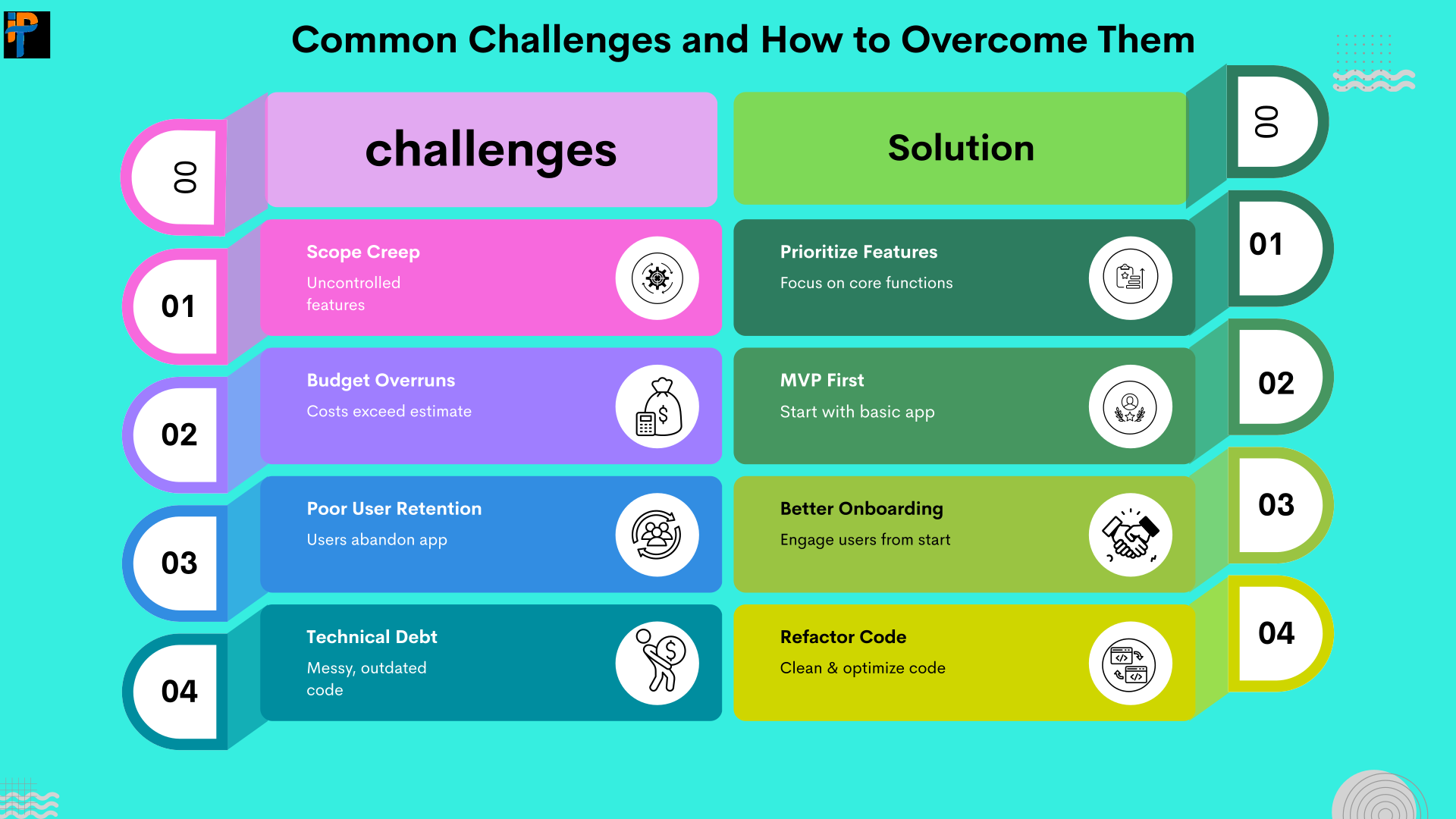
Let’s address the elephant in the room—app development is challenging. Here are common pitfalls and how to avoid them:
Scope Creep Solution: Stick to your feature prioritization matrix and save ideas for future versions.
Budget Overruns Solution: Build an MVP first, establish clear requirements, and work with experienced development partners like IPH Technologies who provide transparent pricing.
Poor User Retention Solution: Focus on onboarding experience, provide immediate value, and continuously engage users through push notifications and in-app messaging.
Technical Debt Solution: Prioritize code quality from day one and allocate time for refactoring.
Also read- Web vs Native vs Hybrid Apps in 2025: The Ultimate Guide
Conclusion
Building a successful mobile app in 2026 isn’t rocket science, but it does require strategy, expertise, and execution excellence. From defining your app’s purpose to launching and maintaining it, every step matters in creating an app that users love and that achieves your business objectives.
Remember, you don’t have to navigate this journey alone. At IPH Technologies, we’ve helped 430+ satisfied clients transform their ideas into successful mobile applications across various industries. With our comprehensive suite of services—from mobile app development to custom software solutions—we leverage cutting-edge technology and agile methodologies to deliver exceptional results.
Whether you’re starting from scratch or looking to improve an existing app, the right development partner can make all the difference between an app that survives and one that thrives.
Ready to bring your app idea to life? Let’s turn your vision into a mobile app that makes an impact.








.png)