



















































































Duolingo Clone App Development: What It Really Takes to Build One in 2026
“Build me a Duolingo clone” is one of the most common briefs app development agencies hear from founders entering the edtech space — and for good reason. Duolingo crossed $1 billion in annual revenue in 2025, growing 39% year over year, and was averaging over 50 million daily active users by Q3 of that year. Numbers like that make the “clone” model look like a shortcut to a proven business.
It can be – but only when you know what a duolingo clone is, how much it is composed of, and where a direct copy falls short of creating a business that is actually able to stand on its own. This guide goes over exactly that.
What “Duolingo Clone App Development” Actually Means
In practice, a Duolingo clone typically refers to an application that uses similar fundamental concepts and features as the original service. However, it usually doesn’t involve directly copying the intellectual property belonging to the company that created Duolingo, since that would be illegal and hardly useful as a clone anyway. What most agencies offering such services actually mean is an application with a similar set of functions and a business model that ultimately relies on the same principles as the existing service.
- Bite-sized, gamified lessons
- Streaks, XP, hearts, and leaderboards
- Level-based progression (A1 through C1)
- Freemium monetization with a premium subscription tier
Once you have selected such an example, it is possible to make the necessary customizations: choose the languages, content, and branding, and, most importantly, the differentiating factors. Thus, clone development should be seen as an opportunity to rely on an already working prototype, not on the specific resources of Duolingo itself.
Read More: Creating an MVP for Virtual Classrooms Key Features for Rapid User Adoption
Why the Clone Model Makes Sense Right Now
The language learning app market is not projected to slow down in any capacity. According to recent reports, the overall market size varies between approximately $8.5 billion in 2026, growing at a CAGR above 16% toward $28 billion USD for the specific segment, and several billions of USD for a more comprehensive definition that may include institutional sales and offline learning.
A few data points that matter specifically for clone-style products:
- Significant Market Opportunity — Duolingo accounts for roughly two-thirds of mobile app spending in the language-learning category, leaving the remaining one-third of the market available for competitors. This represents a substantial opportunity for well-positioned new entrants.
- AI Features Are Now a Baseline Expectation — Nearly half of online language learners already use AI conversation partners, while speech recognition is available in most leading apps. These capabilities are no longer unique selling points but essential features for competing in the market.
- Young Adults Are the Primary Audience — Adults aged 18–24 continue to be the most active users of language-learning applications, providing a clearly defined target audience for product design, feature development, and marketing strategies.
- Growing Demand for Hybrid Learning — The live tutoring market adjacent to app-based language learning is expanding at a CAGR of more than 21%, highlighting an opportunity to combine self-paced learning with optional live tutoring for a differentiated product offering.
The takeaway: cloning Duolingo’s mechanics gets you a validated foundation, but the competitive apps winning market share are the ones that layer something Duolingo does poorly — usually real speaking practice — on top of that foundation.
Core Features to Include in a Duolingo Clone
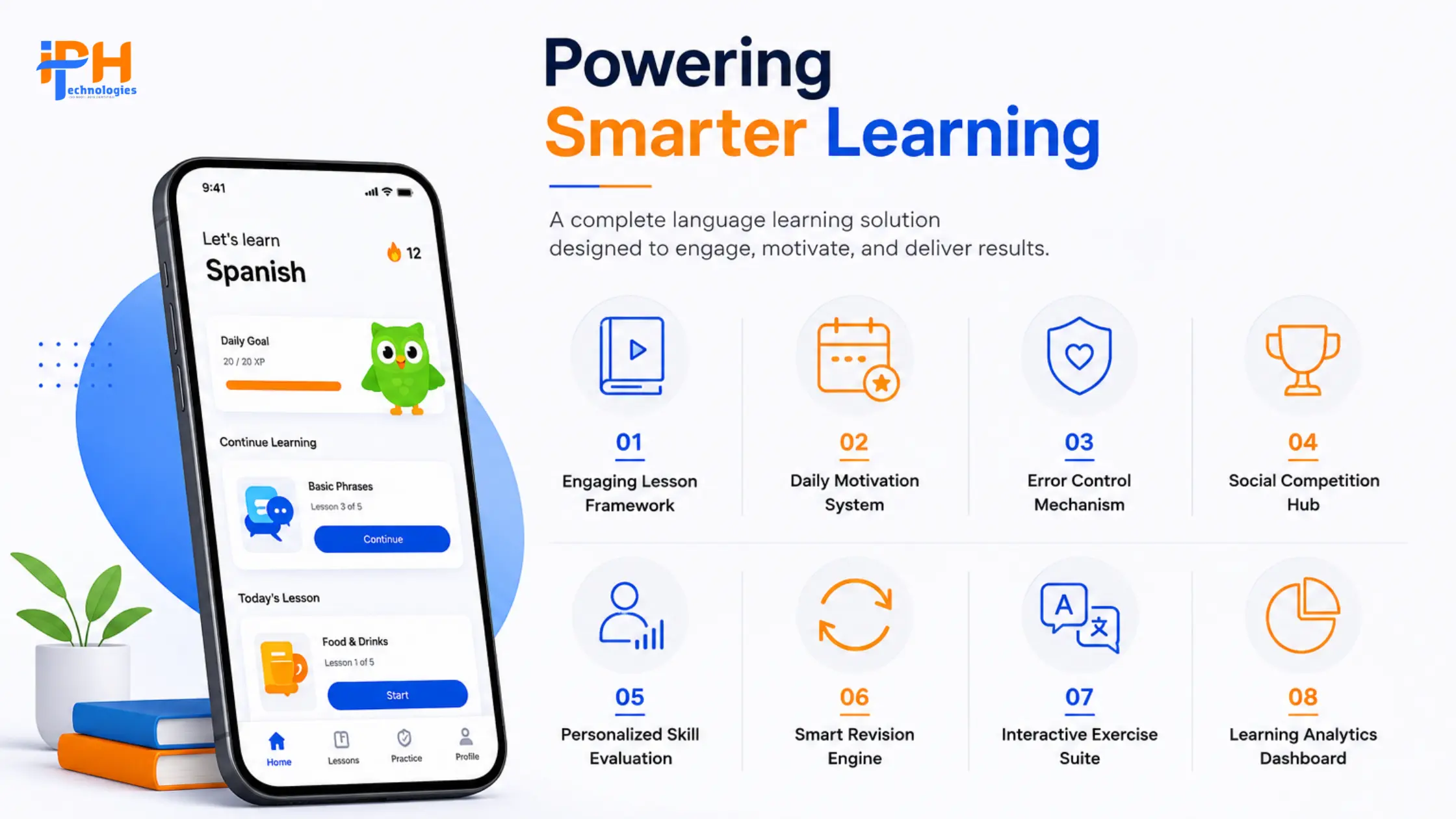
Gamified lesson engine Short, structured lessons (5–15 minutes) organized by level and topic, with XP awarded per exercise.
Streaks and retention mechanics Daily streak tracking, streak freezes/repair, reminders, and push notifications timed around a user’s usual practice window.
Hearts/lives system A soft penalty for mistakes that encourages careful practice without being punishing enough to drive users away — this needs careful tuning, not a direct copy of Duolingo’s exact numbers.
Leaderboards and social competition Weekly leagues or friend leaderboards that tap into competitive motivation, a major driver of Duolingo’s daily engagement.
Placement test and adaptive difficulty An initial assessment plus ongoing difficulty adjustment based on user performance.
Spaced repetition engine Automatic review scheduling for vocabulary and grammar points based on forgetting curves (SM-2 or FSRS-style algorithms are common starting points).
Multiple exercise formats Translation, listening, matching, fill-in-the-blank, and speaking exercises to reinforce the same content from different angles.
Progress dashboard Visual tracking of streaks, XP, accuracy, and vocabulary growth over time.
Features That Turn a Clone Into a Real Competitor
A pure mechanics clone will feel familiar to users but won’t give them a reason to switch from an app they already know. The clone projects that actually gain traction typically add one or two of the following:
- AI-scored pronunciation feedback — Speech-to-text combined with phoneme comparison provides a quantitative pronunciation accuracy score instead of a simple pass/fail result.
- Open-ended AI conversation practice — An LLM-powered chat partner replaces multiple-choice suggested replies, allowing users to naturally construct and practice complete sentences.
- Native speaker video content — Learn from real speakers with authentic accents through professionally filmed video content rather than illustrated flashcards.
- Niche language or audience focus — A specialized app designed for business English, a specific language pair, or a targeted age group can outperform general-purpose language learning platforms within its niche.
- Tutor marketplace add-on — Connect users with live tutors to enhance learning while creating an additional upsell revenue stream.
Tech Stack for a Duolingo-Style App
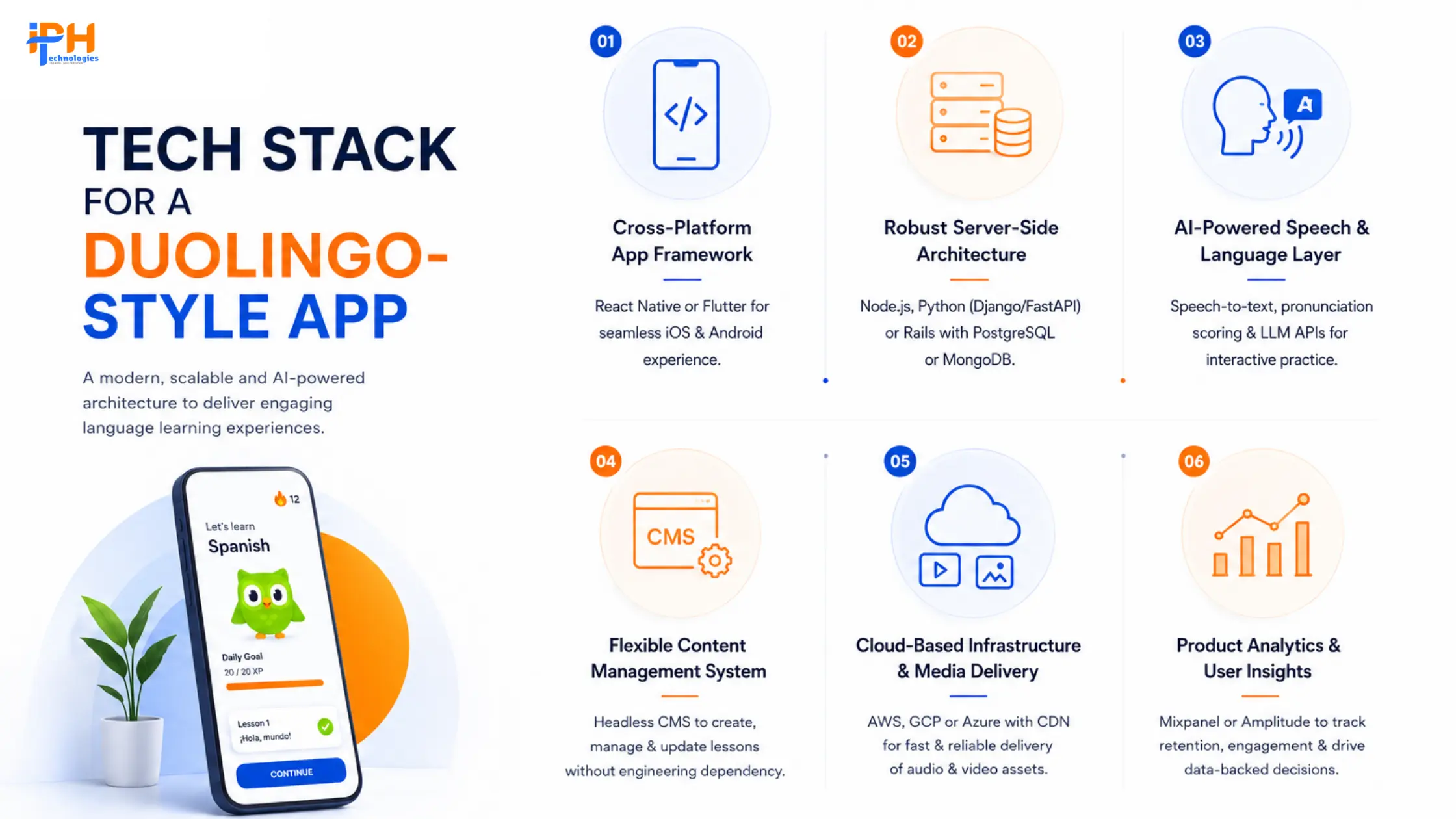
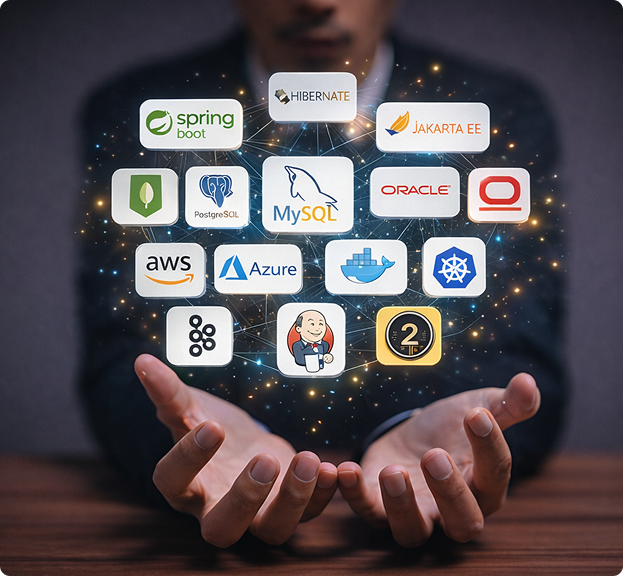
- Mobile Frontend — React Native or Flutter for cross-platform efficiency, or native development with Swift (iOS) and Kotlin (Android) when speech-processing performance is a top priority.
- Backend — Node.js, Python (Django/FastAPI), or Ruby on Rails, with PostgreSQL or MongoDB to manage user progress, learning content, and analytics data.
- Speech & AI Layer — Integrate a speech-to-text and pronunciation-scoring API (such as Azure Speech, Google Cloud Speech-to-Text, or another specialized provider), along with an LLM API for AI-powered conversational practice.
- Content Management — Use a headless CMS to enable curriculum teams to create, update, and manage lessons without requiring engineering support for every content change.
- Infrastructure — Deploy on AWS, Google Cloud Platform (GCP), or Microsoft Azure with CDN delivery for audio and video assets, as media distribution is typically the largest bandwidth expense at scale.
- Analytics — Implement Mixpanel or Amplitude to monitor user engagement and retention, as long-term retention—not download numbers—is the key indicator of a successful freemium language-learning app.
Custom Build vs. Clone Script vs. White-Label: Which Approach Fits?
| Approach | What it is | Best for | Trade-offs |
| Off-the-shelf clone script | Pre-built template with your branding applied | Fastest, cheapest launch to validate an idea | Limited differentiation, harder to scale or add AI features later |
| White-label platform | Licensed platform with configurable content and features | Businesses wanting speed with more flexibility than a script | Ongoing licensing fees, less control over the product roadmap |
| Custom clone development | Built from scratch, replicating proven mechanics with your own architecture | Founders planning to scale, raise funding, or add proprietary AI features | Higher upfront cost and longer timeline |
Most agencies, including ours, recommend custom development for anyone planning to compete seriously rather than just test an idea — pre-built scripts rarely scale cleanly once you need custom AI features or heavy traffic.
Read More: AI Agents Explained: Why They Matter and Real-World Use Cases
Development Timeline and Cost
| Scope | Includes | Typical timeline | Typical cost |
| Basic clone MVP | Core gamified lessons, streaks, one language pair, single platform | 8–12 weeks | $25,000 – $60,000 |
| Full-featured clone | Multi-language, spaced repetition, offline mode, iOS + Android | 4–6 months | $60,000 – $150,000 |
| AI-differentiated clone | Everything above plus pronunciation scoring and AI conversation practice | 6–9 months | $120,000 – $300,000+ |
Plan for ongoing costs too — content production, AI API usage, and hosting typically run 15–25% of the initial build cost annually, and content is usually the most underestimated recurring expense.
Monetization Models for a Clone App
- Freemium Subscriptions — Offer a free tier with limited features or advertisements, while providing a paid subscription that unlocks unlimited access, advanced lessons, and AI-powered learning features.
- Tiered Premium Plans — Introduce multiple subscription levels, such as a lower-cost plan for premium learning content and a higher-tier plan that includes AI conversation practice and personalized learning tools.
- B2B Licensing — License the application, or a white-labeled version of it, to schools, universities, corporate training programs, and language institutes as an additional revenue stream.
- In-App Purchases — Generate additional revenue through optional purchases such as streak repairs, premium content packs, or cosmetic customizations designed to enhance user engagement, especially for younger audiences.
Common Pitfalls in Clone Development
- Copying Features Without the Retention Strategy — Simply replicating streaks, leaderboards, and other gamification mechanics is not enough. Duolingo’s success is driven by continuous A/B testing and optimization, ensuring these features effectively improve long-term user retention.
- Underinvesting in Content — A language learning platform is only as effective as its curriculum. High-quality lessons, exercises, and structured learning paths are essential, making content development one of the most important—and often underestimated—investments in a clone app.
- Treating AI as a Checkbox Feature — Adding an AI chatbot without carefully designing prompts and tailoring responses to different proficiency levels can lead to a poor learning experience. AI should provide meaningful, context-aware guidance that supports learner progress.
- Lack of Clear Differentiation — A clone that closely mirrors Duolingo without offering unique features, specialized content, or a distinct value proposition gives users little incentive to switch from a platform they already know and trust.
Why Build Your Duolingo Clone With IPH Technologies
A Duolingo clone is a proven foundation, not a finished product — the difference between a clone that fades and one that grows into a real business is in the execution: tuned gamification, well-designed curriculum, and AI features (like pronunciation scoring and conversational practice) built to actually work across accents and skill levels. At IPH Technologies, we build custom language learning apps on top of Duolingo’s proven mechanics, with the mobile, backend, and AI/speech engineering expertise to take you from MVP to a scalable product.
If you’re ready to scope your Duolingo clone app, talk to our team about your timeline, budget, and the features that will set your app apart.








.png)