


































































Why Is Accounting Software Essential for Small Businesses in 2026?
Every small business eventually hits the same brick wall. The invoices are in an inbox. The expenses are in a bank application. Payroll is in a spreadsheet. Tax prep takes a whole week to reconstruct a year that nobody tracked. The numbers are already outdated by the time they’re reconciled.
Accounting software can help close this gap. This guide, which I have spent years developing, explains what
accounting software is and how it works. It also explains what makes a good implementation from a bad one, and identifies when a business is ready to switch.
Accounting Software for Growing Businesses
No one sets out to manage their books using five different tools. It’s a gradual process — a spreadsheet, an invoicing tool, and a payroll program are all added as the company grows.
This pattern is more important than many owners realize. Sales, expenses and payroll are all in separate systems. This means that no one has a reliable number from which to make business decisions. This leads to double data entry, headaches with reconciliation, and what I see the most decisions based on numbers that are already outdated by the time they’re looked at.
Accounting software solves the root cause of the problem and not the symptoms. This software gives you a single system of records for your business instead of using a variety of different tools that are all slightly incompatible.
The System Behind the Software
Even a low-cost accounting platform does more work structurally than it appears on the surface.
Accounting software typically centralizes:
- The general ledger is the only source of financial truth.
- Modules for billing, expenses, payroll, and bank reconciliation.
- Automation of categorization rules and data entry.
- Every transaction should be recorded in an audit trail. This is more important than many business owners realize, especially during tax filing or financial audits.
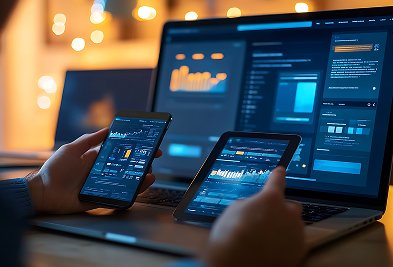
- Dashboards and reports that reflect your current financial situation, not last month’s data.
Accounting software that is connected allows all departments — sales, operations, and finance — to work from the same numbers, in real-time, rather than reconciling the three versions of truth after the event.
Cloud Accounting Software and Desktop/On Premise Systems
The way your accounting software works will affect almost all aspects of how you use it in your business. It depends on your business’s needs. There is no single answer.
| Software | ☁️ Cloud Accounting Software | 💻 Desktop / On-Premise Software |
| Accessible | Real-time access from anywhere on any device. | Available only on installed machines or local networks. |
| Cost | Low upfront investment with subscription pricing. | Higher upfront licensing and infrastructure costs. |
| Maintenance | Updates, backups, and maintenance handled by the vendor. | Managed internally by your IT team. |
| Collaboration | Designed for multiple users working remotely in real time. | Generally limited to single-user or local network access. |
| Customization | Moderate customization within the platform. | Extensive customization available at additional cost. |
| Best For | Startups, SMEs, and growing businesses. | Organizations requiring offline access or strict data residency. |
Cloud accounting software is now the standard for small businesses, as it eliminates all IT overhead. On-premise software is still useful in certain cases, such as heavily regulated industries or businesses with poor internet connectivity.
The Modules that Define the System
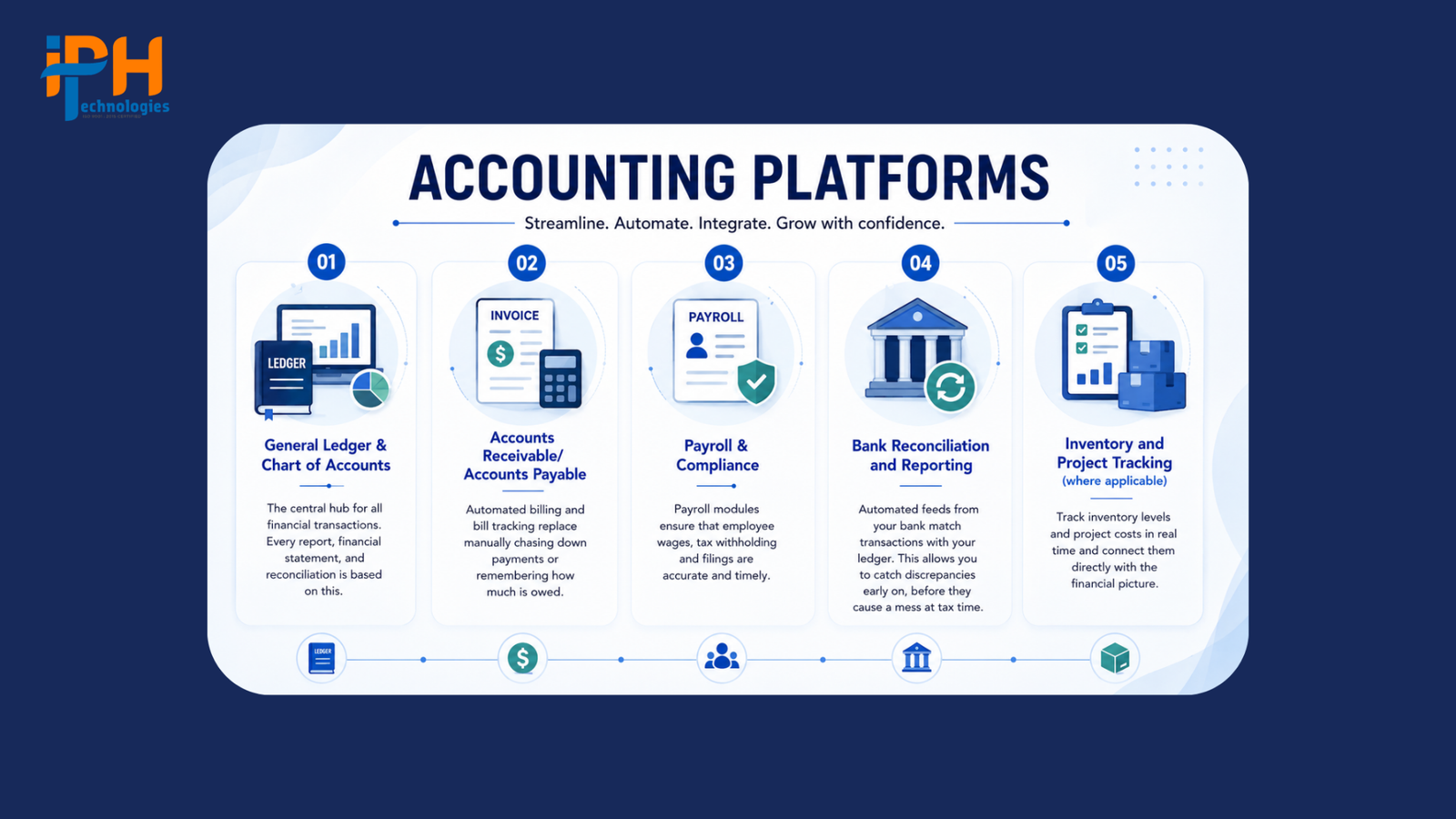
General Ledger & Chart of Accounts All transactions in the business flow through this. Every report, financial statement, and reconciliation is based on this.
Accounts Receivable/Accounts Payable Automated billing and bill tracking replace manually chasing down payments or remembering how much is owed. This is where most businesses see the biggest time savings.
Payroll & Compliance Payroll modules ensure that employee wages, tax withholding and filings are accurate and timely. This is one of the most risky manual processes.
Bank Reconciliation and Reporting Automated feeds from your bank match transactions with your ledger. This allows you to catch discrepancies early on, before they cause a mess at tax time.
Inventory and Project Tracking (where applicable) This allows you to connect your cost tracking directly with the financial picture, rather than living in separate spreadsheets.
Once these modules are linked, it’s obvious that financial data and day-to-day operations no longer need to be reconciled separately. They become one continuous record.
Accounting Software Adoption – Five Lessons for Small Businesses
Having worked with financial systems at different stages of growth in business, I have seen the same five shifts repeatedly.
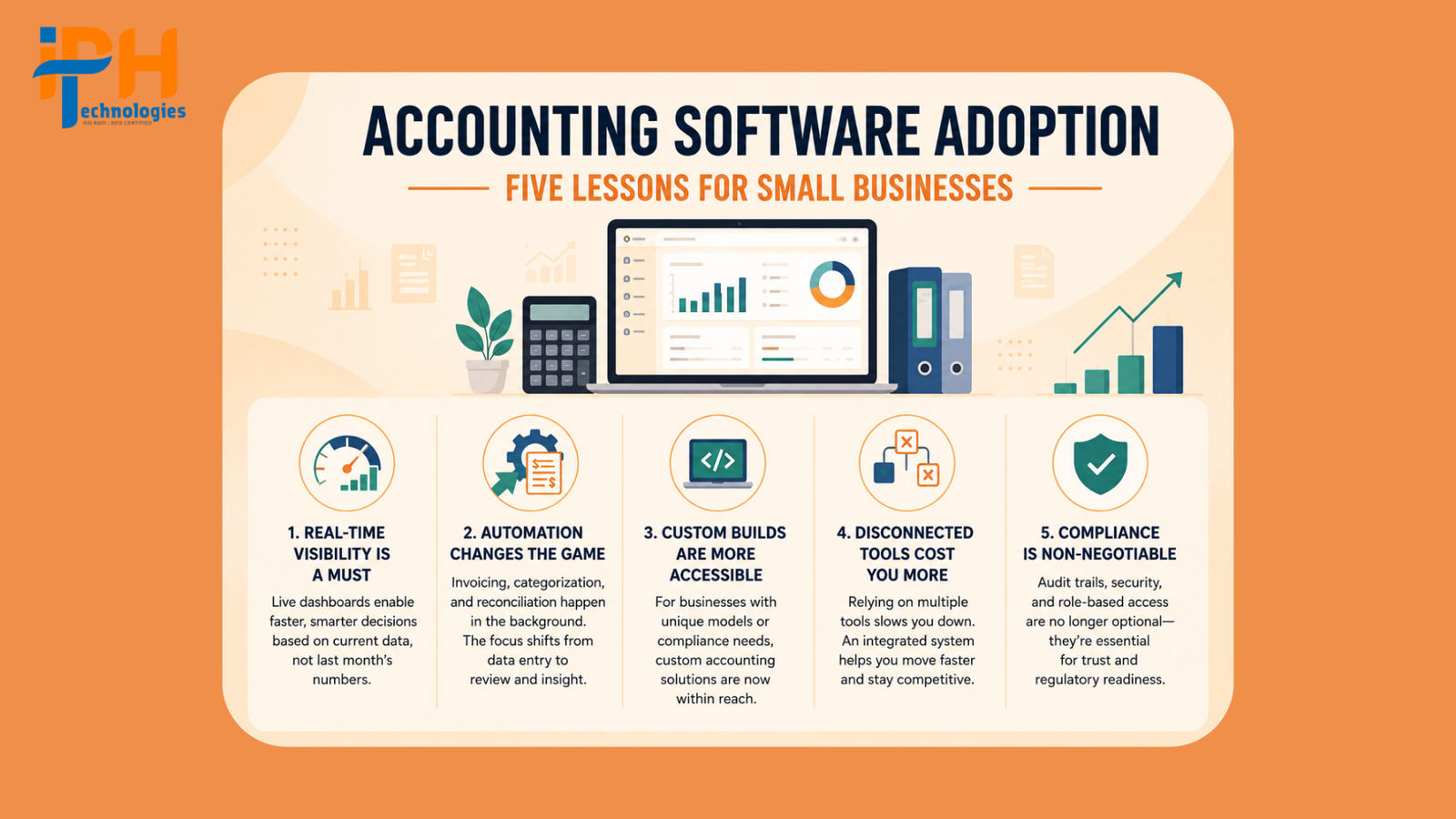
| 1. | Real-Time Financial Visibility: Real-time visibility has become a necessity. Business owners are becoming more aware of the costs associated with making decisions based on month-old data. A live dashboard enables faster and more informed decision-making. |
| 2. | Automation of Bookkeeping: Automating bookkeeping has redefined accounting processes. Tasks such as invoicing, categorization, and reconciliation now happen in the background, allowing professionals to focus on reviewing exceptions instead of manual data entry. |
| 3. | Growth of Custom Accounting Solutions: Custom accounting software has become more accessible than ever. While it is not the right fit for every small business, organizations with unique revenue models or compliance requirements can now afford tailored solutions. |
| 4. | Integrated Financial Systems: Using disconnected financial tools is no longer just an inconvenience—it creates a competitive disadvantage. Businesses using a unified platform can respond faster and make better decisions. |
| 5. | Compliance and Security: Modern accounting software must support audit trails, role-based access control, and compliance features. These capabilities have become essential, especially in regulated industries. |
Businesses that are proactive in addressing these changes tend to spend less money on firefighting. Those that don’t will end up having to make the change later, and with more pressure.
What Businesses Get Wrong
Two mistakes have been made on the opposite end of the decision more often than others:
- It is not worth waiting too long before switching away from spreadsheets. The pain may seem manageable, but a busy period or audit can quickly make manual processes difficult to handle.
- The team often pays for software that is more complex than they need or includes features designed for businesses much larger than their own.
The root of both mistakes is the same: neither decision was made based on where the company actually stands today or where it could be in two more years.
Legacy Beyond the Software
Accounting software adoption is not about the software – it’s more about what happens in the business once the software goes live.
The benefits of automated workflows and connected data continue to accrue long after implementation. Businesses that invest in centralized financial systems early will have the best data for later use, whether it’s to raise money, acquire a business, or scale without chaos.
What this means for your business
Accounting software is not the end goal. It’s a foundation. Systems that are able to prepare businesses for the future tend to be:
- Using one source of accurate financial truth.
- Built for automation, not just digitalized manual work.
- Providing real-time reporting instead of relying on monthly updates.
- Prepared to meet the evolving compliance requirements of your industry.
- Off-the-shelf software is not flexible enough to scale or support highly specific business workflows.
The gap between your current setup and what you want it to be tends to widen more quickly than most owners think.
IPH Technologies builds customized accounting and financial software to meet the needs of businesses that have outgrown standard platforms. We also tell founders when they don’t require custom solutions. Speak to our team to get their opinion before you make a decision.
1. What is accounting software?
2. What is the cost of accounting software?
3. What is the difference between on-premise and cloud accounting software?
4. How does AI change accounting software?
5. Do I need custom accounting software for my small business?


 Verified CTO
I’m Shashi Mishra, CTO at IPH Technologies. I build secure, reliable, future-ready digital products that solve real problems without unnecessary complexity.My work focuses on AI-driven development, cloud-native architecture, and a strict compliance-first approach, ensuring every product meets global security, performance, and regulatory standards.I’ve helped companies modernize systems, integrate AI, and scale platforms with clean engineering and strong user experience. I enjoy working with teams and founders who want to innovate fast while maintaining quality and trust.







.png)