






























































































The oil and gas industry is evolving as companies adopt digital technologies to improve operational efficiency, equipment reliability, and workplace safety. In Utah, where energy production and field operations require effective coordination across remote locations, digital solutions are becoming increasingly valuable for managing complex workflows and making informed decisions.
Traditional methods of monitoring equipment, tracking field activities, and maintaining operational records can create delays and limit visibility into critical processes. Modern oil and gas applications address these challenges by connecting field teams, operational data, and equipment monitoring systems through a centralized digital platform.
With advancements in artificial intelligence (AI), the Internet of Things (IoT), and real-time data analytics, oil and gas app development in Utah is helping energy businesses explore smarter ways to manage field operations, reduce avoidable downtime, and strengthen operational control.
What Is an Oil and Gas App?
An oil and gas app is software built for the petroleum industry. It helps companies and field workers manage exploration, drilling, production, transport, refining, and sales by digitizing work that used to run on paper, spreadsheets, and radio calls. These applications run on mobile, web, or desktop platforms and often connect to sensors and field equipment through IoT and SCADA systems.
Types of Oil and Gas Apps
The oil and gas industry has three main stages: upstream, midstream, and downstream.
Upstream (Finding and Extracting)
- Exploration and seismic apps: View and interpret geological and seismic data to determine suitable drilling locations.
- Drilling management apps: Track well plans, drilling progress, daily reports, and costs.
- Production monitoring apps: Display well output, pressure, and flow rates, with alerts when readings deviate from expected ranges.
- Reservoir management apps: Model oil and gas reserves and evaluate potential recovery strategies.
Midstream (Moving and Storing)
- Pipeline monitoring apps: Detect potential leaks and track flow rates and pressure.
- Fleet and logistics apps: Track tanker trucks, rail transport, and ships.
- Storage and terminal apps: Monitor tank levels and inventory.
Downstream (Refining and Selling)
- Refinery operations apps: Monitor and schedule refining processes.
- Fuel delivery and distribution apps: Manage orders, dispatch, and delivery tracking for fuel stations and businesses.
- Fuel station and retail apps: Manage pumps, payments, loyalty programs, and fleet cards.
- Customer apps: Help consumers find fuel stations, order fuel delivery, or make payments.
Why Oil and Gas Companies in Utah Need Smarter Digital Solutions
Oil and gas operations involve multiple activities, including equipment inspections, production monitoring, maintenance scheduling, inventory management, and field workforce coordination. When these processes rely on disconnected systems or manual reporting, it becomes harder for teams to access accurate information and respond quickly to operational issues.
For companies operating across Utah’s energy-producing regions, limited connectivity, remote work locations, and demanding field conditions can add further complexity. Delayed reports or missed maintenance requirements may affect productivity, increase operational costs, and create safety concerns.
Custom oil and gas applications can help address these challenges by bringing essential workflows together in one platform. Field workers can submit inspection reports, supervisors can monitor job progress, and management teams can review operational data without depending entirely on manual updates.
The goal is not simply to digitize existing processes. It is to build a connected operating environment where teams can identify problems earlier, coordinate activities more effectively, and make decisions based on reliable data.
Also Read: Mining Software Development in Utah
How AI Is Transforming Oil and Gas Field Operations
Artificial intelligence is creating new opportunities for energy companies to analyze operational data, identify patterns, and improve decision-making. When integrated into oil and gas applications, AI can support several important field activities.
1. Predictive Maintenance for Critical Equipment
Equipment failures can interrupt production, increase repair expenses, and expose workers to additional risks. Traditional maintenance schedules may not always reflect the actual condition of machinery.
AI-powered predictive maintenance systems analyze available data, such as equipment temperature, vibration, operating hours, pressure, and historical maintenance records. Depending on the quality and availability of the data, these systems can identify unusual patterns that may indicate a developing equipment problem.
For Utah-based oil and gas operators, this capability can help maintenance teams prioritize inspections, plan service activities, and reduce unexpected equipment downtime. Rather than relying exclusively on fixed maintenance intervals, companies can use equipment condition data to make more informed maintenance decisions.
2. Real-Time Monitoring of Field Assets
Oil and gas companies often manage equipment and infrastructure distributed across multiple field locations. Monitoring these assets manually can make it difficult to maintain consistent visibility into operating conditions.
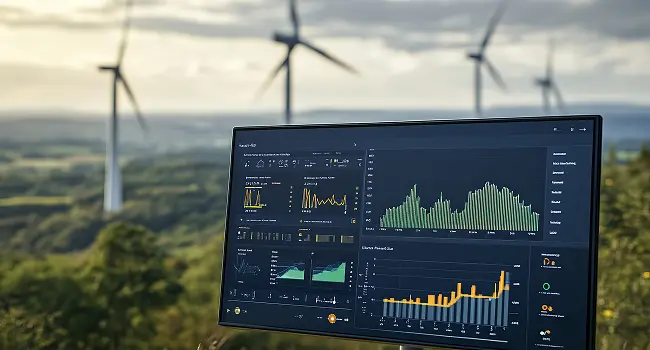
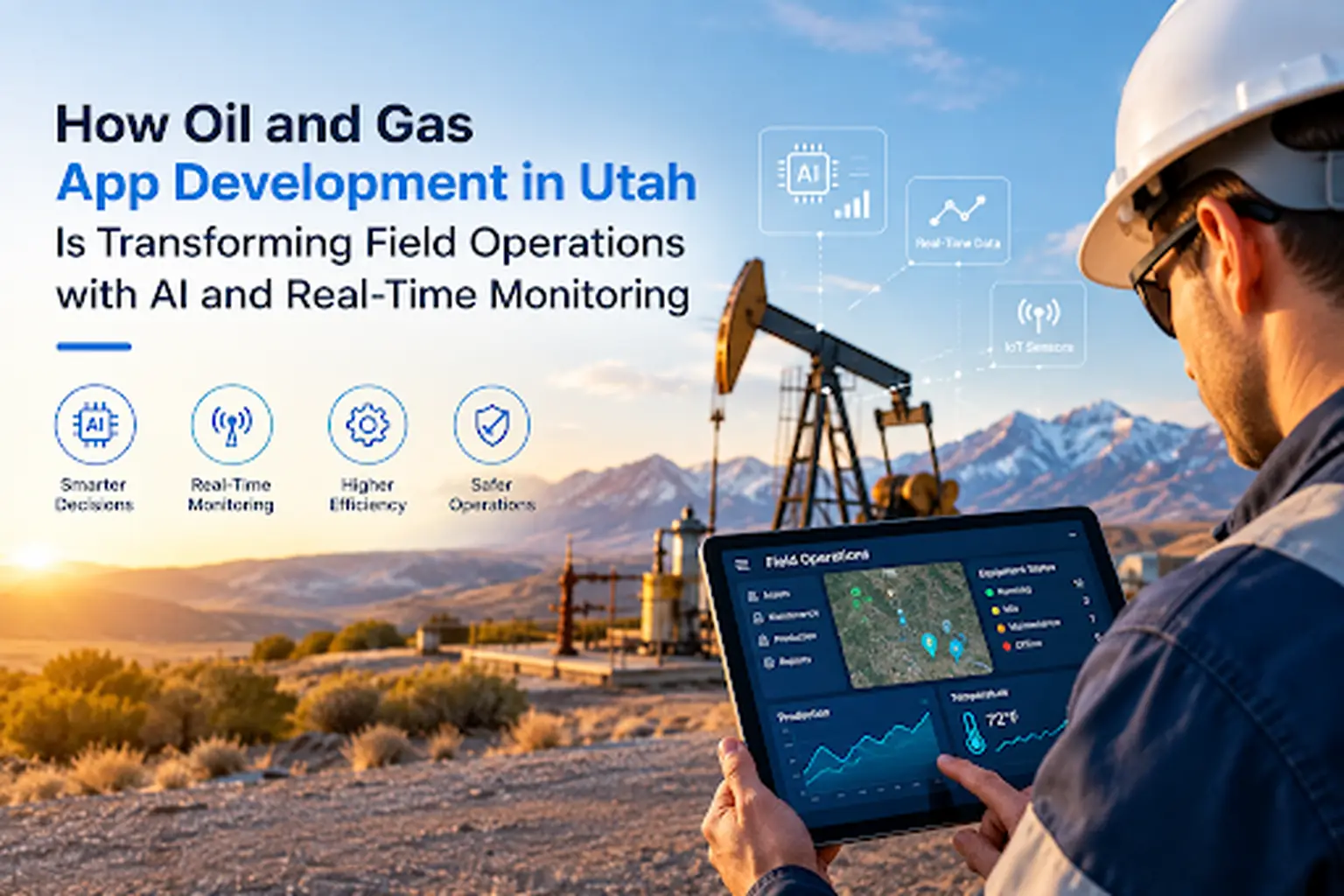
Applications connected to IoT sensors and industrial monitoring systems can collect data from compatible equipment and present it through centralized dashboards. Depending on the installed infrastructure, teams may be able to monitor pressure, temperature, equipment status, production readings, and other operational indicators.
When a reading exceeds a defined threshold, the application can notify the relevant personnel so they can investigate the issue. This improves situational awareness and helps teams respond to potential problems before they develop into more serious disruptions.
3. AI-Assisted Safety and Risk Management
Worker safety remains a critical priority in oil and gas operations. Field personnel may encounter equipment hazards, hazardous substances, changing weather conditions, and other site-specific risks.
Oil and gas applications can support safety management through digital inspection checklists, incident reporting, permit tracking, and automated reminders for required safety procedures. AI-assisted analytics can also help identify recurring patterns in incident reports, inspection findings, and equipment-related events.
AI should support established safety procedures and qualified personnel, not replace professional judgment or required safety controls.
Also Read: P2P Lending Platforms for Businesses in the USA
4. Intelligent Data Analysis for Better Decisions
Oil and gas operations generate substantial amounts of information from production systems, maintenance records, inspections, and field reports. However, collecting data does not automatically make it useful.
AI-powered analytics can help organize operational information, highlight unusual changes, and identify trends that might otherwise be difficult to detect. Managers can use these insights to review equipment performance, compare operational indicators, identify recurring delays, and prioritize maintenance activities.
For energy companies in Utah, integrating analytics into custom applications can make operational information easier to interpret and apply to everyday decisions.
The Role of Real-Time Monitoring in Modern Energy Operations
Real-time monitoring provides visibility into field conditions as operational data becomes available. When connected to suitable equipment and communication networks, oil and gas applications can help teams monitor assets, coordinate maintenance, and track field activities from a centralized interface.
Remote Asset Monitoring
Remote monitoring can reduce the need for personnel to travel to a site simply to collect routine equipment readings. Authorized teams can review available sensor data, identify abnormal conditions, and determine whether a physical inspection is necessary.
This capability is particularly useful for geographically dispersed operations, although its effectiveness depends on sensor coverage, network availability, and the reliability of the underlying systems.
Automated Alerts and Notifications
Timely alerts help field teams focus on issues that require attention. Custom applications can generate notifications when equipment readings cross predefined thresholds, maintenance tasks become overdue, or inspections require follow-up.
Alerts can be routed to the appropriate personnel based on equipment type, location, severity, and operational responsibilities. Well-designed notification workflows also help prevent alert fatigue by prioritizing meaningful events rather than sending excessive low-value notifications.
Improved Field Workforce Coordination
Field operations depend on communication between technicians, supervisors, engineers, maintenance teams, and management. When work orders, inspection reports, and operational updates are scattered across different tools, coordination becomes more difficult.
A centralized application can connect work orders, task assignments, inspection records, and progress updates. Field workers can submit information from supported mobile devices, while supervisors can review completed work and identify outstanding tasks.
Offline functionality can also be important for remote sites with unreliable connectivity, allowing workers to capture selected information locally and synchronize it when a connection becomes available.
Essential Features of Oil and Gas Applications
The right application features depend on whether a company focuses on upstream exploration and production, midstream transportation and storage, or downstream processing and distribution. A custom solution should address specific operational requirements rather than attempt to include every possible feature.
Important capabilities may include:
- Equipment and asset management: Maintain asset records, inspection histories, maintenance schedules, and equipment status information in one accessible system.
- IoT and sensor integration: Connect compatible sensors and industrial systems to collect operational readings and support remote monitoring.
- AI-powered analytics: Analyze available data to identify trends, flag anomalies, and support predictive maintenance planning.
- Work order and maintenance management: Assign tasks, track repair progress, document completed work, and maintain service histories.
- Field inspection and safety reporting: Digitize inspection checklists, incident reports, safety observations, and compliance documentation.
- Real-time dashboards and alerts: Present important operational indicators and notify relevant teams when predefined conditions require attention.
- Offline mobile access: Allow authorized field personnel to complete selected tasks in areas with limited connectivity, with synchronization when the network becomes available.
- Role-based access and data security: Protect operational information through appropriate permissions, authentication, encryption, and audit logging.
Also Read: What Is Generative AI?
Key Benefits of Custom Oil and Gas App Development in Utah
Custom application development allows energy companies to align digital tools with their actual workflows, equipment, and operational priorities.
One major benefit is improved operational visibility. When field data, maintenance activities, and work orders are available through connected systems, managers can gain a clearer picture of ongoing operations and identify issues requiring attention.
Another benefit is more proactive maintenance planning. By combining equipment monitoring with historical records and appropriate analytical models, companies can make better-informed decisions about inspections and repairs. This can help reduce avoidable downtime, although results depend on implementation quality and operating conditions.
Digital workflows can also reduce repetitive administrative tasks. Instead of manually transferring information between spreadsheets, paper forms, and separate software platforms, teams can record and access operational updates through a coordinated application.
Improved access to reliable information can support better planning, resource allocation, and communication between field personnel and office-based teams. Over time, these improvements can contribute to more consistent operations and more effective use of maintenance resources.
Challenges to Consider Before Implementing AI-Based Oil and Gas Software
Although AI and real-time monitoring offer significant opportunities, successful implementation requires careful planning.
- Legacy system integration: Existing industrial systems may use different protocols, data formats, and architectures. A new application must integrate with these systems without disrupting critical operations.
- Data quality and reliability: AI models depend on relevant, accurate, and sufficiently representative data. Inconsistent sensor readings or incomplete maintenance records can reduce the usefulness of analytical outputs.
- Connectivity in remote locations: Some field sites may have limited network coverage. Applications may need offline workflows, local data processing, or store-and-forward synchronization to maintain usability.
- Cybersecurity and operational technology protection: Connected applications can introduce additional security considerations. Strong access controls, secure integrations, network segmentation where appropriate, and ongoing monitoring are important for protecting business and operational systems.
- Adoption by field teams: Even technically advanced applications can fail to deliver value if they are difficult to use. Interfaces should be designed for field conditions, with clear navigation, efficient data entry, and workflows suited to the people using them.
How to Choose the Right Oil and Gas App Development Partner
Selecting a development partner is an important step for companies planning to modernize field operations. Beyond general software development capabilities, businesses should look for a team that understands industrial workflows, data integration, mobile usability, and the security considerations associated with connected operational systems.
A suitable partner should begin by understanding the company’s operational challenges and defining measurable project objectives. These might include improving maintenance response times, increasing inspection completion rates, reducing manual reporting, or improving visibility into equipment status.
The development process should also account for integration requirements, data availability, user permissions, and the conditions under which field personnel will use the application. A phased implementation can help validate core features before expanding to additional sites or workflows.
Testing is equally important. Applications should be evaluated under realistic operating conditions, including poor connectivity, unexpected data inputs, and integration failures. For AI-based features, teams should also assess model performance, establish human review procedures, and monitor results after deployment.
The objective is to deliver a reliable operational tool that solves real problems rather than introducing technology without a clearly defined business purpose.
How IPH Technologies Can Support Oil and Gas Digital Transformation
IPH Technologies provides custom software and application development services that businesses can use to address specific operational and technology requirements.
For oil and gas organizations exploring digital transformation, a tailored application may bring field reporting, equipment monitoring, maintenance workflows, and operational analytics into a more connected environment. Depending on project requirements, development may also involve mobile applications, enterprise system integrations, cloud-based data platforms, and AI-enabled analytical capabilities.
A practical starting point is to identify the most significant operational bottleneck, such as delayed field reporting, limited asset visibility, or inefficient maintenance coordination. From there, businesses can define the required features, assess their existing infrastructure, and develop a solution aligned with their workflows.
For companies evaluating oil and gas app development in Utah, the priority should be a solution that fits real field conditions, supports secure data handling, and can evolve as operational requirements change.
Learn more about IPH Technologies and its software development capabilities.
The Future of Oil and Gas Field Operations in Utah
The future of oil and gas operations will increasingly depend on how effectively companies connect field equipment, operational data, and decision-making processes. AI-assisted analytics, IoT-based monitoring, mobile applications, and predictive maintenance can help organizations move toward more proactive and data-informed operations.
For Utah’s energy businesses, digital transformation does not have to begin with a complete replacement of existing systems. A targeted application addressing one high-impact challenge can provide a foundation for broader improvements over time.
Final Thoughts on Oil and Gas App Development
As technologies mature, companies that evaluate their operational needs carefully and implement digital solutions with appropriate security, integration, and workforce planning will be better positioned to improve visibility and operational resilience.
IPH Technologies helps businesses explore custom software and application development approaches aligned with their digital transformation goals. The right solution starts with understanding the field challenge, identifying the data and systems involved, and building technology around measurable operational outcomes.










.png)