
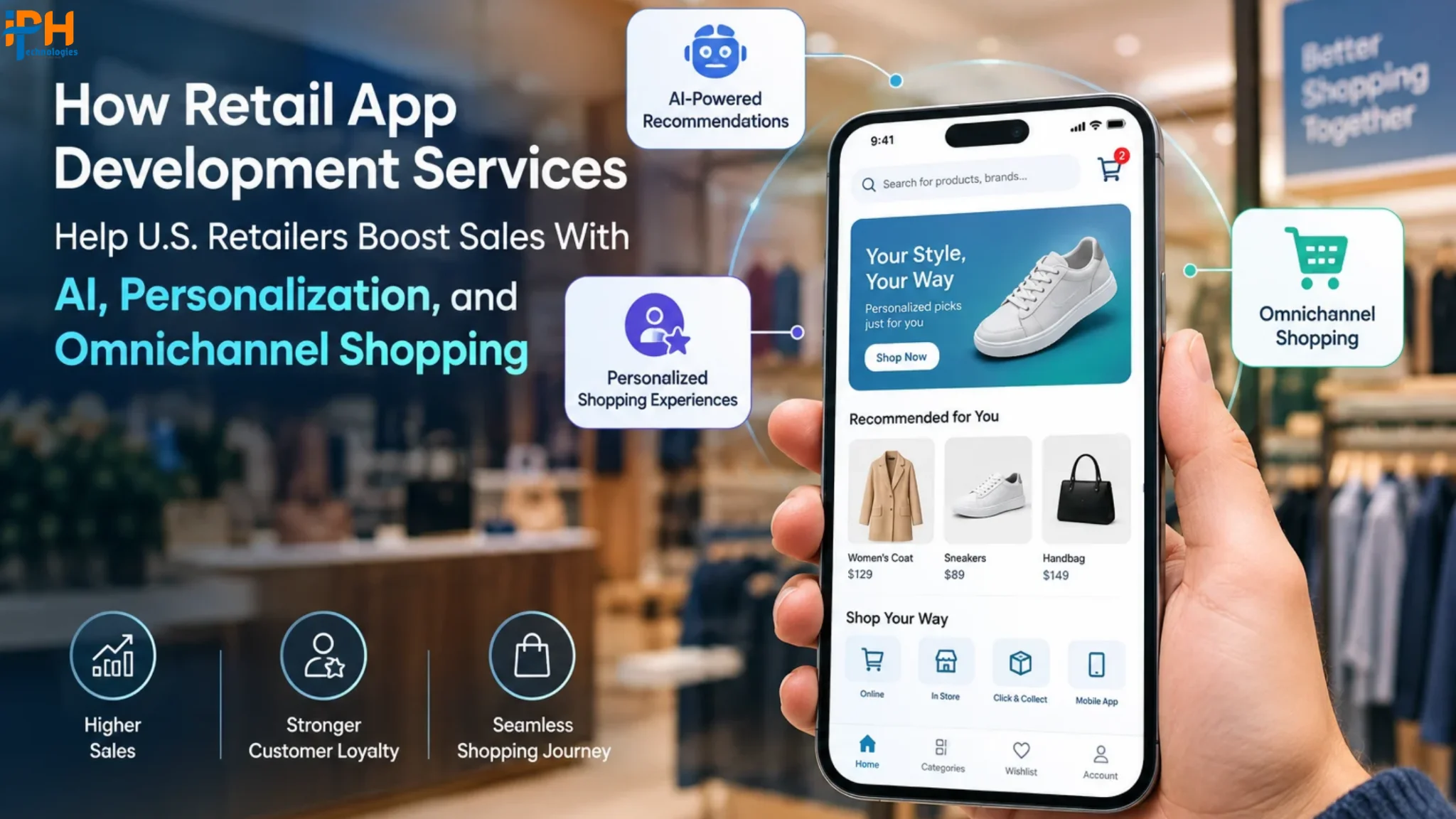


























































































The U.S. retail industry is evolving as customers expect faster shopping experiences, personalized product recommendations, and seamless transitions between online and offline stores. Retailers must adapt to these expectations to attract new customers, improve retention, and increase sales.
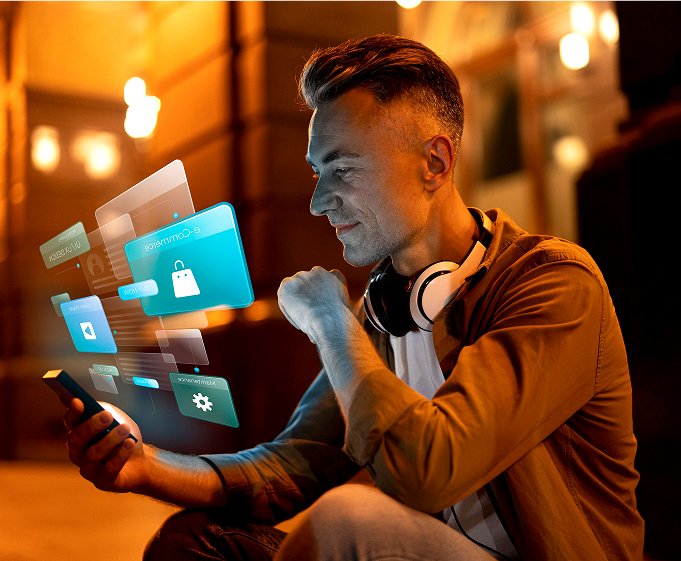
Retail app development services help businesses meet these demands through custom mobile applications, artificial intelligence (AI), personalized shopping experiences, and omnichannel integration. From independent retailers to large retail chains, a well-designed retail app can simplify shopping, improve operational efficiency, and create new opportunities for revenue growth.
In 2026, retailers that invest in intelligent, customer-focused mobile experiences can strengthen their competitive position in the U.S. market.
Why Are Retail Mobile Apps Important for U.S. Businesses?
Mobile devices play a significant role in how American consumers discover products, compare prices, and make purchasing decisions. Customers may browse products on their phones, check availability at nearby stores, and complete purchases through different channels.
Without a convenient mobile shopping experience, retailers may struggle to retain customers who prefer quick and flexible purchasing options.
Retail app development services enable businesses to create applications tailored to their products, customers, and sales strategies. These apps can support product discovery, secure payments, loyalty programs, order tracking, and personalized promotions.
A retail app also provides retailers with valuable insights into customer preferences and shopping behavior, helping them make more informed business decisions.
1. AI-Powered Shopping Experiences That Increase Sales
Artificial intelligence is transforming how retailers interact with customers. By analyzing relevant shopping data, AI-powered applications can help retailers deliver more relevant product suggestions, improve customer support, and simplify product discovery.
Retail app development services can integrate AI-powered capabilities such as:
- Intelligent product recommendations: Suggest relevant products based on customer preferences and shopping activity.
- AI chatbots: Answer common questions about products, orders, returns, and store policies.
- Visual search: Help customers discover similar products using images.
- Predictive analytics: Identify purchasing patterns and support better inventory and promotional decisions.
- Personalized offers: Present relevant discounts and product bundles to eligible customers.
These capabilities can reduce friction during shopping and help customers discover products they are more likely to purchase. Retailers should implement AI responsibly, with appropriate data protection and transparency.
Also Read: LLM vs RAG vs Agentic AI vs AI Agents
2. Personalized Shopping to Improve Customer Retention
Modern consumers often expect shopping experiences that reflect their interests rather than generic product listings and promotions. Personalization helps retailers create more relevant interactions throughout the customer journey.
Custom retail mobile apps can use customer-approved preferences, purchase history, wish lists, and browsing behavior to tailor the shopping experience.
For instance, a beauty retailer can recommend skincare products based on a customer’s stated preferences. A home furnishing store can display complementary products based on items a shopper has saved or purchased.
Retailers can also personalize push notifications, loyalty rewards, product collections, and seasonal promotions.
However, personalization should focus on relevance rather than sending excessive notifications. Retailers need to respect customer communication preferences and applicable privacy requirements.
When implemented effectively, personalization can encourage repeat purchases, improve customer satisfaction, and strengthen long-term brand loyalty.
3. Omnichannel Shopping for a Seamless Customer Journey
Customers do not always purchase through a single channel. They may discover a product on social media, research it through a mobile app, visit a physical store to see it, and complete the purchase online.
Omnichannel retail connects these touchpoints to create a consistent shopping experience.
With retail app development services, businesses can integrate their mobile applications with e-commerce websites, physical stores, inventory systems, customer relationship management (CRM) platforms, and order management solutions.
Important omnichannel features include:
- Buy Online, Pick Up In Store (BOPIS): Let customers purchase online and collect orders at a nearby store.
- Real-time inventory visibility: Display product availability across selected locations when supported by integrated inventory systems.
- Click-and-collect notifications: Keep customers informed about order preparation and pickup.
- Unified customer profiles: Help retailers coordinate customer preferences and interactions across supported channels.
- Flexible returns: Provide clearer processes for eligible online purchases returned to physical stores.
For U.S. retailers operating across multiple locations, these features can improve convenience and reduce purchasing barriers. A connected experience also helps employees respond more effectively to customer needs.
4. Mobile Payments and Faster Checkout
A complicated checkout process can discourage customers from completing purchases. Retailers can address this issue by making payments simple, secure, and convenient.
Custom retail applications can support digital wallets, saved payment methods, secure card payments, and streamlined checkout flows, depending on the payment provider and platform.
Useful checkout features include guest checkout, address autofill, transparent shipping costs, order summaries, and clear delivery estimates.
Retailers can also integrate order confirmation, shipment tracking, and return requests into the app to keep customers informed after a purchase.
A faster, more transparent checkout experience can reduce unnecessary friction and support higher purchase completion rates. Payment processing must also follow applicable security standards and payment provider requirements.
Also Read: MCP vs A2A vs ACP AI Agent Protocol
5. Loyalty Programs That Encourage Repeat Purchases
Acquiring new customers can require significant marketing effort. Loyalty programs help retailers encourage existing customers to return by rewarding continued engagement and purchases.
Retail app development services can incorporate digital loyalty cards, reward points, exclusive discounts, referral programs, membership benefits, and personalized promotions.
Mobile apps make these benefits easier to access because customers can check their rewards, review eligible offers, and track their progress from one place.
Retailers can measure program engagement and repeat-purchase behavior to understand which benefits resonate with their audience. Reward structures should remain easy to understand and provide genuine value to customers.
6. Smart Inventory Management and Retail Operations
Retail success depends not only on attracting customers but also on ensuring that products are available when customers want them.
Inventory discrepancies, stockouts, and delayed order fulfillment can damage the shopping experience and lead to lost sales.
Retail applications integrated with inventory management and point-of-sale systems can help businesses improve stock visibility across online and physical stores.
Depending on the implementation, these systems may support automated stock updates, low-inventory alerts, order management, barcode scanning, and demand forecasting.
AI-driven analytics can further help retailers identify seasonal patterns and anticipate changes in product demand.
Accurate inventory information helps customers make better purchasing decisions while supporting smoother fulfillment and store operations.
7. Data Analytics to Make Better Retail Decisions
Retailers need to understand how customers interact with their apps and where sales opportunities are being missed.
Retail mobile applications can provide analytics on product views, searches, cart abandonment, completed orders, repeat purchases, and campaign engagement, subject to appropriate consent and data collection practices.
These insights can help businesses identify popular products, evaluate promotions, and improve the customer journey.
Businesses can also test different product layouts, promotional messages, and app features to determine which changes improve results.
Retail app development services should include appropriate analytics integration so retailers can measure performance against business goals rather than relying on assumptions.
How to Choose the Right Retail App Development Services in the USA?
Selecting a retail app development partner is an important step because the quality of the application affects customer experience, reliability, security, and future scalability.
Retail businesses should evaluate potential partners based on their technical capabilities, industry experience, integration expertise, and ability to understand business objectives.
Consider the following factors when comparing providers:
- Retail industry experience: Look for a team that understands e-commerce workflows, inventory systems, payment integrations, and customer loyalty requirements.
- Custom development capabilities: Choose a partner that can adapt the application to your business model instead of relying exclusively on generic features.
- AI and integration expertise: Evaluate the team’s ability to integrate appropriate AI capabilities with existing retail platforms and business systems.
- Security and privacy: Ask how the provider approaches secure authentication, data protection, access controls, and applicable privacy requirements.
- Scalability and maintenance: Ensure the application can evolve as your product catalog, customer base, and business requirements grow.
- Post-launch support: Confirm how the provider handles updates, bug fixes, performance monitoring, and future feature development.
How IPH Technologies Supports Retail App Development
IPH Technologies provides app and software development services that businesses can explore when planning custom retail applications. Retailers need solutions that align with their customers’ shopping habits, sales channels, and operational workflows.
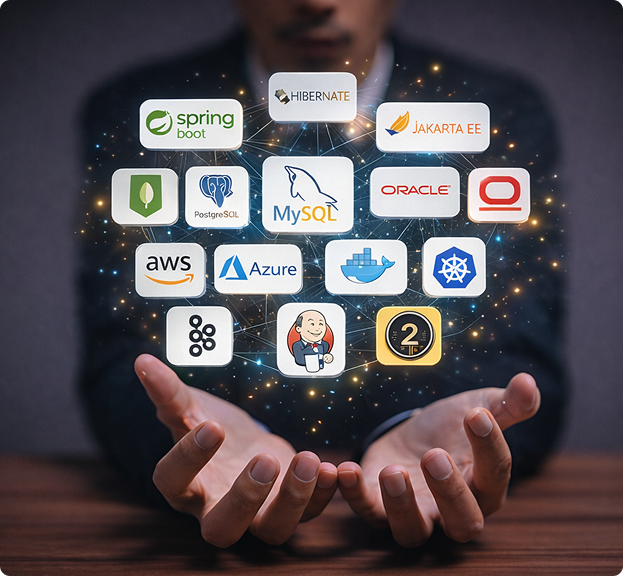
A retail app development project may involve building customer-facing mobile apps, integrating payment gateways, connecting inventory and order management systems, and incorporating AI-powered features where they provide practical value.
The development process should begin with understanding the retailer’s requirements, target customers, existing technology, and desired outcomes. Based on these factors, the team can define the app’s core functionality, integration requirements, user experience, and development roadmap.
Retailers should also plan for testing, security reviews, performance optimization, and ongoing maintenance to keep the application reliable as the business grows.
For businesses looking to modernize their shopping experience, custom retail app development can provide a foundation for connecting customers, products, and retail operations through a more convenient digital experience.
Final Thought on Retail App Development Services
Retail success in 2026 requires more than simply offering products through a mobile application. U.S. retailers need connected shopping experiences that combine convenience, personalization, intelligent recommendations, secure payments, and reliable inventory visibility.
Retail app development services help businesses bring these capabilities together through custom applications designed around their customers and operational needs.
By investing in AI-powered features, omnichannel integration, loyalty programs, and data-driven improvements, retailers can reduce purchasing friction, strengthen customer relationships, and create more opportunities for sales growth.
The most effective approach is to start with clear business objectives, prioritize features that solve real customer problems, and continuously improve the app using performance data and customer feedback.










.png)