Introduction to Digital Transformation in Modern Business
Have you ever wondered why some businesses seem to effortlessly adapt to changing market conditions while others struggle to keep pace? The answer often lies in their embrace of digital transformation. We’re living in an extraordinary era where technology isn’t just a support function—it’s the very backbone of how successful organizations operate, compete, and thrive in today’s hyper-connected marketplace.
Digital transformation has evolved from being a competitive advantage to an absolute necessity. Whether you’re running a startup, managing a mid-sized enterprise, or leading a large corporation, the technologies you adopt today will determine your relevance tomorrow. The question isn’t whether you should transform digitally, but rather how quickly and effectively you can do it.
What is Digital Transformation and Why Does It Matter?
Understanding the Digital Transformation Landscape
Digital transformation represents the comprehensive integration of digital technology into every aspect of your business operations. It fundamentally changes how you operate, deliver value to customers, and respond to market dynamics. Think of it as a complete organizational metamorphosis rather than just a tech upgrade.
Imagine trying to compete in a Formula 1 race with a vintage car—no matter how skilled the driver, you’re simply not equipped for the track. That’s what operating without digital transformation feels like in today’s business environment. It’s about reimagining your entire business model through a digital lens, creating new opportunities, and eliminating outdated processes that hold you back.
The Business Case for Digital Adoption
Why should your organization invest in digital transformation? The reasons are compelling and multifaceted. Companies that successfully implement digital strategies experience significant improvements across key performance indicators: increased revenue streams, reduced operational costs, enhanced customer satisfaction, and improved employee productivity.
Digital transformation enables businesses to make data-driven decisions in real-time, automate mundane tasks, personalize customer experiences at scale, and respond to market changes with unprecedented agility. It’s not just about survival—it’s about positioning your organization to seize opportunities that didn’t even exist a decade ago.
Also read – Step-by-Step Guide to Building a Successful Mobile App in 2026
The Impact of Digital Transformation on Business Operations
Efficiency and Productivity Gains
Digital transformation dramatically streamlines business operations by eliminating bottlenecks, reducing manual interventions, and optimizing workflows. When you automate repetitive tasks and integrate systems seamlessly, your team can focus on strategic initiatives that actually move the needle.
Consider this: tasks that once took hours can now be completed in minutes. Processes requiring multiple departments and weeks of coordination can be orchestrated automatically. The cumulative effect? Organizations are achieving 30-50% improvements in operational efficiency through strategic digital initiatives.
Enhanced Customer Experience and Engagement
Today’s customers expect personalized, seamless experiences across every touchpoint. Digital transformation technologies enable businesses to meet and exceed these expectations by providing omnichannel engagement, predictive customer service, and tailored product recommendations.
Your customers don’t just want good service—they want anticipatory service. They want you to know their preferences, remember their history, and solve their problems before they even articulate them. Digital transformation makes this possible through integrated customer data platforms and intelligent automation.
Artificial Intelligence and Machine Learning
How AI is Reshaping Business Processes
Artificial Intelligence has moved from science fiction to business reality. AI is revolutionizing how companies handle everything from customer service to strategic planning. Intelligent chatbots provide 24/7 customer support, AI-powered systems detect fraud in milliseconds, and machine learning algorithms optimize pricing strategies in real-time.
What makes AI particularly transformative is its ability to learn and improve continuously. Unlike traditional software that follows predetermined rules, AI systems analyze patterns, identify trends, and make increasingly sophisticated decisions without human intervention.
Real-World Applications of Machine Learning
Machine learning applications are everywhere in modern business. E-commerce platforms use ML algorithms to recommend products with uncanny accuracy. Financial institutions deploy ML models to assess credit risk and detect fraudulent transactions. Manufacturing companies leverage predictive maintenance systems that anticipate equipment failures before they occur.
Predictive Analytics and Decision Making
Predictive analytics powered by machine learning transforms how businesses forecast demand, manage inventory, and allocate resources. Instead of relying on gut feelings or historical trends alone, organizations can now predict customer behavior, market fluctuations, and operational challenges with remarkable precision.
Also read- Machine Learning Mobile Apps: Boost User Experience 2026
Cloud Computing Solutions
The Shift to Cloud-Based Infrastructure
Cloud computing has fundamentally changed the technology landscape. Gone are the days when businesses needed massive capital investments in physical servers and infrastructure. Today, cloud platforms provide scalable, flexible, and cost-effective solutions that can grow with your business.
The cloud enables businesses of all sizes to access enterprise-grade technology without the traditional barriers to entry. Whether you need computing power for data analysis, storage for customer information, or platforms for application development, cloud services deliver on-demand resources that you can scale up or down based on your needs.
Benefits of Cloud Migration for Businesses
Migrating to the cloud offers tremendous advantages: reduced IT costs, enhanced collaboration capabilities, improved disaster recovery, automatic software updates, and the ability to access your systems from anywhere in the world. Your team can work seamlessly across locations, partners can access shared resources securely, and your infrastructure can handle traffic spikes without breaking a sweat.
Internet of Things (IoT)
Connected Devices Transforming Operations
The Internet of Things connects physical devices to the digital world, creating a network of smart objects that collect, share, and act on data. From smart factories to connected retail environments, IoT devices are generating insights that were previously impossible to capture.
Imagine sensors monitoring every aspect of your operations—temperature, humidity, equipment performance, inventory levels, and customer movement patterns. This constant stream of real-time data enables proactive decision-making and operational optimization.
IoT in Supply Chain and Manufacturing
In supply chain management, IoT devices track shipments in real-time, monitor storage conditions, and optimize routing dynamically. Manufacturing facilities use IoT sensors to monitor production lines, detect quality issues instantly, and schedule preventive maintenance. The result is reduced downtime, improved quality control, and significant cost savings.
Robotic Process Automation (RPA)
Automating Repetitive Tasks
Robotic Process Automation uses software robots to handle repetitive, rule-based tasks that previously required human intervention. Think data entry, invoice processing, report generation, and customer onboarding. RPA bots work tirelessly, accurately, and efficiently without the errors and fatigue that affect human workers.
The beauty of RPA is its non-invasive nature. These bots can work with your existing systems without requiring major infrastructure changes, making implementation faster and less disruptive than traditional automation approaches.
ROI of RPA Implementation
Organizations implementing RPA typically see impressive returns on investment. Beyond cost savings from reduced manual labor, RPA delivers improved accuracy, faster processing times, enhanced compliance, and freed-up human resources for higher-value activities. Many companies report ROI within 6-12 months of implementation.
Also read- Low-Code No-Code Automation Transform Business Processes in 2026
Big Data and Analytics
Turning Data into Actionable Insights
Every interaction, transaction, and operation generates data. Big Data technologies enable organizations to collect, store, and analyze massive volumes of information from diverse sources. But collecting data isn’t enough—the real value lies in extracting meaningful insights that drive better decisions.
Advanced analytics platforms help businesses identify customer trends, optimize operations, detect market opportunities, and mitigate risks. The ability to process and analyze data in real-time means you’re not just looking at what happened—you’re understanding what’s happening now and what’s likely to happen next.
Data-Driven Decision Making Strategies
Data-driven organizations outperform their competitors by making decisions based on evidence rather than intuition alone. By establishing robust data governance frameworks, implementing advanced analytics tools, and fostering a culture of data literacy, businesses can transform raw information into competitive advantage.
Blockchain Technology
Beyond Cryptocurrency Applications
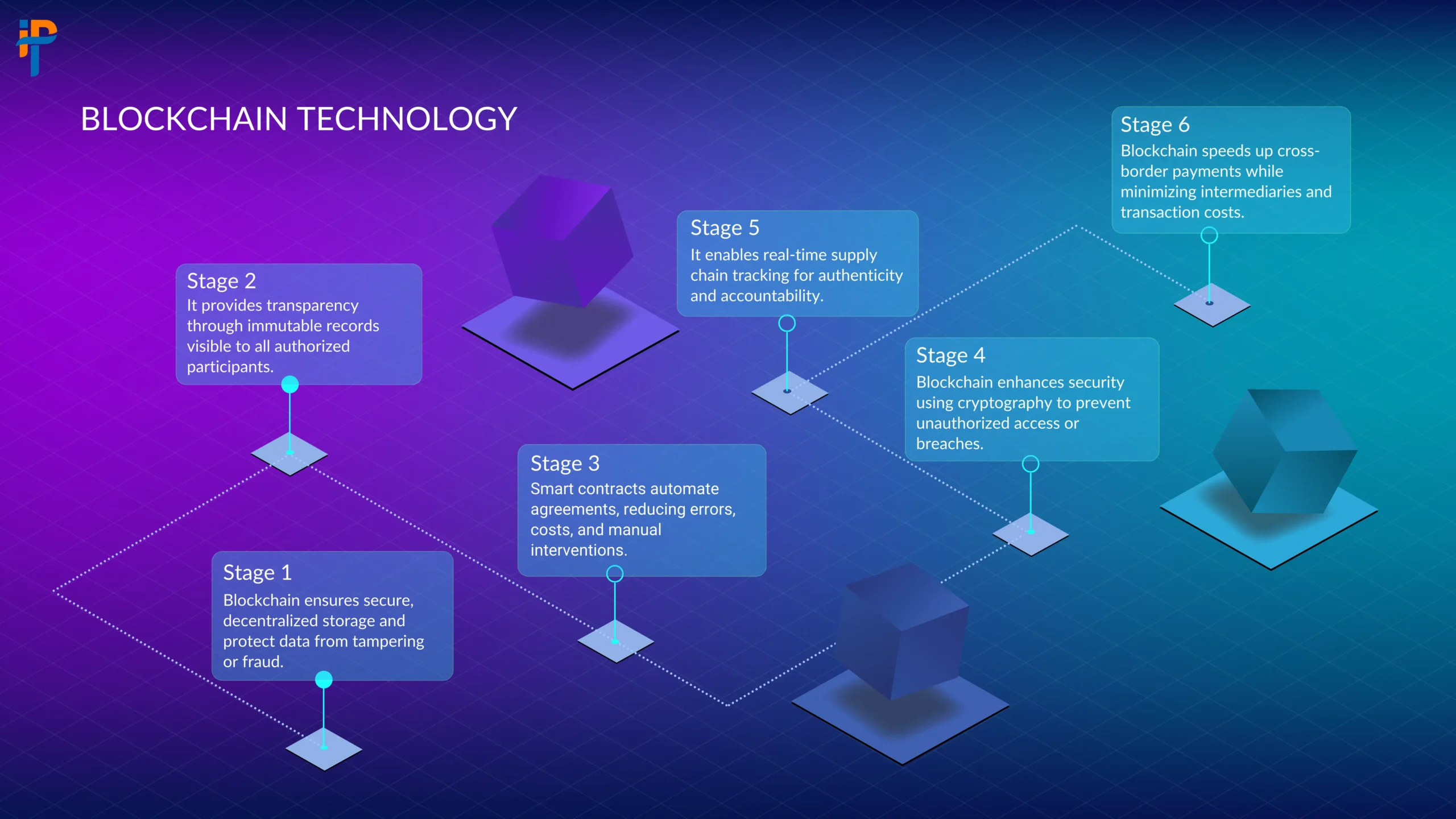
While blockchain gained fame through cryptocurrencies, its applications extend far beyond digital currency. Blockchain provides a secure, transparent, and immutable record-keeping system that’s transforming industries from healthcare to real estate.
The distributed nature of blockchain means no single entity controls the data, reducing fraud risk and increasing trust among stakeholders. Smart contracts automatically execute agreements when conditions are met, eliminating intermediaries and reducing transaction costs.
Blockchain in Business Operations and Security
Businesses are leveraging blockchain for supply chain transparency, secure document management, intellectual property protection, and identity verification. In supply chains, blockchain provides end-to-end visibility, ensuring product authenticity and ethical sourcing. Financial institutions use blockchain to streamline cross-border payments and reduce settlement times from days to minutes.
Extended Reality (AR/VR)
Immersive Technologies in Training and Development
Augmented Reality and Virtual Reality are revolutionizing how organizations train employees, design products, and engage customers. VR creates fully immersive training environments where employees can practice complex procedures without real-world risks or costs.
Imagine training surgeons without patients, pilots without planes, or technicians without expensive equipment. Extended reality makes this possible, providing realistic scenarios that accelerate learning and improve retention.
Customer Engagement Through AR/VR Experiences
Retailers use AR to let customers visualize products in their homes before purchasing. Real estate companies offer virtual property tours to international buyers. Automotive manufacturers enable customers to customize and experience vehicles in virtual showrooms. These immersive experiences enhance engagement, reduce purchase anxiety, and differentiate brands in crowded markets.
How IPH Technologies Enables Digital Transformation
Our Approach to Custom Software Solutions
At IPH Technologies, we understand that digital transformation isn’t one-size-fits-all. Every business has unique challenges, opportunities, and objectives. That’s why we take a consultative approach, working closely with you to understand your specific needs and designing custom solutions that align with your strategic goals.
Our team leverages cutting-edge technologies and agile methodologies to build mobile apps, web applications, and custom software that drive real business results. We don’t just deliver code—we deliver solutions that transform how you operate, engage customers, and compete in your market.
Implementing Digital Transformation: Best Practices
Creating a Digital Transformation Roadmap
Successful digital transformation requires careful planning and strategic execution. Start by assessing your current state, identifying gaps and opportunities, and defining clear objectives. Prioritize initiatives based on business impact and feasibility, and establish metrics to measure success.
Your roadmap should be flexible enough to adapt to changing circumstances while maintaining focus on core objectives. Involve stakeholders across your organization, secure executive sponsorship, and communicate the vision clearly to build buy-in and momentum.
Overcoming Common Implementation Challenges
Digital transformation initiatives face several common obstacles: resistance to change, legacy system constraints, skills gaps, budget limitations, and security concerns. Address these challenges proactively by investing in change management, providing training and support, adopting phased implementation approaches, and establishing robust governance frameworks.
Remember that transformation is a journey, not a destination. Celebrate quick wins to build momentum, learn from setbacks, and continuously refine your approach based on feedback and results.
Also read – How Much Does It Cost to Build an AI App in Dubai? 2026 Breakdown
The Future of Digital Transformation Technologies
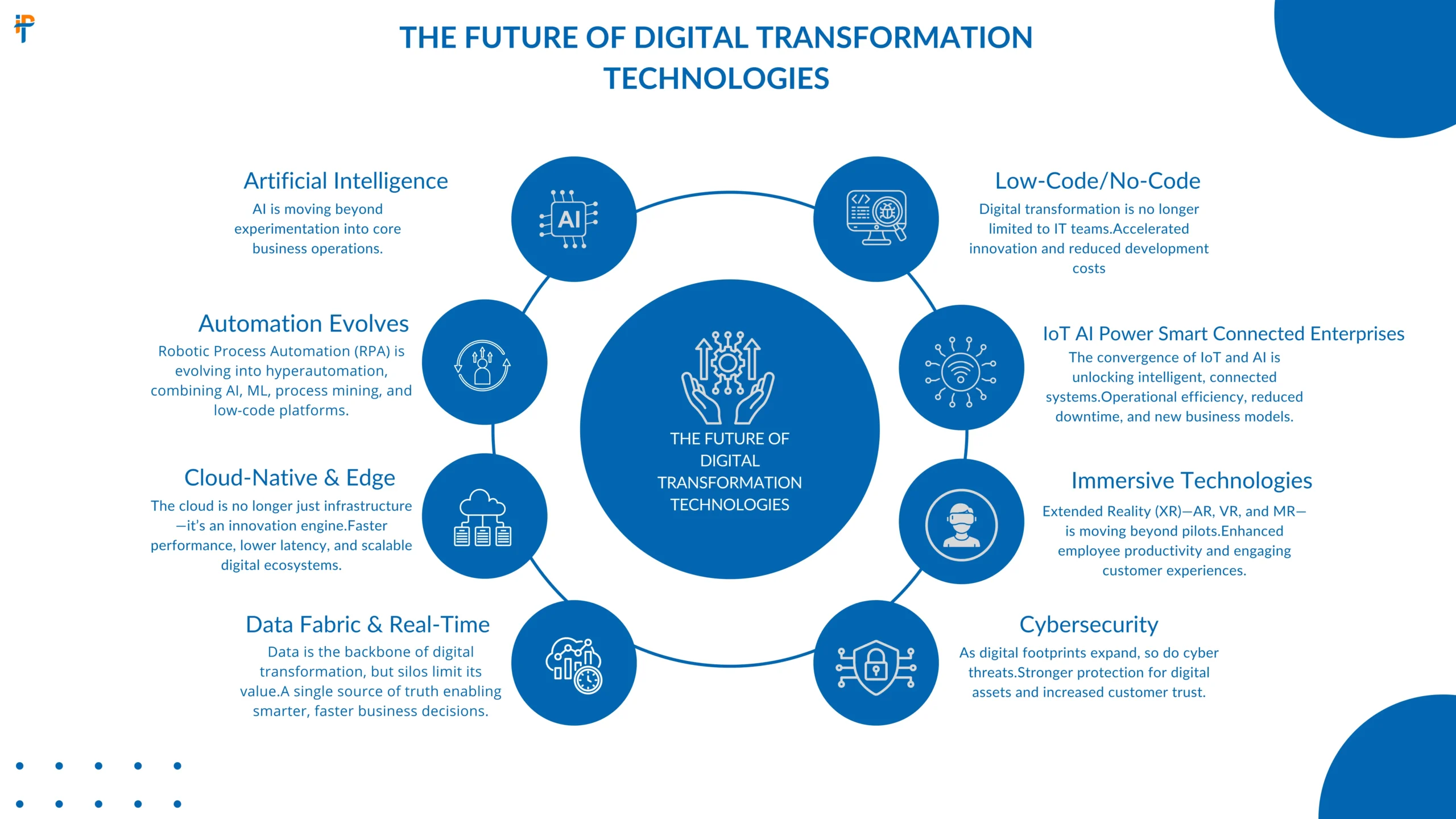
The pace of technological innovation shows no signs of slowing. Emerging technologies like quantum computing, 5G networks, edge computing, and advanced AI will unlock new possibilities we’re only beginning to imagine. The organizations that thrive will be those that maintain curiosity, embrace experimentation, and remain agile in their approach to technology adoption.
The future belongs to businesses that view technology not as a cost center but as a strategic enabler of growth, innovation, and competitive advantage. Are you ready to be part of that future?
Digital Transformation Technology Comparison
| Technology | Primary Benefits | Implementation Complexity | Typical ROI Timeline |
|---|---|---|---|
| Artificial Intelligence | Automation, personalization, predictive insights | High | 12-18 months |
| Cloud Computing | Scalability, cost reduction, accessibility | Medium | 6-12 months |
| Internet of Things | Real-time monitoring, operational efficiency | Medium-High | 12-24 months |
| RPA | Cost savings, accuracy, speed | Low-Medium | 6-12 months |
| Big Data Analytics | Informed decisions, trend identification | Medium-High | 9-18 months |
| Blockchain | Security, transparency, trust | High | 18-36 months |
| AR/VR | Enhanced training, customer engagement | Medium | 12-24 months |
Industry Adoption of Digital Transformation Technologies
| Industry | Top Technologies Adopted | Digital Maturity Level | Key Drivers |
|---|---|---|---|
| Retail | AI, IoT, Big Data | High | Customer experience, personalization |
| Manufacturing | IoT, RPA, Big Data | High | Efficiency, predictive maintenance |
| Healthcare | AI, Cloud, Blockchain | Medium-High | Patient care, data security |
| Finance | AI, Blockchain, RPA | High | Security, automation, compliance |
| Education | Cloud, AR/VR, AI | Medium | Remote learning, accessibility |
| Logistics | IoT, Big Data, Cloud | High | Supply chain optimization |
Conclusion
Digital transformation is no longer optional—it’s the defining factor that separates thriving businesses from those struggling to survive. The seven technologies we’ve explored—Artificial Intelligence, Cloud Computing, IoT, RPA, Big Data Analytics, Blockchain, and Extended Reality—are fundamentally reshaping how organizations operate, compete, and deliver value.
But here’s the critical insight: technology alone doesn’t guarantee success. What matters is how strategically you implement these solutions, how effectively you align them with business objectives, and how well you manage the organizational change that accompanies transformation.
At IPH Technologies, we’re passionate about helping businesses navigate this complex landscape. With our proven track record of over 500 successful projects and expertise across cutting-edge technologies, we’re positioned to be your trusted partner in digital transformation. Whether you’re taking your first steps or accelerating an existing transformation journey, we bring the technical expertise, industry knowledge, and commitment to excellence that ensure your success.
The future is digital. The question is: will you lead the transformation or be transformed by it?








.png)