


































































































Boost Productivity with Low-Code and No-Code Platforms in 2026
Low-Code/No-Code Automation Transform Your Business Without Writing a Single Line of Code
Have you ever felt like your business is drowning in repetitive tasks? You’re not alone. In today’s fast-paced digital landscape, businesses are constantly searching for ways to do more with less. Enter low-code/no-code automation—the game-changing solution that’s democratizing technology and putting the power of automation into everyone’s hands.
Think of it this way what if you could build sophisticated business applications the same way you assemble furniture from IKEA? No engineering degree required, just a clear vision and the right tools. That’s exactly what low-code/no-code platforms offer, and they’re revolutionizing how businesses operate in 2025 and beyond.
What is Low-Code/No-Code Automation?
Low-code/no-code automation refers to platforms and tools that enable users to create applications, automate workflows, and build digital solutions with minimal or zero traditional programming. Instead of writing thousands of lines of code, you’re using visual interfaces, drag-and-drop components, and pre-built templates to bring your ideas to life.
Understanding Low-Code Platforms
Low-code platforms are like having training wheels on your bike—they provide support while still giving you control. These platforms require some basic coding knowledge but dramatically reduce the amount of manual programming needed. Industry research shows that low-code development technologies can reduce application development time by up to 90%, making them invaluable for businesses looking to accelerate their digital transformation.
Developers and tech-savvy business users can leverage low-code platforms to create custom applications quickly, while still having the flexibility to add custom code when needed. It’s the perfect middle ground between traditional development and complete automation.
What Makes No-Code Different?
No-code platforms take things a step further. They’re designed for the everyday business user—the marketing manager, the HR specialist, the sales team leader—who has zero coding experience but understands their business processes inside and out. These platforms use intuitive visual builders, pre-configured templates, and simple logic rules that anyone can master.
Think of no-code as speaking your business language directly to computers. You’re not translating your needs through a developer; you’re building solutions yourself, in real-time.
The Evolution of Business Automation
Business automation isn’t new, but the accessibility of it certainly is. We’ve moved from expensive, enterprise-only solutions requiring massive IT departments to democratized platforms that put automation in the hands of individual team members. This evolution mirrors the broader trend of technology becoming more user-friendly and accessible—remember when you needed a computer science degree just to create a website?
Also read- Blockchain Integration in Mobile Apps: Complete Guide 2025
Why Should Businesses Care?
Let me ask you this: what if you could eliminate 80% of your repetitive manual tasks tomorrow? What would your team do with that extra time?
The Digital Transformation Imperative
Digital transformation isn’t a buzzword—it’s survival. Companies that fail to automate and digitize their operations are falling behind faster than ever. Recent studies indicate that the global pandemic accelerated digital transformation by approximately seven years, and there’s no going back.
Low-code/no-code automation allows businesses of all sizes to participate in this transformation without breaking the bank or hiring an army of developers.
Cost Efficiency in Modern Business
Here’s a reality check: hiring a team of developers is expensive. Training them takes time. Maintaining custom-coded solutions requires ongoing investment. Low-code/no-code platforms slash these costs dramatically. You’re essentially renting sophisticated technology and expertise at a fraction of the cost of building it in-house.
The savings aren’t just theoretical—businesses report reducing development costs by 50-70% when switching from traditional coding to low-code/no-code approaches.
Speed-to-Market Advantages
In business, timing is everything. The faster you can launch new products, respond to customer needs, or adapt to market changes, the better your competitive position. Traditional software development can take months or even years. Low-code/no-code solutions? Sometimes just days or weeks.
This speed advantage can be the difference between capturing a market opportunity and watching your competitors seize it first.
Key Benefits of Low-Code/No-Code Automation
Let’s get into the meat of why this matters for your bottom line.
Reduced Development Time and Costs
The numbers don’t lie. Here’s a comparison of traditional development versus low-code/no-code approaches:
| Development Aspect | Traditional Development | Low-Code/No-Code |
|---|---|---|
| Average Time to Build Simple App | 4-6 months | 1-4 weeks |
| Cost Range | $50,000 – $250,000+ | $5,000 – $30,000 |
| Required Team Size | 3-5 developers | 1-2 citizen developers |
| Maintenance Complexity | High | Low to Medium |
| Time to Implement Changes | Days to weeks | Hours to days |
This table illustrates the dramatic difference in resource requirements. But it’s not just about saving money—it’s about reallocating those resources to strategic initiatives that drive growth.
Empowering Non-Technical Teams
Remember when only the IT department could create solutions? Those days are gone. Low-code/no-code automation empowers your marketing team to build campaign workflows, your HR team to create onboarding processes, and your sales team to automate their pipeline—all without submitting endless IT tickets.
This democratization of technology means faster problem-solving, better process ownership, and teams that feel empowered rather than dependent. Your subject matter experts become solution creators, bridging the gap between business needs and technical implementation.
Enhanced Agility and Scalability
Markets change. Customer needs evolve. Can your business keep up? With low-code/no-code platforms, adapting to change becomes part of your DNA rather than a painful, expensive process. You can test new ideas quickly, pivot when needed, and scale successful solutions without rebuilding from scratch.
The modular nature of these platforms means you can start small and grow incrementally, adding features and complexity as your needs evolve.
Real-World Impact on ROI
Companies implementing low-code platforms consistently report impressive return on investment figures. Industry studies show average ROI ranging from 300% to over 500% within three years. That’s not a typo. The combination of reduced development costs, faster time-to-market, and increased productivity creates a powerful multiplier effect on your business results.
Beyond the hard numbers, businesses also report softer benefits like improved employee satisfaction, reduced IT backlog, and enhanced innovation culture.
Also read- Healthcare App Development Trends 2025: Complete Guide
Top 10 Business Processes You Can Automate Today
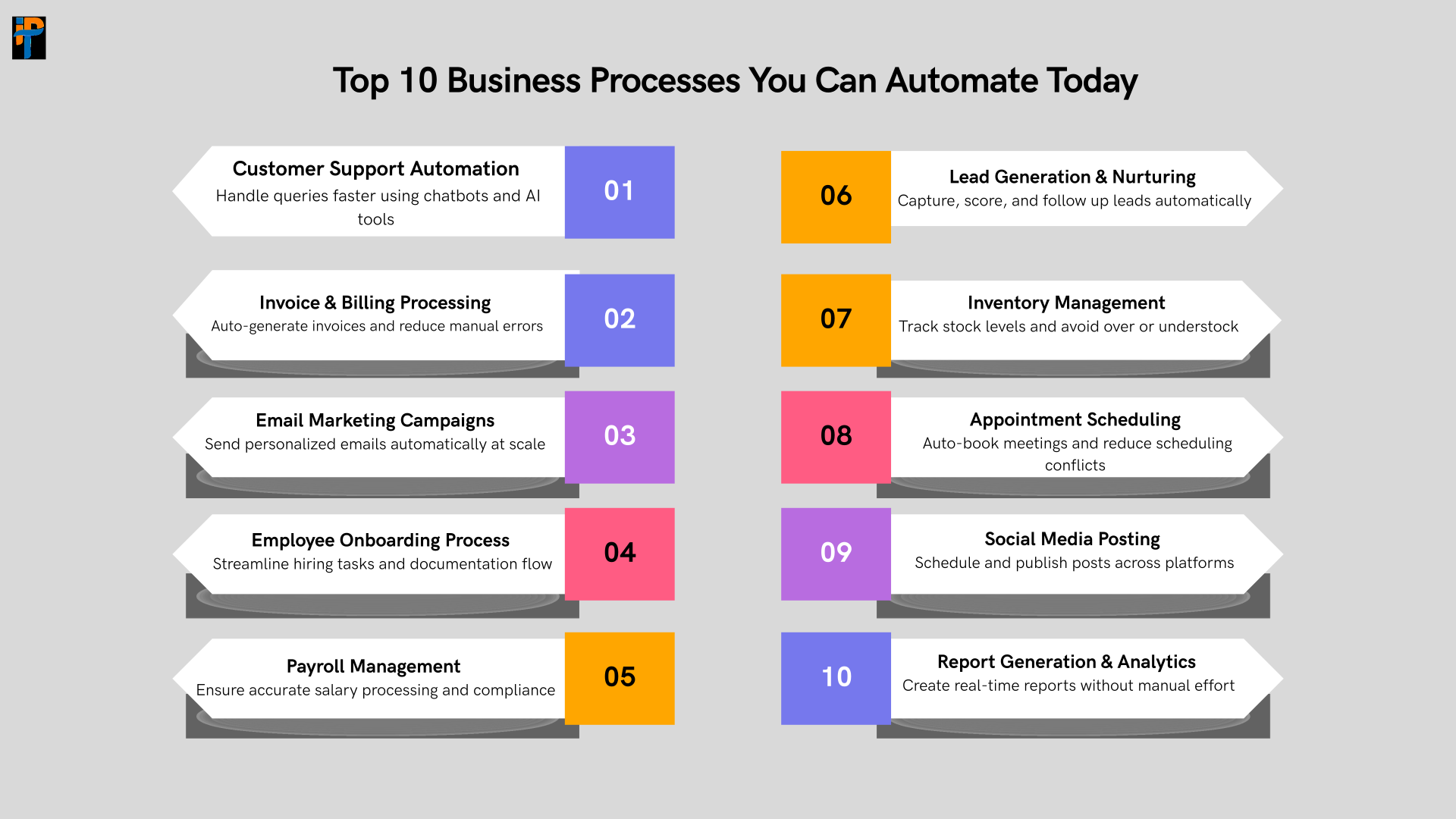
Ready to get started? Here are ten processes that are perfect candidates for low-code/no-code automation:
Customer Service and Support Workflows
Automate ticket routing, create chatbots that handle common queries, and build self-service portals where customers can find answers instantly. Your support team focuses on complex issues while automation handles the routine stuff.
Imagine reducing response times from hours to minutes, or deflecting 40-60% of common inquiries through intelligent automation. That’s the power of automated customer service workflows.
Sales Pipeline Management
From lead capture to follow-up sequences, deal tracking to proposal generation—automate the entire sales journey. Your sales team spends more time selling and less time on administrative tasks.
Automated reminders ensure no lead falls through the cracks, while intelligent scoring helps prioritize the hottest opportunities. Your sales cycle shortens, and conversion rates improve.
HR and Employee Onboarding
Create seamless onboarding experiences with automated document collection, training schedules, and welcome sequences. New hires feel supported from day one, and your HR team isn’t buried in paperwork.
From offer letter generation to first-day equipment setup, automation ensures consistency and completeness in every new hire experience.
Inventory and Supply Chain Operations
Track inventory levels, automate reordering, manage supplier communications, and monitor shipments—all without manual data entry. Real-time visibility means better decisions and fewer stockouts.
Set triggers that automatically order products when inventory drops below threshold levels, eliminating the guesswork and manual monitoring that plagues traditional inventory management.
Marketing Campaign Automation
Build multi-channel campaigns, automate email sequences, track engagement, and nurture leads through personalized journeys. Marketing automation platforms are perfect examples of no-code tools in action.
Segment your audience, trigger personalized messages based on behavior, and measure campaign effectiveness—all through intuitive visual interfaces.
Financial Reporting and Invoicing
Generate invoices automatically, track expenses, create financial dashboards, and automate approval workflows. Your finance team gets real-time insights without drowning in spreadsheets.
Recurring billing becomes effortless, expense tracking happens in real-time, and financial reports update automatically as transactions occur.
Data Entry and Management
Eliminate manual data entry by connecting your systems and creating automated data flows. Whether it’s moving information from forms to databases or syncing data between platforms, automation eliminates errors and saves hours.
Human error in data entry costs businesses millions annually. Automation doesn’t make typos, doesn’t get tired, and processes information consistently every single time.
Project Management and Collaboration
Automate task assignments, status updates, progress reports, and team notifications. Your projects run smoother when everyone has the right information at the right time.
Create workflows that automatically notify stakeholders when milestones are reached, escalate issues that miss deadlines, and generate progress reports without manual compilation.
Quality Assurance and Testing
Create automated testing workflows, bug tracking systems, and quality checklists. Consistent processes lead to consistent quality.
Automated testing can run scenarios repeatedly, catching issues that manual testing might miss while freeing your QA team to focus on complex, exploratory testing.
Customer Feedback and Survey Collection
Automatically send surveys after purchases or interactions, collect responses, analyze sentiment, and trigger follow-up actions based on feedback. Turn customer insights into immediate action.
Negative feedback can trigger immediate customer service outreach, while positive reviews can be funneled into testimonial collections and marketing materials.
Here’s a breakdown of automation potential by business function:
| Business Function | Automation Potential | Typical ROI Timeline | Complexity Level |
|---|---|---|---|
| Customer Service | 60-75% | 3-6 months | Medium |
| Sales Operations | 40-60% | 2-4 months | Low-Medium |
| HR Processes | 50-70% | 3-5 months | Medium |
| Marketing | 55-80% | 2-6 months | Low-Medium |
| Finance & Accounting | 50-65% | 4-8 months | Medium-High |
| Supply Chain | 45-60% | 6-12 months | High |
Common Pitfalls & How to Avoid Them: A Realistic Guide
Let’s be honest—low-code/no-code isn’t a magic wand. Like any tool, it can be misused. Here’s what to watch out for:
Over-Automation: When Too Much is Too Much
Just because you can automate something doesn’t mean you should. Some processes benefit from human judgment, creativity, or that personal touch. The key is finding the right balance.
How to avoid it: Start by automating the most repetitive, rule-based tasks. Leave room for human decision-making in complex scenarios. Ask yourself: “Does this automation enhance or replace the human element?” If it’s the latter, proceed with caution.
Consider customer service: automating FAQs makes sense, but trying to automate empathetic responses to complaints might backfire. Know where the line is.
Security and Compliance Concerns
With great power comes great responsibility. When non-technical users can create applications and workflows, you need guardrails to ensure data security and regulatory compliance aren’t compromised.
How to avoid it: Establish clear governance policies. Work with your IT and security teams to create guidelines for what can and can’t be automated. Use platforms with built-in security features and regular compliance audits. Remember, the average cost of a data breach exceeds $4 million—prevention is far cheaper than cure.
Implement role-based access controls, regular security audits, and mandatory training for anyone building automation workflows. Security isn’t optional.
Integration Challenges with Legacy Systems
Your shiny new automation tools need to talk to your existing systems. Sometimes those systems are older than your newest employees and speak a different technological language.
How to avoid it: Choose platforms with robust integration capabilities and pre-built connectors for common business systems. Don’t try to automate everything at once—start with well-defined processes that have clear system boundaries.
Sometimes you’ll need middleware or API layers to bridge the gap between modern automation tools and legacy systems. Factor this into your planning and budget.
Best Practices for Seamless Implementation
Start small
Pick one process, automate it well, learn from it, then expand. Quick wins build momentum and organizational buy-in.
Involve stakeholders early
The people doing the work know it best—include them in automation planning. Their insights prevent costly mistakes and resistance to change.
Document everything
Even no-code solutions need documentation for maintenance and knowledge transfer. Future you (or your successor) will thank present you.
Test thoroughly
Just because it’s easier to build doesn’t mean you should skip testing. Run scenarios, check edge cases, and pilot with small user groups before full rollout.
Plan for scalability
Today’s simple workflow might need to handle 10x volume tomorrow. Build with growth in mind.
Establish governance
Create clear guidelines about who can build what, data handling protocols, and approval processes for new automations.
Invest in training
Even user-friendly platforms require learning. Provide proper training and create internal champions who can support others.
How Business Process Automation Services Help Businesses Grow
This is where the rubber meets the road. While low-code/no-code platforms are accessible, that doesn’t mean you have to go it alone.
The IPH Technologies Advantage
At IPH Technologies, we specialize in turning visionary ideas into impactful solutions. As a leading app development company, we offer a comprehensive suite of services designed to meet your unique business needs. From innovative mobile apps and web applications to custom software solutions, our team leverages the latest technology and agile methodologies to deliver exceptional results.
With a track record of over 500 successful projects and 430+ satisfied clients, we pride ourselves on our ability to exceed expectations. Our expertise extends across various domains, including app development, web development, and custom software engineering, ensuring we provide the perfect solution for every challenge.
What sets us apart in the low-code/no-code automation space? We understand that staying ahead in today’s competitive market requires more than just technology—it requires a partner who is dedicated to your success. We don’t just implement automation; we analyze your processes, identify optimization opportunities, and create tailored solutions that align with your business objectives.
Our approach combines strategic consulting with hands-on implementation. We help you:
- Identify automation opportunities: Not every process should be automated. We help you prioritize based on impact, complexity, and resource requirements.
- Select the right platforms: The low-code/no-code landscape is crowded. We guide you toward solutions that fit your specific needs, budget, and technical environment.
- Design scalable architectures: Today’s solution needs to grow with tomorrow’s demands. We build with the future in mind.
- Implement best practices: From security protocols to governance frameworks, we ensure your automation initiatives are built on solid foundations.
- Train your teams: Technology is only as good as the people using it. We empower your staff to become confident automation creators.
Partnering for Success
Think of professional automation services as your guide up the mountain. Sure, you could climb alone, but having an experienced sherpa who knows the terrain, the shortcuts, and the potential hazards makes the journey faster, safer, and more successful.
We combine the speed and accessibility of low-code/no-code platforms with strategic expertise that ensures your automation efforts deliver real business value. Whether you’re automating your first process or orchestrating enterprise-wide digital transformation, we’re committed to helping you stay ahead of the curve with innovative and tailored solutions.
Our partnership approach means we’re invested in your long-term success, not just project completion. We measure our success by your results: time saved, costs reduced, revenue increased, and competitive advantages gained.
Closing Notes
Low-code/no-code automation isn’t just a trend—it’s a fundamental shift in how businesses operate and compete. The barrier to entry for sophisticated technology solutions has never been lower, and the potential for transformation has never been higher.
The question isn’t whether to automate, but where to start. Every repetitive task in your organization is an opportunity. Every manual process is potential time and money being left on the table. The businesses that thrive in the coming years will be those that embrace automation not as a one-time project, but as a continuous journey of improvement and innovation.
The democratization of technology means that competitive advantage increasingly comes from execution rather than access. Everyone has access to powerful automation tools—the winners will be those who deploy them most strategically and effectively.
At IPH Technologies, we’re not only delivering cutting-edge solutions but also an unparalleled client experience. We believe that the right automation strategy can transform your business—and we’re here to make that transformation as smooth and impactful as possible.
Ready to take the first step? The future of your business might be just one automated process away. Don’t let manual processes hold you back when the tools to transform them are at your fingertips.










.png)